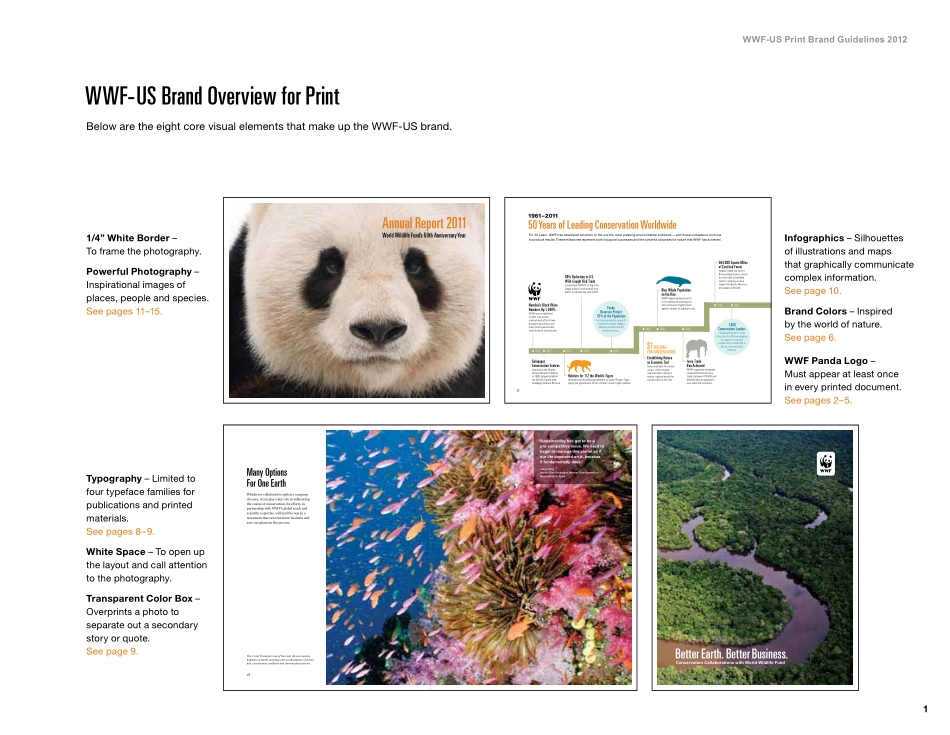
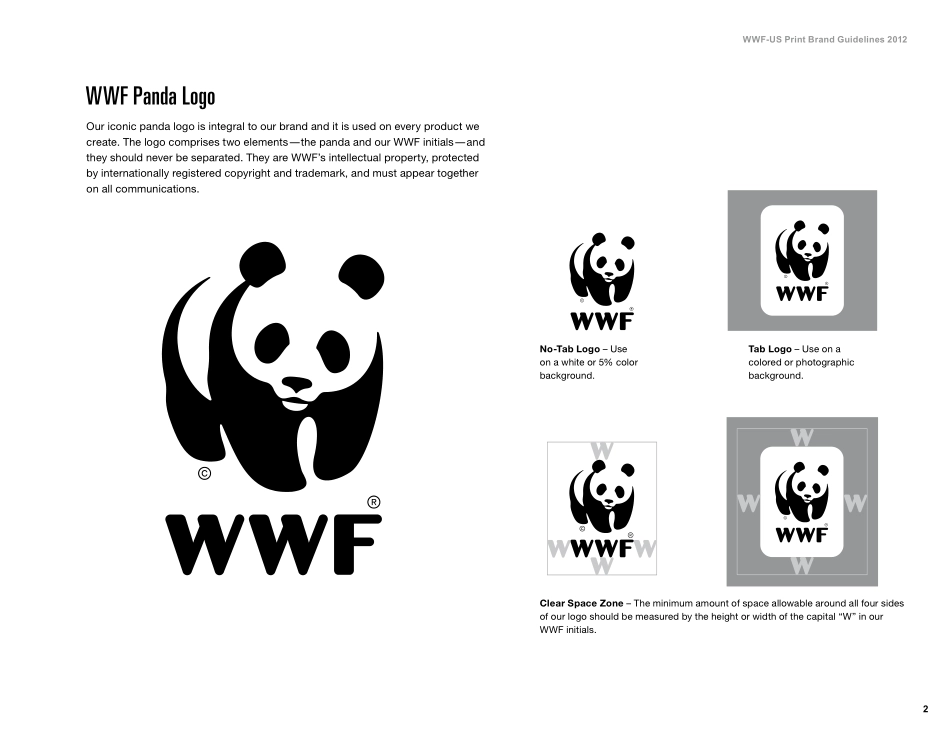
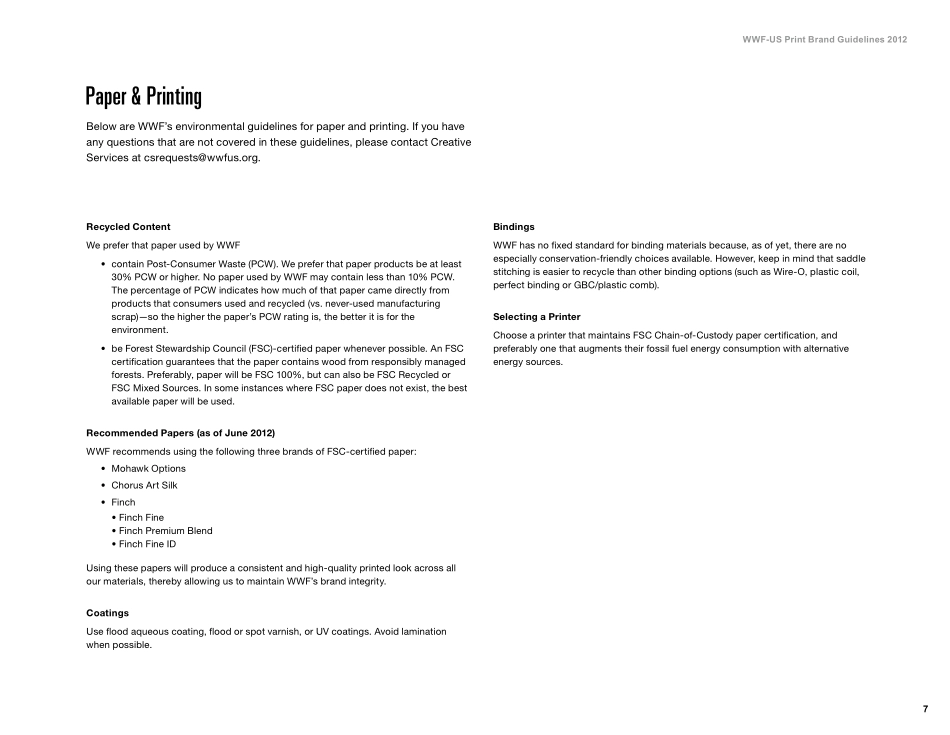
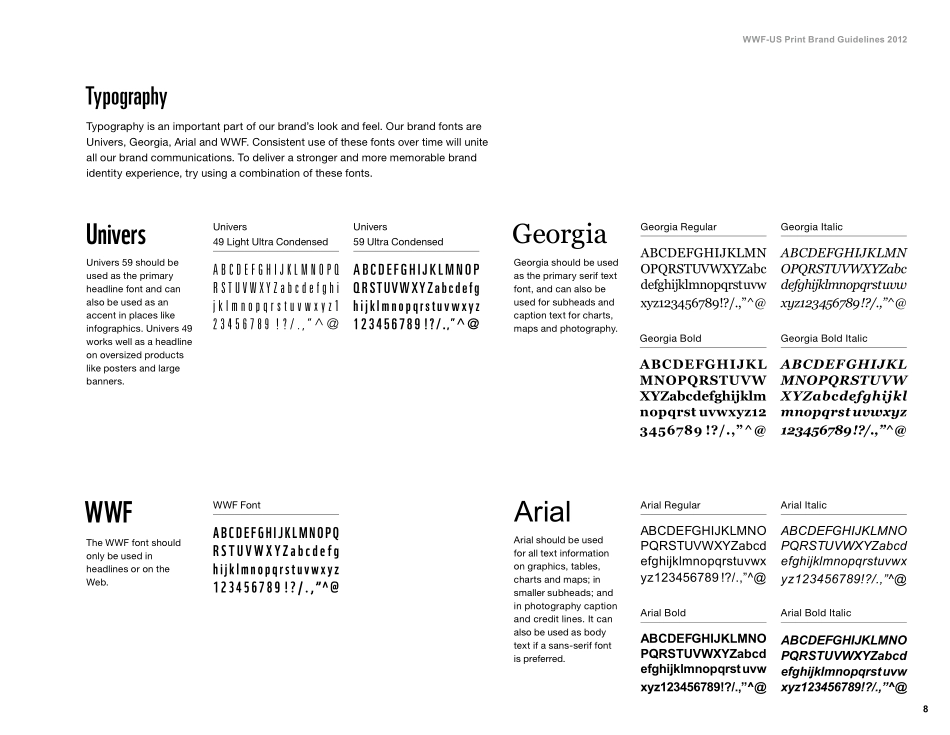
iWWF-US | Print BrandGuidelines 2012WWF-US Print Brand Guidelines 2012iiWWF’s brand is often the first thing about us that people experience—well before they have learned anything about our organization’s mission or goals. Our brand gives the world their first visual impression of who we are and what we stand for. Because of that, it is critically important to have a strong, clear, compelling and consistent branded look that carries across all our printed materials. In the following pages, you will see examples of how to reinforce our brand effectively and consistently in print.One Brand, One VoiceWWF-US Print Brand Guidelines 20121Below are the eight core visual elements that make up the WWF-US brand. WWF Panda Logo – Must appear at least once in every printed document.See pages 2–5.Typography – Limited to four typeface families for publications and printed materials.See pages 8–9.White Space – To open up the layout and call attention to the photography.Transparent Color Box – Overprints a photo to separate out a secondary story or quote. See page 9.1/4” White Border – To frame the photography.Powerful Photography – Inspirational images of places, people and species.See pages 11–15.Infographics – Silhouettes of illustrations and maps that graphically communicate complex information.See page 10.Brand Colors – Inspired by the world of nature.See page 6.WWF-US Brand Overview for Print18“ Sustainability has got to be a pre-competitive issue. We need to begin to manage this planet as if our life depended on it, because it fundamentally does.” Jason Clay Senior Vice President, Market Transformation World Wildlife FundThe Coral Triangle is one of the most diverse marine habitats on Earth, teeming with an abundance of corals, fish, crustaceans, mollusks and marine plant species.Whichever collaborative option a company chooses, it can play a key role in influencing the course of conservation. Its efforts, in partnership with WWF’s global reach and scientific expertise, will lead the way in a movement that can transform business and save our planet in the process.Many Options For One EarthBetter Earth. Better Business.Conservation Collaborations with World Wildlife FundC1Annual Report 2011World Wildlife Fund’s 50th Anniversary Year221,400 Conservation LeadersLaunched Russell E. Train Education for Nature program to support in-country conservation leadership in Africa, Asia and Latin America.Habitats for 1/2 the World’s Tigers Worked with the Indian government to launch Project Tiger, laying the groundwork for all of India’s current tiger reserves.Establishing Nature as Economic ToolConceived debt-for-nature swaps, which forgive national debt to protect nature, a global model for conservation to this day. 564,000 Square Miles of Certified ForestHelped create the Forest Stewardship Council, which has certified sustainable forests covering an ar...