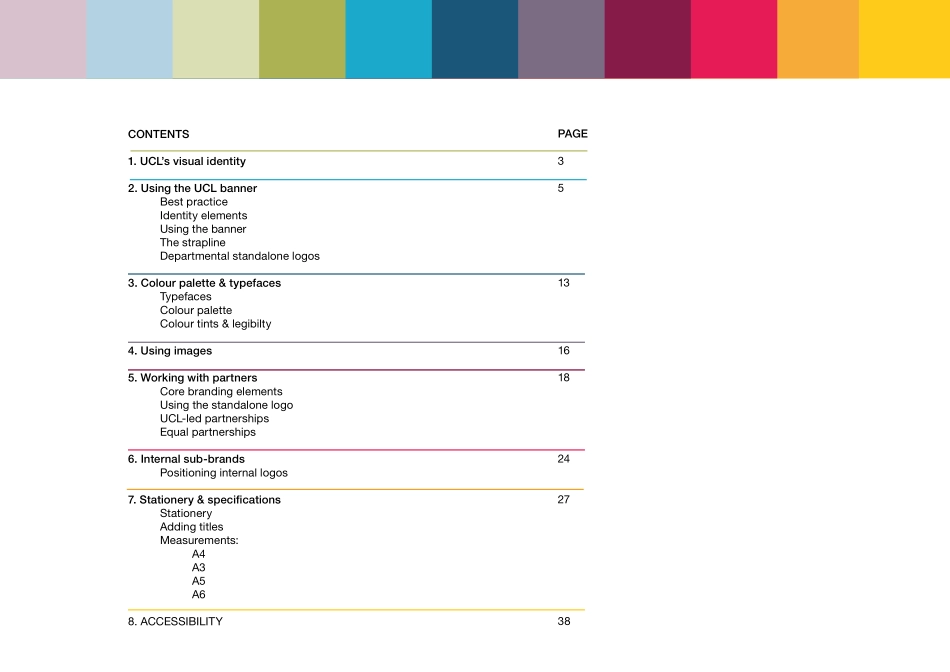
VISUAL IDENTITYLONDON’S GLOBAL UNIVERSITYcontents 1. UcL’s visual identity 2. Using the UcL banner Best practiceIdentity elements Using the banner The straplineDepartmental standalone logos3. colour palette & typefacesTypefaces Colour palette Colour tints & legibilty4. Using images 5. Working with partners Core branding elements Using the standalone logoUCL-led partnershipsEqual partnerships6. Internal sub-brands Positioning internal logos 7. Stationery & specifications StationeryAdding titlesMeasurements:A4A3A5A6 8. ACCESSIBILITY PAGe 3 513161824273831. UcL’s VIsUAL IdentIty4The UCL visUaL idenTiTyIntroduction UCL is a large and complex institution, which represents many things to many different people. Over time, a number of different symbols and logos sprang up to represent UCL, and this started to affect our ability to communicate our work in a consistent and unified way.Research and consultation with people in the audiences we are trying to reach – including prospective students, funding bodies, partner organisations and business leaders – confirmed that there was confusion outside the organisation about UCL, and that some of the groundbreaking research and teaching excellence taking place here was going unnoticed by the outside world. As a result, a visual identity was created for UCL to strengthen our ability to gain greater recognition for the work we do and the impact that we have, both in the UK and globally.Over the past few months, we have held more than 50 hours of discussion with key people all across UCL to find out how the visual identity has been working and what can be done to increase its use across the university. On these pages, you will find everything you need to use the elements of the UCL visual identity, along with advice, artwork and templates to ensure that UCL’s profile remains high and that all areas of our work are well and consistently represented to the outside world. There are three key elements to the UCL visual identity: 1. All UCL materials should carry the UCL banner. 2. All UCL materials should use either Helvetica, Arial or Garamond font. 3. Only colours in the UCL colour palette should be used.The importance of a visual identityUCL is an internationally and instantly recognised brand. A specific department, school or faculty may not be as widely recognised. By not using the UCL brand properly, in communications, online or in print, the kudos of being associated with and part of UCL is lost, as well as affecting UCL’s overall professional appearance and reputation.The extensive UCL colour palette, and both sans serif and serif fonts, allow for countless variation and, with creative input, a look for individual departments or projects can be created that compliment and adhere to the UCL guidelines.www.ucl.ac.uk/visual-identity2. UsInG the UcL bAnner56THe UCL visUAL idenTiTyhow the UCL banner ...