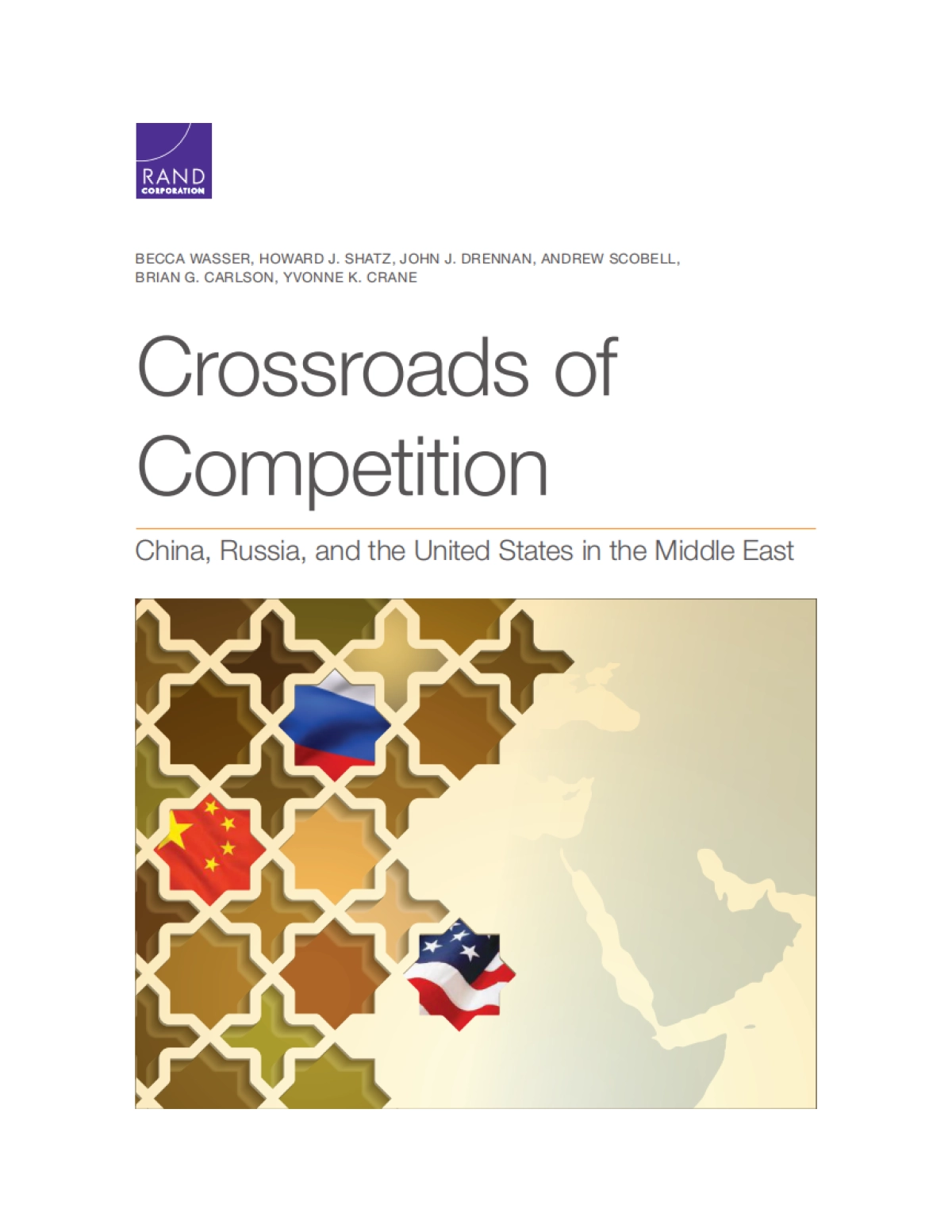



C O R P O R A T I O NBECCA WASSER, HOWARD J. SHATZ, JOHN J. DRENNAN, ANDREW SCOBELL, BRIAN G. CARLSON, YVONNE K. CRANECrossroads of CompetitionChina, Russia, and the United States in the Middle East
Limited Print and Electronic Distribution RightsThis document and trademark(s) contained herein are protected by law. This representation of RAND intellectual property is provided for noncommercial use only. Unauthorized posting of this publication online is prohibited. Permission is given to duplicate this document for personal use only, as long as it is unaltered and complete. Permission is required from RAND to reproduce, or reuse in another form, any of its research documents for commercial use. For information on reprint and linking permissions, please visit www.rand.org/pubs/permissions.The RAND Corporation is a research organization that develops solutions to public policy challenges to help make communities throughout the world safer and more secure, healthier and more prosperous. RAND is nonprofit, nonpartisan, and committed to the public interest. RAND’s publications do not necessarily reflect the opinions of its research clients and sponsors.Support RANDMake a tax-deductible charitable contribution at www.rand.org/giving/contributewww.rand.orgFor more information on this publication, visit www.rand.org/t/RRA325-1Library of Congress Cataloging-in-Publication Data is available for this publication.ISBN: 978-1-9774-0617-0Published by the RAND Corporation, Santa Monica, Calif.© Copyright 2022 RAND CorporationR® is a registered trademark.
iiiPrefaceThe 2017 U.S. National Security Strategy and 2018 U.S. National Defense Strategy elevated strategic competition with China and Russia as the key feature for U.S. strategy, a paradigm shift from the low-intensity conflicts against nonstate actors that the United States had been fighting since 2001. Although strategic competition is intended to be global in nature, much of the focus has been on Europe and Asia, leaving other regions understudied.This report focuses on one such region: the Middle East, where competitive dynamics are already apparent among the United States, China, and Russia. China has built economic partnerships in energy trade, infrastructure, ports, and communications technology; these economic ties have given China regional influence. Russia, meanwhile, has attempted to posi-tion itself as a mediator and alternate weapon provider; by intervening in Syria, Russia also has increased its influence and established itself as an important external power in the region. Such efforts by China and Russia have challenged U.S. interests in the region, such as protection of allies and partners, defense of U.S. troops, stabilization of energy markets, and promotion of free and open trade. Furthermore, China and Russia will continue to contest the U.S. role in the Middle East. In this report, we consider these t...