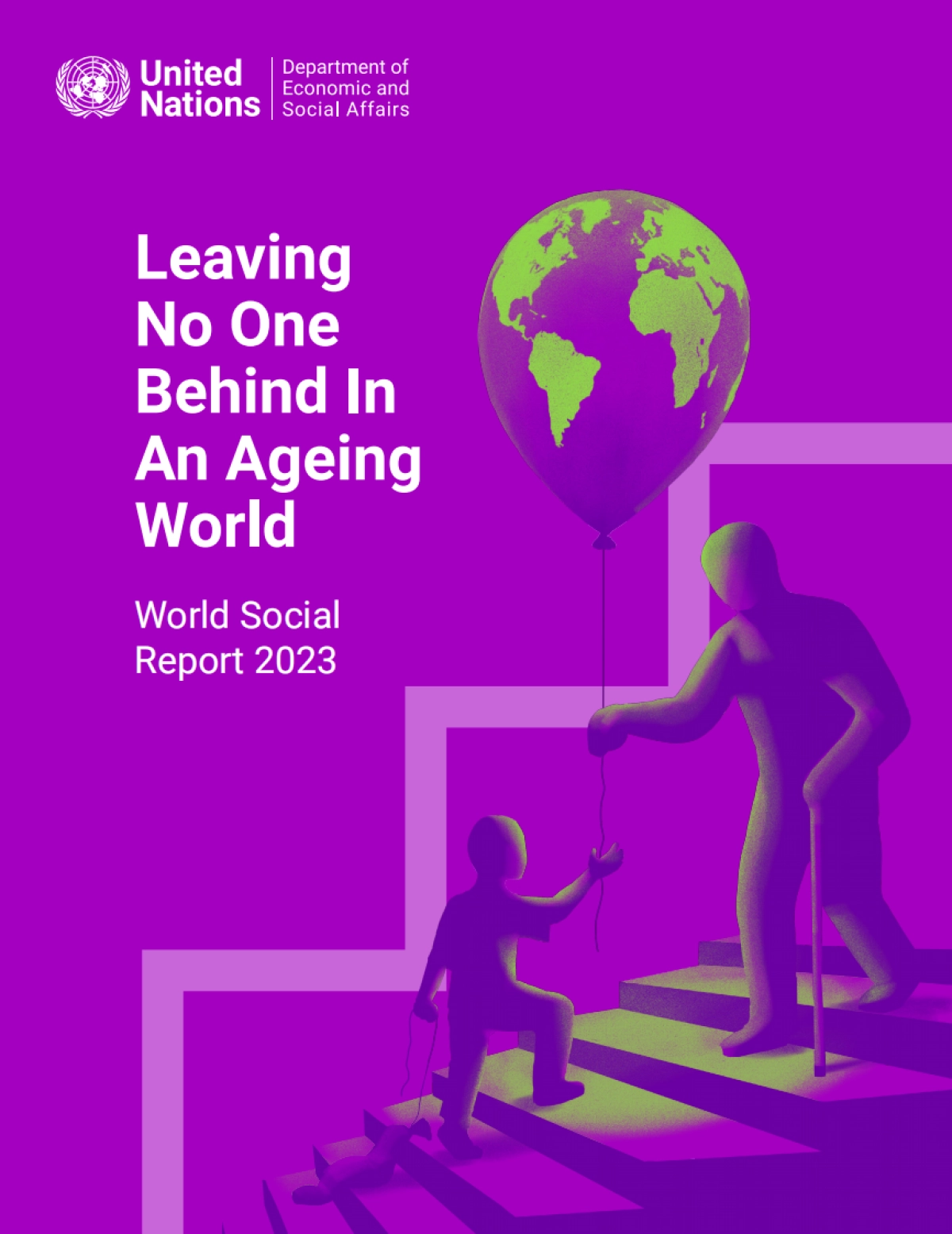
iINTRODUCTIONLeaving No One Behind In An Ageing WorldWorld SocialReport 2023
DEPARTMENT OF ECONOMiC AND SOCiAL AFFAiRSWORLD SOCiAL REPORT 2023: LEAViNG NO ONE BEHiND iN AN AGEiNG WORLDWORLD SOCiAL REPORT 2023: LEAViNG NO ONE BEHiND iN AN AGEiNG WORLD
iiiDEPARTMENT OF ECONOMiC AND SOCiAL AFFAiRSThe Department of Economic and Social Affairs of the United Nations Secretariat is a vital interface between global policies in the economic, social and environmental spheres and national action. The Department works in three main interlinked areas: (i) it compiles, generates and analyses a wide range of economic, social and environmental data and information on which States Members of the United Nations draw to review common problems and to take stock of policy options; (ii) it facilitates the negotiations of Member States in many intergovernmental bodies on joint courses of action to address ongoing or emerging global challenges; and (iii) it advises interested Governments on the ways and means of translating policy frameworks developed in United Nations conferences and summits into programmes at the country level and, through technical assistance, helps build national capacities.ST/ESA/379United Nations publicationSales No. E.23.IV.2ISBN 978-92-1-130458-9eISBN 978-92-1-001968-2Copyright © United Nations 2023All rights reserved
iVWORLD SOCiAL REPORT 2023: LEAViNG NO ONE BEHiND iN AN AGEiNG WORLDFOREWORDOur world is changing in fundamental ways. One key trend is the gradual and largely irreversible shift towards an older popula-tion, already underway in most countries.The number of persons aged 65 years or older worldwide is expected to double over the next three decades, reaching 1.6 billion in 2050, when older people will account for more than 16 per cent of the global population. People are living longer, healthier lives. The rise in human longevity is a success story caused by improved sanitation and medical therapies, greater access to education and family planning, and strides towards gender equality and women’s empowerment. This shift in the population age structure brings into question current arrangements of old-age support in countries both young and old. As the health and wealth of so-cieties continue to improve, traditional notions of dependency at older ages are becoming less and less valid. Yet, effective systems of old-age support will continue to be needed, as will the intergenerational solidarity required to sustain them.Not everyone has benefitted to the same extent from the social and economic im-provements that drive longevity. High and rising levels of inequality threaten to become a defining feature of present and future generations. Due to a combination of acute crises and unfavourable long-term trends in employment and wages, successive generations are increasingly unequal and economically insecure in both developed and developing count...