GBA INDEX PRESS CONFERENCE大湾区指数发布2022Inventory Space Redevelopment In The Greater Bay Area 粤港澳大湾区存量治理报告2022 / 09中国城市规划设计研究院深圳分院CHINA ACADEMY OF URBAN PLANNING & DESIGN SHENZHEN存量规划中心CENTER OF INVENTORY SPACE PLANNING粤港澳数字湾区中心GREATER BAY AREA DIGITAL CENTER更新中心CENTER OF URBAN RENEWAL中国城市规划设计研究院 深圳分院中国城市规划设计研究院 深圳分院
目录 CONTENTS1.1. 粤港澳大湾区进入存量再出发时期1.1. The Greater Bay Area Enters the Stage of Inventory Space Redevelopment1.2. 存量治理难点:解决城市转型的阵痛与普遍面临的问题1.2. Obstacles to Inventory Space Governance: Addressing the Throes and Common Problems in Urban Transformation大湾区存量空间开发现状特征Features of the Current Development of Inventory Space in the Greater Bay Area1page 02page 02page 10大湾区存量空间开发典型案例:多元规划策略推进存量空间治理2.1. 深圳宝安2.1. Bao'an District in Shenzhen 2.2. 东莞长安2.2. Chang'an Township in Dongguan2.3. 佛山顺德2.3. Shunde District in Foshan 2.4. 广州2.4. GuangzhouCase Studies of Inventory Space Development in the Greater Bay Area: Diversified Planning Strategy Promotes Inventory Space Governance2page 11page 11page 14page 16page 20中国城市规划设计研究院 深圳分院
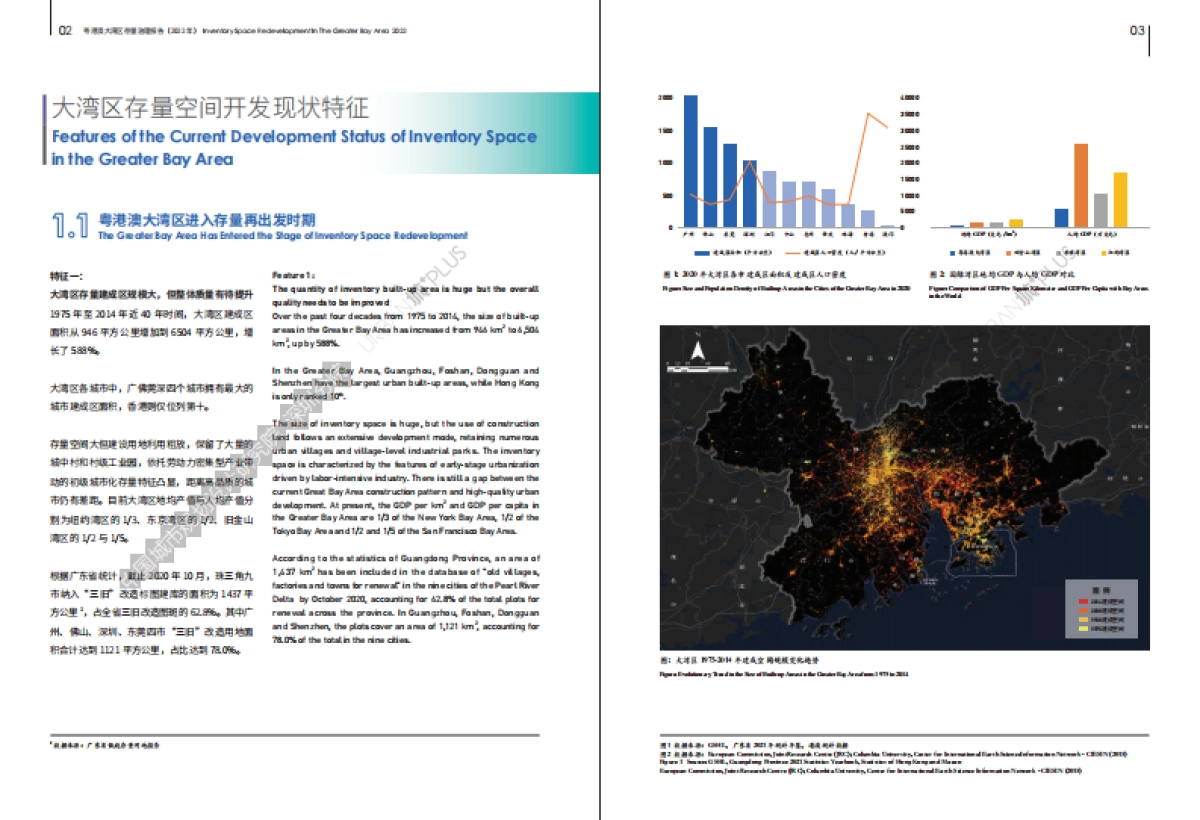
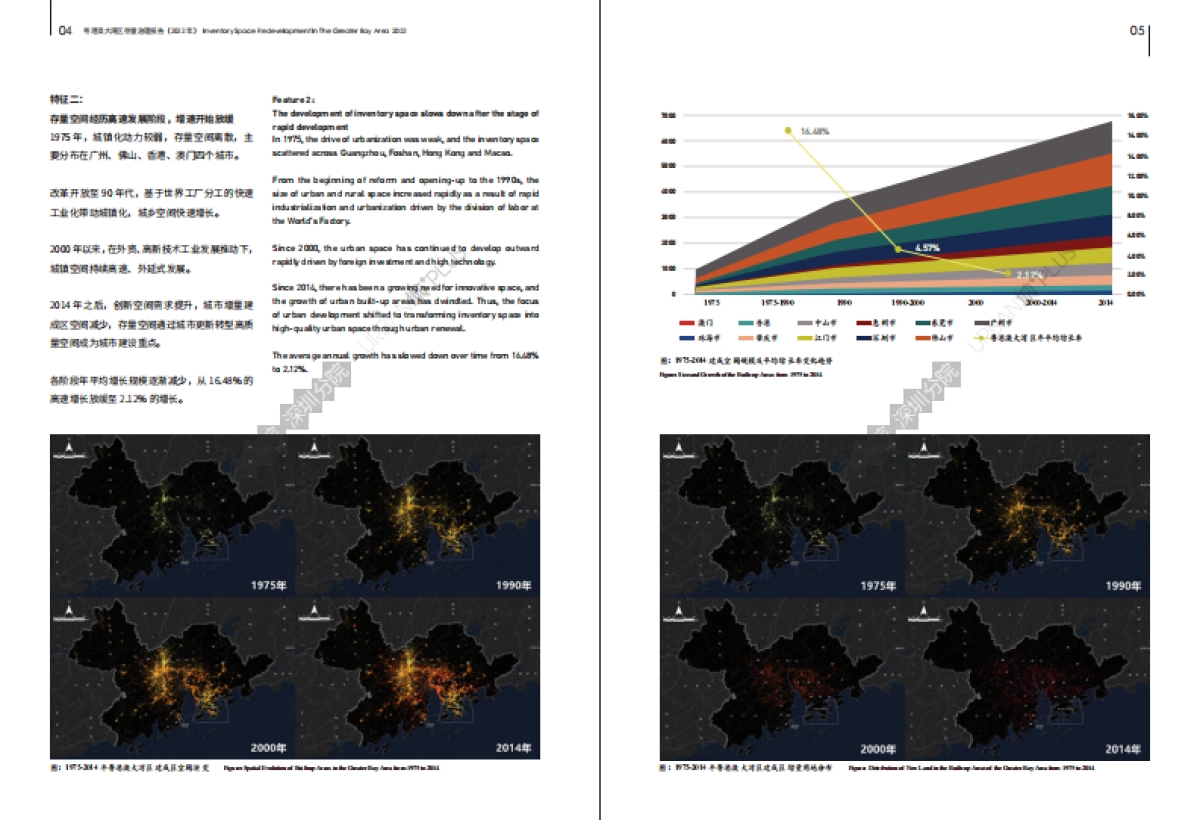
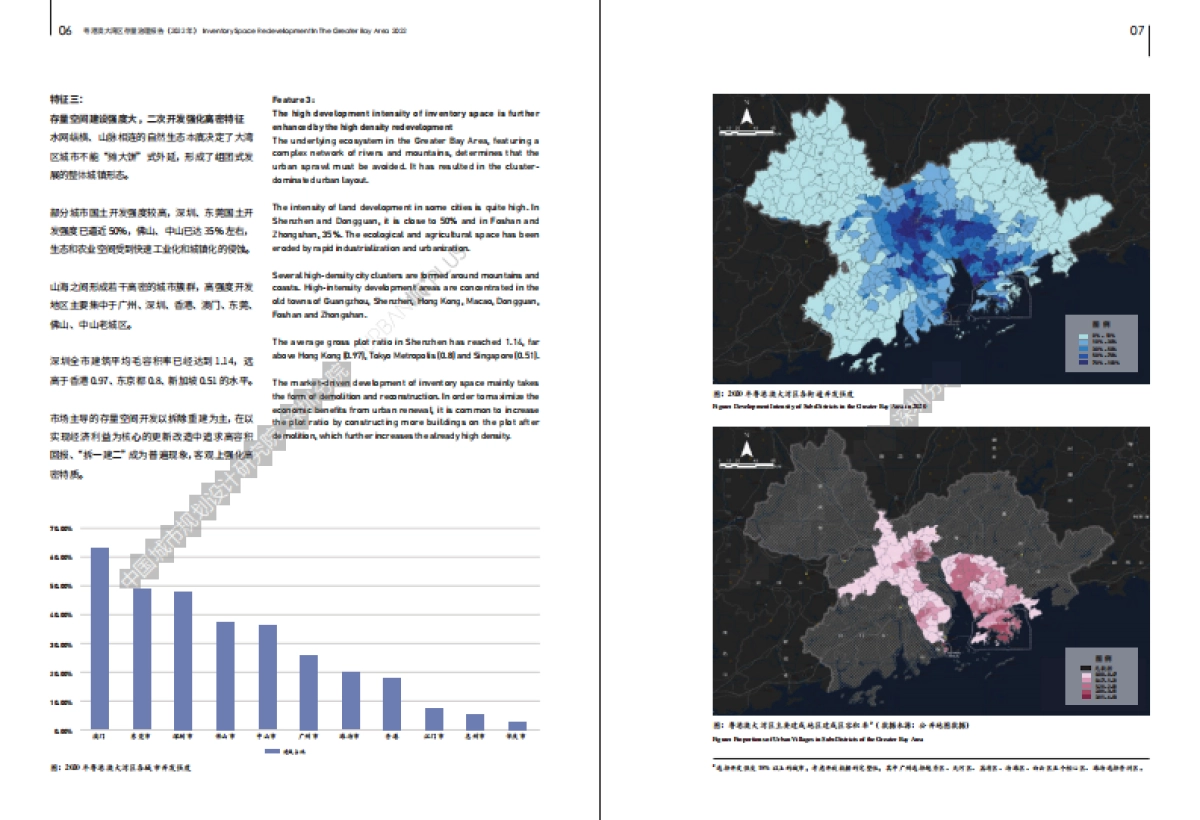
粤港澳大湾区进入存量再出发时期The Greater Bay Area Has Entered the Stage of Inventory Space Redevelopment大湾区存量空间开发现状特征Features of the Current Development Status of Inventory Space in the Greater Bay Area特征一:大湾区存量建成区规模大,但整体质量有待提升1975 年至 2014 年近 40 年时间,大湾区建成区面积从 946 平方公里增加到 6504 平方公里,增长了 588%。大湾区各城市中,广佛莞深四个城市拥有最大的城市建成区面积,香港则仅位列第十。存量空间大但建设用地利用粗放,保留了大量的城中村和村级工业园,依托劳动力密集型产业带动的初级城市化存量特征凸显,距离高品质的城市仍有差距。目前大湾区地均产值与人均产值分别为纽约湾区的 1/3、东京湾区的 1/2、旧金山湾区的 1/2 与 1/5。根据广东省统计,截止 2020 年 10 月,珠三角九市纳入“三旧”改造标图建库的面积为 1437 平方公里1,占全省三旧改造图斑的 62.8%。其中广州、佛山、深圳、东莞四市“三旧”改造用地面积合计达到 1121 平方公里,占比达到 78.0%。Feature 1: The quantity of inventory built-up area is huge but the overall quality needs to be improvedOver the past four decades from 1975 to 2014, the size of built-up areas in the Greater Bay Area has increased from 946 km2 to 6,504 km2, up by 588%.In the Greater Bay Area, Guangzhou, Foshan, Dongguan and Shenzhen have the largest urban built-up areas, while Hong Kong is only ranked 10th.The size of inventory space is huge, but the use of construction land follows an extensive development mode, retaining numerous urban villages and village-level industrial parks. The inventory space is characterized by the features of early-stage urbanization driven by labor-intensive industry. There is still a gap between the current Great Bay Area construction pattern and high-quality urban development. At present, the GDP per km2 and GDP per capita in the Greater Bay Area are 1/3 of the New York Bay A...