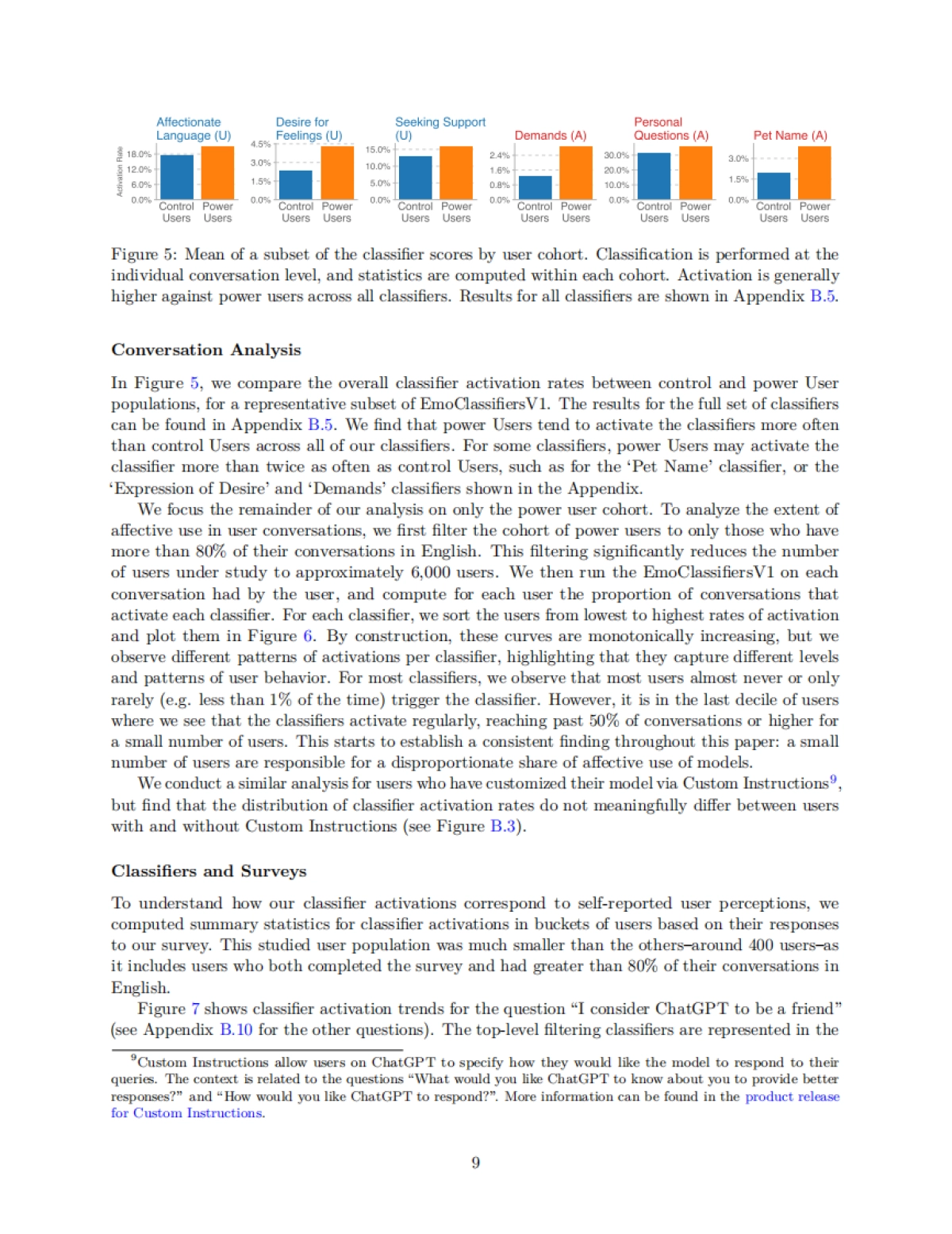
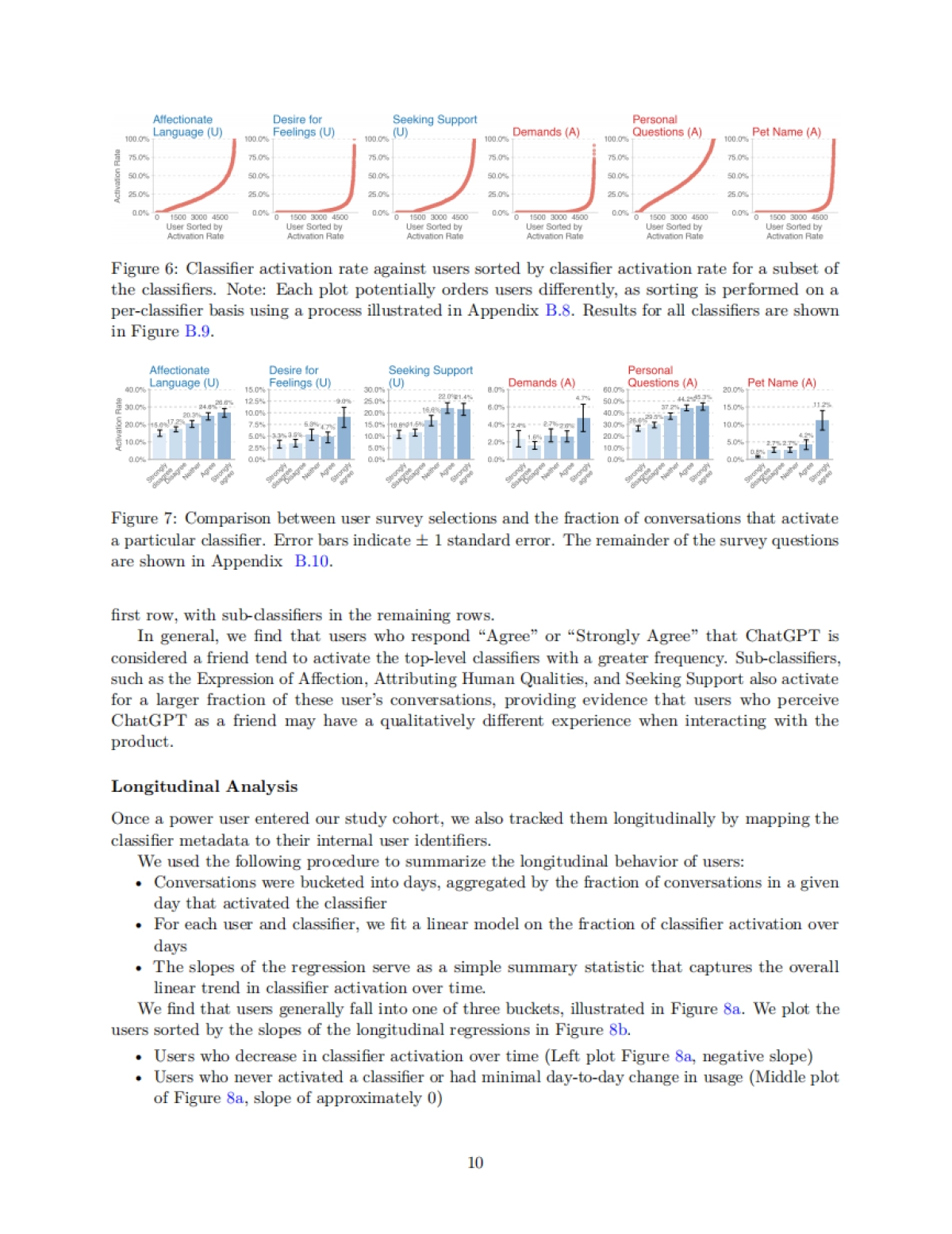
Investigating Affective Use and Emotional Wel-beingon ChatGPTJason Phang?MichaelLampe LamaAhmad*SandhiniAgarwal*Cathy Mengving Fang!Auren R. Liu! Valdemar Danrv! Eunhae LeetSamantha W.T.Chan! Pat Pataranutaporn! PattieMaesAsAl chatbots see increased adoption and integration into everyday life. questions have beerraisedabout thepoteon emotional well-being toI emotionalstateand totalOverall, our analysis reveals that a small number ofdisproportionate share of the most affective cues.IntroductionOver the past two years, the adoptionlarge language modes(ILLMs) and their.These platformssuch asOpenAI's ChatGPT, Anthropic's Claudepurpose tools for a wide variety of applications, including work, education, and entertainmentHowever, their conversational stvle. first-Dersdand ability to simulate humanr-like interactions lave led users to sonetines persnify and anthroponorpliz these vystens Gral anyVoigt.2024:Liaoand WilsonIarise from these systems becomesearchers have introducedshould not only meet static task- and psychologicalecosystems of their users (Kirk et al., 2025)ective is particularly important giventContributing author, MIT Media Lab
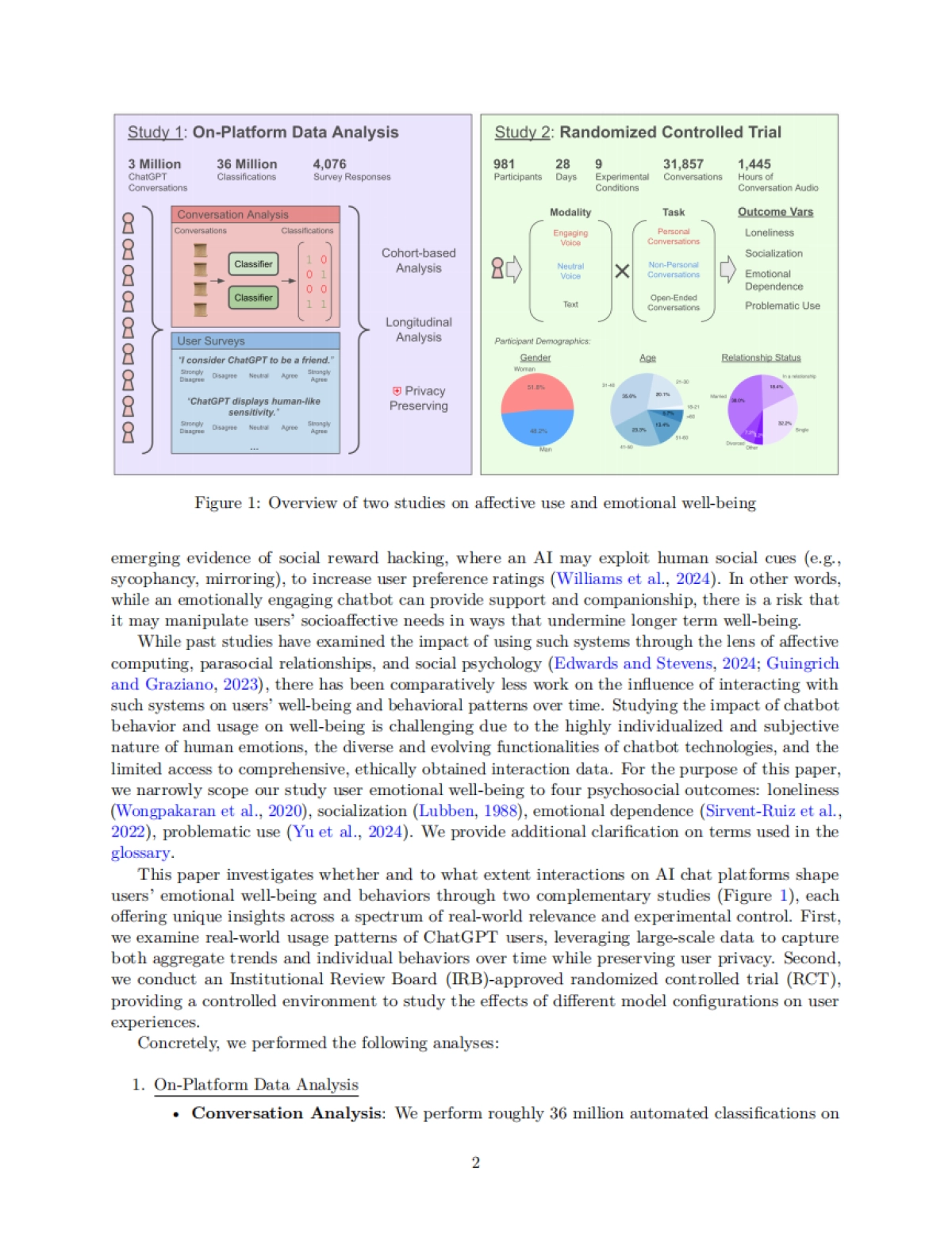
Study1:On-Platform Data Analysis,Study2:RandomizedControlled Tria31,8573Million1.445SurveyResponsesConversationAudiModalityOutcomeVars884804010401010102LonelinessCohort-basedAnalysisNon-PerasoneXProblematicUseongitudinalUserSurveysAnalysisParticipantDemograyIconsiderChatGPTtobeafriendGender园PrivacyChatGPTdisplayshuman-likePreservingFigure 1: Overview of two studies on affective use and emotional well-beingemerging evidence of social reward mav exploit hmuman social cues (e.g-sycophancy, mirroring), to increat(Williams et al. 2024). In other wordswhile an emotionally engaging chatbanionship, there is a risk thatit may manipulate users' sociafectivs that undermine longer term wll-being,rough thelens of affectivecomputing.parasocial relationshindStevens.2024:Guingrichinfuence of interacting withStudvine theimpactof chatboindividualized and subjectivenature of human emotions. the diverse and evolvine functionalities of chatbot technologies. and the(Wongpakaran et al. 2020), socialization (Latbben. 1988), emotional dependence (Sirvent-Runiz etall2022),problematic use(Vnetal9094\W/glossaryThis papers on Al chat platforms shapeo complementary stuadies (Figure 1), achspectrum of real-world relevance and experimental control. Firstprivacv.Second(IRB)-approved randomized controlled trial (RCT)providing a controlled environment to study the effects of oexperiences.Concretely, we performed the following analy.1.On-Platform Data Analysis
over 3 milin ChatGPT corverstions n a privwacy preserving manner without Inmanreview of the underlying conversations (Section 3.21Individual Loneitudinal Analvsis: We assessed the aceregate usace of around 6.000heavy users of ChatGPT's Advanced Voice Mode over 3 months to understand how theirusage evolves over time.experiences usineChatCPT2. Randomized Controlled Trial(RCT)981-user Study: We conducted a randomized...