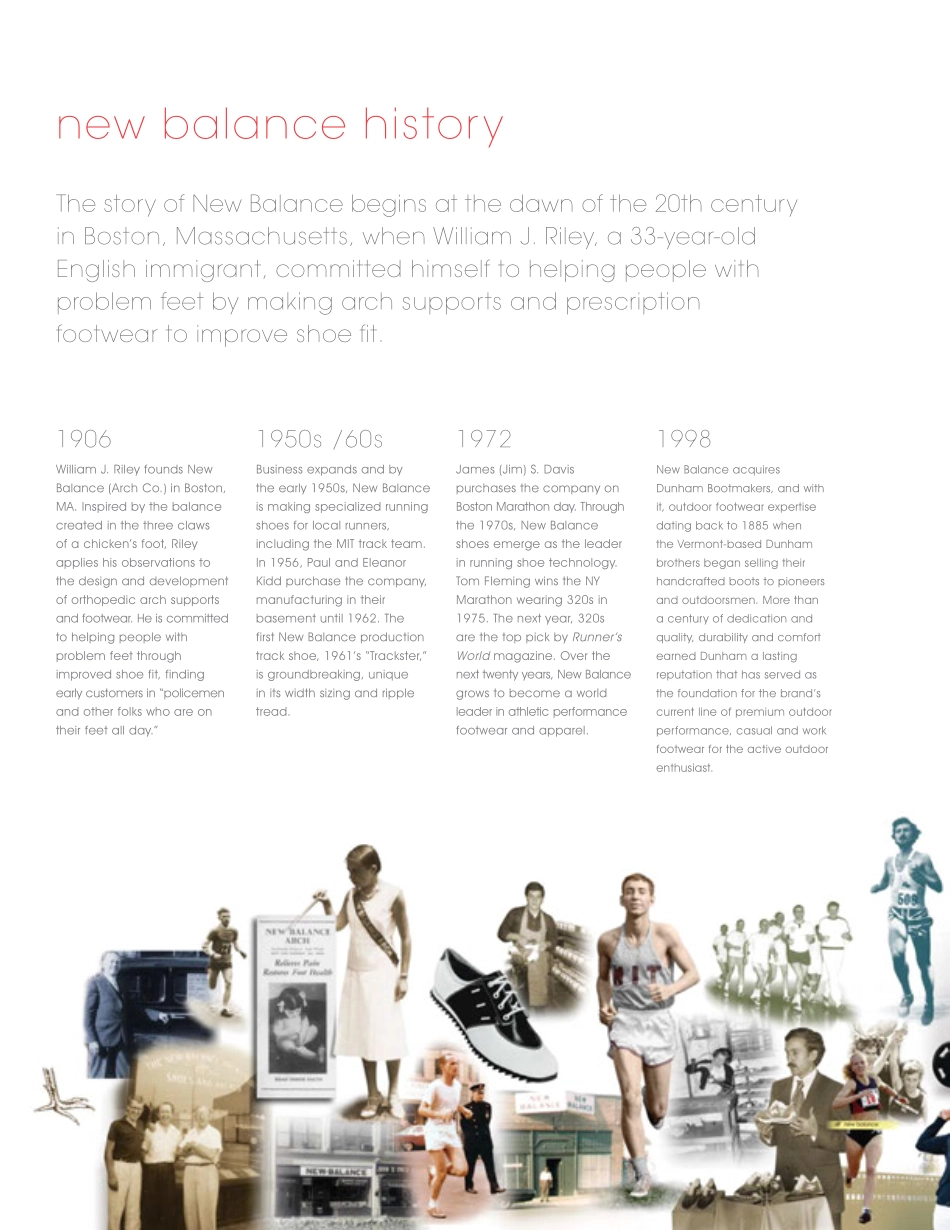
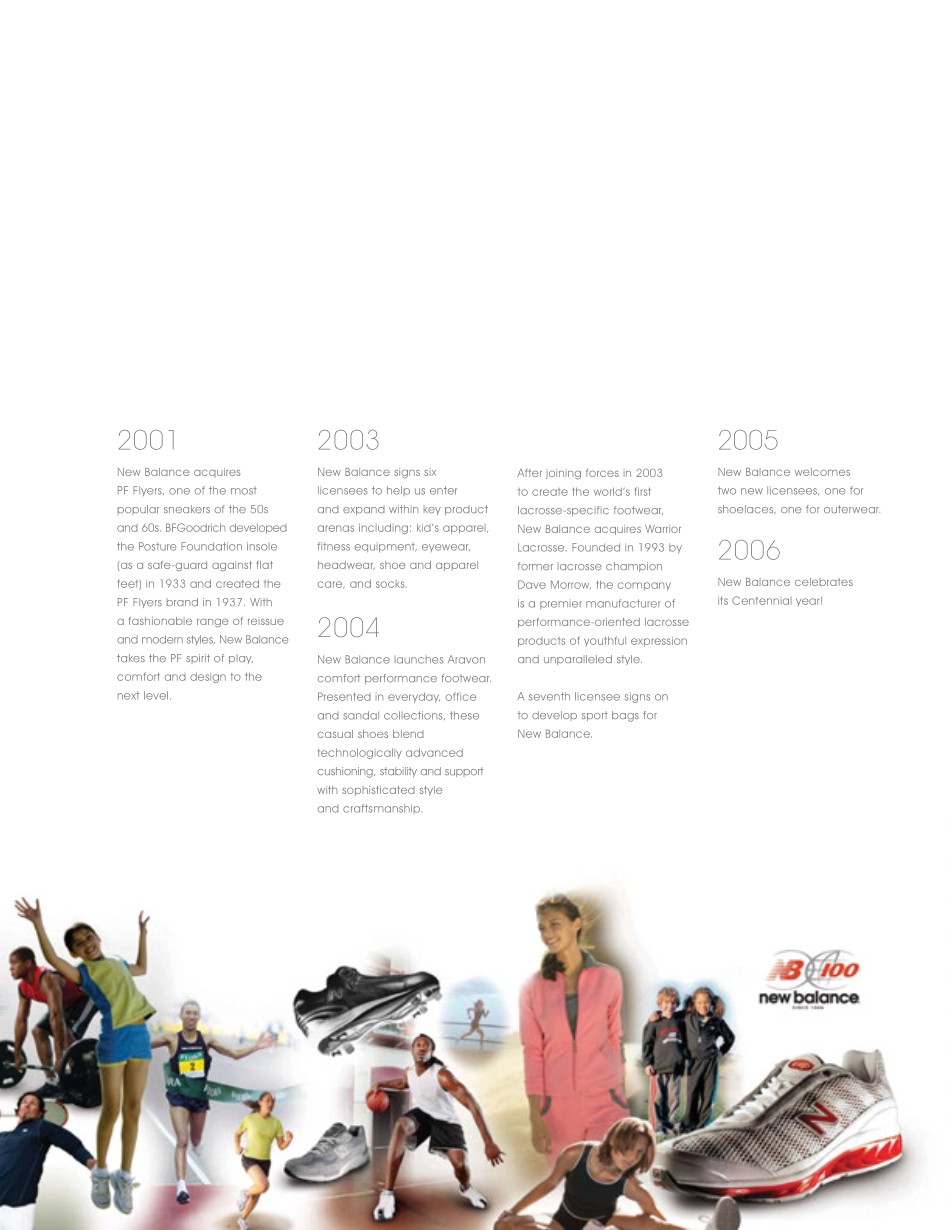
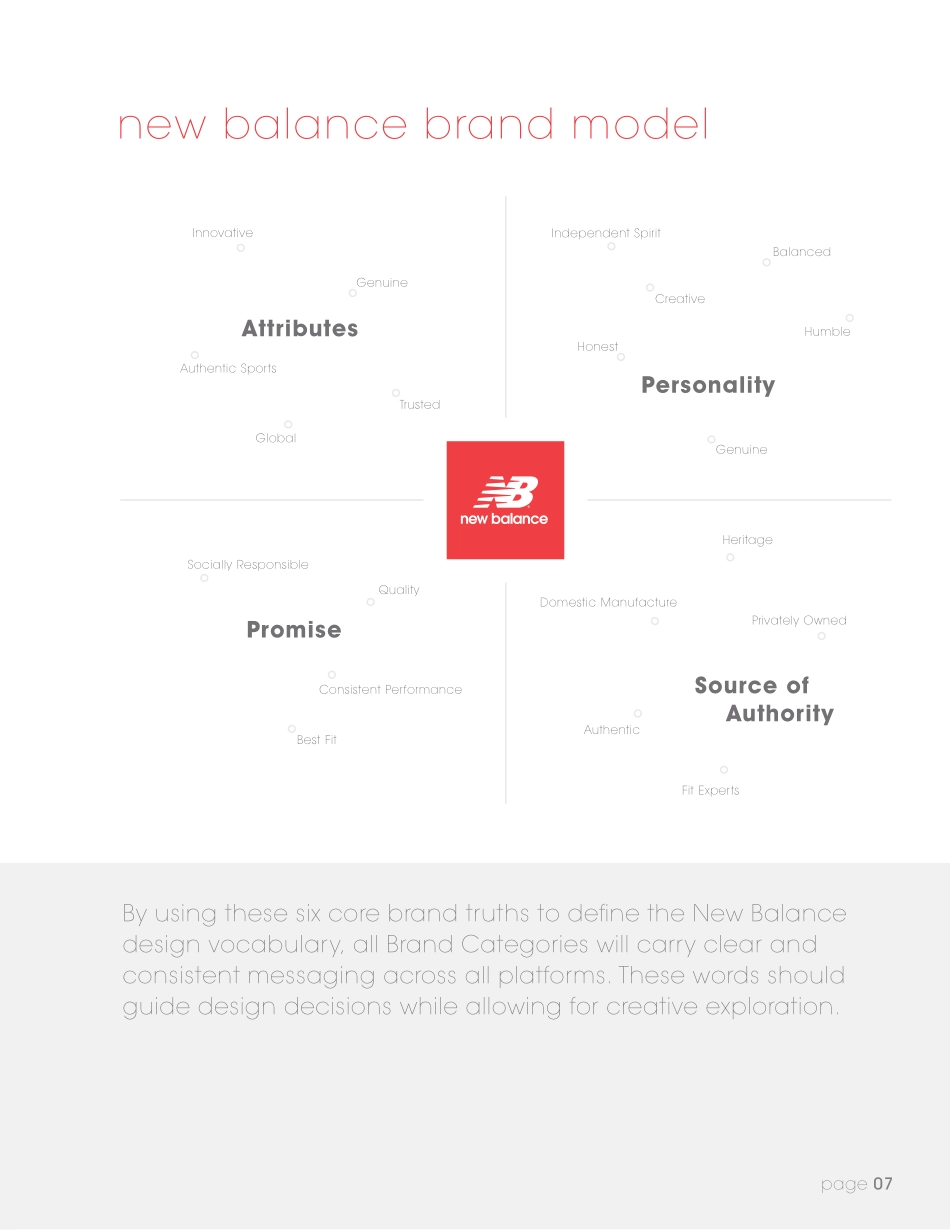
brand book 2007welcome 02mission statement 03history 04mindset 06brand model 07elements 08typography 10photography 14color palette 26logo treatment 27build the brand 40table of contentswelcomeGlobal Brand Guideline ContactsMarketing Services ManagerCatherine Jakaitiscatherine.jakaitis@newbalance.com617-746-2233Asia/Pacific RepresentativeQing Niqing.ni@newbalance.com.hkSenior Graphic DesignerMichael Hutto michael.hutto@newbalance.com617-746-2402Europe RepresentativeGraham Dickengraham.dicken@newbalance.co.uk +44 1925 423000Int’l Marketing Services CoordinatorAngus Treloar angus.treloar@newbalance.com617-779-7534 Latin America RepresentativeFernando Canofernando.cano@newbalance.com(54-9-11) 5009 4715page 02This booklet's purpose is to explain and encourage all New Balance associates, partnersand suppliers to participate in maintaining the New Balance Brand Identity as set out onthe following pages.Key to the growth of the New Balance brand is its consistency in the marketplace,and the vital support of everyone involved in maintaining its presence on a daily basis.That said, the brand that endeavors to be everything to everyone inevitably ends upmeaning nothing. Indeed, it’s this principle on which our company was founded. Thetrue value and spirit of New Balance is found in the mindset of the athletes that wearour products and perform at their highest ability. There's a basic honesty to ourproducts, they are built to perform and to improve performance, and we hopethat through all our communications this message is reinforced.new balance’s missionpage 03To be the world’s leading manufacturer of high performance athletic and active lifestyle productswhile operating in a socially responsible manner.Company Missionwhat do we do?create the best-fitting, most technologically innovative performance footwearand athletic apparelwho are we talking to?people who are serious about their athletic activitywhat is the core benefit of newbalance?better fit = better performancenew balance history1906William J. Riley founds NewBalance (Arch Co.) in Boston,MA. Inspired by the balancecreated in the three clawsof a chicken’s foot, Rileyapplies his observations tothe design and developmentof orthopedic arch supportsand footwear. He is committedto helping people withproblem feet throughimproved shoe fit, findingearly customers in “policemenand other folks who are ontheir feet all day.”1950s /60s Business expands and bythe early 1950s, New Balanceis making specialized runningshoes for local runners,including the MIT track team.In 1956, Paul and EleanorKidd purchase the company,manufacturing in theirbasement until 1962. Thefirst New Balance productiontrack shoe, 1961’s “Trackster,”is groundbreaking, uniquein its width sizing and rippletread.1972James (Jim) S. Davispurchases the company onBoston Marathon day. Throughthe 1970s, New Balanceshoes emerge as the leaderin running shoe technology.Tom Fleming wins the NYMarathon wearing 320s i...