EmpoweringVisionN-iXDeliveringValue.7AI trends thatwil define 2026
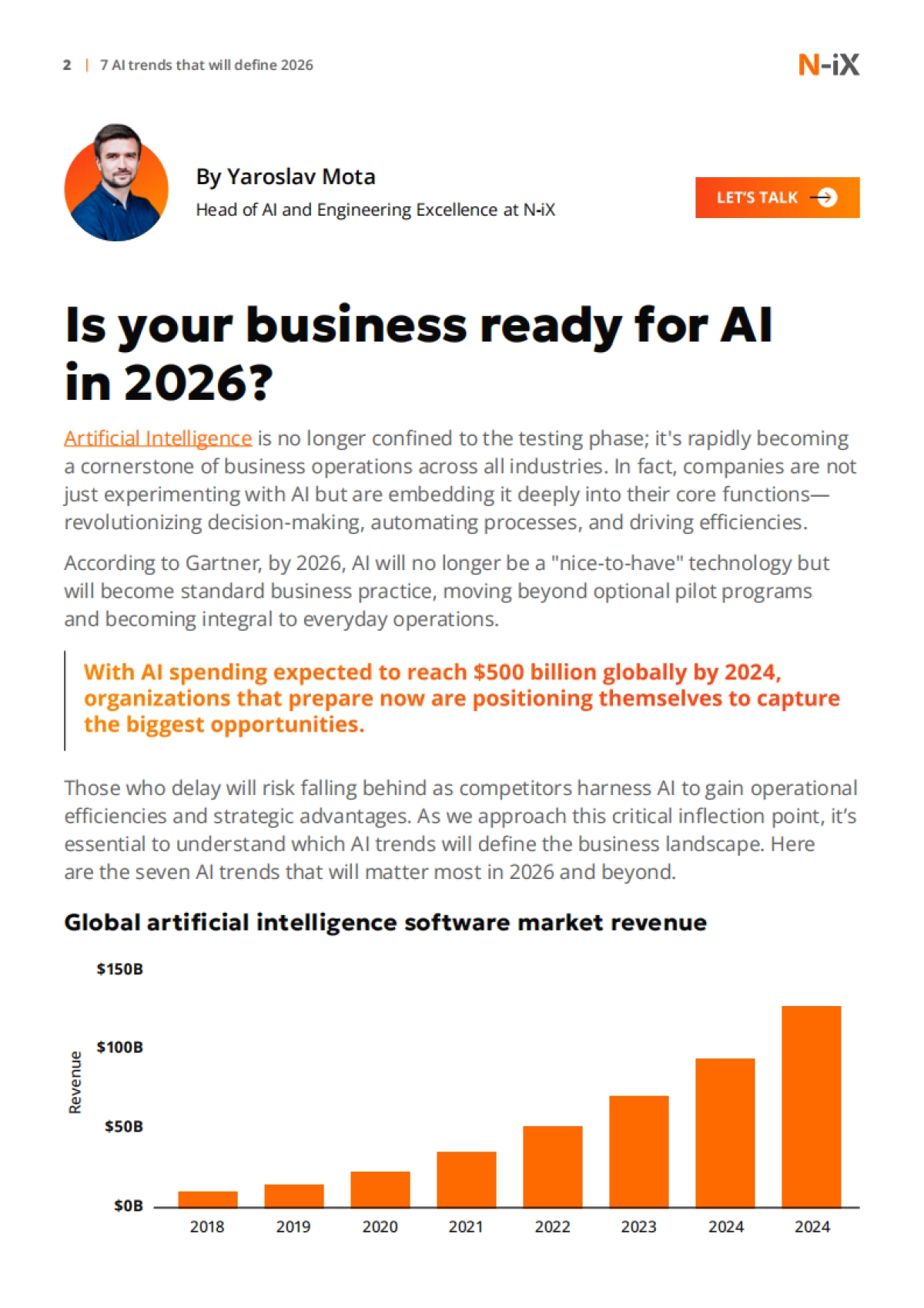
N-iX2|7Altrends that willdefine2026ByYaroslavMotaLET'STALKIsvour business ready for Alin2026? Artficial Intellience s no longer confined to the testing phase;it's rapidly becominga cornerstone of business operations acrossallindustries. In fact, companies are not just experimenting with Al but are embedding it deeply into their core functions-revolutionizing decision-making. automating processes, and driving efficienciesAccording toGartner.bv2026.Al will no longerbe al"'nice-to-have"'technologvburwill become standard business practice, moving beyond optional pilot program;andberomingintegralto evervdavonerationsWith Al spending expected to reach $500 billion globally bv 2024organizationsthatprepare noware positioningthemselves to canturethe biggest opportunities.Those who delav will risk falling behind as competitorsharnessAl to gain operationaefficiencies and strategic advantages. As we approach this critical inflection point, it'sessential to understand which Al trends will define the business landscape. Hereare the seven Al trends that will matter most in 2026 and beyond.Global artificial intelligence software market revenue$150R$100Banuaag$50B$OB20182019202020212022202320242024
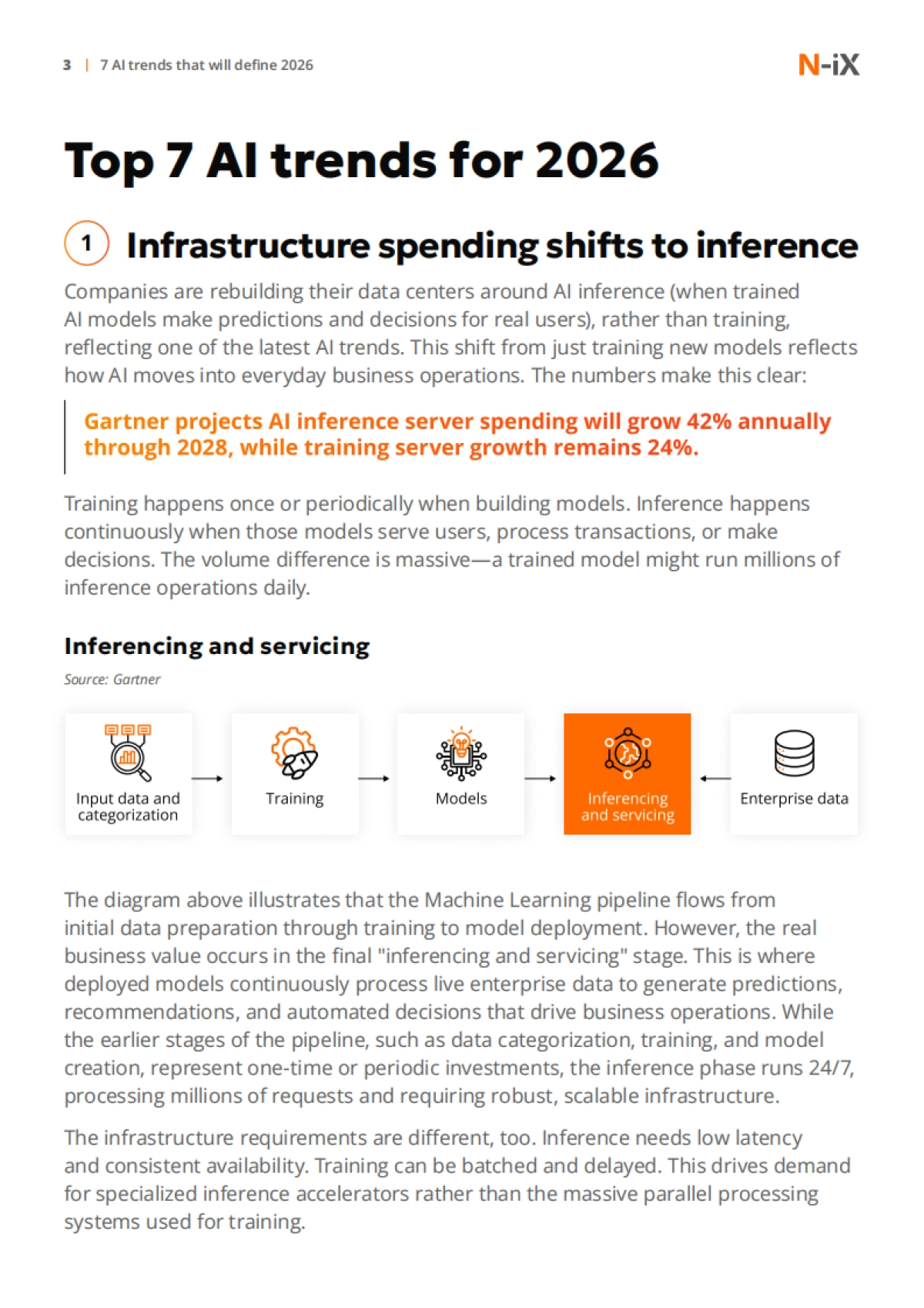
N-iX3|7Altrends that willdefine2026Top7Altrendsfor2026InfrastructurespendingshiftstoinferenceCompanies are rebuilding their data centers around Al inference (when trainedAI models make predictions and decisions for real users, rather than training,reflecting one of the latest Al trends. This shif from just training new models reflectshowAl moves into everyday business operations. The numbers make this clear;Gartner projects Al inference server spending will grow 42% annuallythrough 2028. while training server growth remains24%.continuously when those models serve users, process transactions, or makedecisions. The volume difference is massive-a trained model might run millions ofinference operations daily,InferencingandservicingSource:GartnerInput data andTrainingModelsInferencingcategorization'and servicingThe diagram above llustrates that the Mipeline flows frominitial data preparation through trainingment. However, the real businessvalue occurs in the final inferencing and servicing" stage. This is wheredeployed models continuously process live enterprise data to generate predictions,recommendations, and automated decisions that drive business operations. Whilethe earlier stages of the pipeline, such as data categorization,training, and modecreation, represent one-time or periodic investments, the inference phase runs 24/7processing millions of requests and requiring robust, scalable infrastructureTheinfrastructure requirements are difrent, to. Inference needs low latencand consistent availabilitv. Training can be batched and delaved. This drivesdemandfor specialized inference accelerators rather than the massive parallel processingsystems used for training.
N-iXPower consumption creates immediate cons...