MORCANSTANLEYRESEARCHMorganStanleyMoy27,202606:47PMGMTMay27,2026Al and the Economic TransitionMay 27,2026MichaelGapen,ChiefUSEconomistpnomisttegui, USEconomistima Sinhnomisthichell Weave; US Equty Thematic SralegstAlintormationasofMay14,2026,uniessothenwisestalanMorganStanley&Co.LLCFor imoortant dlisclosures referto the Disclosure Section,located at the end of this report
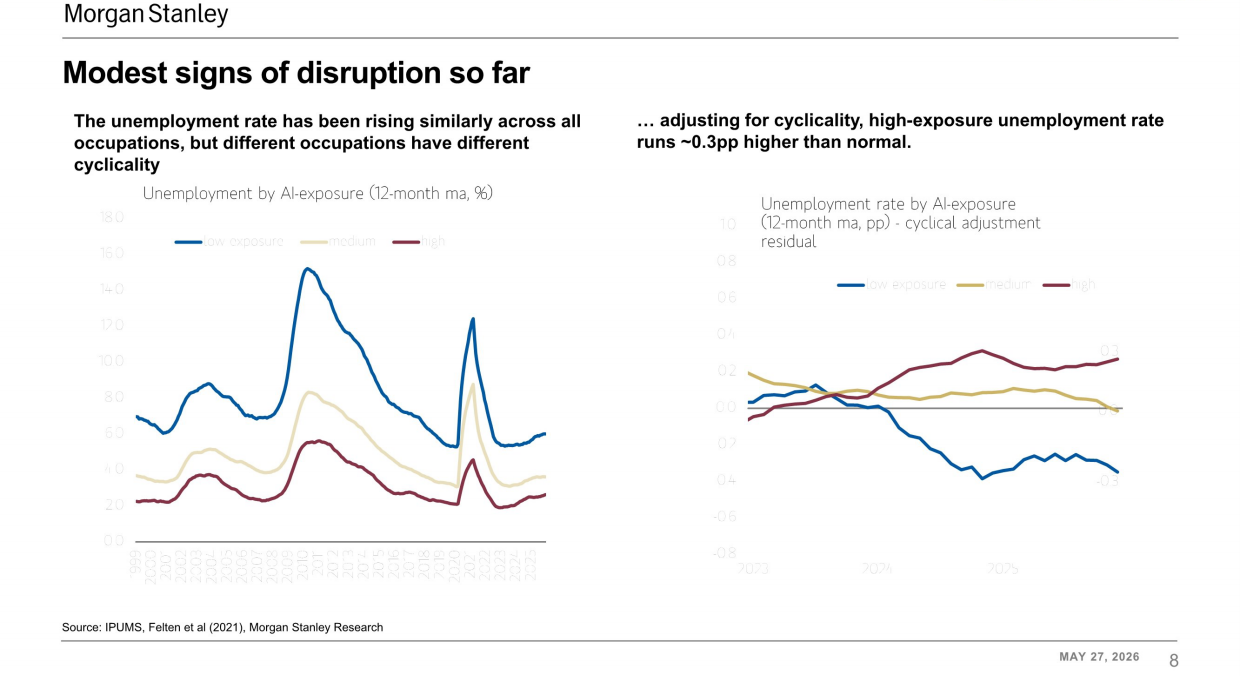
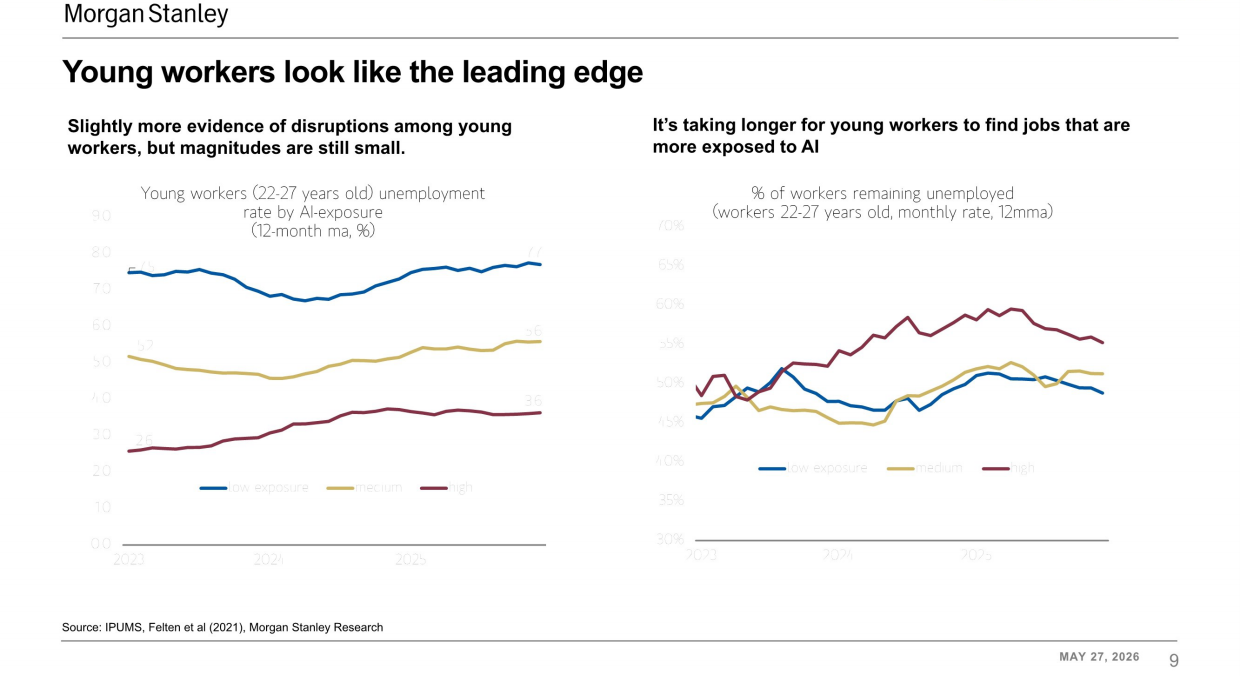
MorqanStanleyAImatters for our outlook on investment spending, labor markets andproductivity growthA-related capex should continue to drive overall growth, supported by sustained hyperscale,spending-which should exceed $1tn in 2027- and the ongoing buildout ofcompute andpowercapacity.Al-related spending wil remain the dominant driver within business spendingProductivity gains are likely. Al, like prior general-purpose technologies, should raise outputperworker, particularly with organizational change.Al-exposed industries are seeing a clearer acceleration in productivity, with output peremployeerisinq faster in 2025than in lessexposedsectors.This reflects strongeroutput arowth ratherthanwidesoread labor substitution.Our Aldisruntion tracker points to early. narrowly concentrated displacement, more evident amongyoungerworkers,whileaqaregateeffectsremainmodest (atmost~10boonthe unemplovmentSlowtomoderate diffusion of Al oroduces manageable labor displacement in the presence of taskcreationandindirectwealtheffectsinourframework.Iffeedbackeffectsarestrona.even fastdiffusion oroducesamore manadeable economic transitionSource:MorganStanleyResearchMAY27,2026
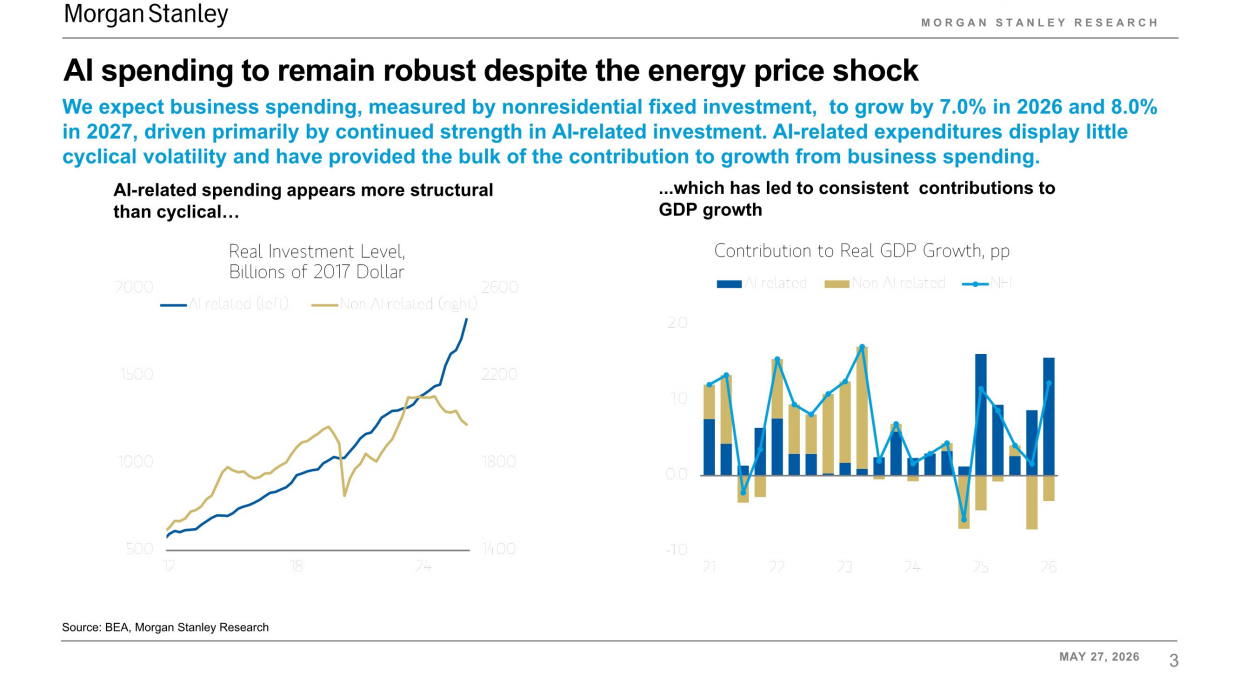
MorqanStanleyMORGANSTANLEYRESEARCHAI spending to remain robust despite the energy price shockWe expect business spending, measured by nonresidential fixed investment, to grow by 7.0% in 2026 and 8.0%in 2027, driven primarily by continued strength in Al -related investment. Al-related expenditures display littlecyclical volatility and have provided the bulk of the contribution to growth from business spending..whichhasledtoconsistentcontributionstthan cvclical..GDP growthReal Investment LevelContrbution toReal.GDP Growth, pp,2200Source:BEA,MorganStanleyResearchMAY27,2026
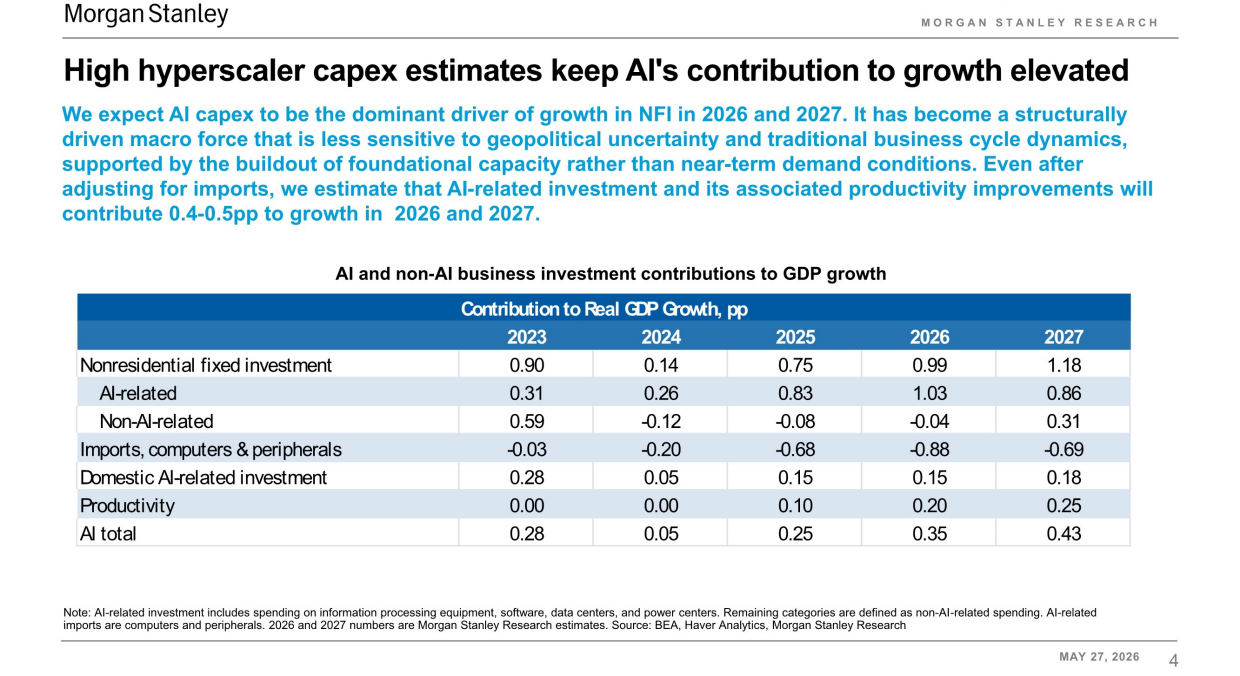
MorqanStanleyHigh hyperscaler capex estimates keep Al's contribution to growth elevatedWe expect Al capex to be the dominant driver of growth in NFl in 2026 and 2027. It has become a structurally driven macro force that is less sensitive to geopolitical uncertainty and traditional business cycle dynamics,supported by the buildout of foundational capacity rather than near-term demand conditions. Even afteradjusting for imports, we estimate that Al-related investment and its associated productivity improvements willcontribute0.4-0.5ipptoarowthin2026and2027;Alandnon-Albusinessinvestmentcontributions toGDPgrowthContributiontoRealGDPGrowth,pp20232024202520262027Nonresidential fixed investment0.900.140.750.991.18A-related0.310.260.831.030.86Non-Al-related0.59-0.12-0.08-0.040.31Imports,computers& peripherals-0.03-0.20-0.68-0.88-0.69DomesticAl-related investment0.280.050.150.150.18Productivity0.000.000.100.200.25AItotal0.280.050.25...