AI-driven change and the next big thingMay 2026AI adoption and emerging technologies 2026
Strategy&Key findings1The AI adoption illusion2The next big thing4Call for action52AgendaMay 2026The transformation gap3Strategy&AI-driven change and the next big thing
Strategy&Key findings3AI-driven change and the next big thingStrategy&May 2026
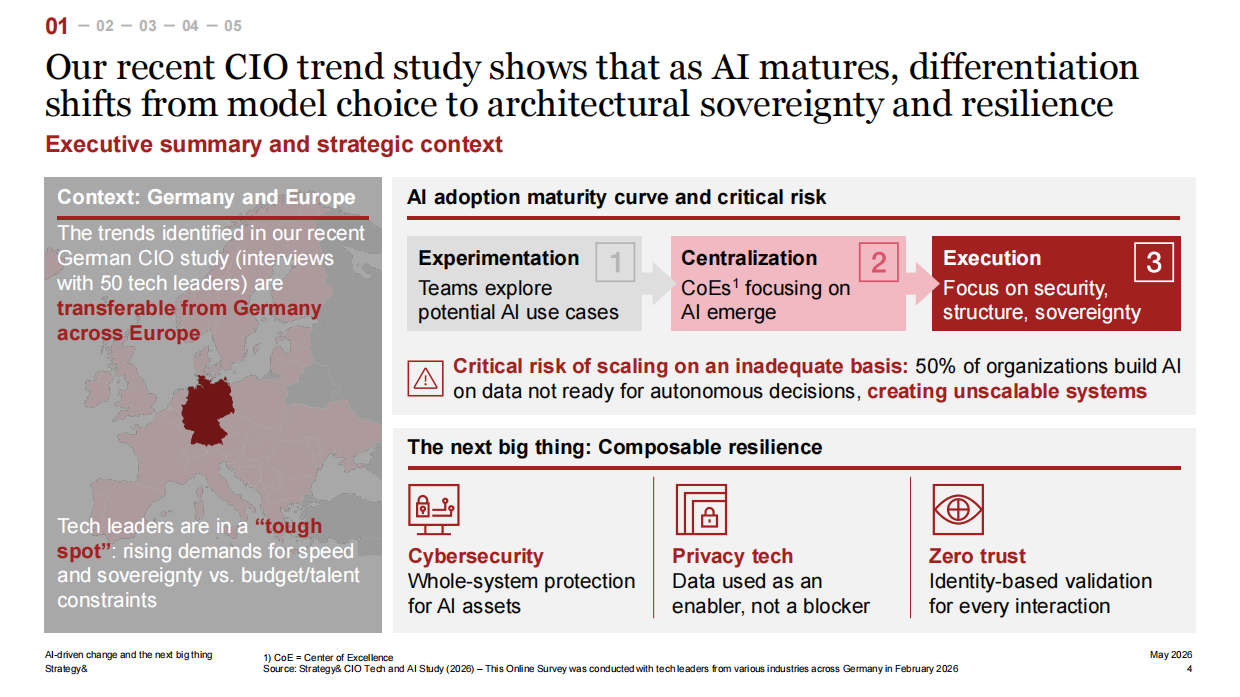
Strategy&May 2026Our recent CIO trend study shows that as AI matures, differentiation shifts from model choice to architectural sovereignty and resilienceExecutive summary and strategic context4AI adoption maturity curve and critical riskThe next big thing: Composable resilienceCritical risk of scaling on an inadequate basis: 50% of organizations build AI on data not ready for autonomous decisions, creating unscalable systemsZero trustIdentity-based validation for every interactionPrivacy techData used as an enabler, not a blocker1) CoE = Center of ExcellenceSource: Strategy& CIO Tech and AI Study (2026) – This Online Survey was conducted with tech leaders from various industries across Germany in February 2026Context: Germany and EuropeCybersecurityWhole-system protection for AI assetsAI-driven change and the next big thingExperimentationTeams explore potential AI use casesCentralizationCoEs1 focusing on AI emergeExecutionFocus on security, structure, sovereigntyThe trends identified in our recent German CIO study (interviews with 50 tech leaders) are transferable from Germany across EuropeTech leaders are in a “tough spot”: rising demands for speed and sovereignty vs. budget/talent constraints0102030405
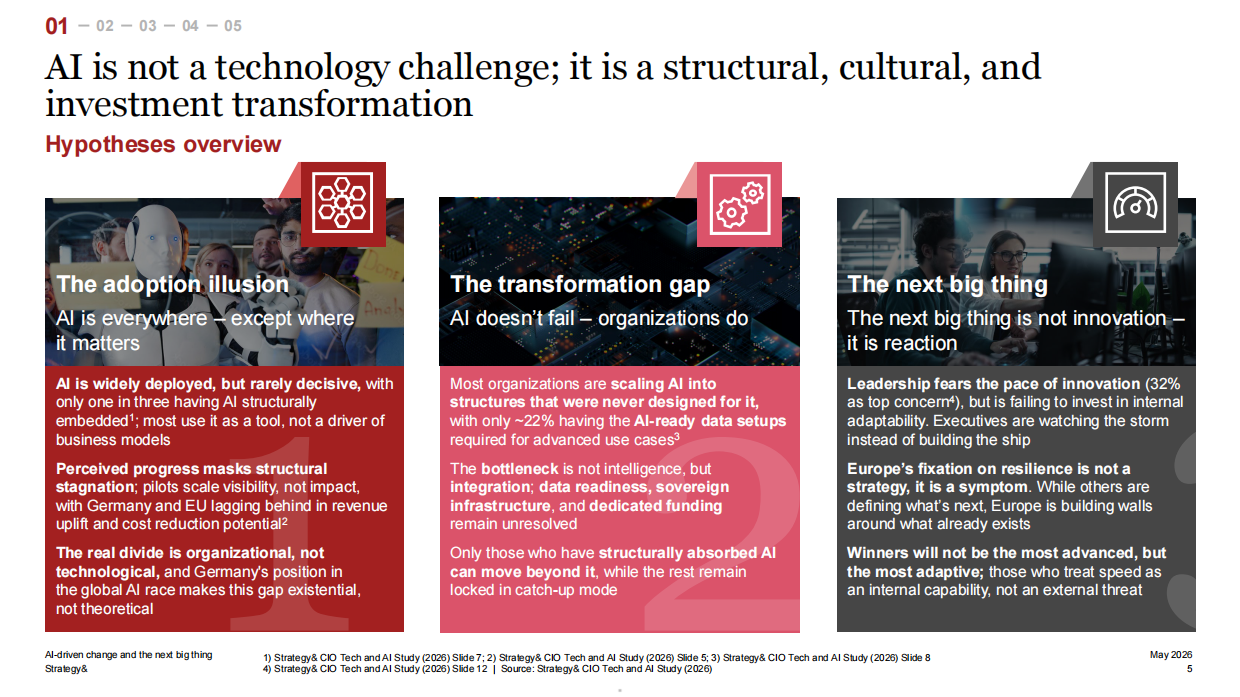
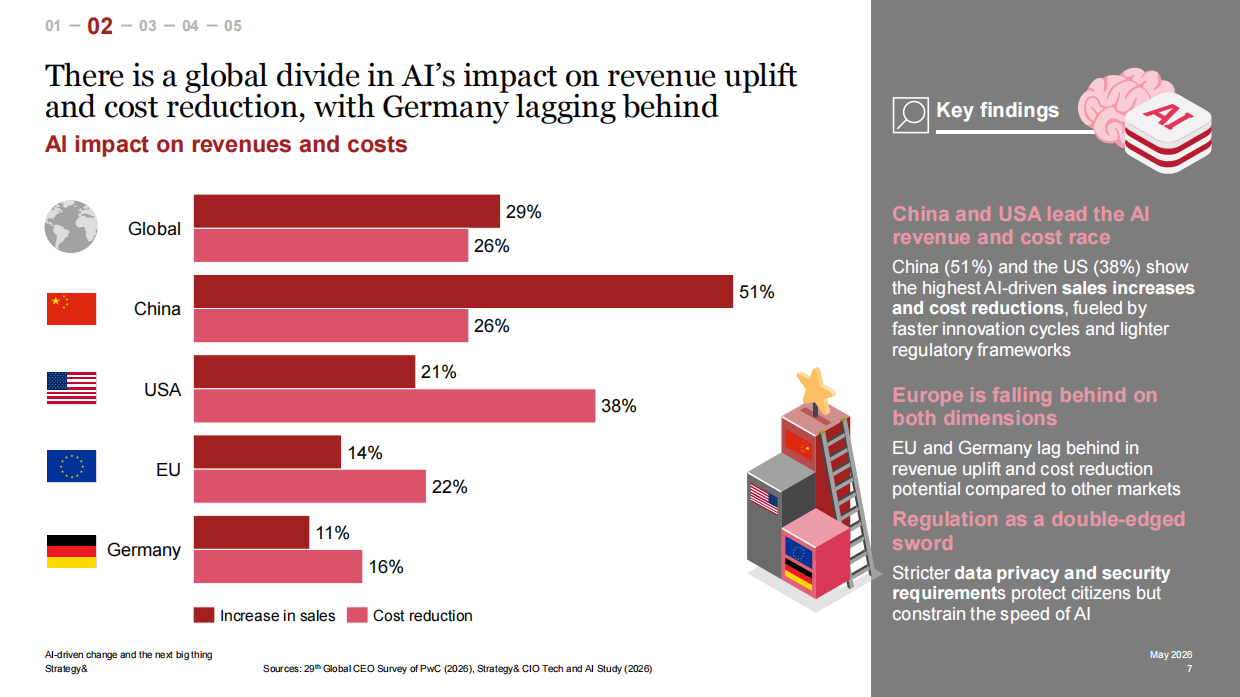
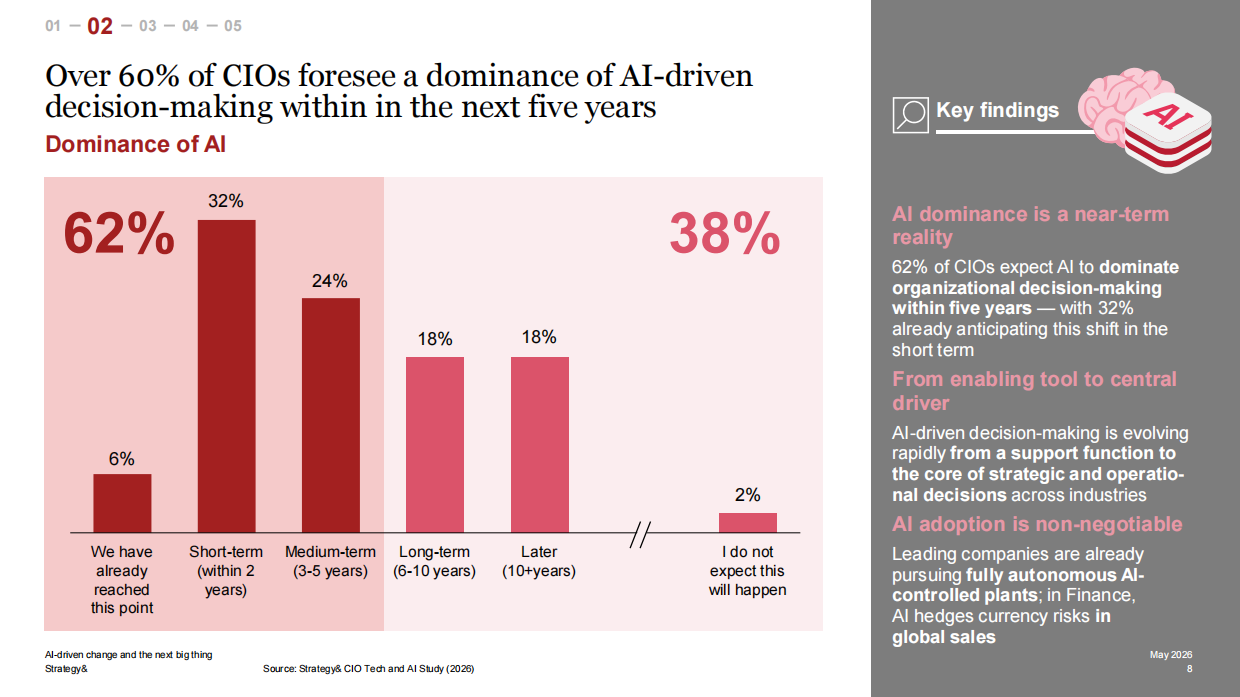
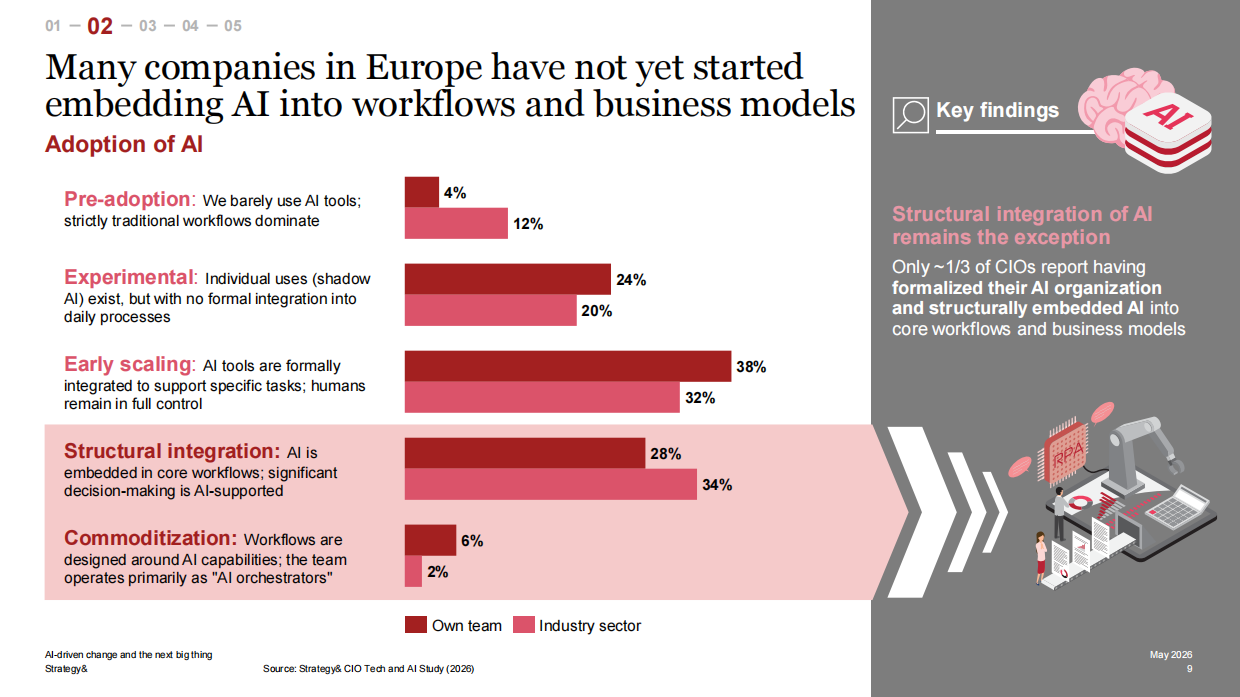
Strategy&May 2026Leadership fears the pace of innovation (32% as top concern4), but is failing to invest in internal adaptability. Executives are watching the storm instead of building the shipEurope’s fixation on resilience is not a strategy, it is a symptom. While others are defining what’s next, Europe is building walls around what already existsWinners will not be the most advanced, but the most adaptive; those who treat speed as an internal capability, not an external threatMost organizations are scaling AI into structures that were never designed for it, with only ~22% having the AI-ready data setups required for advanced use cases3The bottleneck is not intelligence, but integration; data readiness, sovereign infrastructure, and dedicated funding remain unresolvedOnly those who have structurally absorbed AI can move beyond it, while the rest remain locked in catch-up modeAI is not a technology challenge; it is a structural, cultural, and investment transformationHypotheses overview5AI is widely deployed, but rarely decisive, with only one in three having AI structurally embedded1; most use it as a tool, not a driver of business modelsPerceived progress masks structural stagnation; pilots scale visibility, not impact, with Germany and EU lagging behind in revenue uplift and cost reduction potential2The real divide is organizational, ...