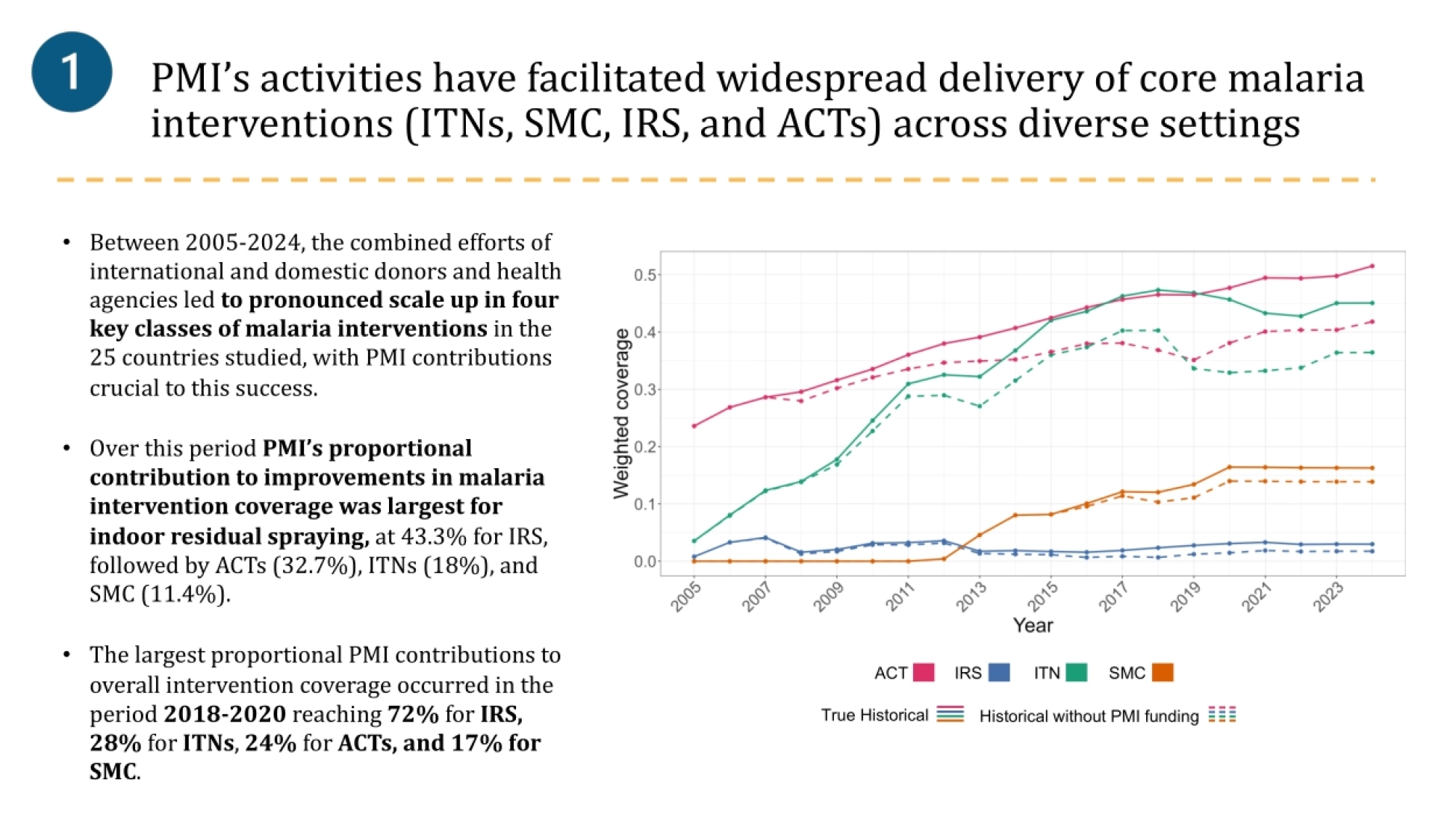
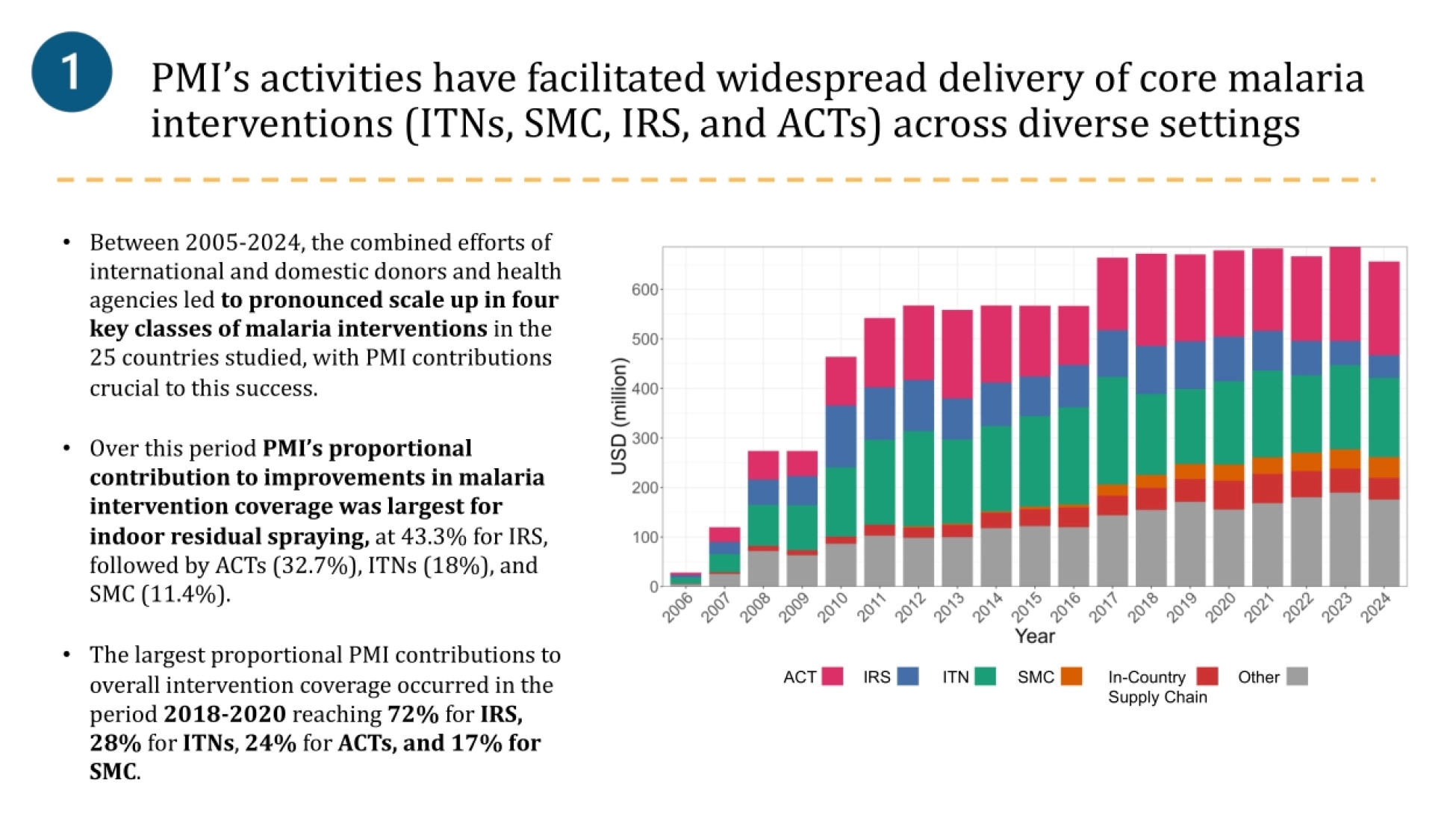
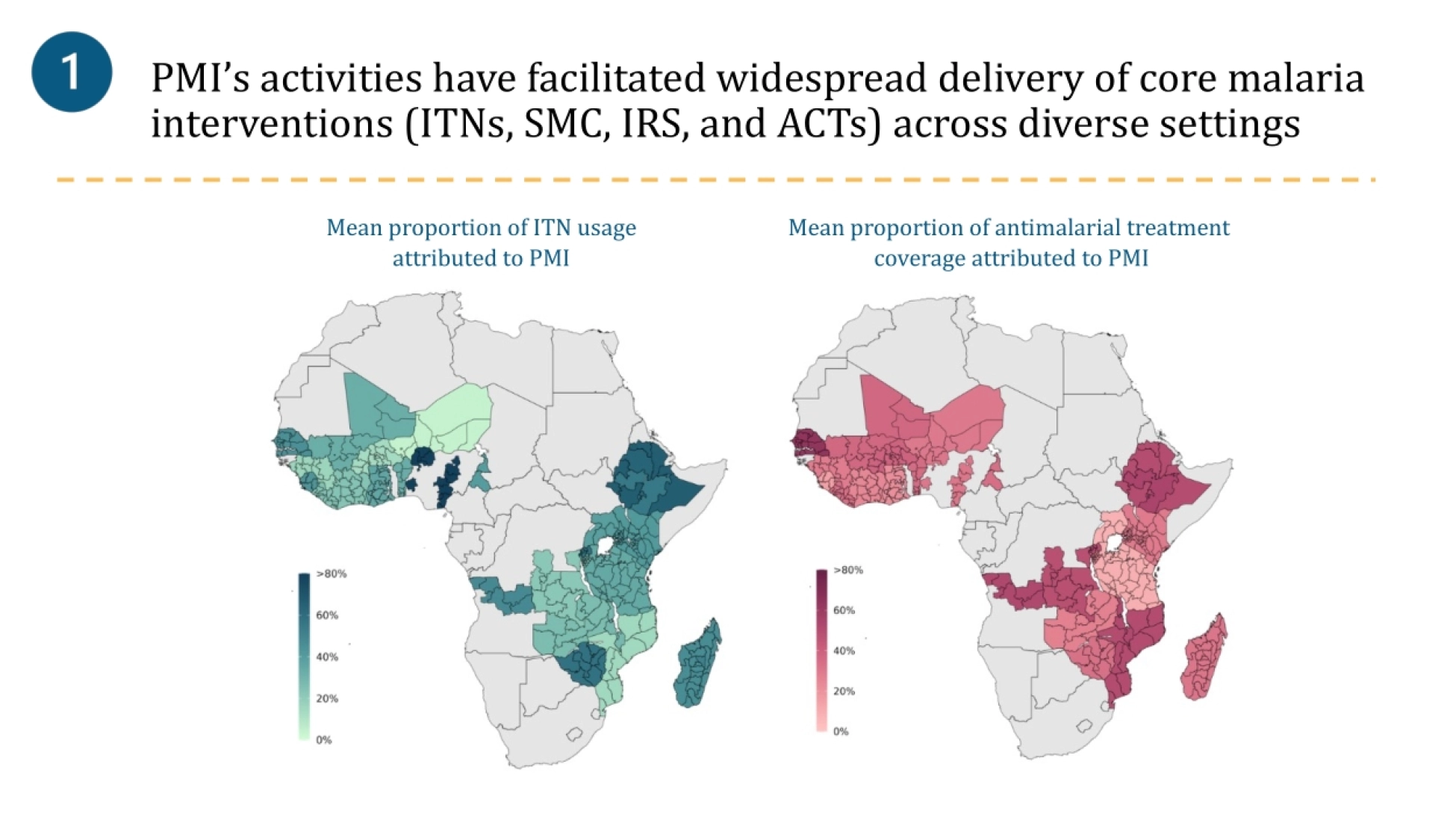
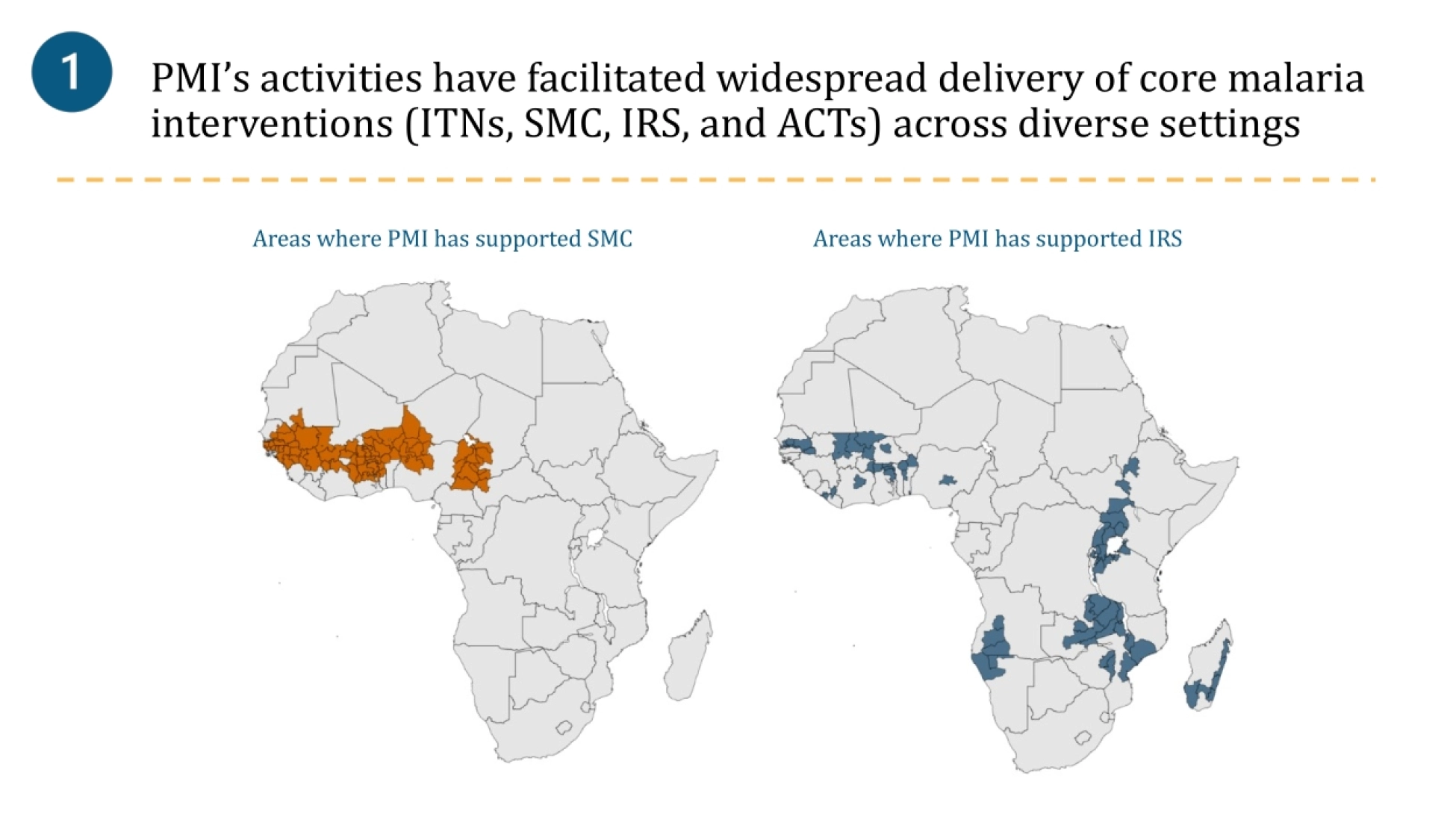
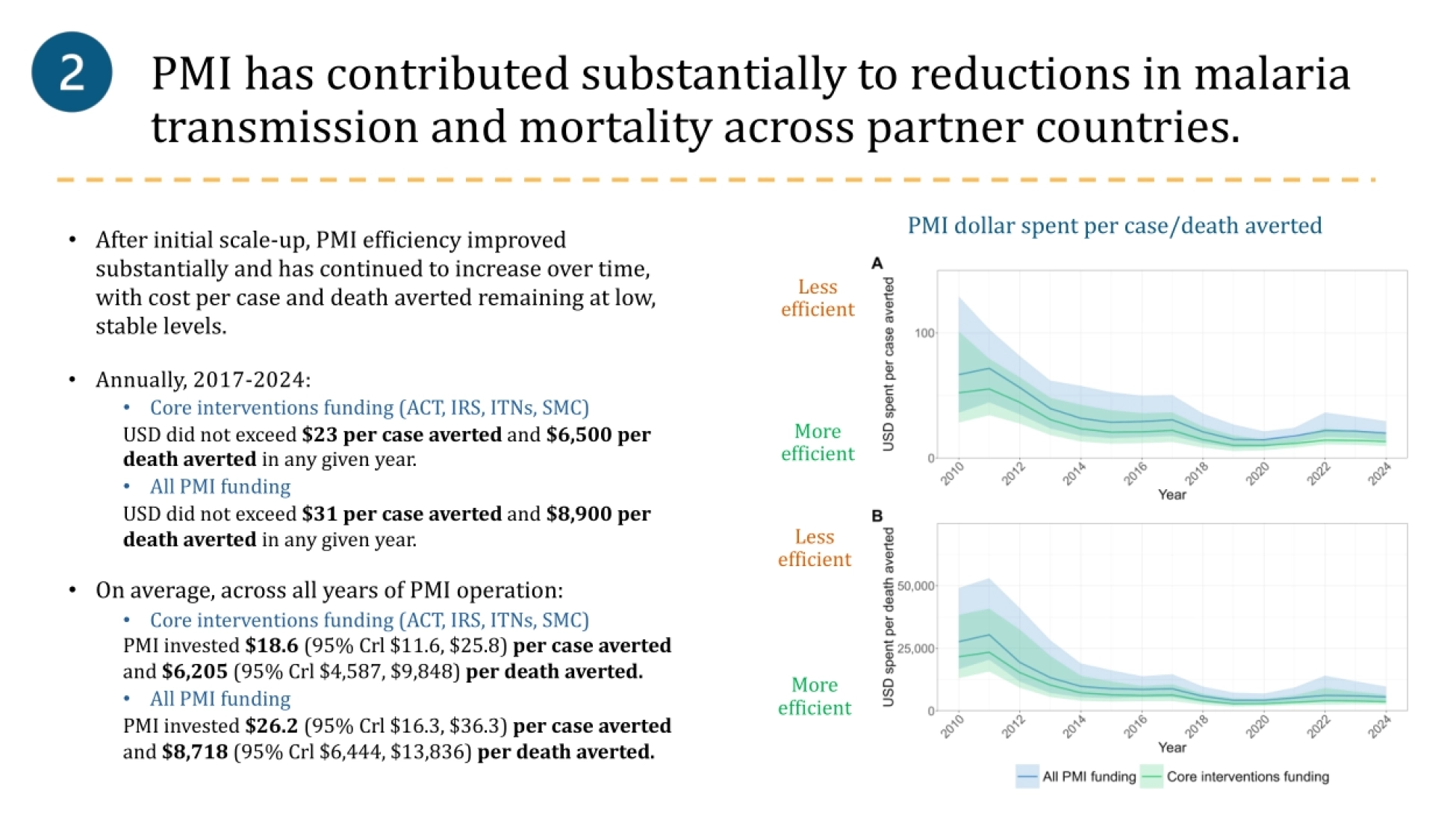
Estimating the impact of PMI’s malaria control activities,2005-2024AimTo estimate and communicate the historical impact of the President’s Malaria Initiative (PMI) on malaria burden across sub-Saharan Africa from 2005 to 2024, quantifying reductions in malaria cases and deaths as a result of PMI investments.Objectives1.Generate estimates of PMI impact through 2024 across PMI-supported countries in sub-Saharan Africa (SSA).2.Quantify malaria cases and deaths averted by comparing observed outcomes to a counterfactual scenario without PMI support.3.Integrate results from two independent modelling groups (Imperial College London and Malaria Atlas Project).4.Present high-level estimates of the historical impact of PMI.Summary | Key modelling findingsPMI’s activities have facilitated widespread delivery of core malaria interventions (ITNs, SMC, IRS, and ACTs) across diverse settingsStatementKey takeaway •During this period, the procurement and distribution of malaria interventions by PMI averted an estimated 379 million cases (95% credible interval: 273, 606 million) and 1.1 million deaths (95% credible interval: 0.7, 1.5 million).•In 2024, the incidence rate was 11.8% less and the mortality rate was 15.7% less due to PMI activities.•The average cost per case averted was 18.6 USD (95% credible interval: 11.6, 25.8 USD) and per death averted was 6,205 USD (95% credible interval: 4,587, 9,848 USD) when considering PMI spending on ACT, IRS, ITNs, and SMC.•Results should be interpreted as PMI’s contribution within a wider, coordinated financing context. Investment decisions were taken jointly with national programmes and aligned with partner funding with PMI support intentionally complementing other resources.PMI has contributed substantially to reductions in malaria transmission and mortality across partner countries•Two independent modelling groups, using distinct modelling frameworks and a shared data foundation, reproduced historical malaria incidence and mortality trends with and without PMI support, converging on a similar magnitude of PMI’s impact.•This ensemble approach demonstrates the analysis is robust to different structural assumptions and inference approaches, increasing confidence that the conclusions reflect real epidemiological signals.Independent analysis by two different modelling groups align on PMI’s impact in SSA•From 2005-2024, across 25 partner countries, on average PMI’s greatest proportional contribution to increases in intervention coverage was to artemisinin combination therapy (ACT, 32.7%) followed by indoor residual spraying (IRS, 43.3%), insecticide treated bed-nets (ITNs, 18.0%), and seasonal chemoprevention (SMC, 11.4%). •PMI made its largest proportional contributions to the total coverage of interventions in the period 2018-2020 reaching 72% for IRS, 28% for ITNs, 24% for ACTs, and 17% for SMC.PMI’s activities have facilitated widespread delivery...