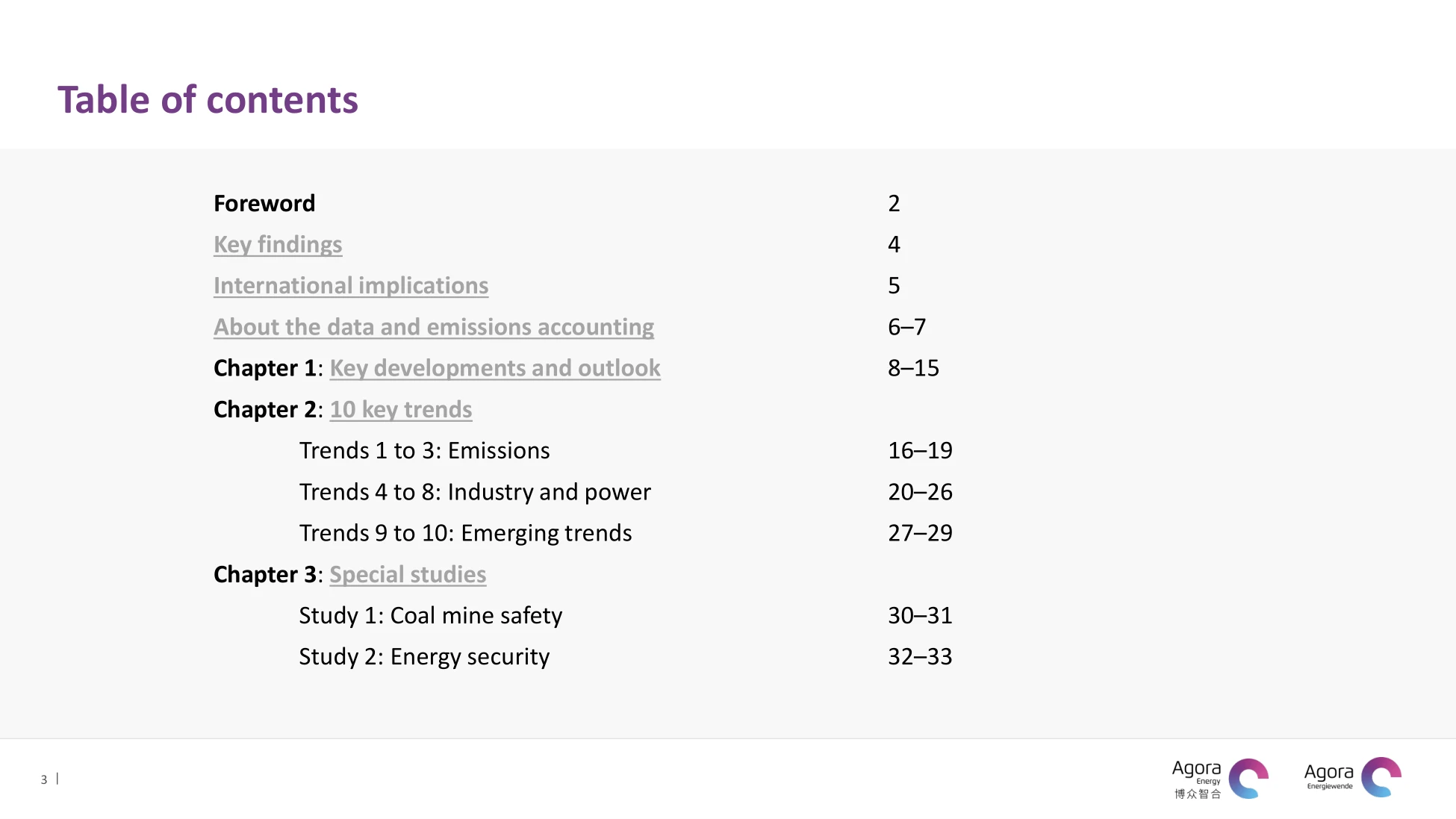
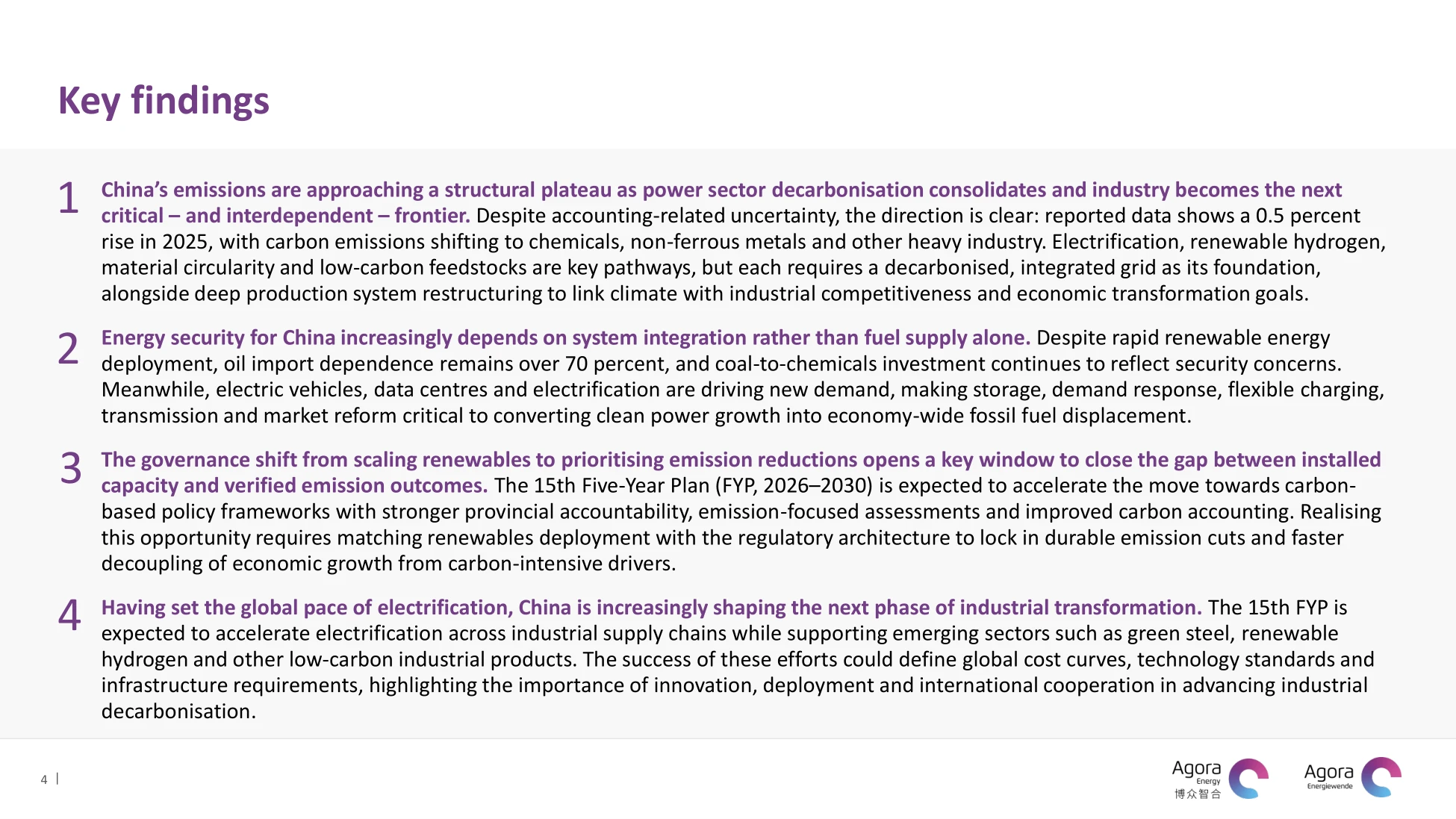
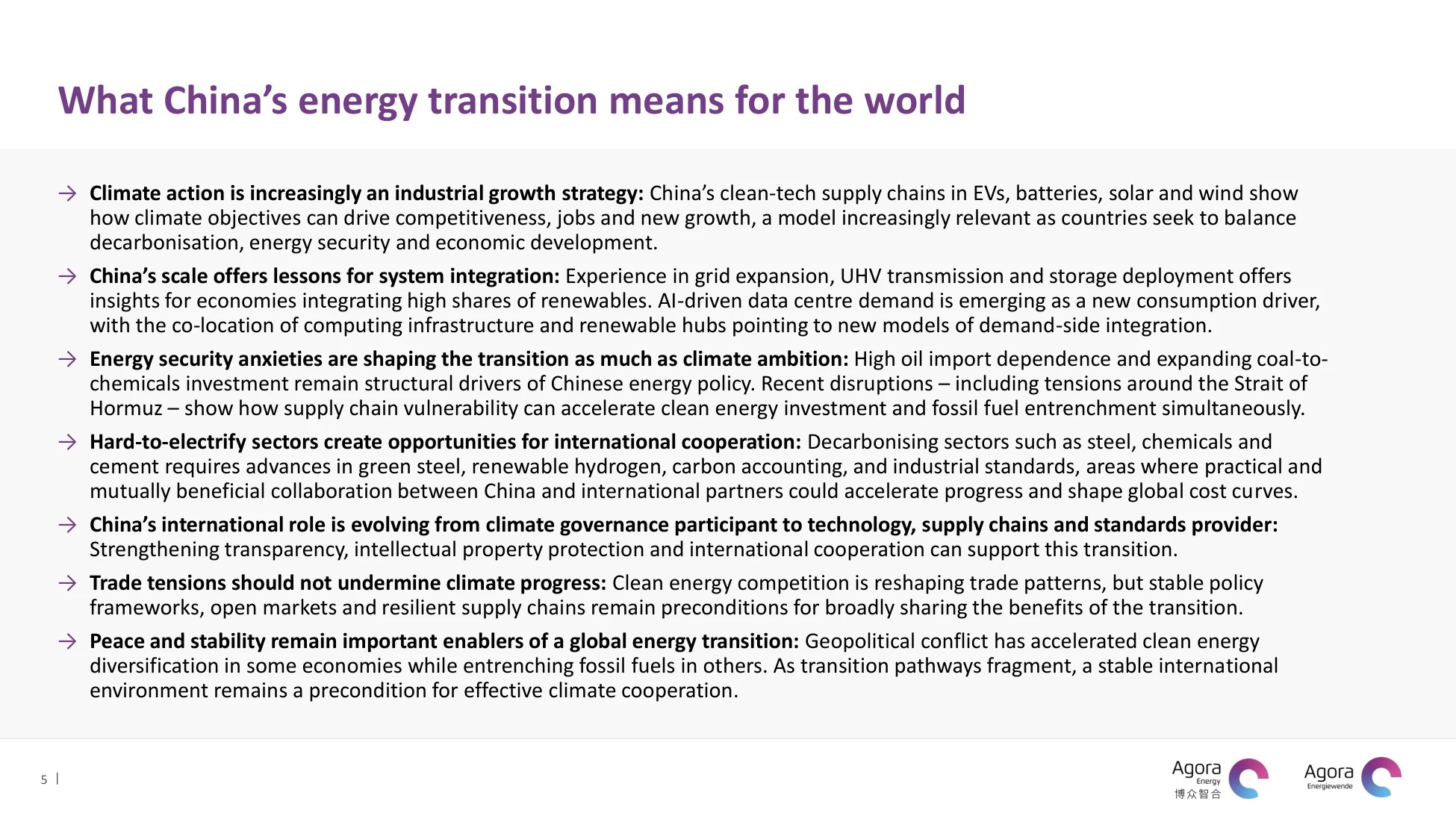
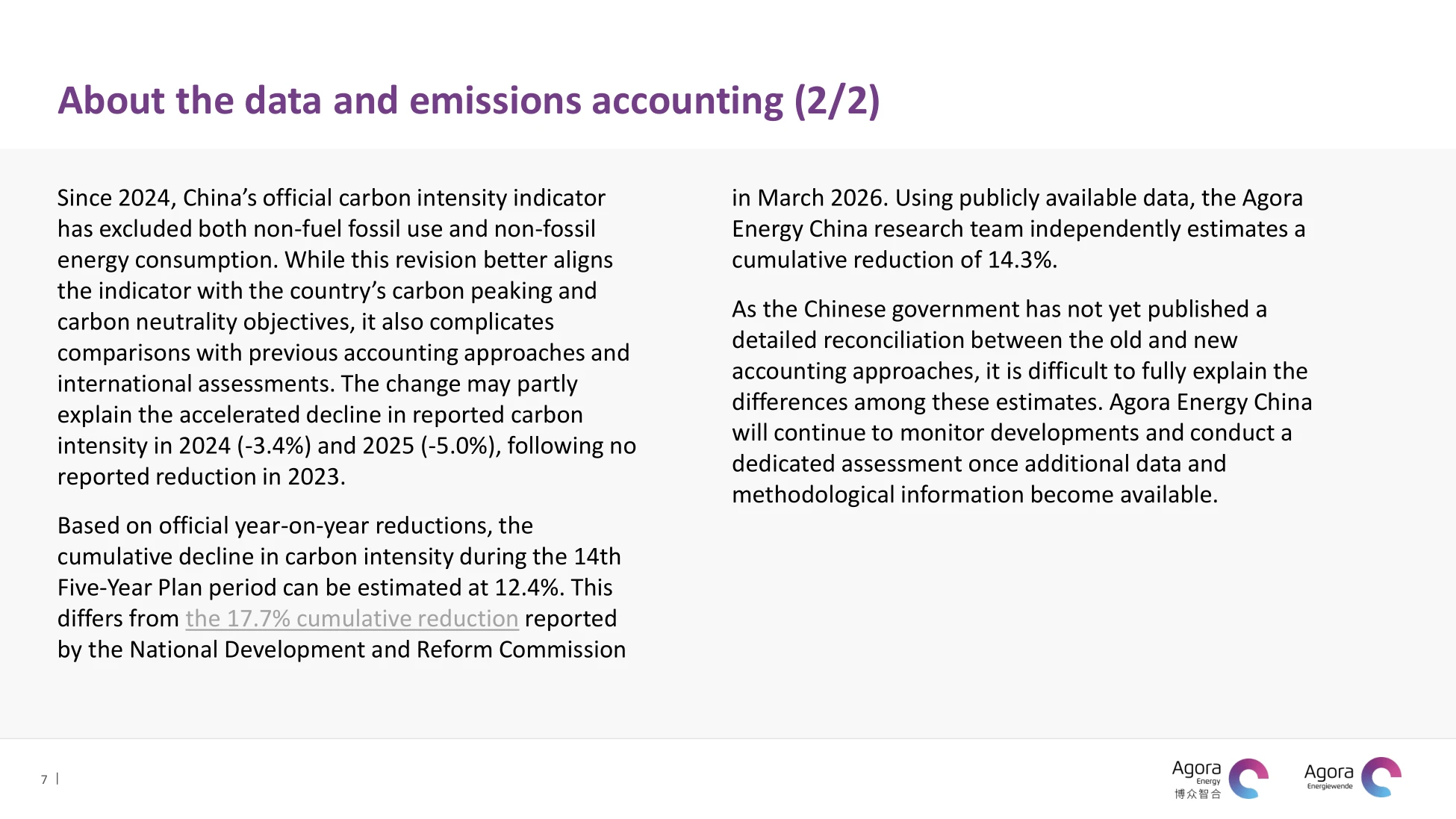
China’s energy transition and climate status report 2026 From scaling renewables to governing carbonAgora Energy China|Foreword2Dear readers,China’s energy transition has entered a new phase. After more than a decade of rapid renewable energy growth and accelerating electrification, the country is approaching a critical turning point. While emissions have yet to enter a sustained decline, their growth has slowed significantly, suggesting that China is nearing a high-level structural emission plateau.As China enters the 15th Five-Year Plan (FYP) period (2026–2030), the focus is shifting from expanding clean energy capacity to transforming the energy system and strengthening carbon-based governance. Greater emphasis on carbon management, system flexibility and industrial decarbonisation signals a transition increasingly defined by implementation and structural change. Meanwhile, AI-driven computing demand is emerging as a new driver of renewable energy consumption and regional system integration, while the energy transition is reshaping the geography of employment.As the world’s largest energy consumer, carbon emitter and clean energy investor, China’s choices will continue to shape global energy markets and climate outcomes. This report provides an evidence-based assessment of these developments and aims to support informed dialogue among policymakers, researchers, businesses and other stakeholders. We hope it serves as a useful resource and welcome feedback to strengthen future editions.Markus Steigenberger Managing DirectorAgora Think TanksKevin TuManaging DirectorAgora Energy China|Table of contents3Foreword2Key findings4International implications5About the data and emissions accounting 6–7Chapter 1: Key developments and outlook8–15Chapter 2: 10 key trendsTrends 1 to 3: Emissions16–19Trends 4 to 8: Industry and power20–26Trends 9 to 10: Emerging trends27–29Chapter 3: Special studiesStudy 1: Coal mine safety30–31Study 2: Energy security32–33|Key findings4China’s emissions are approaching a structural plateau as power sector decarbonisation consolidates and industry becomes the next critical – and interdependent – frontier. Despite accounting-related uncertainty, the direction is clear: reported data shows a 0.5 percent rise in 2025, with carbon emissions shifting to chemicals, non-ferrous metals and other heavy industry. Electrification, renewable hydrogen, material circularity and low-carbon feedstocks are key pathways, but each requires a decarbonised, integrated grid as its foundation, alongside deep production system restructuring to link climate with industrial competitiveness and economic transformation goals.Energy security for China increasingly depends on system integration rather than fuel supply alone. Despite rapid renewable energy deployment, oil import dependence remains over 70 percent, and coal-to-chemicals investment continues to reflect security concerns. Meanwhile,...