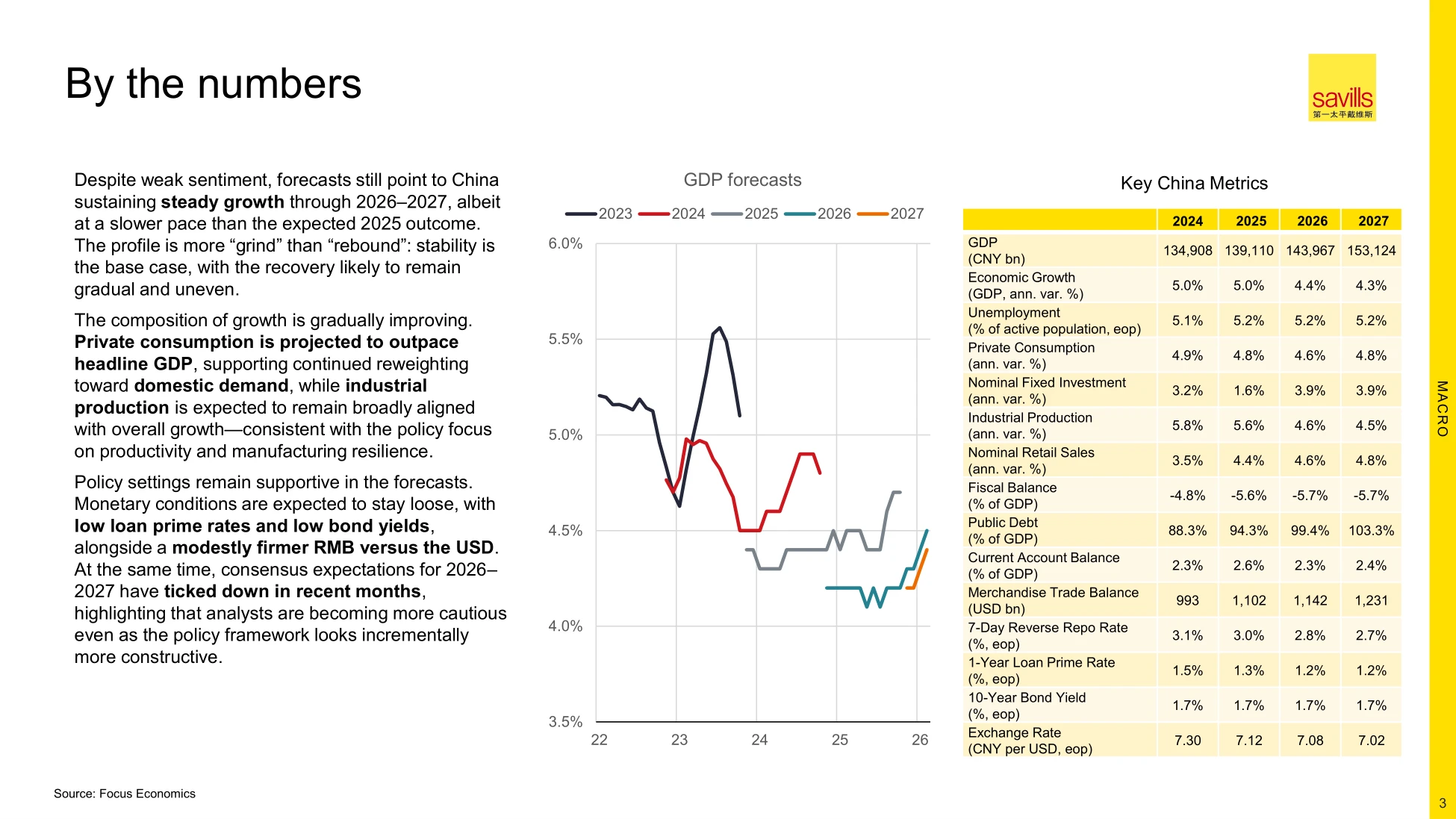
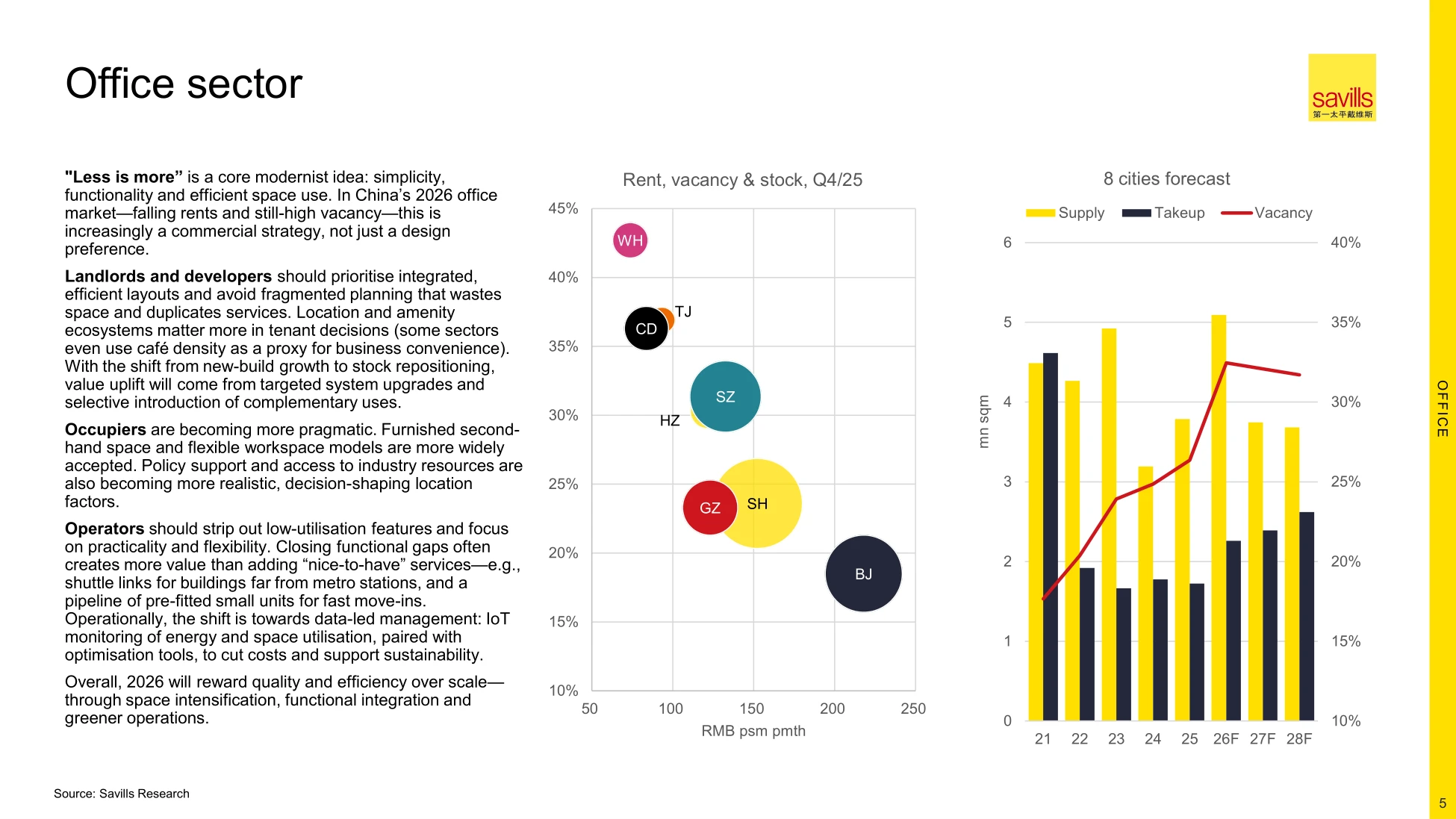
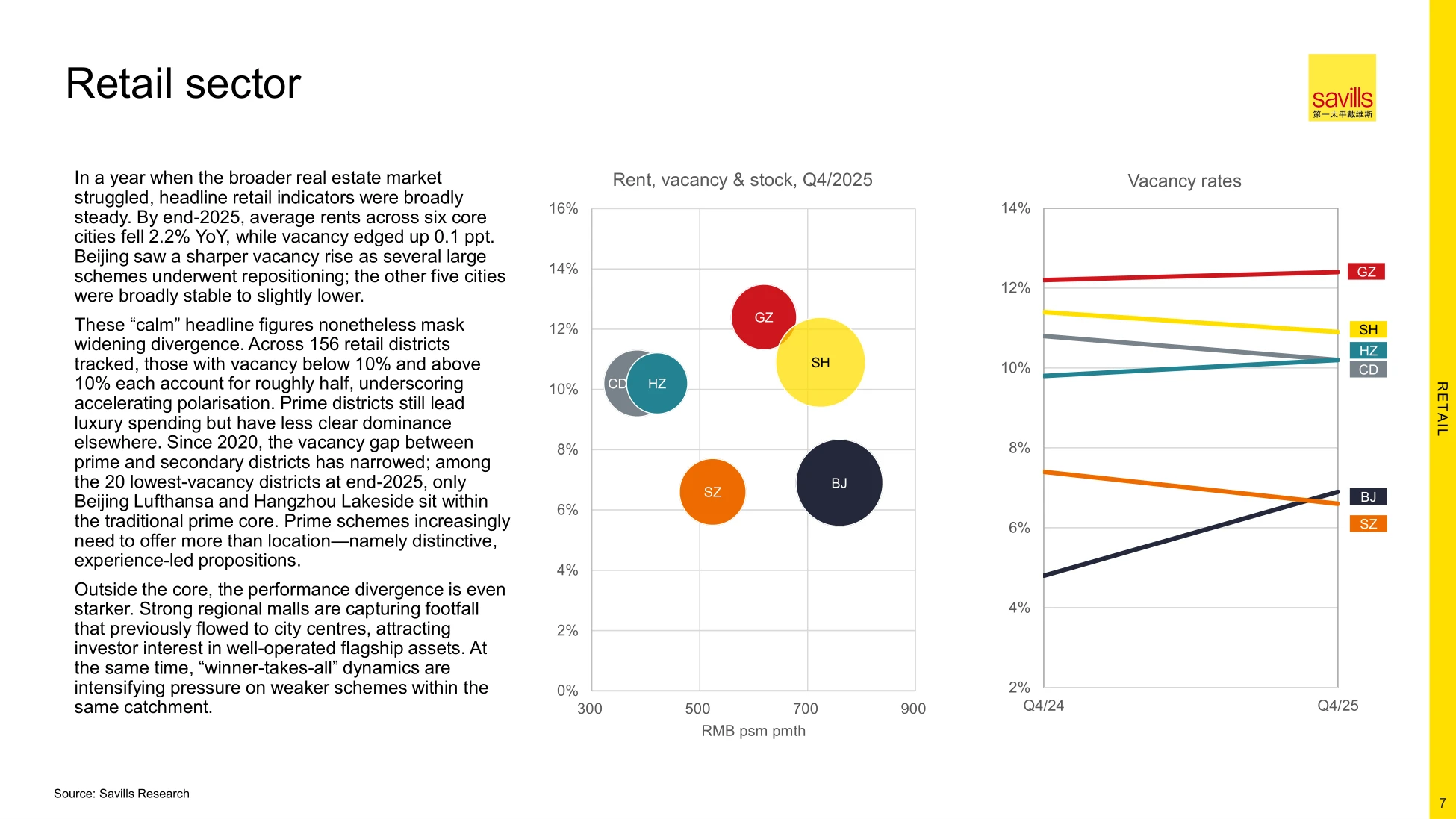
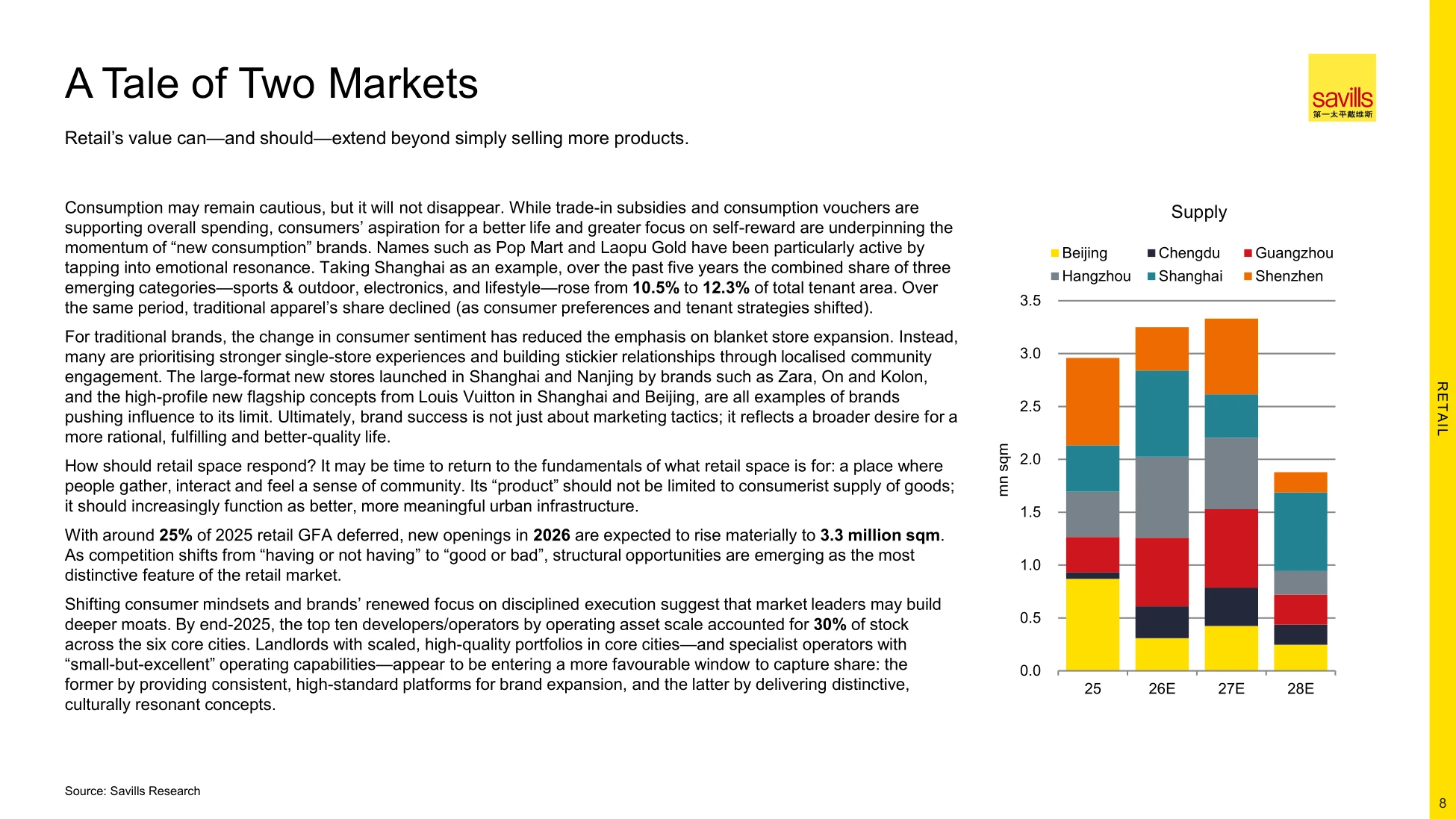
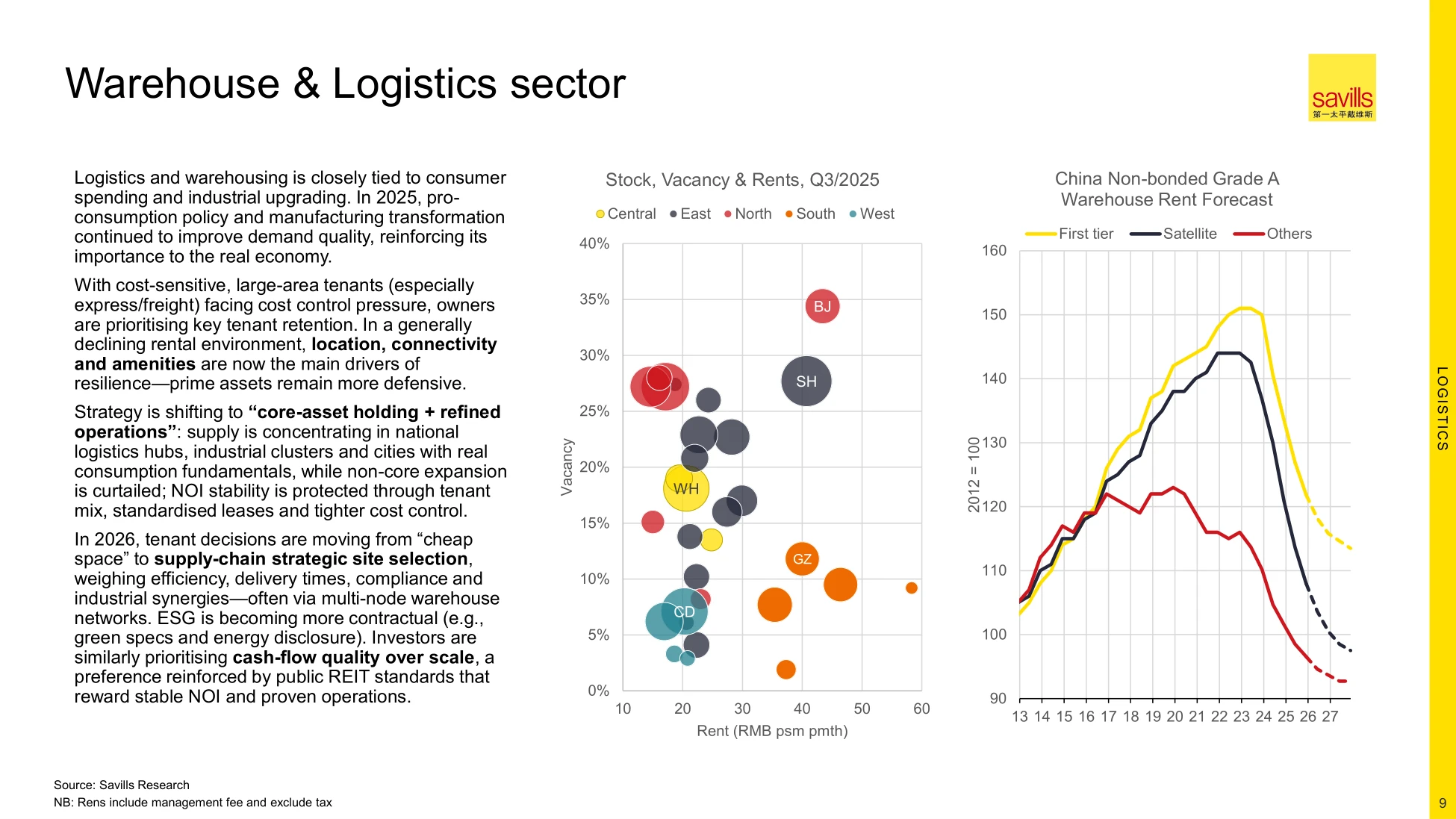
Insert title hereBreaking the Cycle: Back to BasicsChina Property Outlook 2026JANUARY 2026EXECUTIVE SUMMARY2Breaking the CycleChina’s real estate market enters 2026 in a state of deep reassessment. Four years of subdued leasing, soft sales absorption, weaker footfall, rising vacancies, cautious capital, and persistent debt strain have pushed every asset class into a defensive posture. The old model—relying on scale, momentum, and rising prices—no longer offers a path forward. What the sector faces today is not simply cyclical weakness, but a structural shift in expectations, business models, and economic purpose. The only sustainable response is to break the cycle of decline: the cycle in which cost-cutting erodes service quality, eroded service quality weakens demand, and weaker demand triggers yet more cost-cutting. This downward spiral has reached its limit.Breaking the cycle requires going back to basics: an unflinching look at what each asset class is fundamentally meant to do, and how well it currently does it. Offices must re-establish themselves as places that genuinely enhance productivity, collaboration, and tenant partnership—instead of merely offering space. Retail must rediscover community, identity, relevance, and emotional connection, not chase temporary traffic spikes. Logistics must align with the priorities of a modernised, automated, export-resilient industrial economy. Residential must focus on liveability, design quality, operational consistency, and trust. And capital markets must move from a debt-dominated model to one supported by transparent valuations, patient equity, and long-term institutional capital. This is not just about stabilising the sector; it is about redefining its purpose.Yet while the short term still demands discipline and realism, China’s long-term opportunity remains intact. The fundamentals—industrial upgrading, innovation in both hardware and software, domestic consumption potential, supply-chain resilience, national planning, and an enormous internal market—give the property sector a future worth preparing for. What matters in 2026 is ensuring that decisions made under pressure do not undermine tomorrow’s opportunities. Cutting fat without cutting muscle. Strengthening management capability. Rebuilding processes, not just budgets. And using this period of strain as a rare window to rethink business models, reposition portfolios, and prepare for a different type of growth.MACROSource: Focus Economics3Despite weak sentiment, forecasts still point to China sustaining steady growth through 2026–2027, albeit at a slower pace than the expected 2025 outcome. The profile is more “grind” than “rebound”: stability is the base case, with the recovery likely to remain gradual and uneven.The composition of growth is gradually improving. Private consumption is projected to outpace headline GDP, supporting continued reweighting towa...