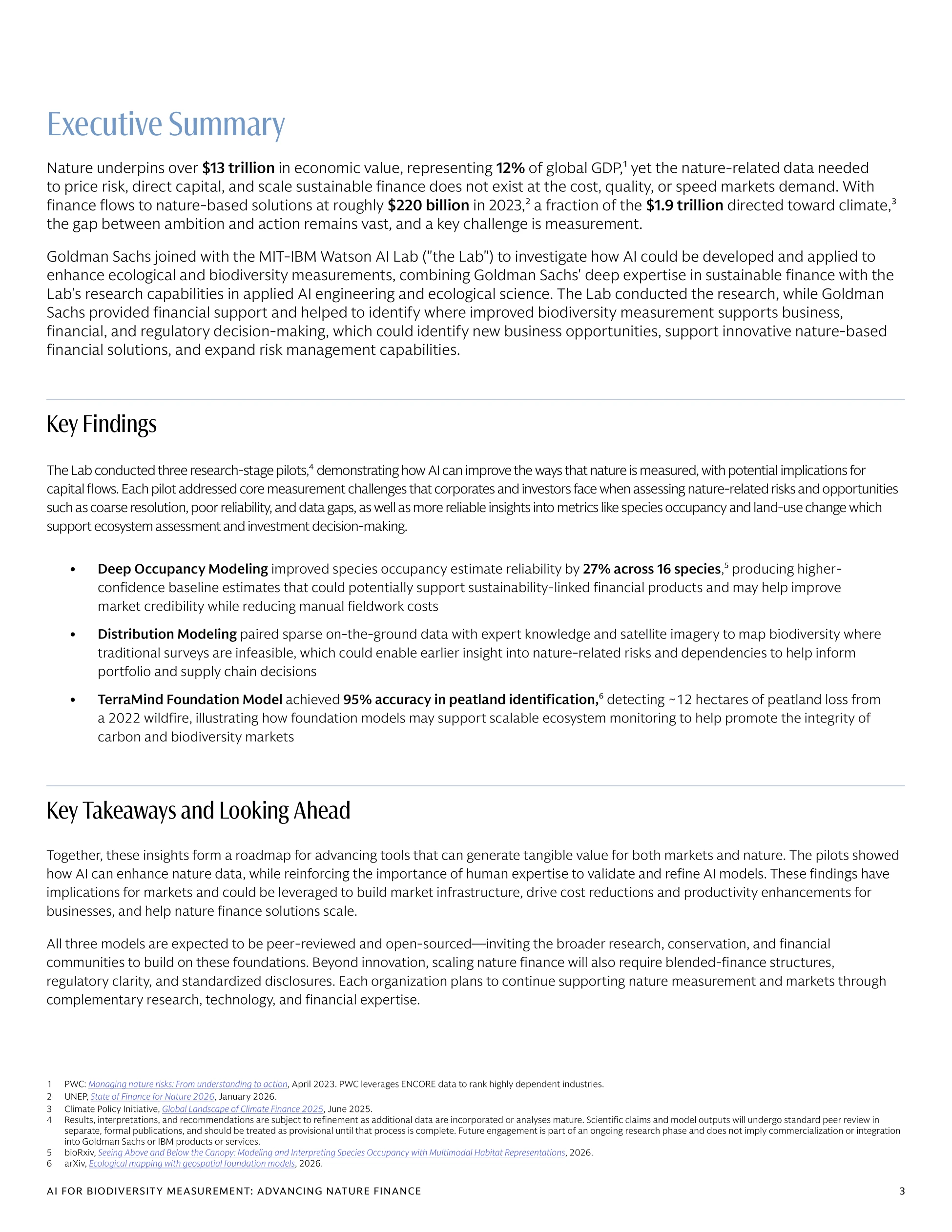
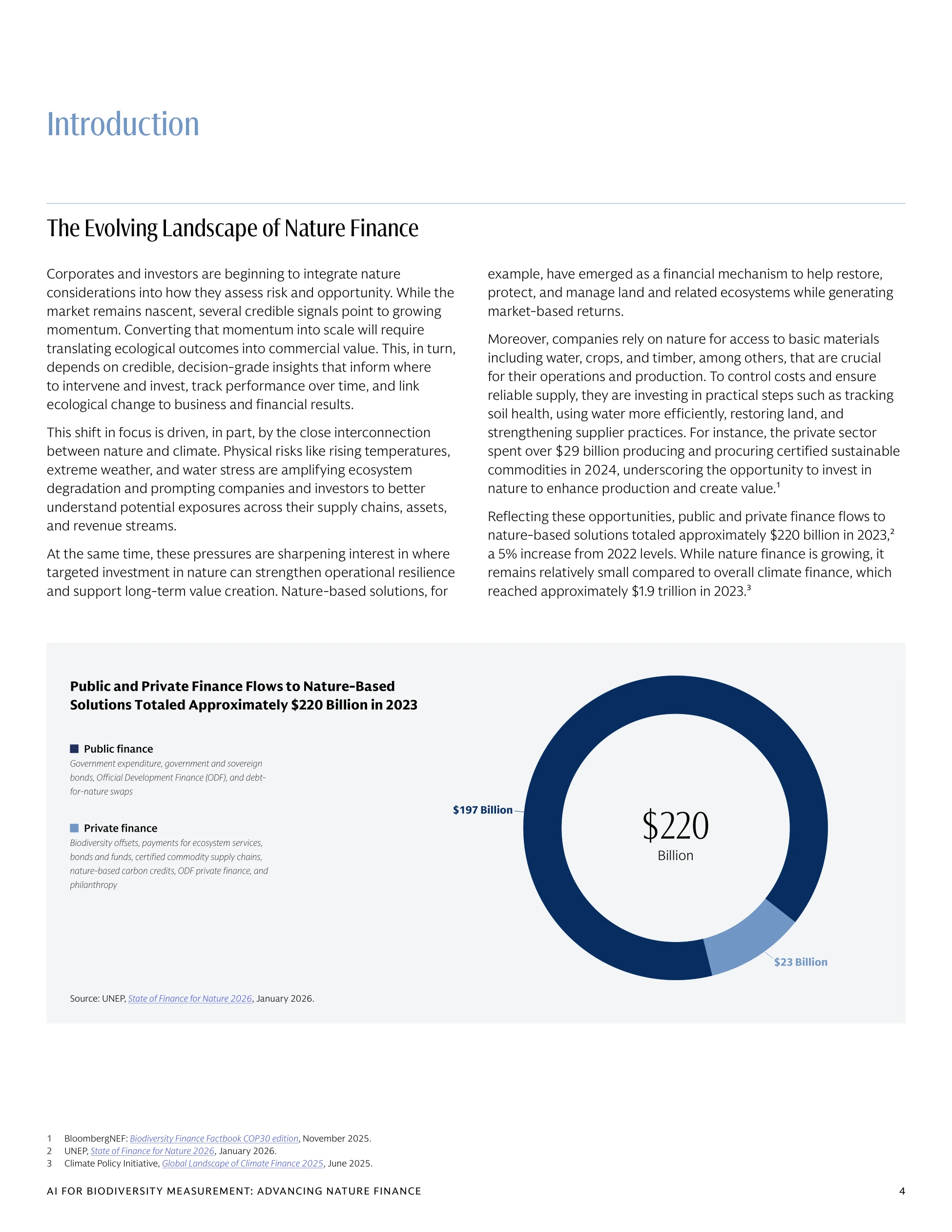
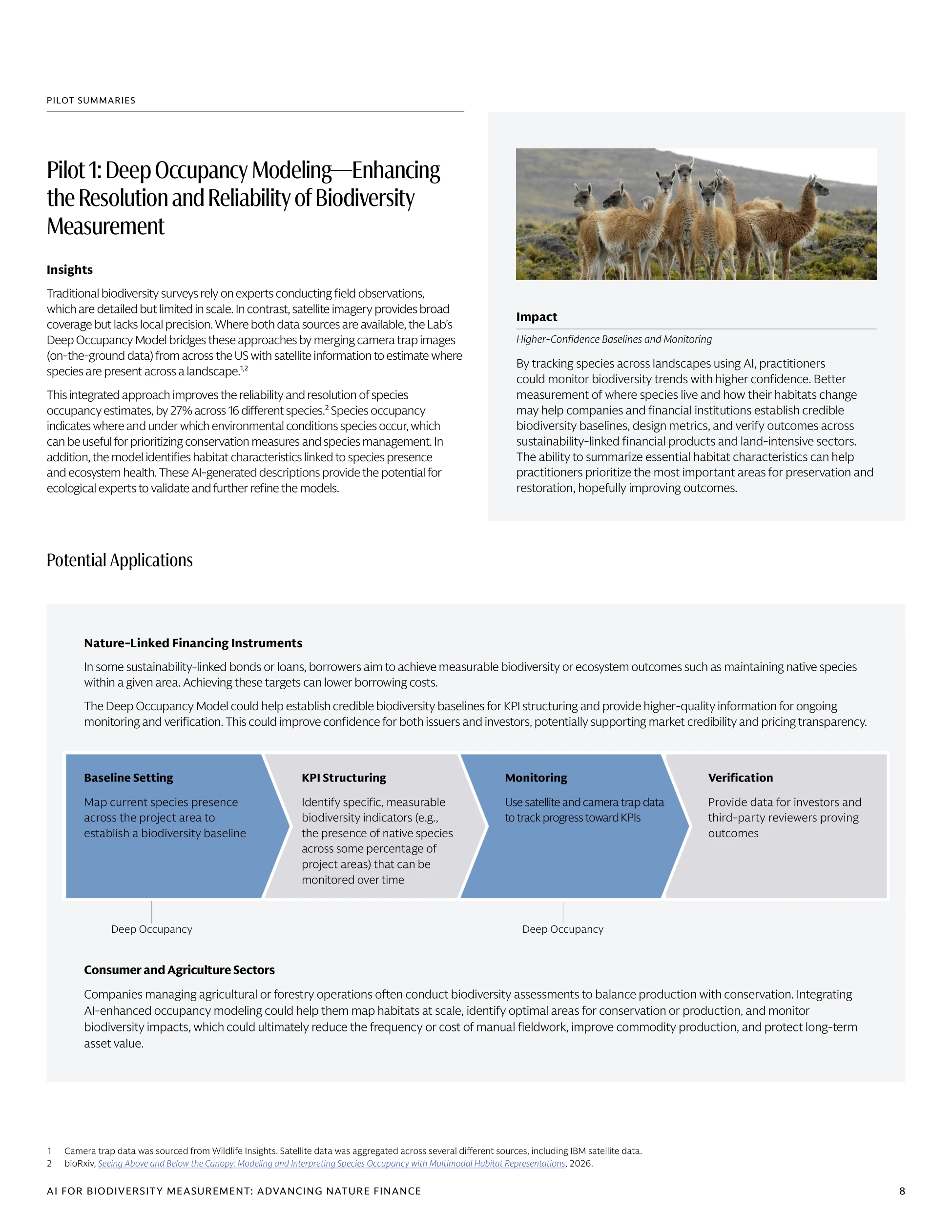
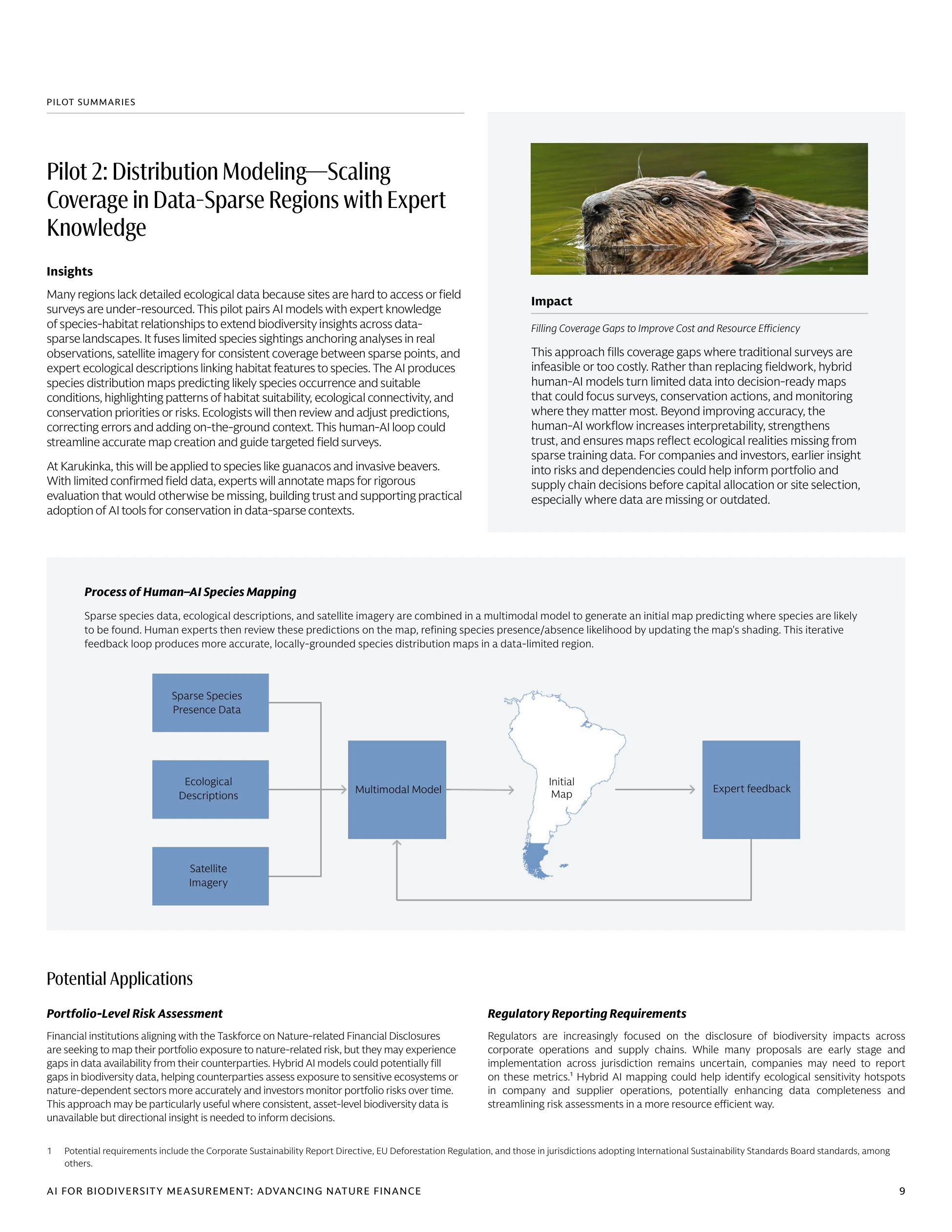
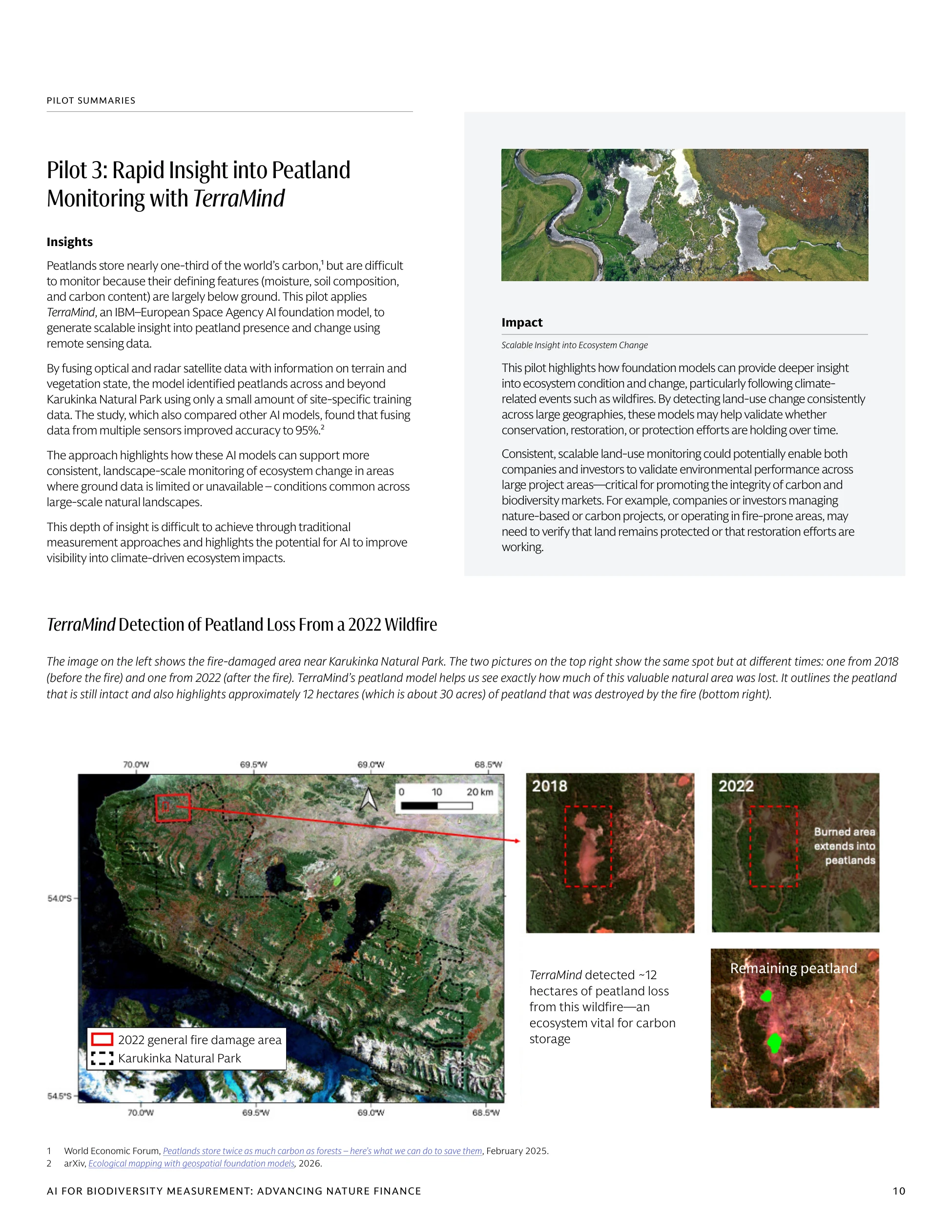
AI for Biodiversity Measurement: Advancing Nature FinanceA Goldman Sachs and MIT-IBM Watson AI Lab ReportThis report outlines insights and applications identified during Goldman Sachs’ membership in the MIT-IBM Watson AI Lab (“the Lab”), exploring how artificial intelligence (AI) can help improve biodiversity measurement. While the power and precision of these AI models continue to evolve, the research demonstrates initial proofs of concept and potential applications: improved biodiversity data can help enhance business, financial, and regulatory decision-making, which could expand risk management capabilities, identify new business opportunities, and support innovative nature-based financial solutions.ABOUT THIS REPORT2 AI FOR BIODIVERSITY MEASUREMENT: ADVANCING NATURE FINANCE• Deep Occupancy Modeling improved species occupancy estimate reliability by 27% across 16 species,⁵ producing higher-confidence baseline estimates that could potentially support sustainability-linked financial products and may help improve market credibility while reducing manual fieldwork costs• Distribution Modeling paired sparse on-the-ground data with expert knowledge and satellite imagery to map biodiversity where traditional surveys are infeasible, which could enable earlier insight into nature-related risks and dependencies to help inform portfolio and supply chain decisions• TerraMind Foundation Model achieved 95% accuracy in peatland identification,⁶ detecting ~12 hectares of peatland loss from a 2022 wildfire, illustrating how foundation models may support scalable ecosystem monitoring to help promote the integrity of carbon and biodiversity marketsExecutive SummaryThe Lab conducted three research-stage pilots,⁴ demonstrating how AI can improve the ways that nature is measured, with potential implications for capital flows. Each pilot addressed core measurement challenges that corporates and investors face when assessing nature-related risks and opportunities such as coarse resolution, poor reliability, and data gaps, as well as more reliable insights into metrics like species occupancy and land-use change which support ecosystem assessment and investment decision-making.Together, these insights form a roadmap for advancing tools that can generate tangible value for both markets and nature. The pilots showed how AI can enhance nature data, while reinforcing the importance of human expertise to validate and refine AI models. These findings have implications for markets and could be leveraged to build market infrastructure, drive cost reductions and productivity enhancements for businesses, and help nature finance solutions scale.All three models are expected to be peer-reviewed and open-sourced—inviting the broader research, conservation, and financial communities to build on these foundations. Beyond innovation, scaling nature finance will also require blended-finance structures, regulatory clarity, a...