
2025Trends Shapingthe HealthEconomytrilliant/health02025TRILLIANTHEALTH
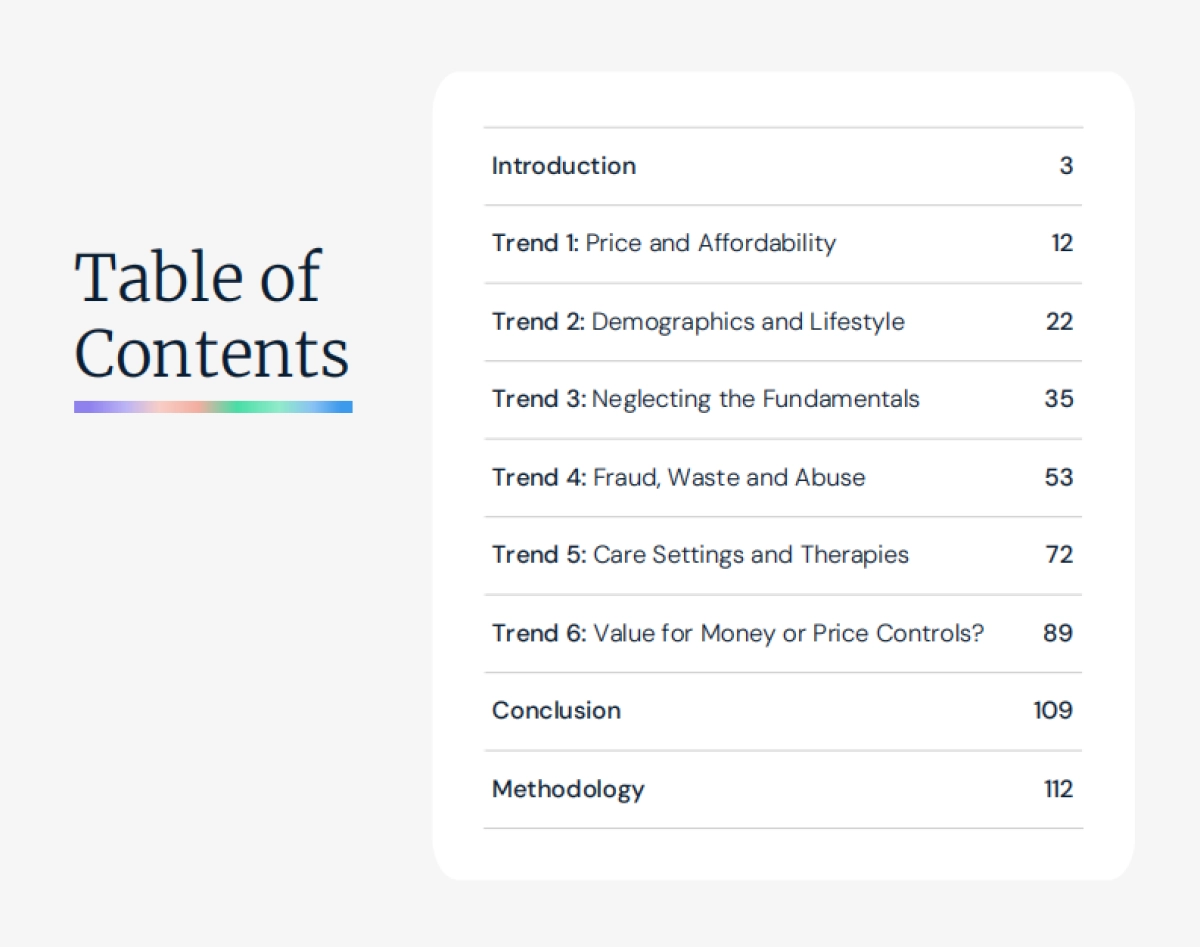
Introduction3Trend1PriceandAffordability12Table ofTrend2: Demographics and Lifestyle22ContentsTrend.3:Neglectingthe Fundamentals35Trend4:Fraud.WasteandAbuse53Trend5:CareSettingsandTherapies12Trend6:ValueforMonevorPriceControls?89Conclusion109Methodology112
INTRODUCTION
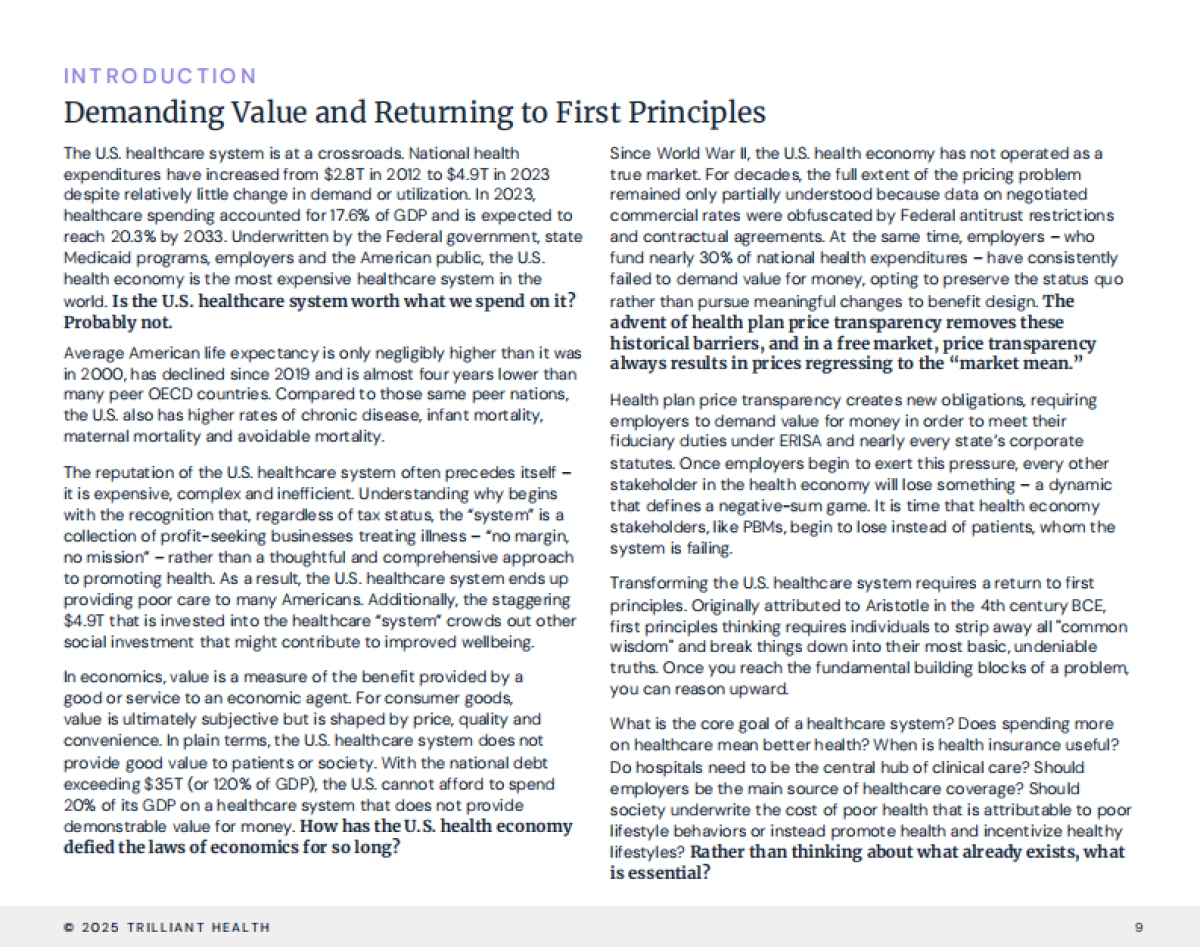
INTRODUCTIONTheLaws of Economics Necessitate Change in the Health EconomyTheinputsoftheU.S.healthcaresystemvastlyexceedits outputs, as measuredby thehealthoftheAmericanpublic.Andyet, overthe next10 years, health expenditures are expected to continue to grow faster than the rest of the economy, projected toreach20.3% of GDP, on$24,200perperson, by 2033. The current rajectory of the U.S healthcare syster,one which increasingly depletes societal wealth withoutgeneratingcommensuratehealthgains,isunsustainable forpatients,payers,employersandprovidersalike.The factthat the healtheconomycontinues todefy the laws of economics confirms thatitisnot a freemarketThisfifth installmentof theTrendsShaningtheintensiying or emergin,.The Transparency in Coverageinitiative promulgated by the CentersforMedicare andMedicaidServicesmakesobviousthattheU.Shealtheconomyfindsitselfatacrossroads:thechoiceforhealtheconomvradical and transfomational change from the inside or whether to be subjected to such change by external forces, namely Federal and stategovernment. Said diffe rently, the question for health economy stakeholders is this. do you want tomake it happen or have it happen to you?inethersceni ever hetheconom sakehod r il e equiredo ele demonstrade ale formone,rather thnperpetuatinginefficiencies that compound systemic waste. To do so, stakeholders must be willing to reassess the very foundation of the U.S. healthcaresystem.Ratherthanthinkingaboutwhat alreadyexists.the fundamentalauestionisthis:whatisessential?Thisreportdoesnot claimto provideallthe answers, but it offers aframework for asking the right questions. What trendshaveyounotconsidered, and how wil theyimpact the markets that your organization serves? What changes must your organizationmaketo delivermorevalueformoney relative to your current and future competitors? What changes are necessary for your organization to competeeffectivelyinasystemthatcannolongersustain the status quo?D2025TRILLIANTHEALTH
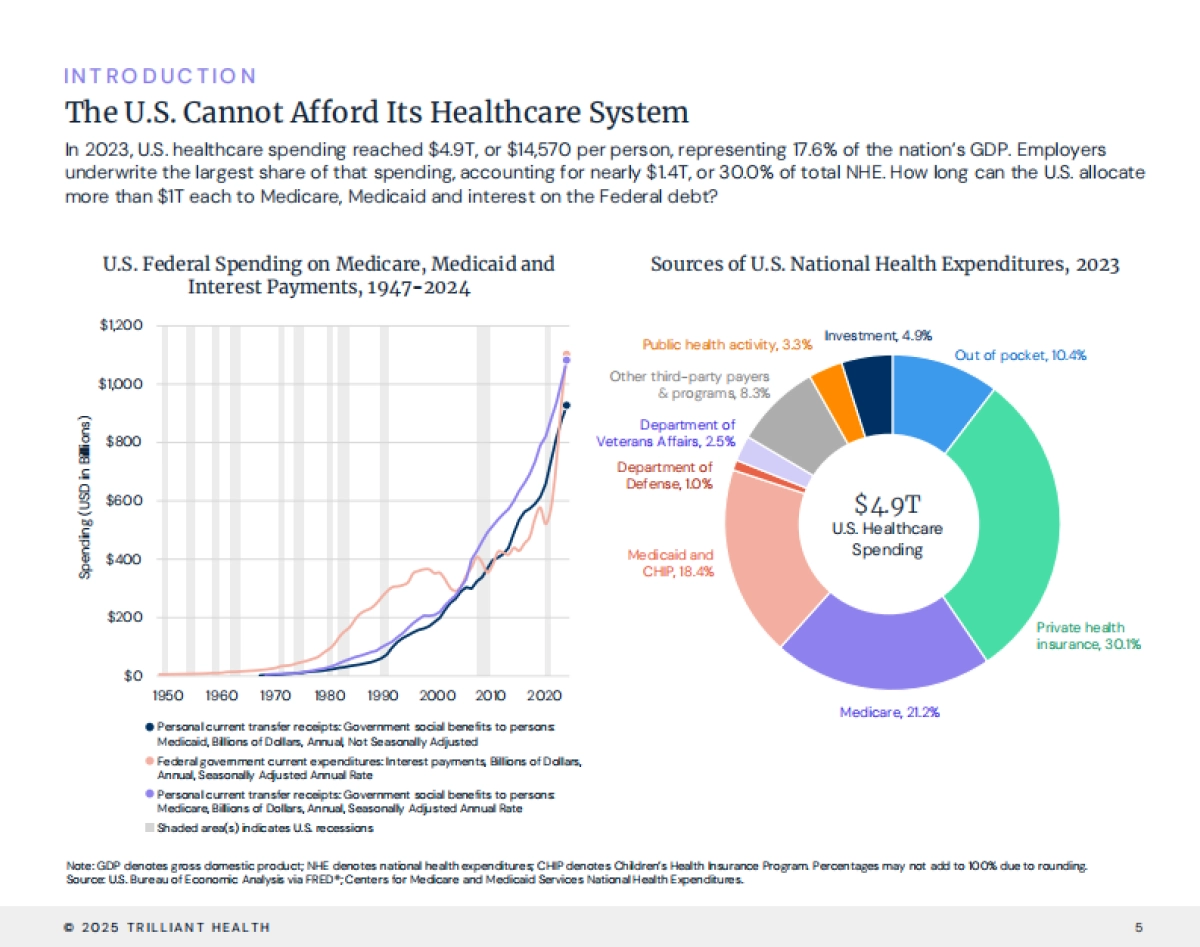
INTRODUCTIONThe U.S.Cannot Afford Its Healthcare SystemIn 2023,U.S. healthcare spending reached $4.9T, or $14,570 per person, representing 17.6% of the nation's GDP. Employersunderwrite the largest share of that spending, accountingfor nearly $147, or30.0% of totalNHE.How long can the U.S. allocatemorethan$1T eachtoMedicare,Medicaid andinterestontheFederaldebtU.S.Federal Spending on Medicare, Medicaid andSourresof11.SNationalHealthExnenditurps2022Interest Payments, 1947-2024$1,200Investment4.9%Public heath activity,3.3%Out of pocket,10.4%$1,000Otherthird-partypayers,Deoartmentof$800VeteransAffairs,25%DepartmentofDefense,1.0%$600$49TU.S. Healthcare$400Medicaid andSpendingCHIP,18.4%$200Privateheaithinsurance,30.1%sO19501960197019801990...