
电脑桌面
添加运营动脉到电脑桌面
安装后可以在桌面快捷访问

2026年全球奢侈品力量报告(英文)-德勤Deloitte.pdf会员免费优质

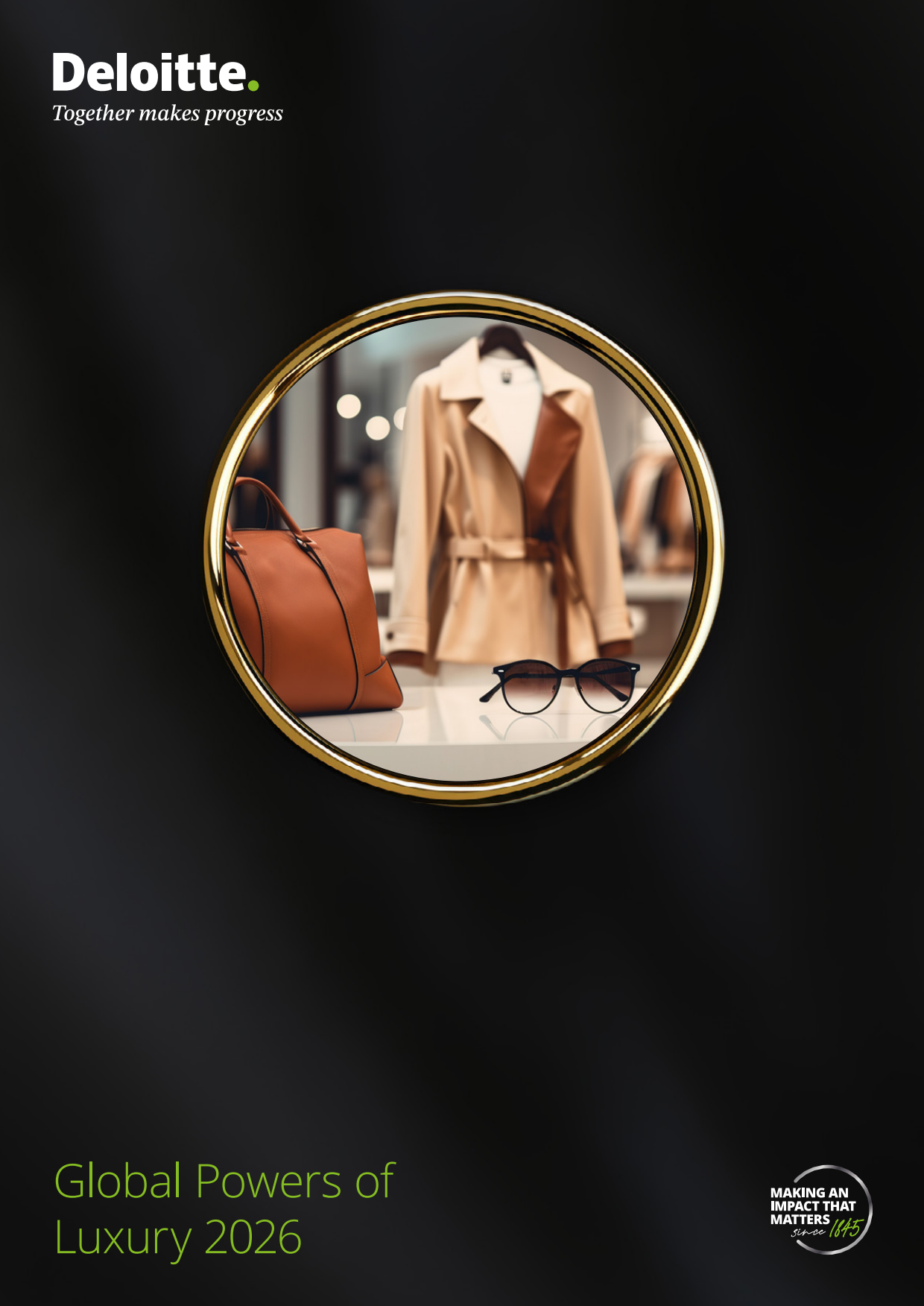
2026年全球奢侈品力量报告(英文)-德勤Deloitte.pdf_第1页
1/38
2026年全球奢侈品力量报告(英文)-德勤Deloitte.pdf_第2页
2/38
2026年全球奢侈品力量报告(英文)-德勤Deloitte.pdf_第3页
3/38
2026年全球奢侈品力量报告(英文)-德勤Deloitte.pdf_第4页
4/38
2026年全球奢侈品力量报告(英文)-德勤Deloitte.pdf_第5页
5/38
2026年全球奢侈品力量报告(英文)-德勤Deloitte.pdf_第6页
6/38
2026年全球奢侈品力量报告(英文)-德勤Deloitte.pdf_第7页
7/38
2026年全球奢侈品力量报告(英文)-德勤Deloitte.pdf_第8页
8/38
2026年全球奢侈品力量报告(英文)-德勤Deloitte.pdf_第9页
9/38
2026年全球奢侈品力量报告(英文)-德勤Deloitte.pdf_第10页
10/38
Global Powers of Luxury 2026

ContentsGlobal Powers of Luxury 2026 | Contents02Foreword 03Executive Summary 052026 Luxury outlook 06Consumer trends shaping luxury 06Luxury outlook 09Companies’ expectations 12Top priorities 14Top growth opportunities 16Major financial investments 17GenAI adoption in Luxury: poised between assessment and implementation 20Areas with greatest potential of AI implementation 23Focus on India 25Next 5 years trends and growth prospects 26Major transformative impacts 26Future growth levers: from transaction to relationship 29Sustainability 32Methodology 35Contacts 36Endnotes 37

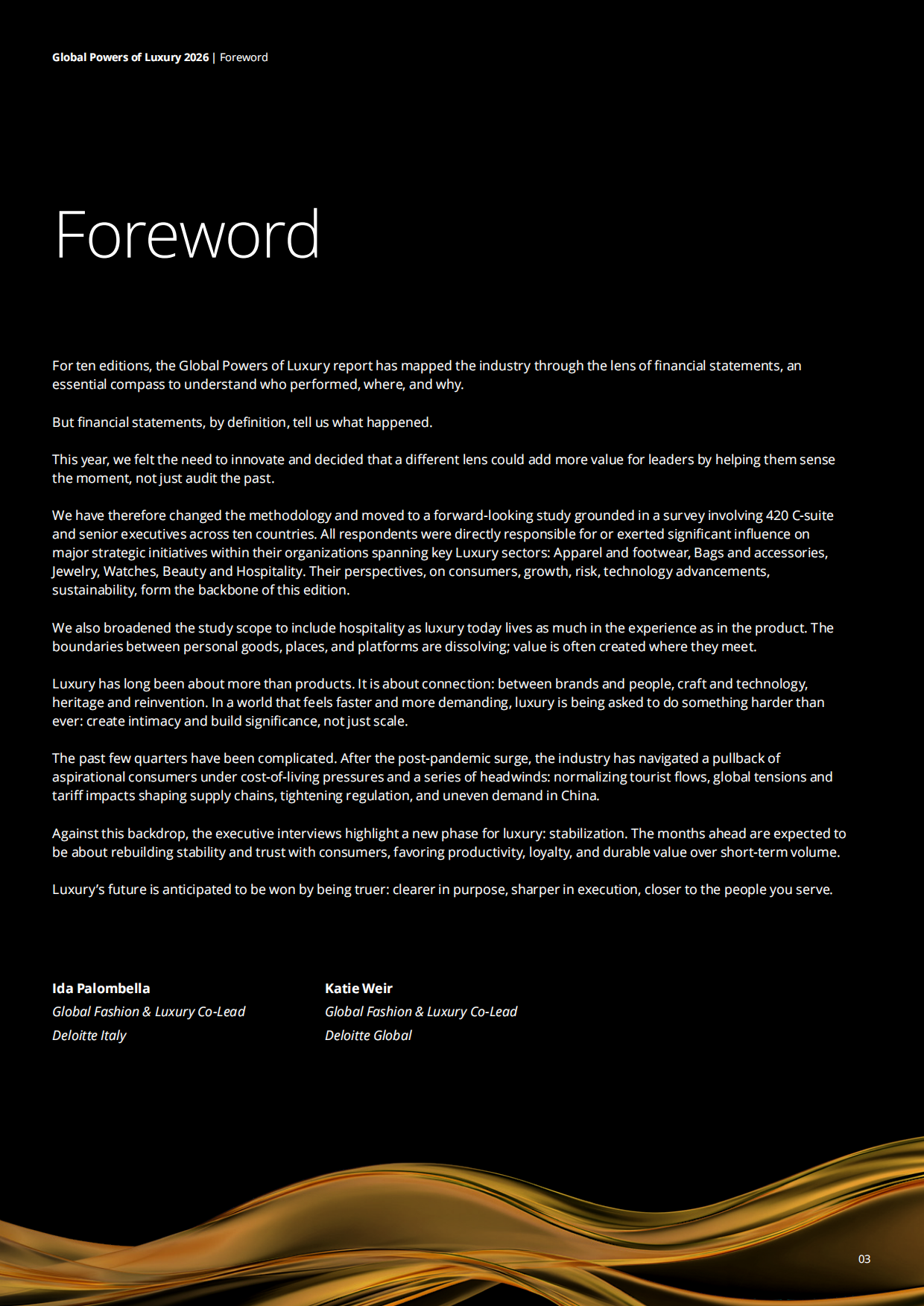
ForewordFor ten editions, the Global Powers of Luxury report has mapped the industry through the lens of financial statements, an essential compass to understand who performed, where, and why. But financial statements, by definition, tell us what happened. This year, we felt the need to innovate and decided that a different lens could add more value for leaders by helping them sense the moment, not just audit the past.We have therefore changed the methodology and moved to a forward-looking study grounded in a survey involving 420 C-suite and senior executives across ten countries. All respondents were directly responsible for or exerted significant influence on major strategic initiatives within their organizations spanning key Luxury sectors: Apparel and footwear, Bags and accessories, Jewelry, Watches, Beauty and Hospitality. Their perspectives, on consumers, growth, risk, technology advancements, sustainability, form the backbone of this edition. We also broadened the study scope to include hospitality as luxury today lives as much in the experience as in the product. The boundaries between personal goods, places, and platforms are dissolving; value is often created where they meet. Luxury has long been about more than products. It is about connection: between brands and people, craft and technology, heritage and reinvention. In a world that feels faster and more demanding, luxury is being asked to do something harder than ever: create intimacy and build significance, not just scale.The past few quarters have been complicated. After the post-pandemic surge, the industry has navigated a pullback of aspirational consumers under cost-of-living pressures and a series of headwinds: normalizing tourist flows, global tensions and tariff impacts shaping supply chains, tightening regulation, and uneven demand in China.Against this backdrop, the executive interviews highlight a new phase for luxury: stabilization. The months ahead are expected to be about rebuilding stability and trust with consumers, favoring productivity, loyalty, and durable value over short-term volume.Luxury’s future is anticipated to be won by being truer: clearer in purpose, sharper in execution, closer to the people you serve.Global Powers of Luxury 2026 | Foreword03Ida PalombellaGlobal Fashion & Lu...
德勤全球奢侈品力量2026:以价驱动新常态,超个性化与二手策略重构格局(附报告下载)

一、从"以量取胜"到"以价驱动":德勤全球奢侈品力量2026的核心转向

德勤第十版《全球奢侈品力量》报告给出了一个精准的行业定调:2026年奢侈品行业增长驱动力正在从"量"切换到"价"——三分之二的奢侈品高管预计全年营收将保持稳定或增长,70.7%预期利润率将维持或改善。这不是"市场在扩张"的乐观信号,而是"定价权、产品组合优化和运营纪律正在替代销量增长成为核心引擎"的结构性信号。

报告在方法论上做了一个有意思的突破。过去九年德勤主要通过财务报表来测绘行业格局——但财务报表告诉你的是"发生了什么"。第十版加入了高管调研和消费者数据,试图回答"接下来会发生什么"。结论是:在一个销量增长见顶的市场环境里,奢侈品牌的核心能力正从"卖得更多"切换为"卖得更贵且不被抛弃"。66.9%的高管预计营收稳定或增长,但支撑这个预期的不是市场扩张,而是价格调整(调研中排第一的成本控制措施)、门店优化(关掉非核心位置、聚焦关键地段)和组合精简。

二、超个性化登顶:AI时代的奢侈品消费新信仰

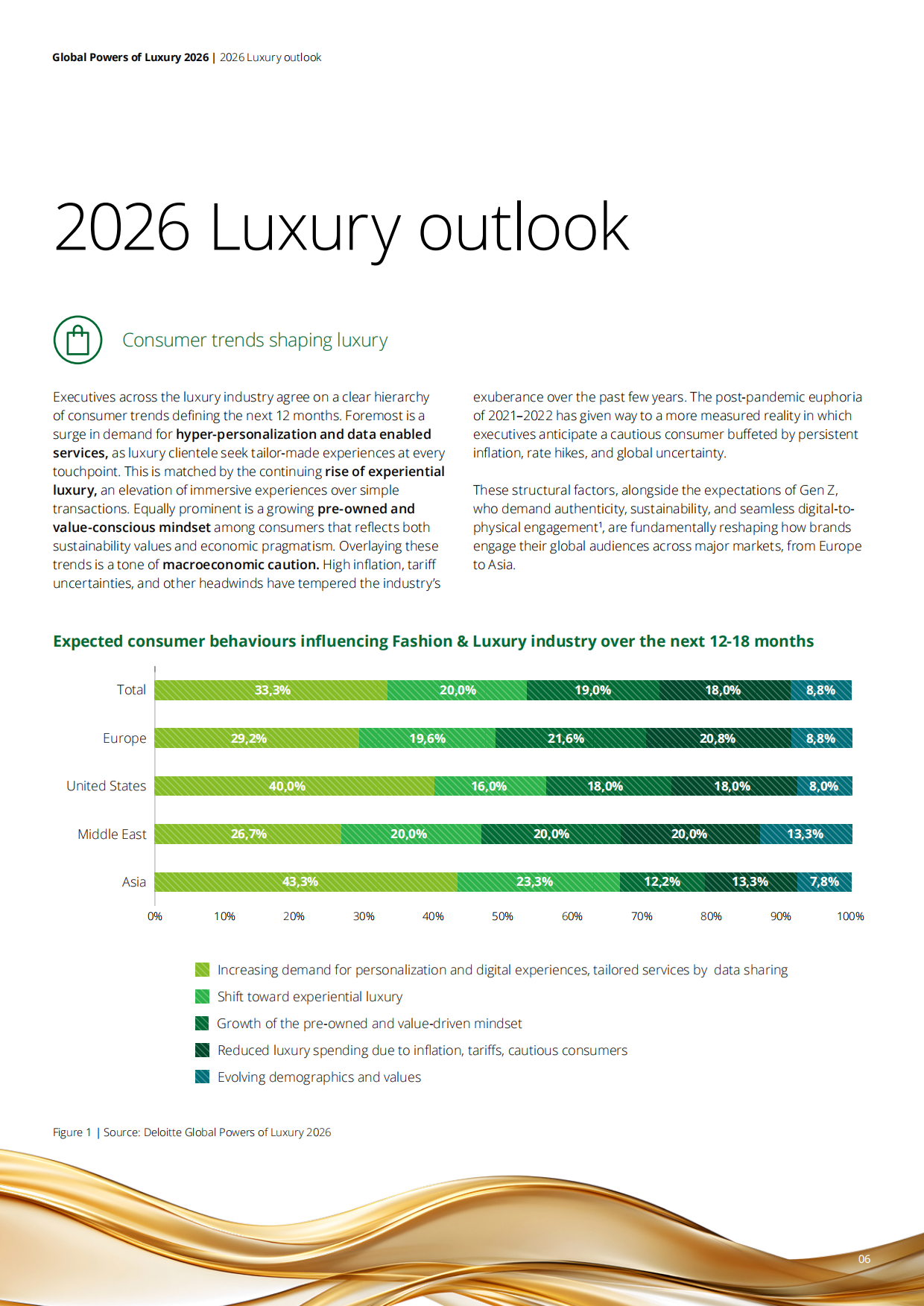
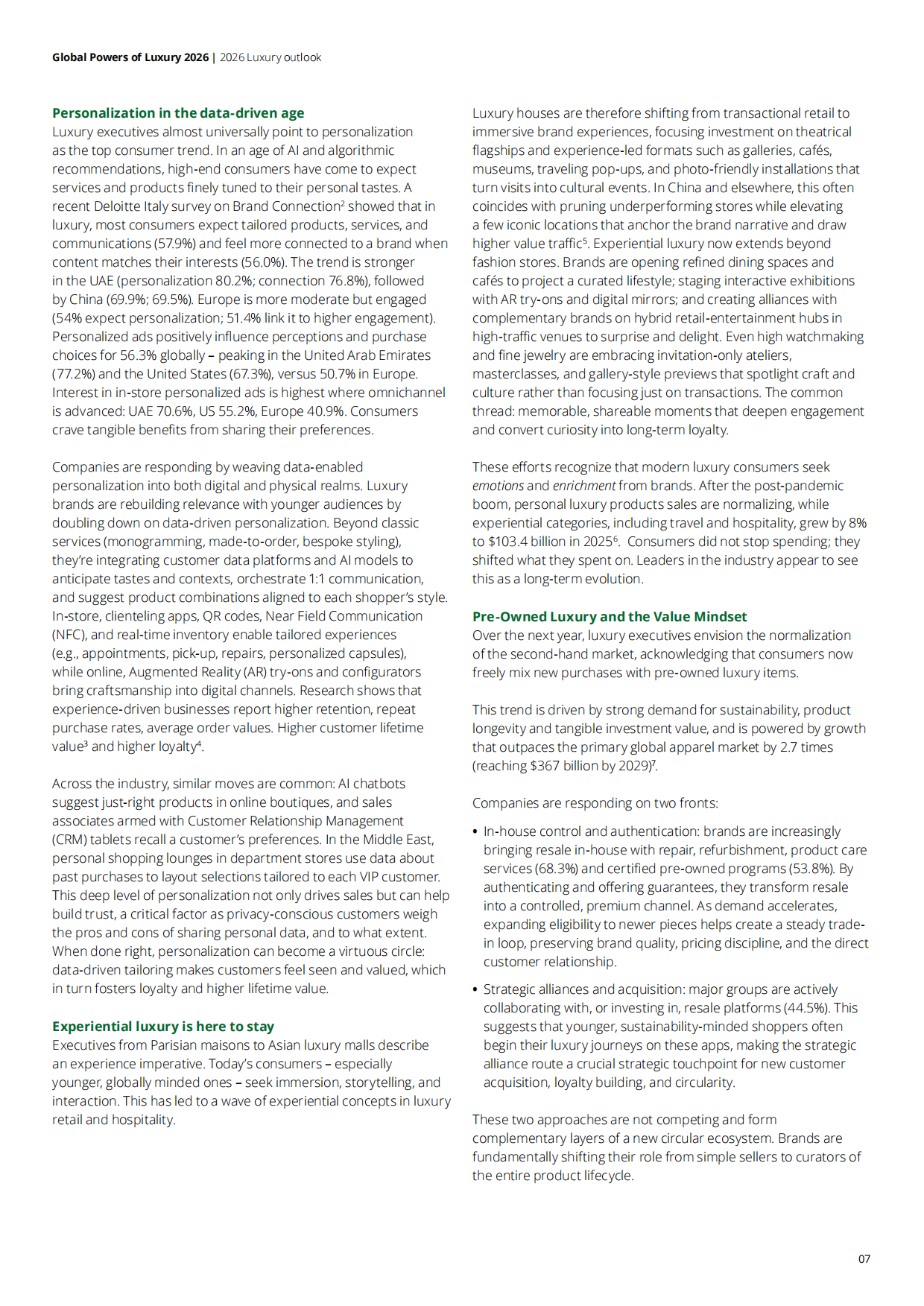
"超个性化与数据驱动的服务"被奢侈品高管几乎一致地推举为未来12个月最重要的消费趋势。在AI和算法推荐高度普及的时代,高端消费者对"量身定制"的期望已经从"加分项"变成了"入场券"。德勤此前的一项消费者调研也印证了这一点:83%的消费者愿意为个性化体验支付溢价。

查看完整解读

1、当您付费下载文档后,您只拥有了使用权限,并不意味着购买了版权,文档只能用于自身使用,不得用于其他商业用途(如 [转卖]进行直接盈利或[编辑后售卖]进行间接盈利)。
2、本站所有内容均由合作方或网友上传,本站不对文档的完整性、权威性及其观点立场正确性做任何保证或承诺!文档内容仅供研究参考,付费前请自行鉴别。
3、如文档内容存在违规,或者侵犯商业秘密、侵犯著作权等,请点击“违规举报”。

查找下载文件的指引

一、电脑端

- Windows 系统:按下键盘快捷键 `Ctrl + J`,即可打开下载列表。  

- Mac 系统:按下键盘快捷键 `⌘ + J`,即可打开下载列表。  

二、手机端

1. 打开手机浏览器,点击浏览器右下角的 “≡”(或“更多”)图标。  

2. 在弹出的菜单中找到并点击 “下载内容”(或类似选项),即可查看已下载的文件。  

提示:不同浏览器界面略有差异,若未找到“下载”入口,可尝试在浏览器设置中搜索“下载”关键词。


2026年全球奢侈品力量报告(英文)-德勤Deloitte.pdf

Reozyyy + 关注
实名认证
内容提供者

聚焦前沿运营洞察与创意方案,用个性视角解码增长密码。

文章解读

一、从"以量取胜"到"以价驱动":德勤全球奢侈品力量2026的核心转向

德勤第十版《全球奢侈品力量》报告给出了一个精准的行业定调:2026年奢侈品行业增长驱动力正在从"量"切换到"价"——三分之二的奢侈品高管预计全年营收将保持稳定或增长,70.7%预期利润率将维持或改善。这不是"市场在扩张"的乐观信号,而是"定价权、产品组合优化和运营纪律正在替代销量增长成为核心引擎"的结构性信号。

报告在方法论上做了一个有意思的突破。过去九年德勤主要通过财务报表来测绘行业格局——但财务报表告诉你的是"发生了什么"。第十版加入了高管调研和消费者数据,试图回答"接下来会发生什么"。结论是:在一个销量增长见顶的市场环境里,奢侈品牌的核心能力正从"卖得更多"切换为"卖得更贵且不被抛弃"。66.9%的高管预计营收稳定或增长,但支撑这个预期的不是市场扩张,而是价格调整(调研中排第一的成本控制措施)、门店优化(关掉非核心位置、聚焦关键地段)和组合精简。

二、超个性化登顶:AI时代的奢侈品消费新信仰

"超个性化与数据驱动的服务"被奢侈品高管几乎一致地推举为未来12个月最重要的消费趋势。在AI和算法推荐高度普及的时代,高端消费者对"量身定制"的期望已经从"加分项"变成了"入场券"。德勤此前的一项消费者调研也印证了这一点:83%的消费者愿意为个性化体验支付溢价。

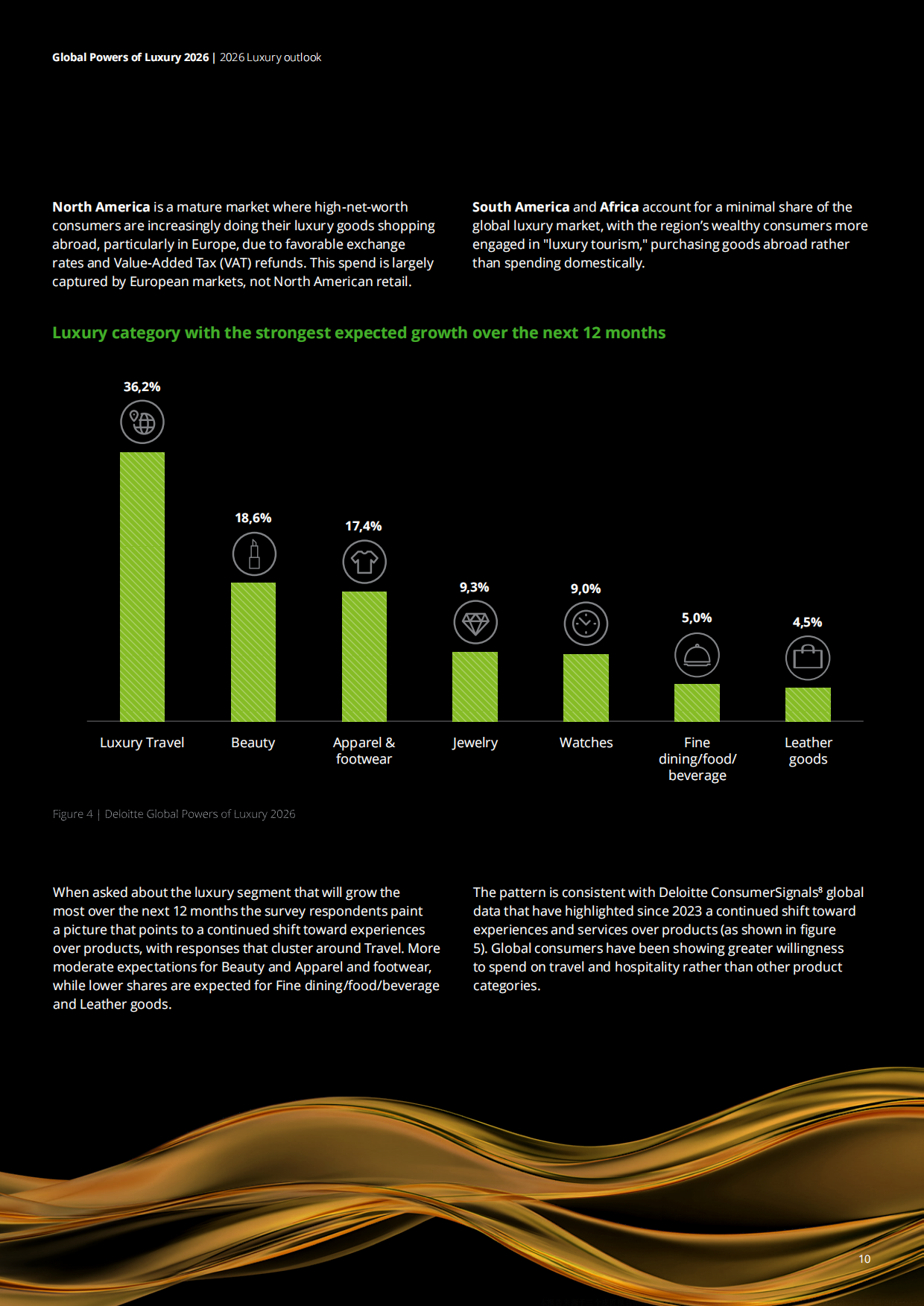
在品类增长预期上,旅行以压倒性优势被高管们推举为增长最快的奢侈品细分赛道——"体验超越产品"的消费转向正在加速。美妆和服饰鞋履的增长预期相对温和。德勤还发布了一个"消费意愿指数":休闲旅行、餐饮和个人护理的净消费意愿显著为正,而服装品类意愿值处于负区间——奢侈品消费的"服务化"趋势比想象中更为剧烈。

三、二手策略与中国锚点:两条不容回避的结构性暗线

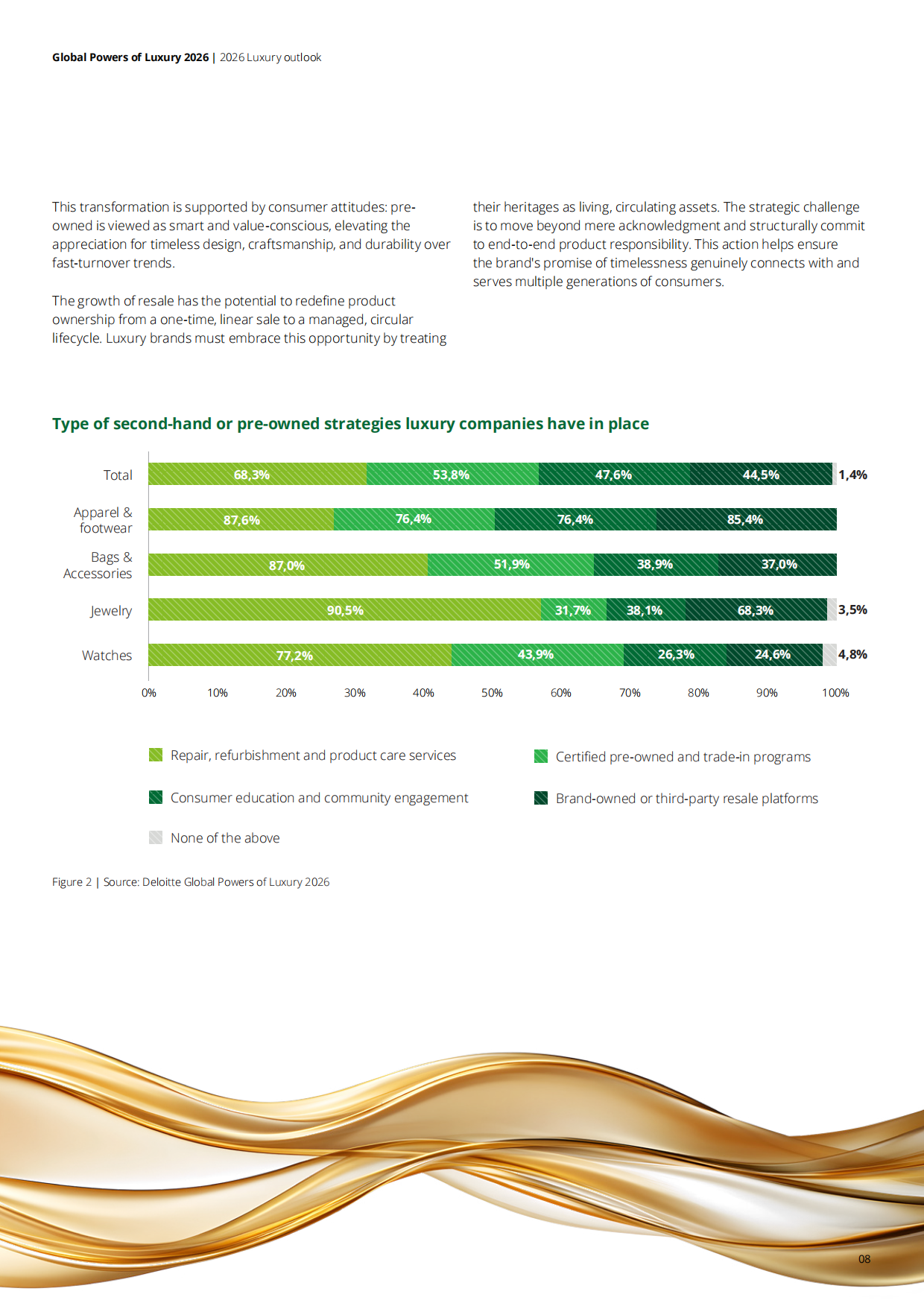
报告披露了一组关于二手奢侈品策略的关键数据:皮具和配饰品类的二手策略渗透率最高(68.3%的品牌已布局),其次是珠宝(53.8%)、腕表(47.6%)和美妆(44.5%)。服饰鞋履品类(1.4%)的二手化率极低——这主要是因为服饰的标准化程度和保值能力远不如包袋和腕表,二手市场的供需匹配天然更困难。但整体趋势很明确:二手不再是品牌被迫应对的"灰色地带",而是被纳入正式渠道策略的增长引擎。

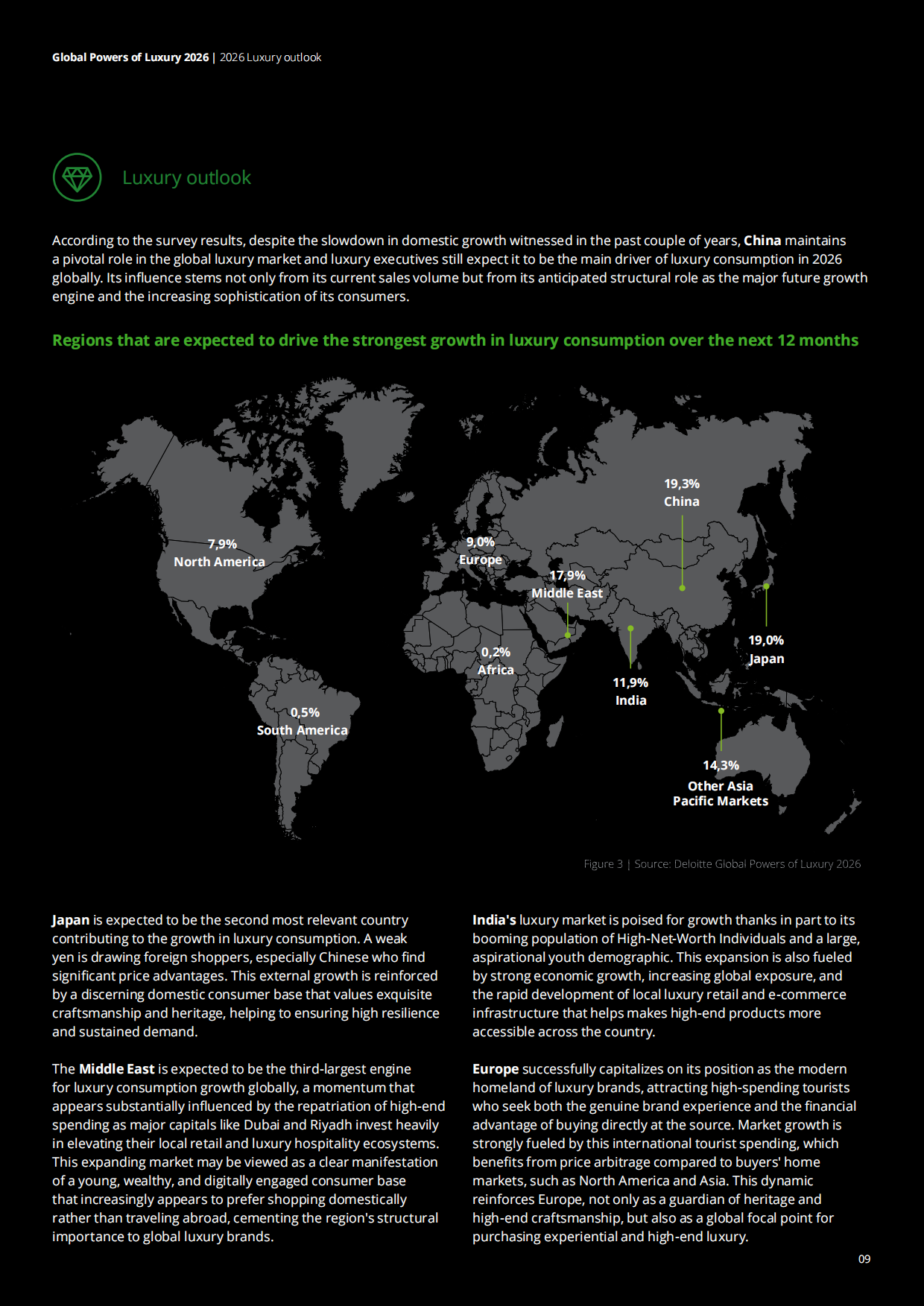
中国市场依然是全球奢侈品的最重要锚点。尽管过去两年国内增长放缓,奢侈品高管们仍然一致将中国视为2026年全球奢侈品消费的主要驱动力——这不仅仅因为中国当前的销售体量,更因为它对未来增长方向和速度的预示作用。从区域预期来看,欧洲品牌最自信(68.8%营收稳定性和70.8%利润率改善预期),日本和北美市场也保持健康态势。整体基调是"审慎乐观"——不是"要大干一场",而是"守住利润、优化组合、等风来"。




查看完整解读
确认删除?
签到
收藏
足迹
微信
  • 站长微信
回到顶部