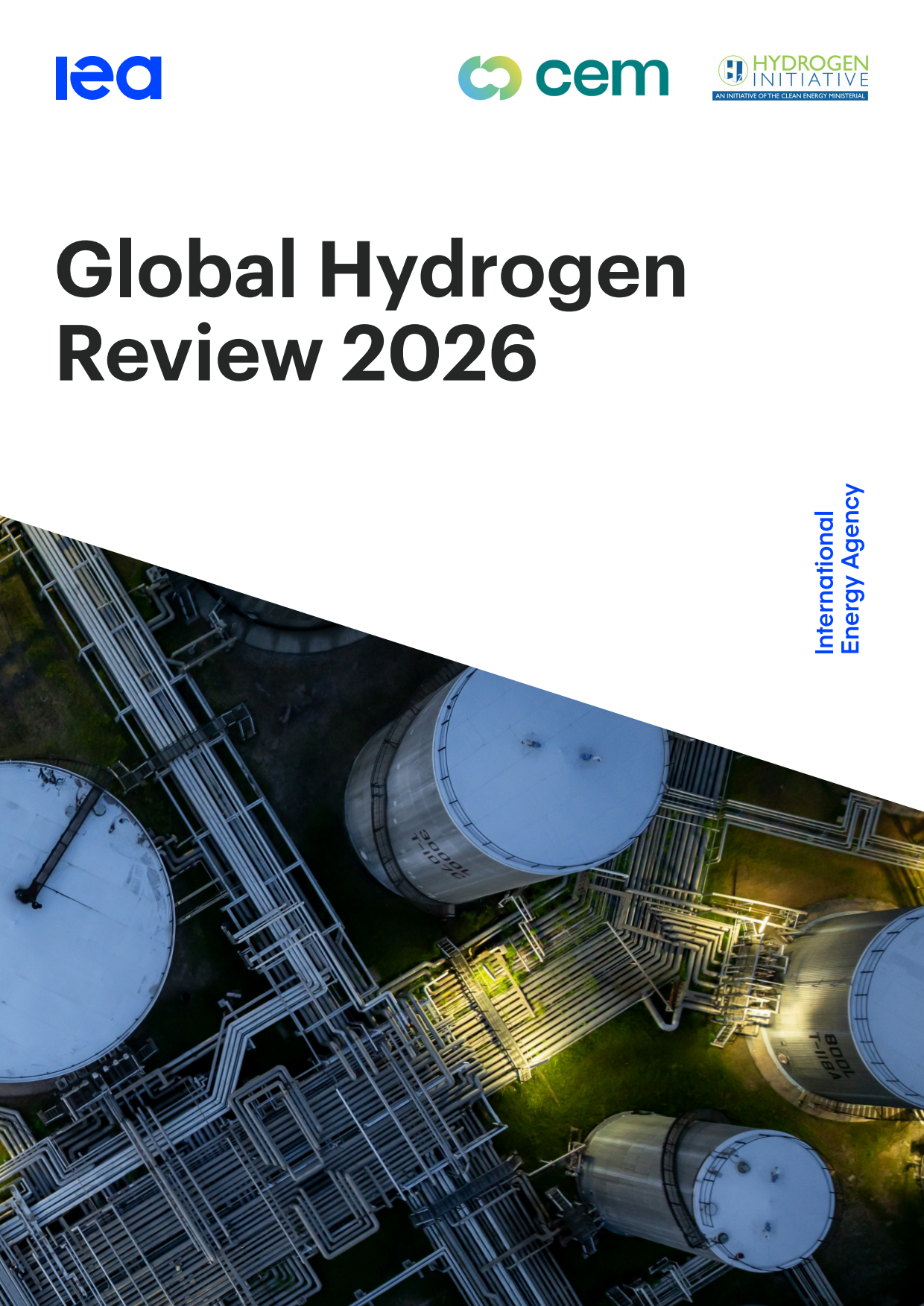
Global Hydrogen Review 2026
The IEA examines the full spectrum of energy issues including oil, gas and coal supply and demand, renewable energy technologies, electricity markets, energy efficiency, access to energy, demand side management and much more. Through its work, the IEA advocates policies that will enhance the reliability, affordability and sustainability of energy in its 32 Member countries, 13 Association countries and beyond.This publication, as well as any data and map included herein, are without prejudice to the status of or sovereignty over any territory, to the delimitation of international frontiers and boundaries and to the name of any territory, city or area.Source: IEA. International Energy Agency Website: www.iea.orgIEA Member countries: AustraliaAustriaBelgiumCanadaCzech Republic DenmarkEstoniaFinlandFranceGermanyGreeceHungaryIrelandItalyJapanKoreaLatviaLithuania Luxembourg Mexico NetherlandsNew Zealand NorwayPolandPortugalSlovak Republic SpainSweden Switzerland Republic of Türkiye United Kingdom United StatesThe European Commission also participates in the work of the IEAIEA Accession countries:ChileColombiaCosta RicaINTERNATIONAL ENERGYAGENCYIEA Association countries:Argentina ChinaEgyptIndia Indonesia Kenya Morocco Senegal Singapore South Africa Thailand UkraineViet NamBrazilIsraelRomania
Global Hydrogen Review 2026 Abstract PAGE | 3 IEA. CC BY 4.0. Abstract The IEA's Global Hydrogen Review 2026 provides an update on hydrogen production and demand worldwide and identifies the latest developments relating to policy, infrastructure, trade, investments and innovation. The report is an output of the Clean Energy Ministerial Hydrogen Initiative and is intended to provide an update to energy sector stakeholders on the status and future prospects of hydrogen, and to inform discussions at the Hydrogen Energy Ministerial Meeting organised by Japan. The conflict in the Middle East is impacting global supplies of hydrogen and hydrogen derivatives, such as fertilisers, exposing vulnerabilities in their supply chains. As energy security concerns move higher up the policy agenda, this year's report considers the potential contributions of low-emissions hydrogen and hydrogen derivatives to enhancing energy security. It takes stock of deployment to date to assess the level of hydrogen uptake that could be achieved by 2030. This sixth edition of the Global Hydrogen Review includes novel analysis on what constitutes an acceptable cost for low-emissions hydrogen across multiple applications and regions. It concludes with a special focus chapter exploring challenges and opportunities for the development of new supply chains for low-emissions hydrogen-based products in Africa. The report is published alongside updates to the Hydrogen Production and Infrastructure Projects Database and the online Hydrogen Tracker. These resources allow users to explore project-level information and ...