MID-YEAR UPDATEWorld Economic Situation and Prospects 2026
The World Economic Situation and Prospects as of mid-2026 updates the World Economic Situation and Prospects 2026 released on 8 January 2026. The report is prepared by the Global Economic Monitoring Branch in the Economic Analysis and Policy Division of the United Nations Department of Economic and Social Affairs.World Economic Situation and Prospects 2026MID-YEAR UPDATE
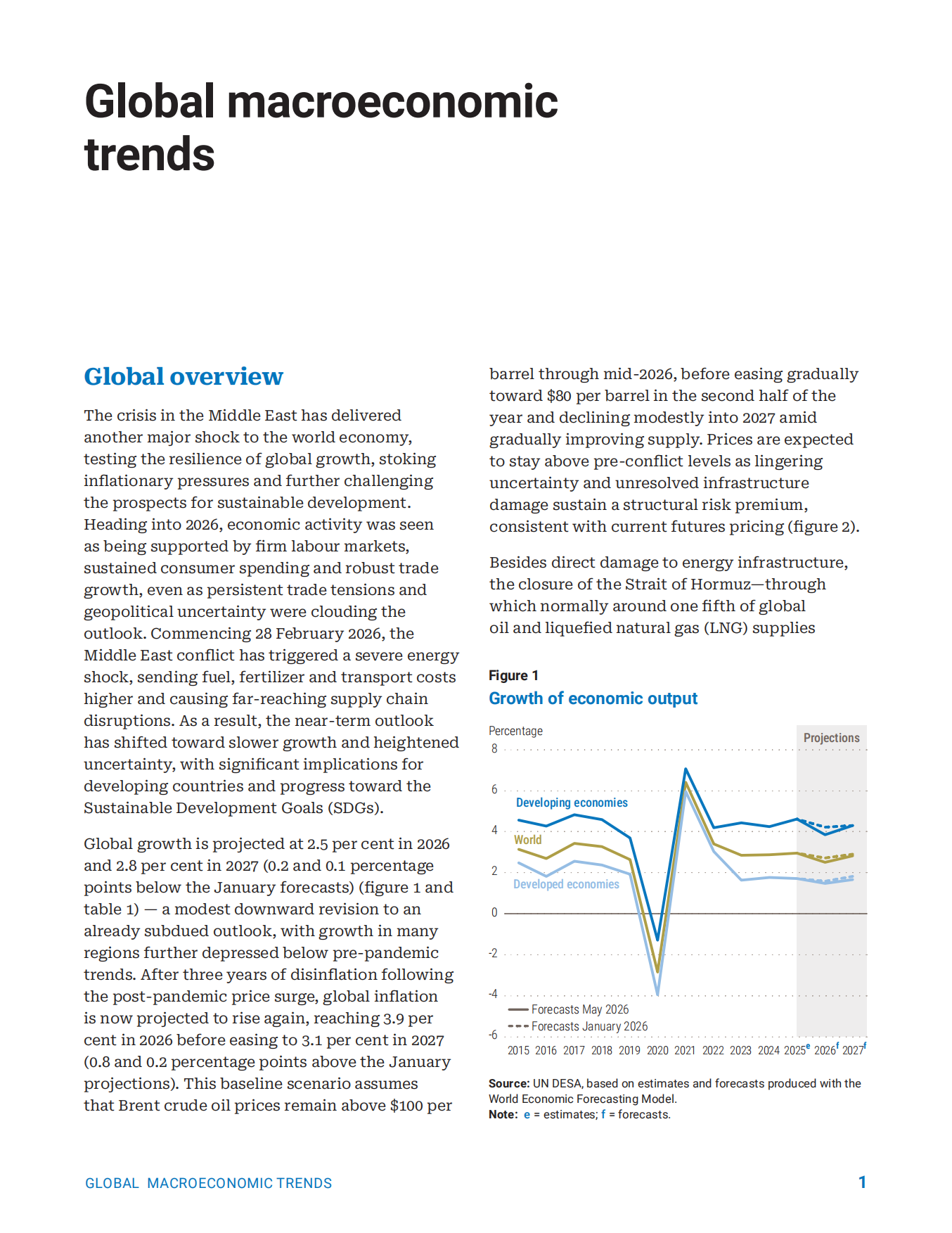
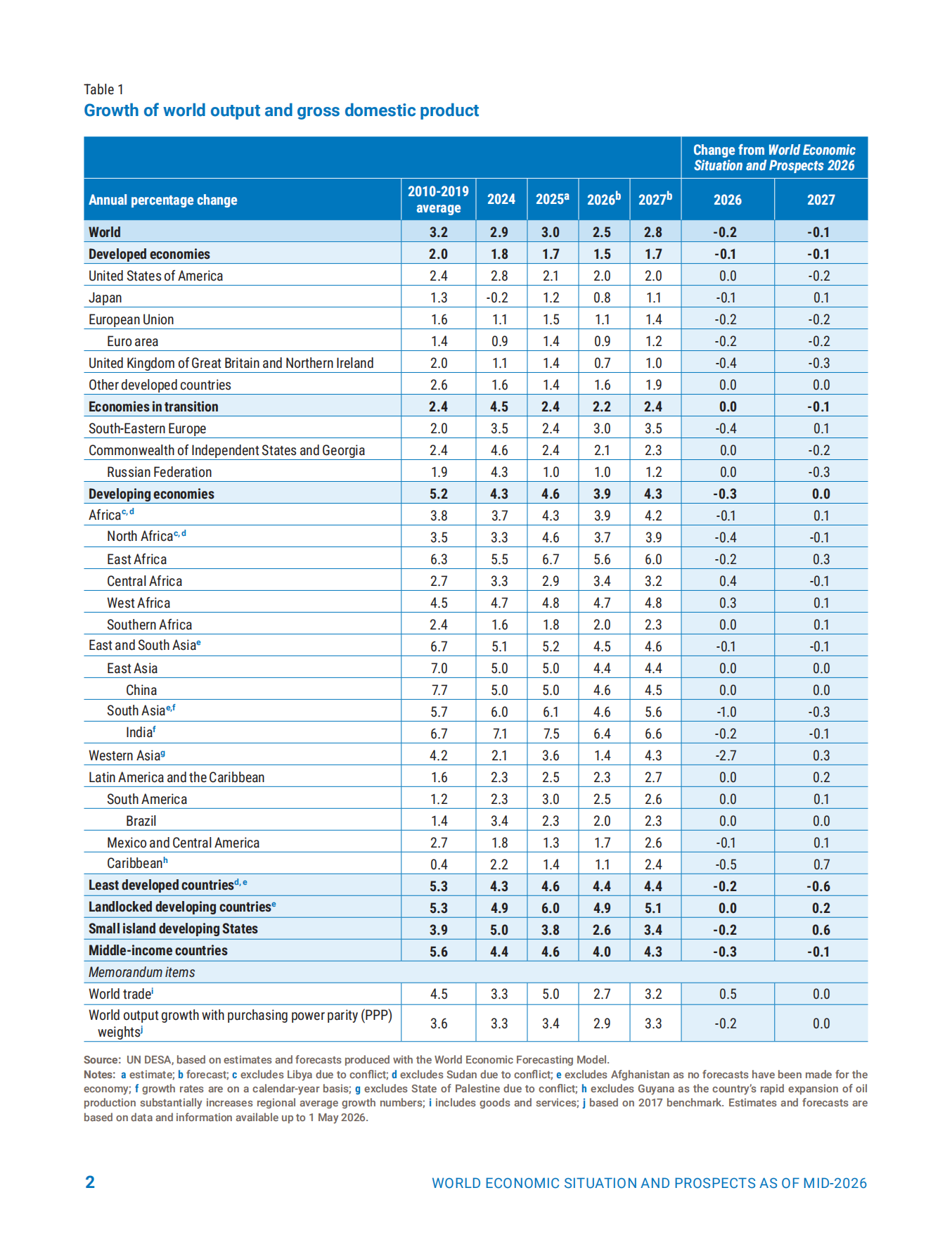
World Economic Situation and Prospects as of mid-2026The global economy is under stress as the crisis in the Middle East clouds the growth outlook, stokes inflationary pressures, and adds to uncertainty across financial markets. Global growth is now projected at 2.5 per cent in 2026 and 2.8 per cent in 2027—downward revisions to an already subdued outlook. Although these revisions are modest, forecast uncertainty has risen considerably, as outcomes hinge on the conflict’s duration and scale; a faster-than-expected resolution could restore confidence, while a prolonged disruption would deepen the downgrade. The closure of the Strait of Hormuz—through which about one fifth of global oil and liquefied natural gas supplies pass—is driving fuel, fertilizer, and food prices higher and straining global supply chains. Global inflation is now expected to reach 3.9 per cent in 2026—0.8 percentage points above the January forecast—reversing a disinflationary trend and eroding household purchasing power. Financial market volatility has increased, with risks of renewed portfolio outflows and tighter external financing conditions if the conflict persists. Central banks are expected to hold rates higher for longer to curb inflation, while governments face rising fiscal pressures from weaker growth alongside necessary expenditures to cushion crisis impacts. Resilient labour markets and artificial intelligence (AI)-driven trade and investment support global activity but are unlikely to fully offset widespread headwinds. The outlook is most challenging for fuel- and food-importing developing economies, where surging import costs risk widening fiscal deficits, straining external balances, and deepening food insecurity. Low-income households—which spend the largest share of their budgets on food and energy—bear the heaviest burden, with millions at risk of being pushed into poverty. Combined with declining aid flows and mounting debt-service costs, these pressures threaten to reverse hard-won development gains and further slow progress toward the Sustainable Development Goals.Summary
III ContentsSummary. . . . . . . . . . . . . . . . . . . . . . . . . . . . . . . . . . . . . . . . IIGlobal macroeconomic trends. . . . . . . . . . . . . . . . . . . . . . 1Global overview . . . . . . . . . . . . . . . . . . . . . . . . . . . . . . . . . . 1Inflation. . . . . . . . . . . . . . . . . . . . . ...