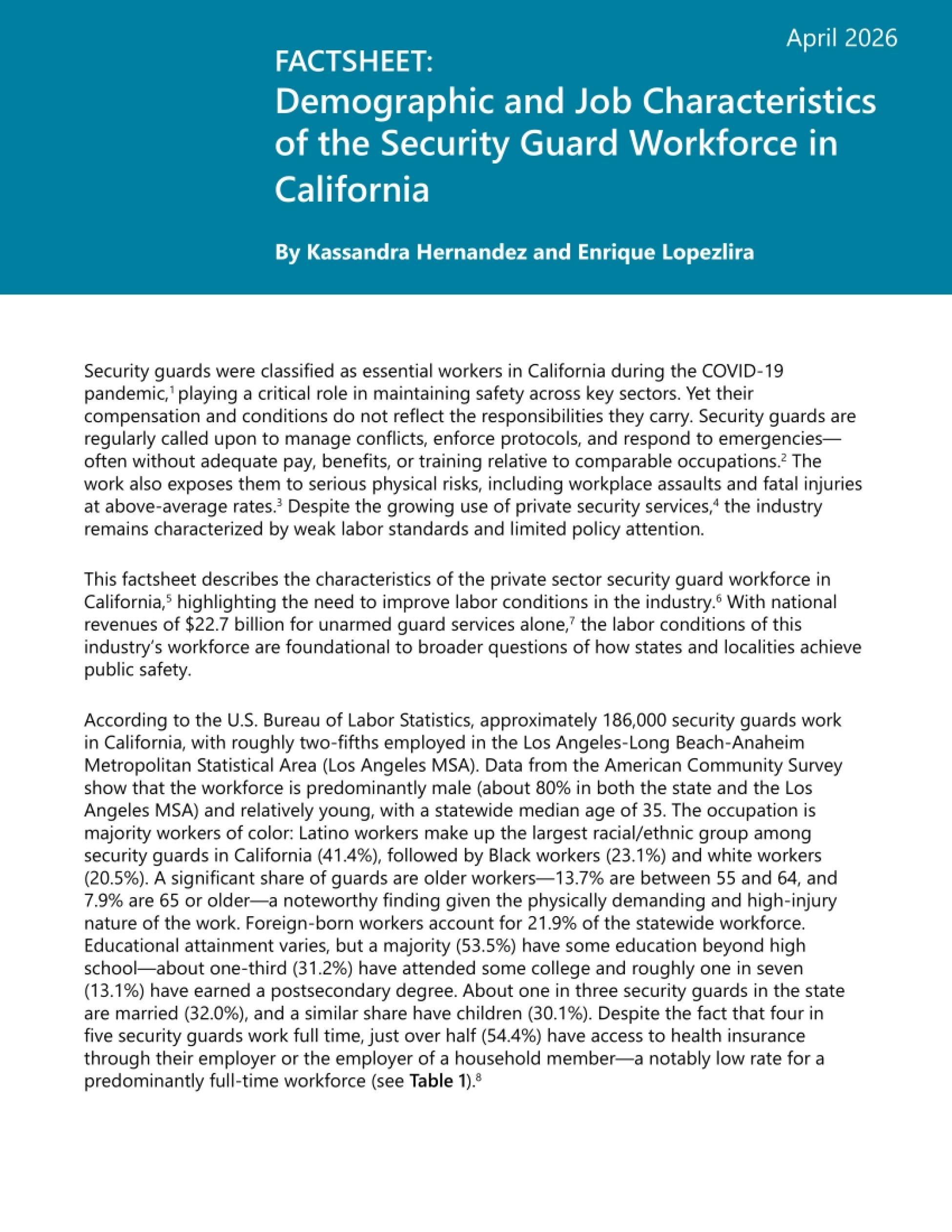
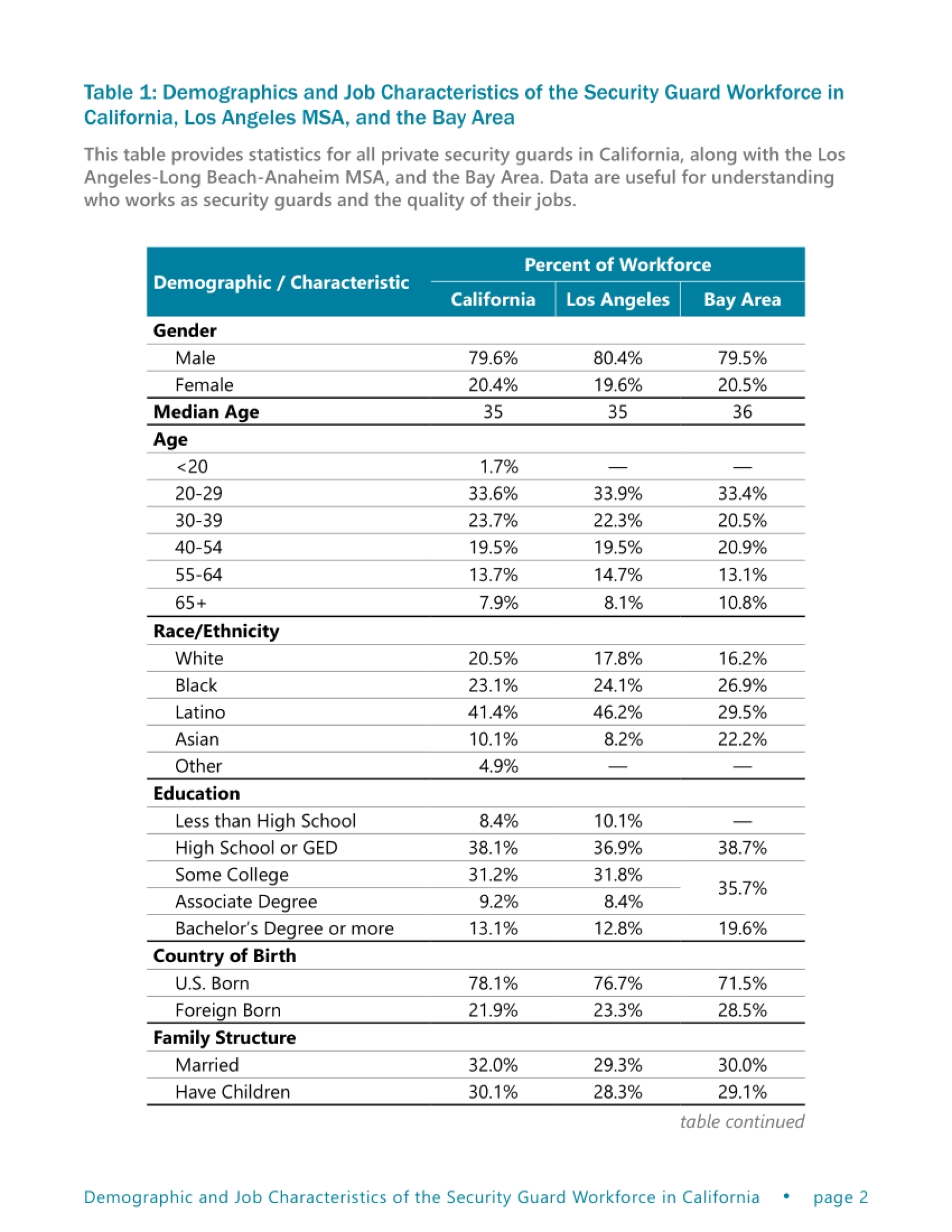
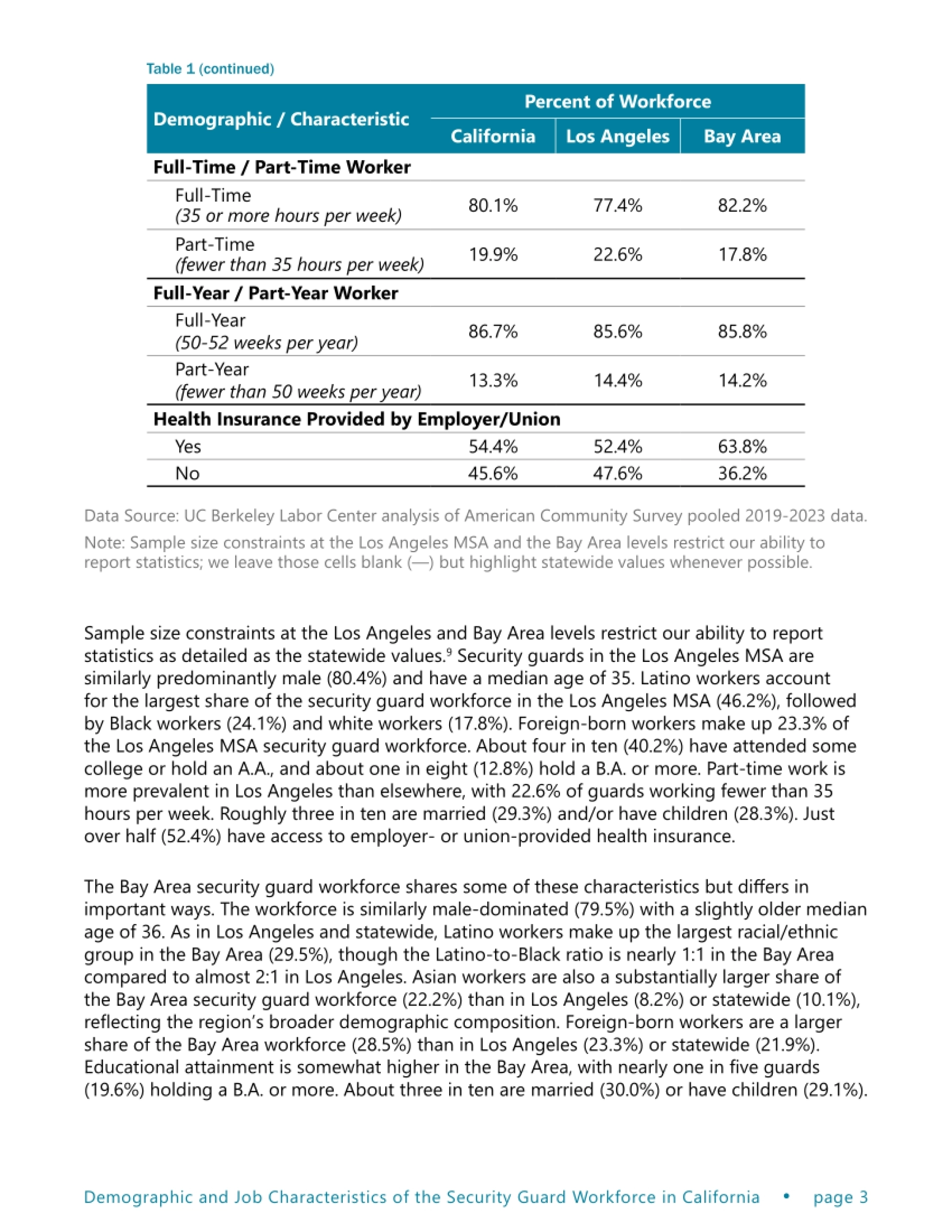
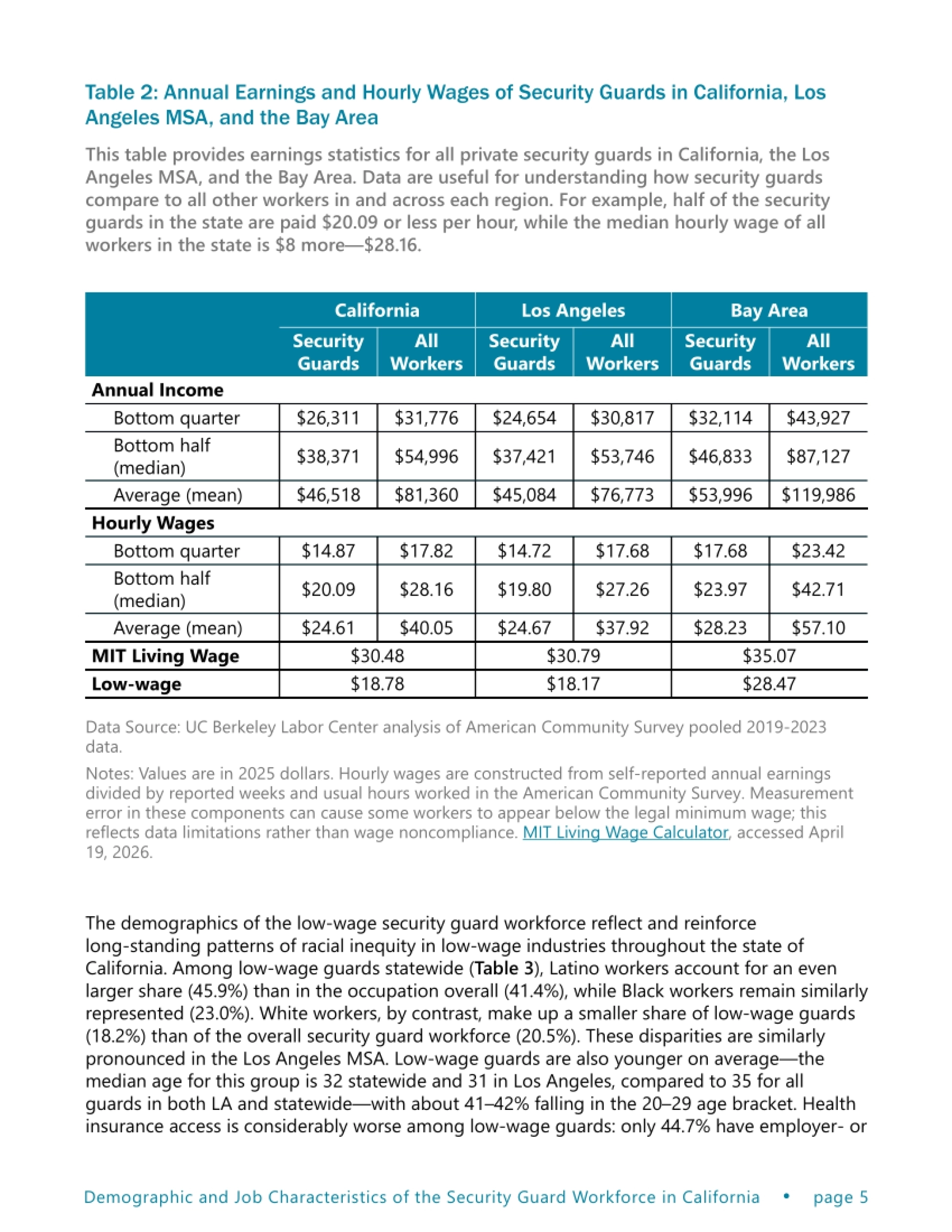
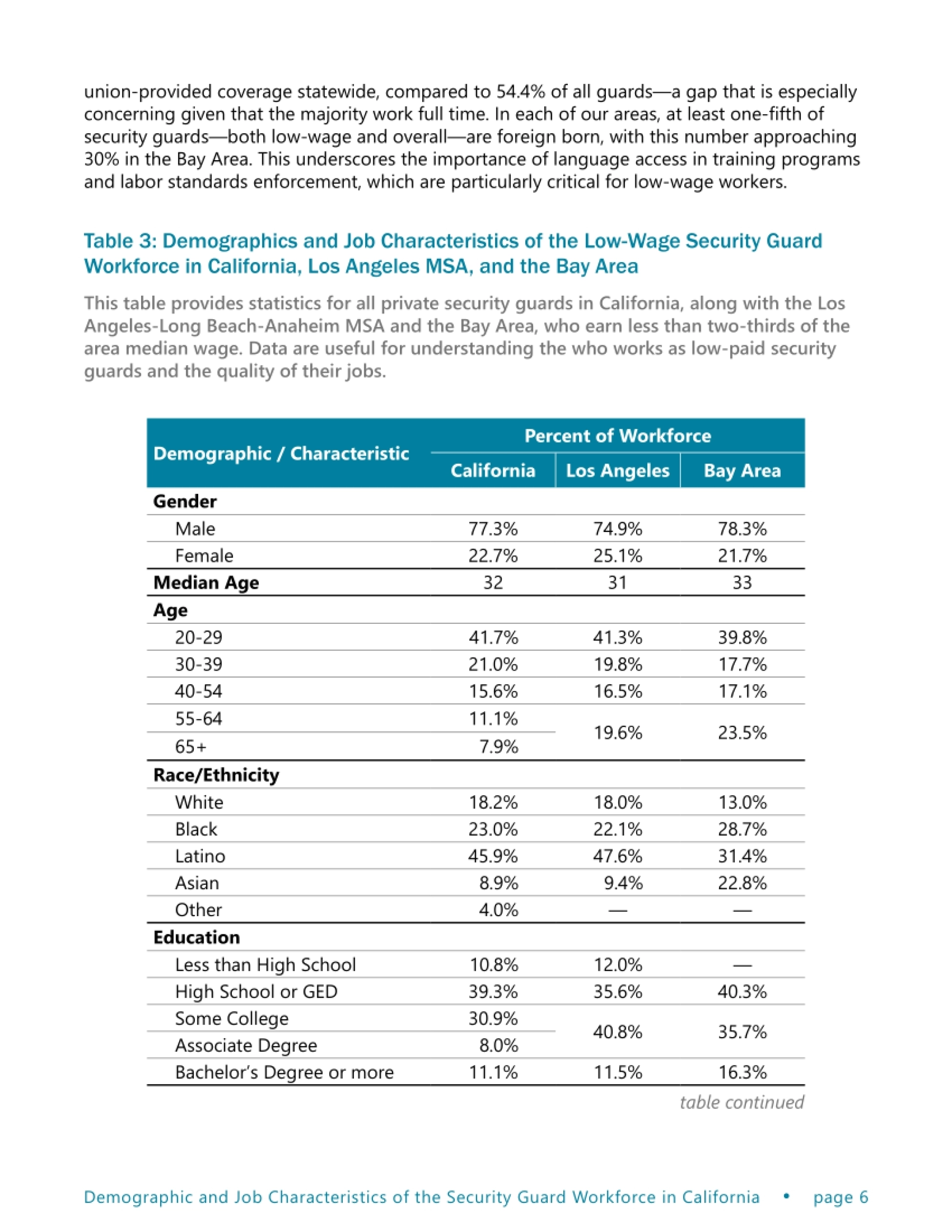
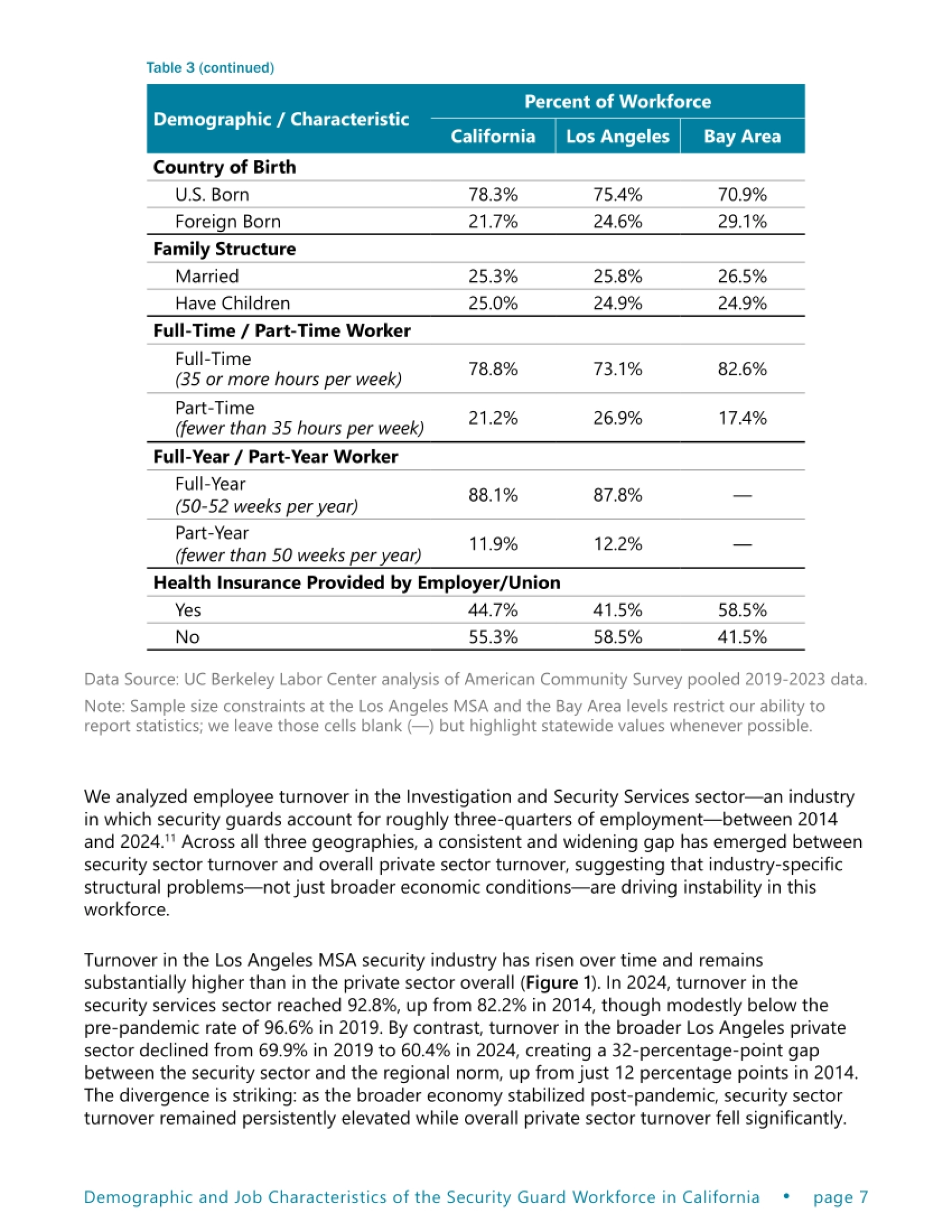
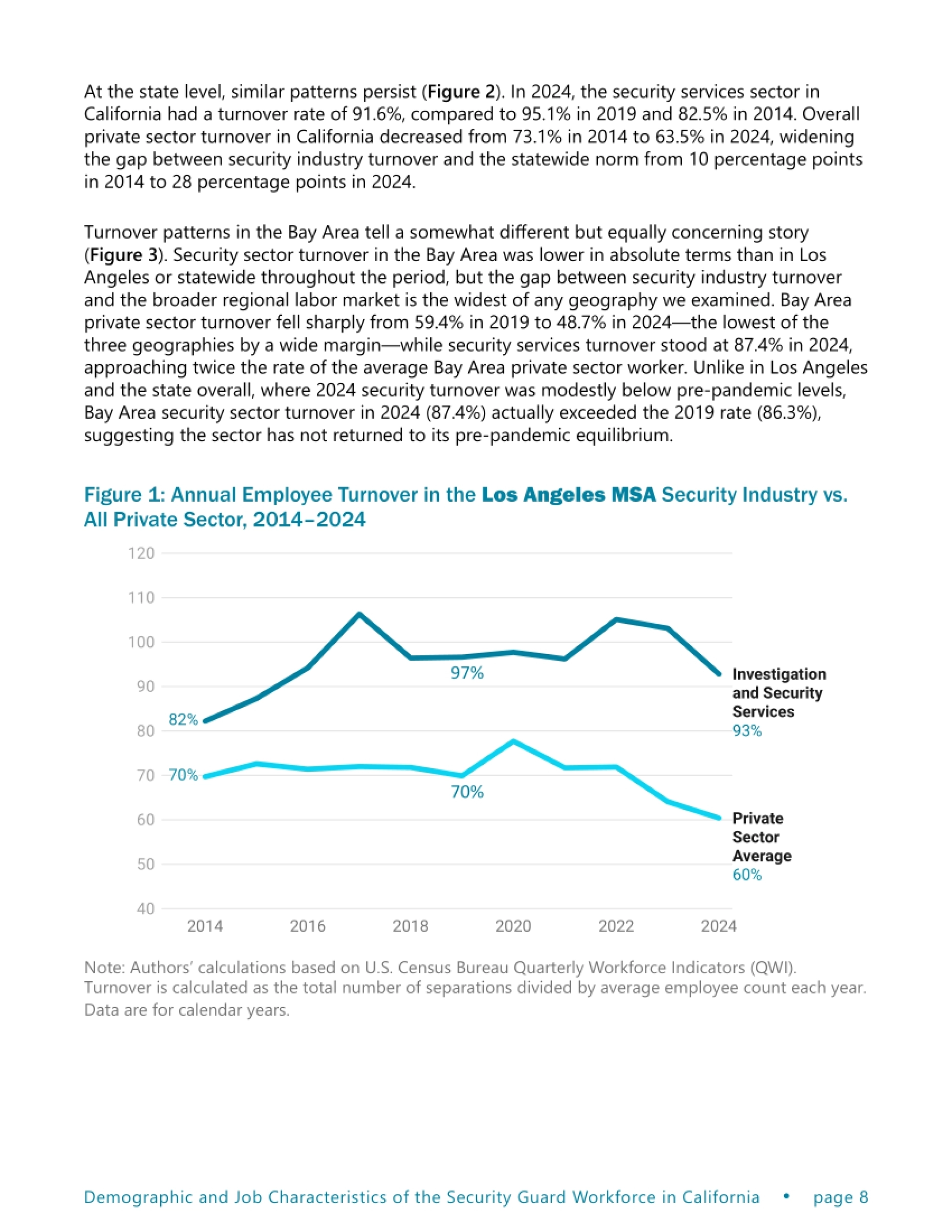
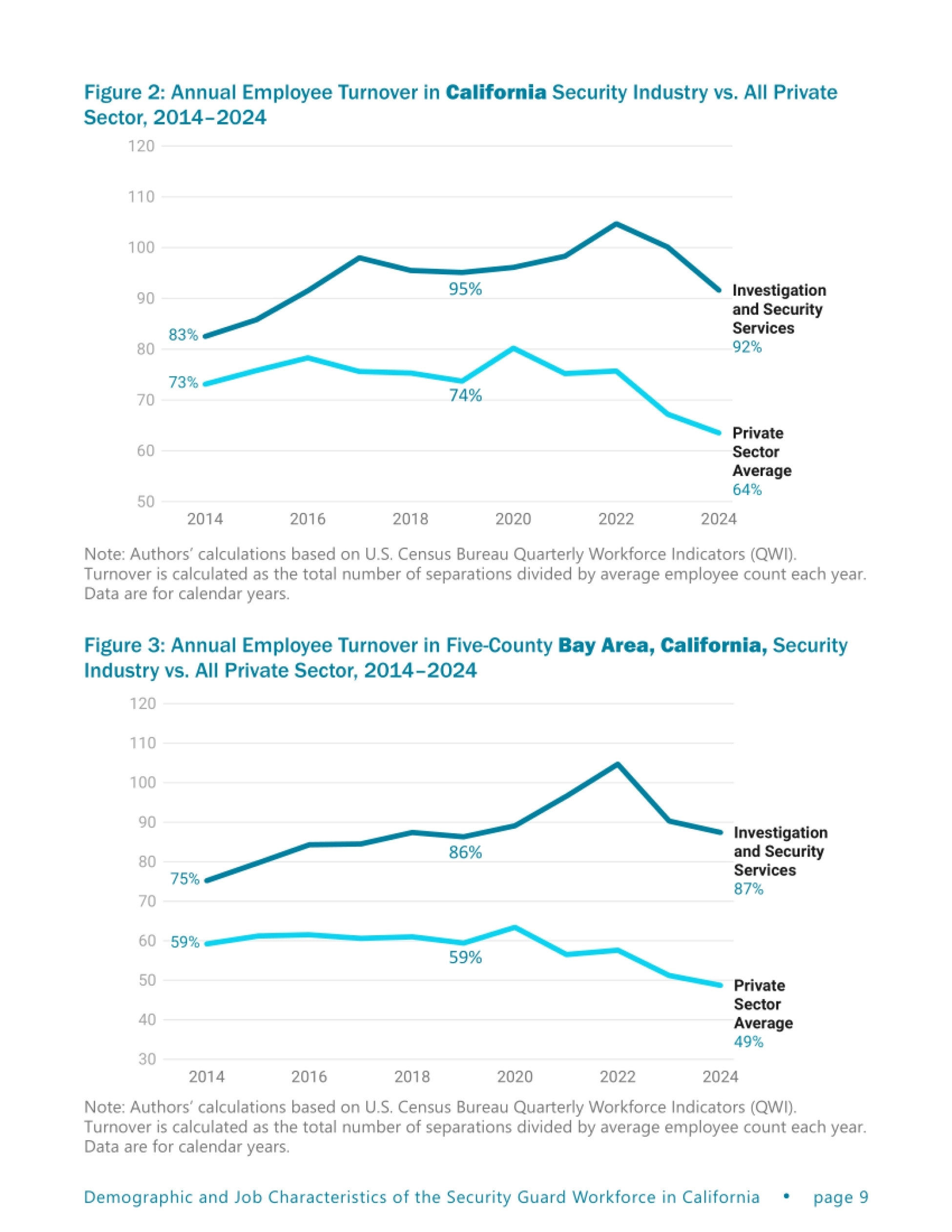
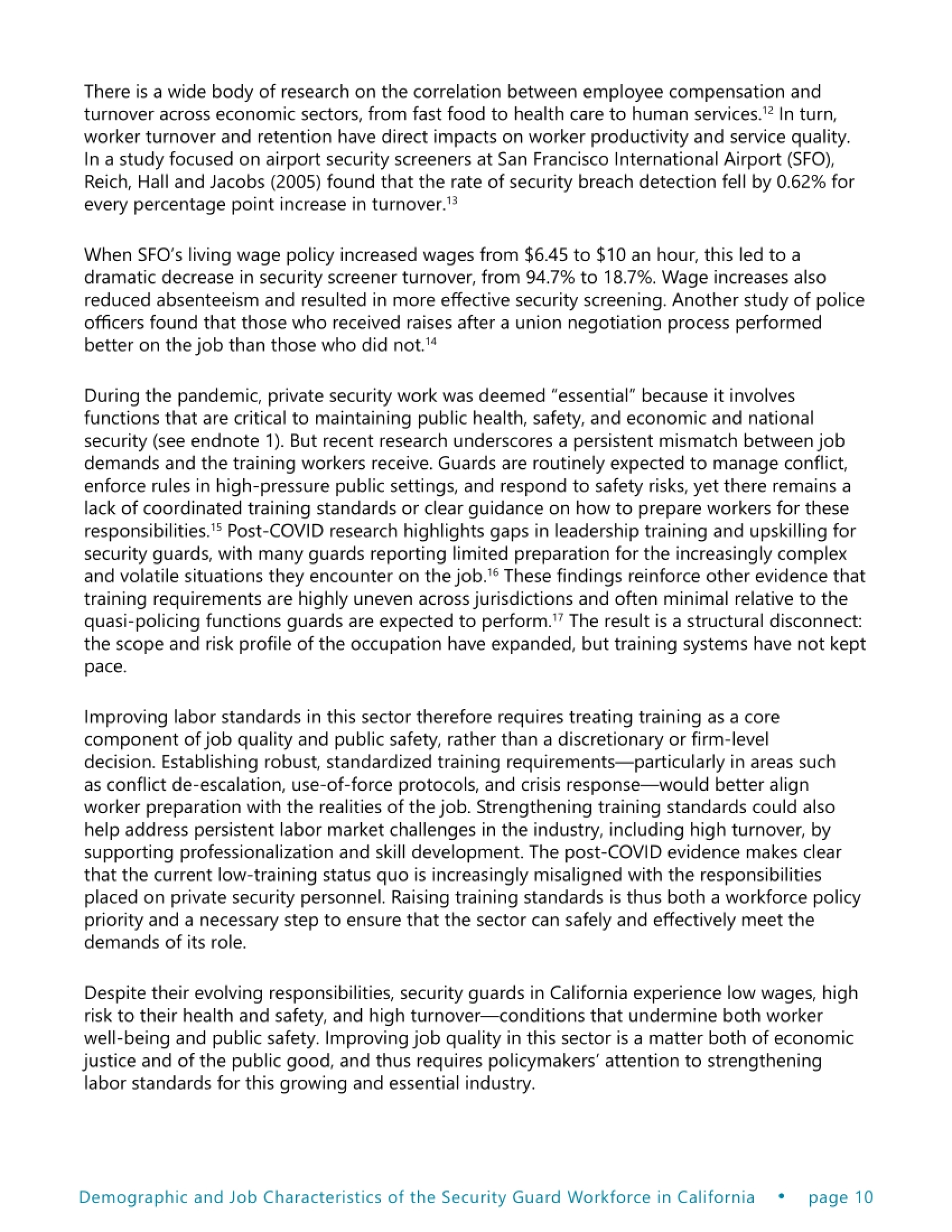
FACTSHEET:Demographic and Job Characteristics of the Security Guard Workforce in CaliforniaBy Kassandra Hernandez and Enrique LopezliraApril 2026Security guards were classified as essential workers in California during the COVID-19 pandemic,1 playing a critical role in maintaining safety across key sectors. Yet their compensation and conditions do not reflect the responsibilities they carry. Security guards are regularly called upon to manage conflicts, enforce protocols, and respond to emergencies—often without adequate pay, benefits, or training relative to comparable occupations.2 The work also exposes them to serious physical risks, including workplace assaults and fatal injuries at above-average rates.3 Despite the growing use of private security services,4 the industry remains characterized by weak labor standards and limited policy attention.This factsheet describes the characteristics of the private sector security guard workforce in California,5 highlighting the need to improve labor conditions in the industry.6 With national revenues of $22.7 billion for unarmed guard services alone,7 the labor conditions of this industry’s workforce are foundational to broader questions of how states and localities achieve public safety.According to the U.S. Bureau of Labor Statistics, approximately 186,000 security guards work in California, with roughly two-fifths employed in the Los Angeles-Long Beach-Anaheim Metropolitan Statistical Area (Los Angeles MSA). Data from the American Community Survey show that the workforce is predominantly male (about 80% in both the state and the Los Angeles MSA) and relatively young, with a statewide median age of 35. The occupation is majority workers of color: Latino workers make up the largest racial/ethnic group among security guards in California (41.4%), followed by Black workers (23.1%) and white workers (20.5%). A significant share of guards are older workers—13.7% are between 55 and 64, and 7.9% are 65 or older—a noteworthy finding given the physically demanding and high-injury nature of the work. Foreign-born workers account for 21.9% of the statewide workforce. Educational attainment varies, but a majority (53.5%) have some education beyond high school—about one-third (31.2%) have attended some college and roughly one in seven (13.1%) have earned a postsecondary degree. About one in three security guards in the state are married (32.0%), and a similar share have children (30.1%). Despite the fact that four in five security guards work full time, just over half (54.4%) have access to health insurance through their employer or the employer of a household member—a notably low rate for a predominantly full-time workforce (see Table 1).8Demographic and Job Characteristics of the Security Guard Workforce in California • page 2Table 1: Demographics and Job Characteristics of the Security Guard Workforce in California, Lo...







































