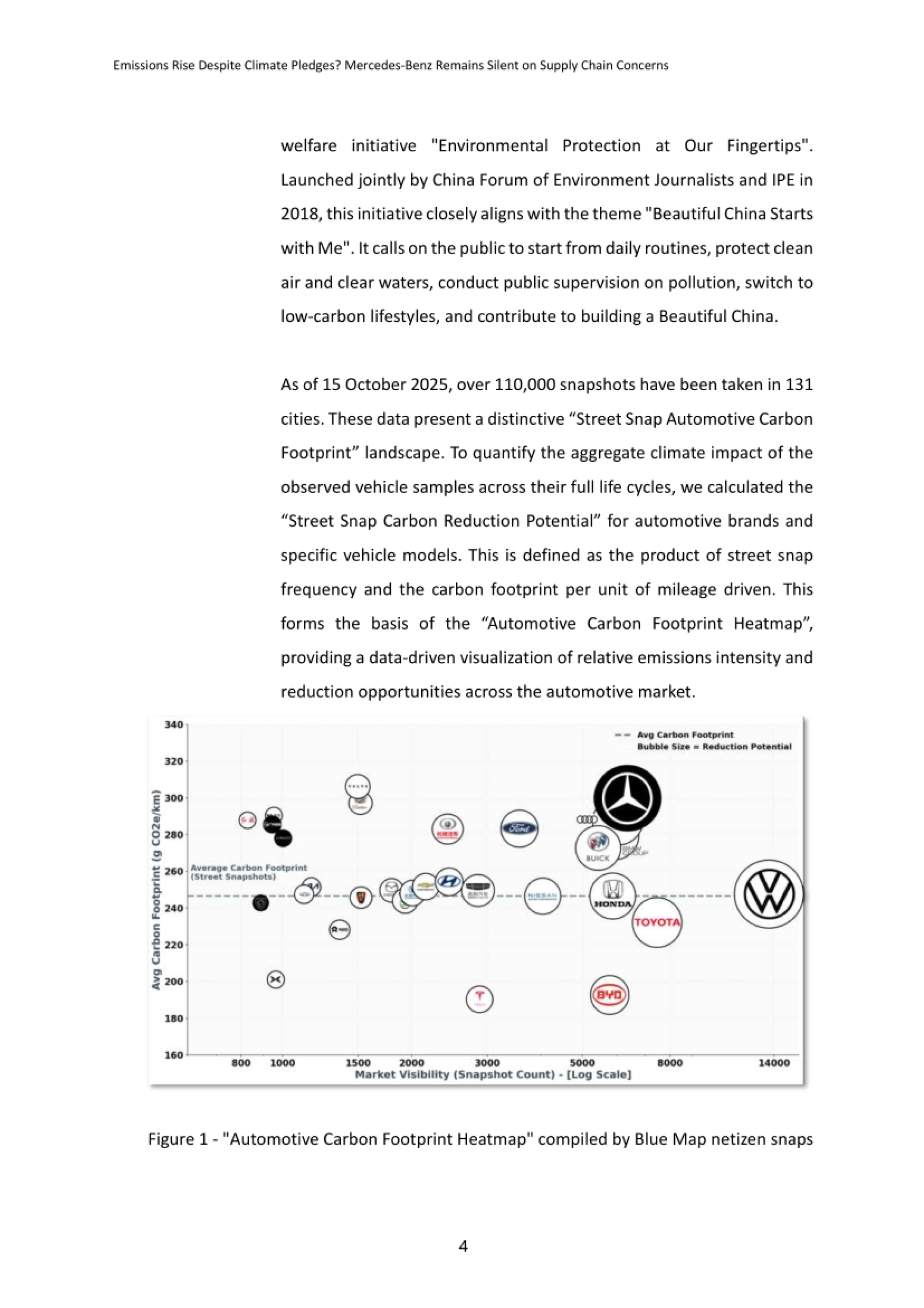
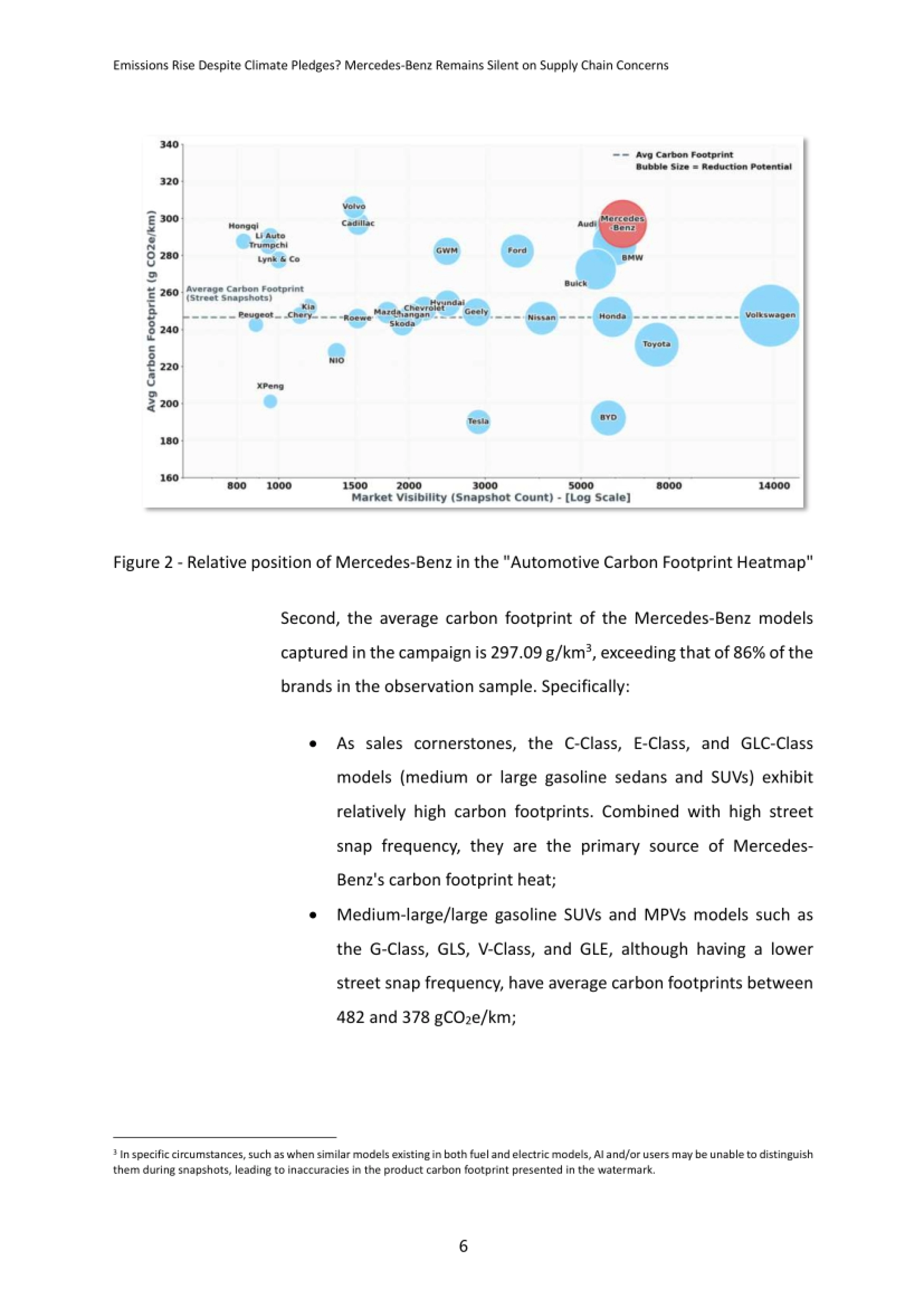
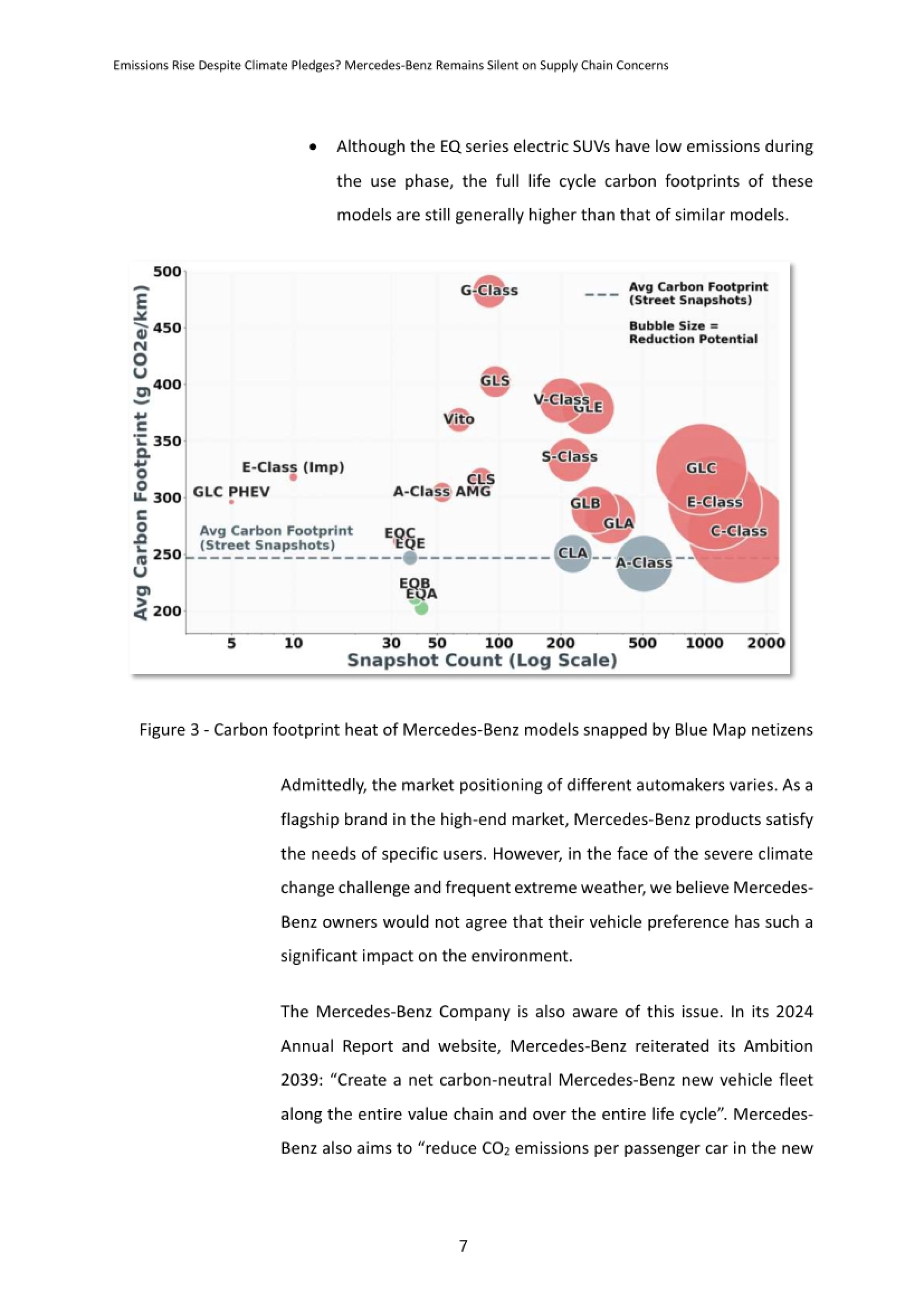
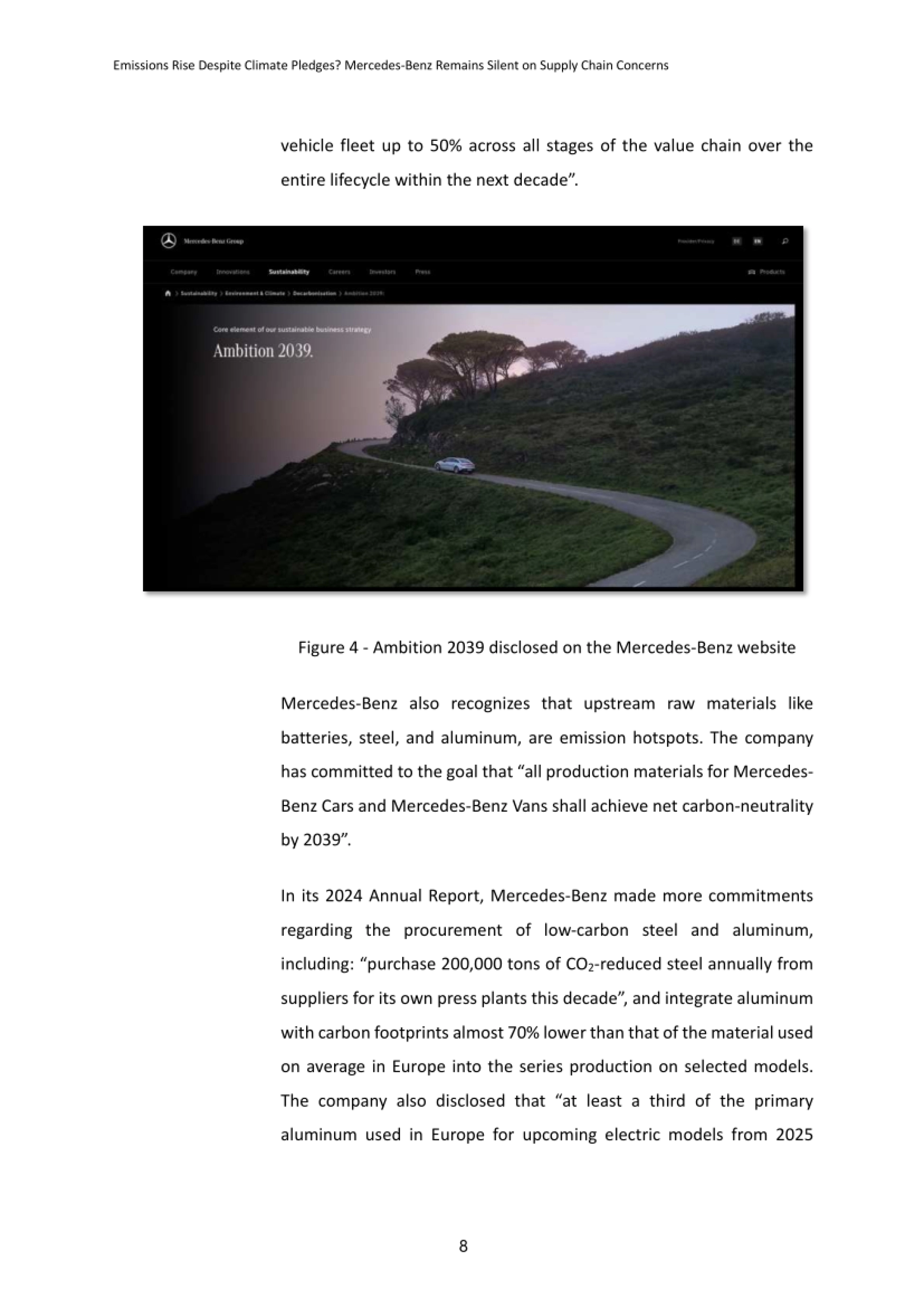
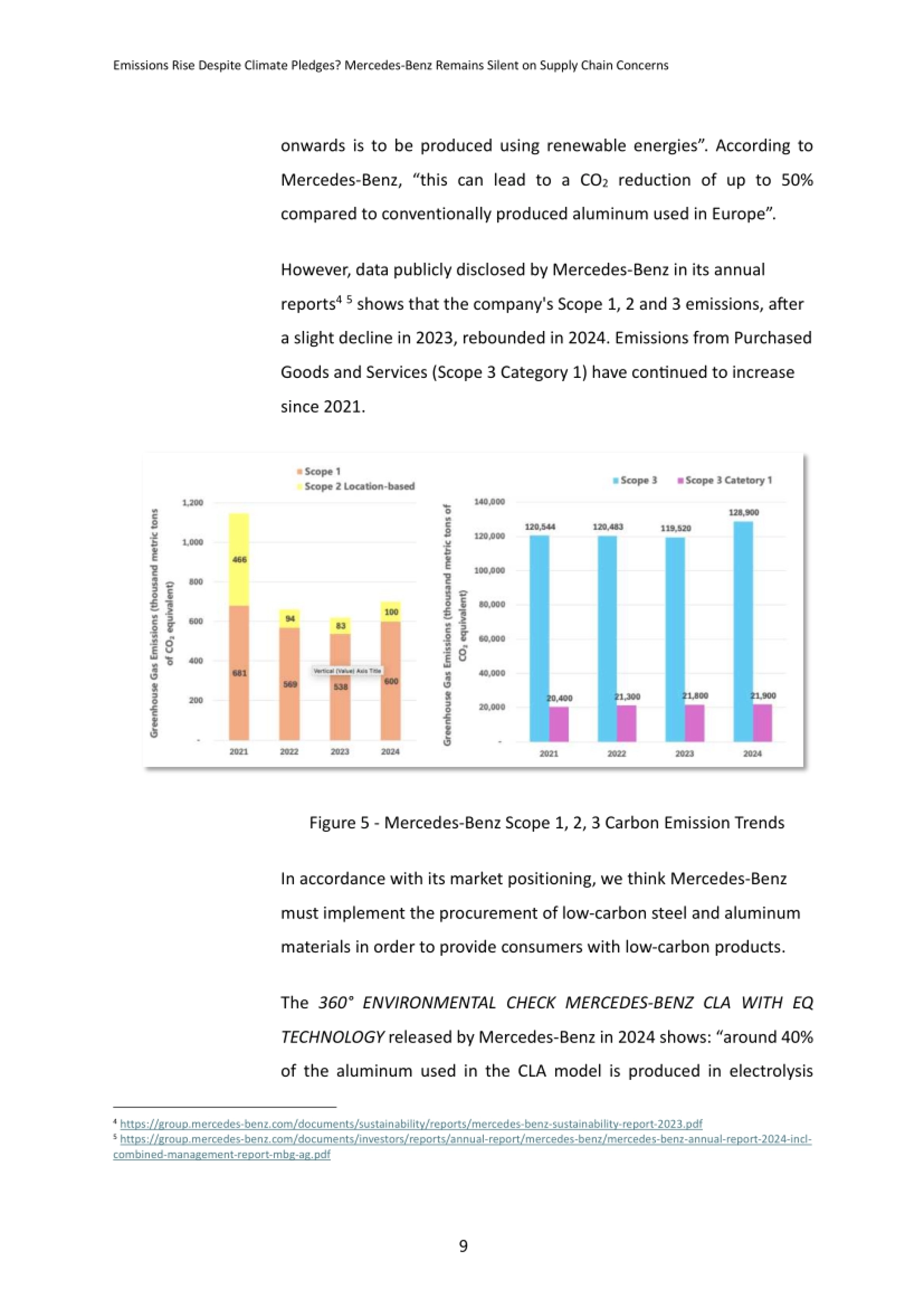
Emissions Rise Despite Climate Pledges? Mercedes-Benz Remains Silent on Supply Chain Concerns 1 Emissions Rise Despite Climate Pledges? Mercedes-Benz Remains Silent on Supply Chain Concerns 2 In 2025, the Institute of Public and Environmental Affairs (IPE) and Green Jiangnan, together with nine other environmental organizations, jointly launched the “Vehicle Carbon Footprint Snap” campaign. The active participation of Blue Map App users unlocked the product carbon footprints of more than 110,000 vehicles via street snap, revealing total emissions exceeding 4.12 million tons of CO₂. Notably, Mercedes-Benz vehicles alone accounted for over 270,000 tons of carbon emissions, placing the brand among the highest emitters across hundreds of Chinese and international automotive manufacturers. To accelerate low-carbon transformation of China’s automotive sector and provide consumers with more environmentally sustainable choices, the eleven environmental organizations collectively sent an open letter to several leading automakers. Several Chinese and international brands responded constructively and engaged in dialogue and exchanges. However, despite repeated outreach, Mercedes-Benz has yet to respond. Big Data and AI Enable the Development of an Automotive Carbon Footprint Heatmap The global automotive industry continues to thrive, delivering significant mobility benefits while generating substantial carbon emissions. Although the rise of new energy vehicles—particularly battery electric vehicles—has helped reduce emissions during the use phase, carbon emissions from raw material production require equal and urgent attention. Emissions Rise Despite Climate Pledges? Mercedes-Benz Remains Silent on Supply Chain Concerns 3 Research by the China Automotive Data Co., Ltd.1 indicates that, for passenger vehicles, carbon emissions from the raw material acquisition stage, primarily driven by steel and aluminum production, are 10 to 15 times higher than those generated during final assembly. This highlights the critical need to accelerate decarbonization across upstream supply-chain segments, including steel, aluminum, and battery materials. Encouragingly, many steel and aluminum producers have already developed low-carbon product offerings. However, limited demand from automakers has constrained large-scale adoption, preventing these products from displacing conventional high-carbon options and slowing emissions reductions across the value chain. Overcoming this bottleneck requires heightened awareness and coordinated support from all stakeholders, particularly consumers. To address these obstacles, under the guidance of the China Forum of Environment Journalists, Blue Map and the China Products Carbon Footprint Factors Database (CPCD) jointly developed the “Product Carbon Scan” tool. Leveraging data from platforms such as China Automobile industry chain carbon publicity platform (CPP) and CPCD, an...







































