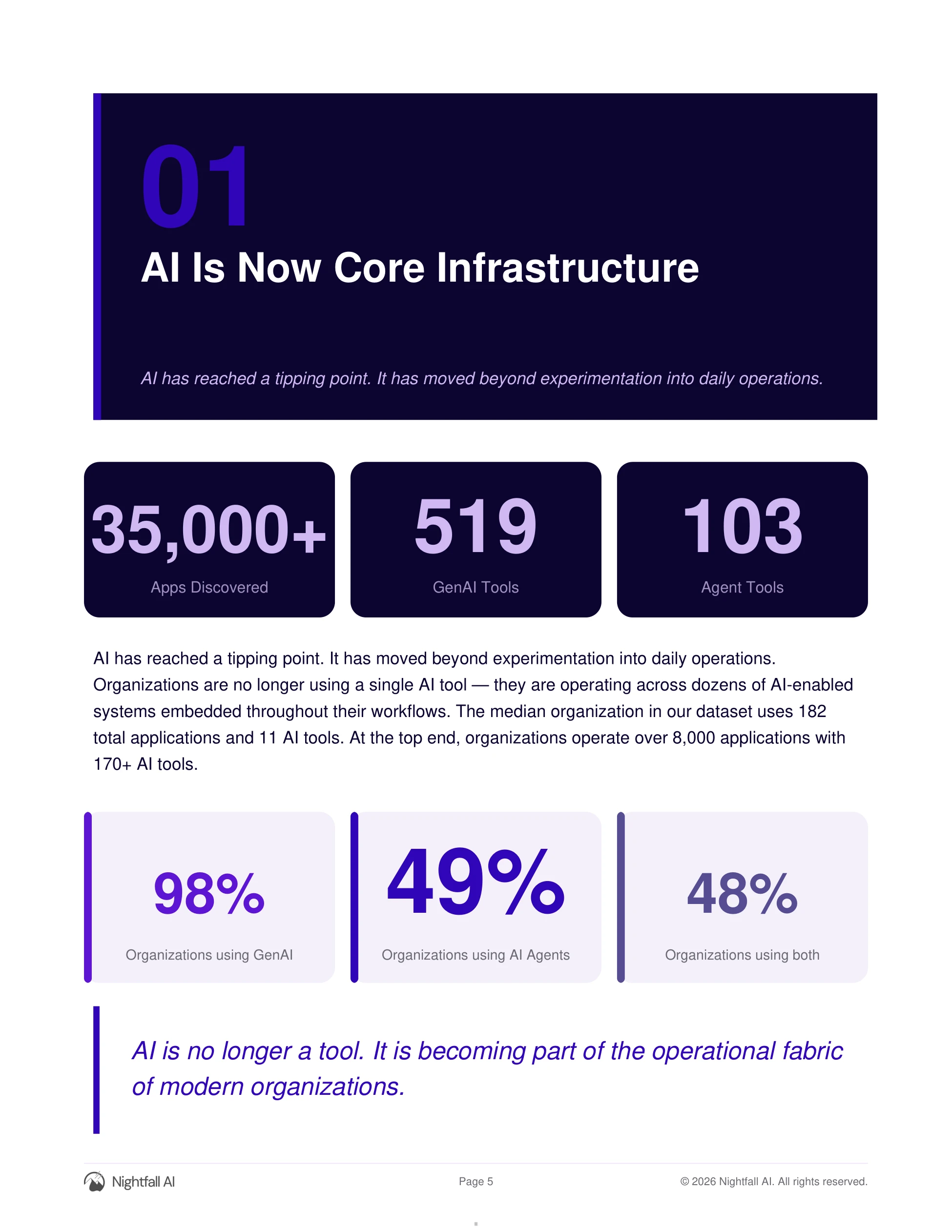

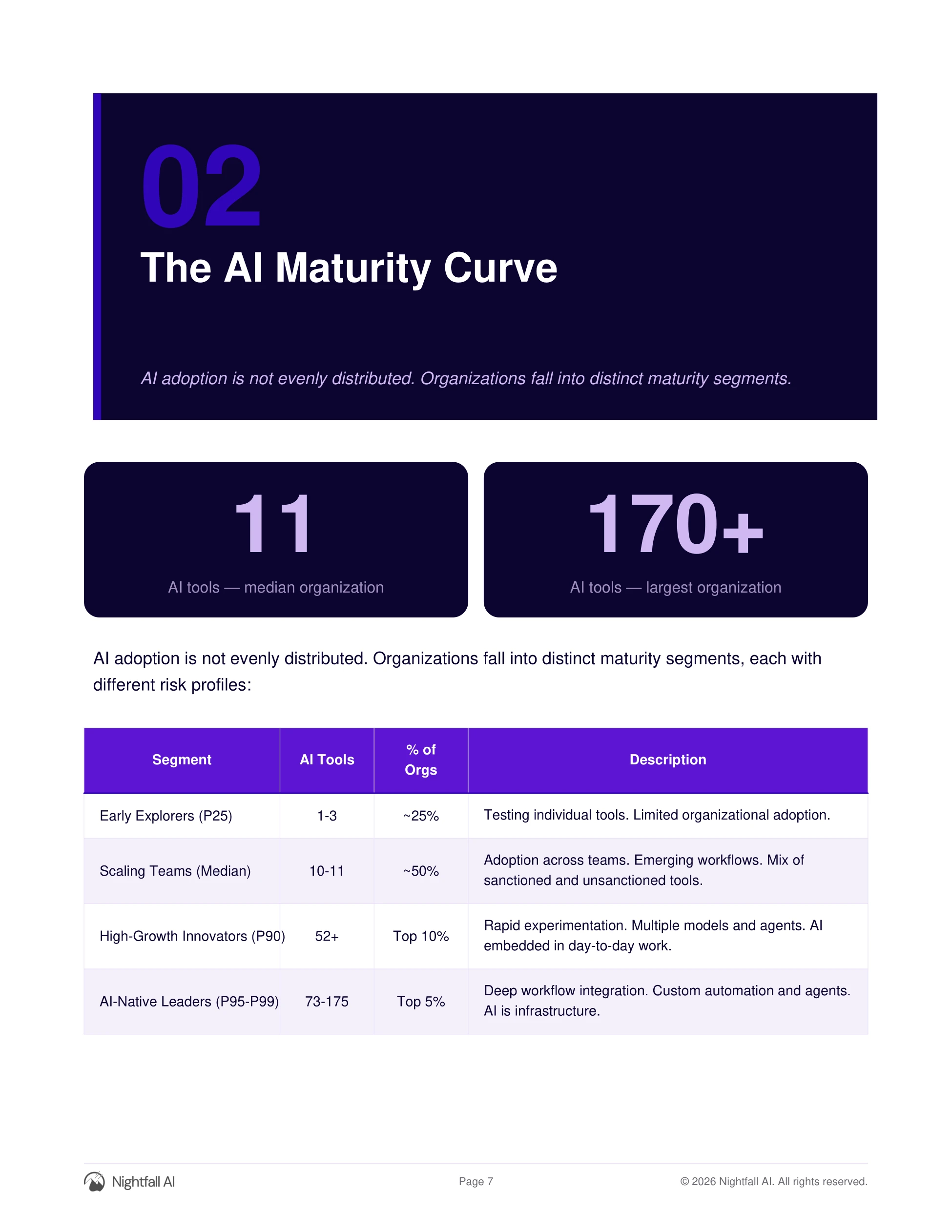
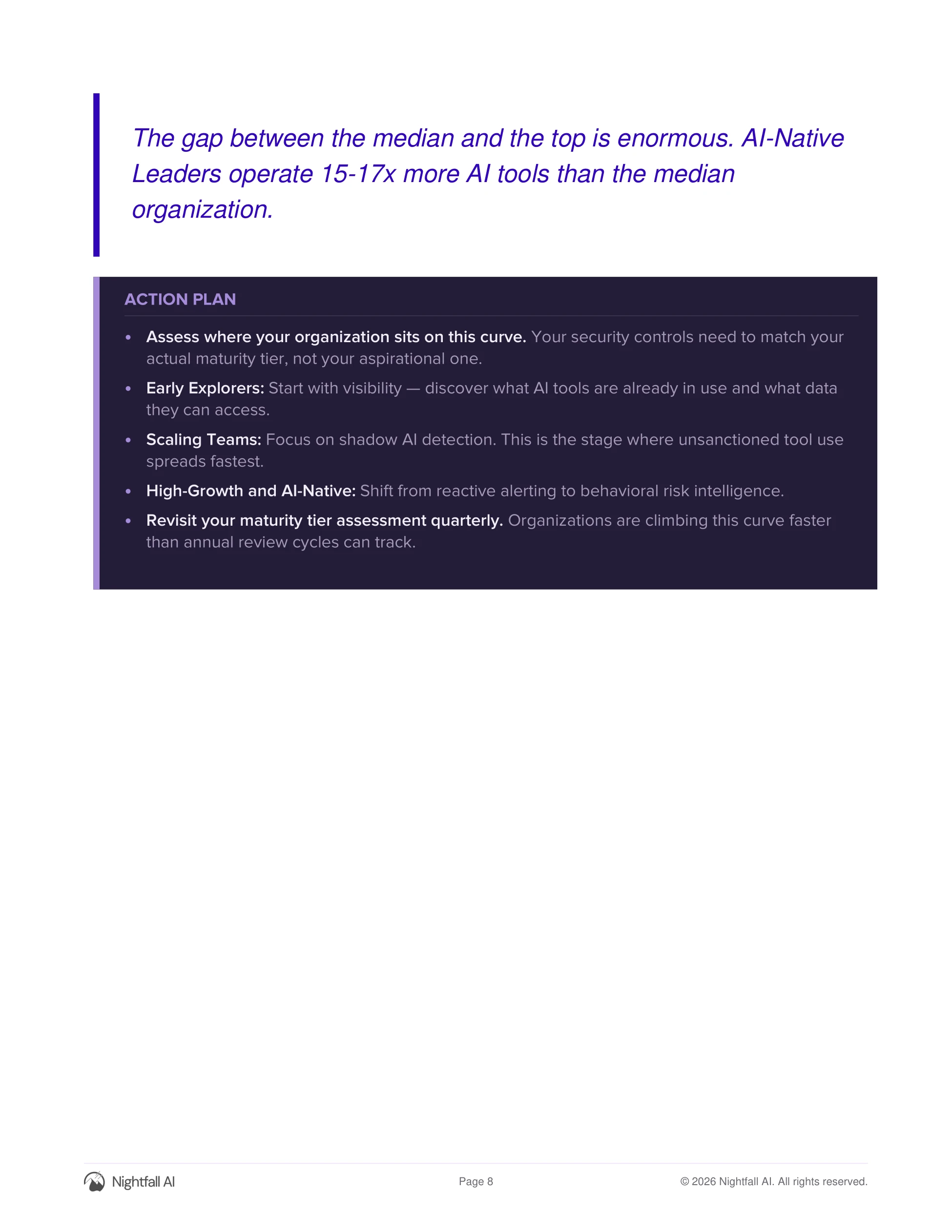
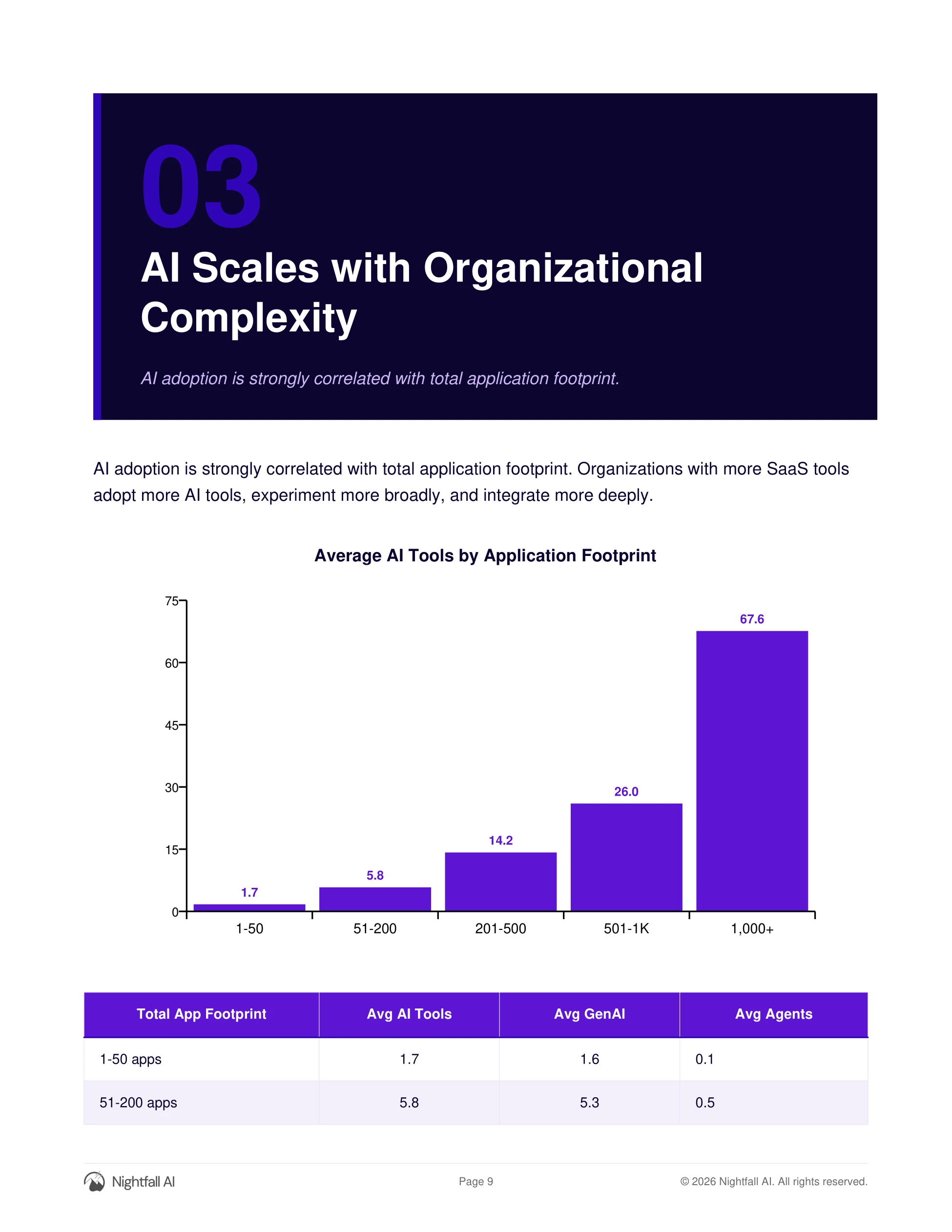
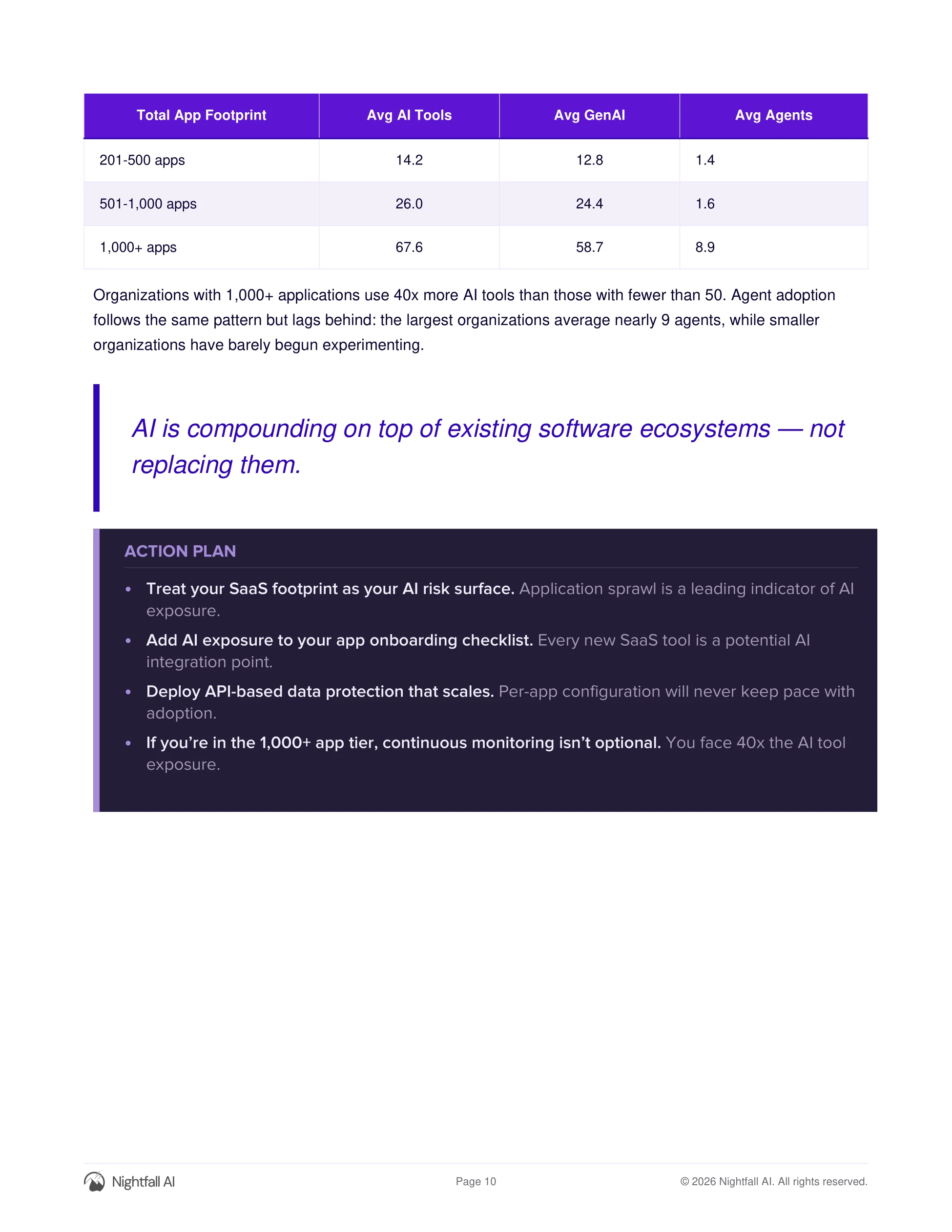
2026AI AgentRisk & ActionReportAI Adoption, Innovation, and theEmerging Risk LandscapeNightfall AI© 2026 Nightfall AI. All rights reserved.Table ofContentsExecutive SummaryKey FindingsSection 01AI Is Now Core InfrastructureSection 02The AI Maturity CurveSection 03AI Scales with Organizational ComplexitySection 04GenAI vs. AI Agents: Two Layers of AI AdoptionSection 05The Long Tail ProblemSection 06The Rise of Invisible AISection 07AI Risk Is Defined by Data ConnectivitySection 08The Rise of AI Connectivity InfrastructureSection 09Compound AI SystemsSection 10AI Adoption Across IndustriesSection 11The Nightfall AI Risk IndexConclusionPage 2© 2026 Nightfall AI. All rights reserved.ExecutiveSummaryArtificial intelligence has crossed a structural thresholdinside the enterprise. What began as isolated experimentationwith GenAI tools has evolved into something far moreconsequential: AI is now embedded across workflows,connected to core business systems, and increasinglyacting autonomously through agents.This report draws on anonymized, aggregated data from Nightfall’s customer base across technology, financial services,healthcare, and other industries, encompassing more than 35,000 distinct applications. The data provides a point-in-timeview into how AI is actually being adopted and used inside real enterprise environments — revealing patterns that are ofteninvisible to traditional security approaches.The core finding of this report is that AI risk is no longer defined by the tools themselves, but by the data connectivity theyenable. Every integration between an AI system and a SaaS platform, every agent connected to internal systems, and everyemerging protocol such as MCP introduces new pathways for sensitive data to flow. These pathways are dynamic,compound, and increasingly autonomous, making traditional approaches to data security insufficient.Legacy data loss prevention (DLP) technologies were not designed for this model. Built for an earlier era of email and filetransfers, they rely on static rules, generate high volumes of low-quality alerts, and lack visibility into the modern AIecosystem.Security leaders now face a different challenge. The question is no longer whether AI is being used, but how deeply it isembedded, what systems it can reach, and what data it can access. Managing this risk requires a shift from tool-centricgovernance to a data-centric model.AI is now part of how organizations operate. Risk has followed the same path. The enterprises that succeed in this nextphase will not be the ones that slow adoption, but the ones that build the controls to support it. In an AI-driven world,securing data—not just tools—is the only strategy that scales.Page 3© 2026 Nightfall AI. All rights reserved.Key Findings01Nightfall discovered more than 35,000 distinct applications in useacross its customer base, including 519 GenAI tools and 103 AIAgent tools.02The median organi...