

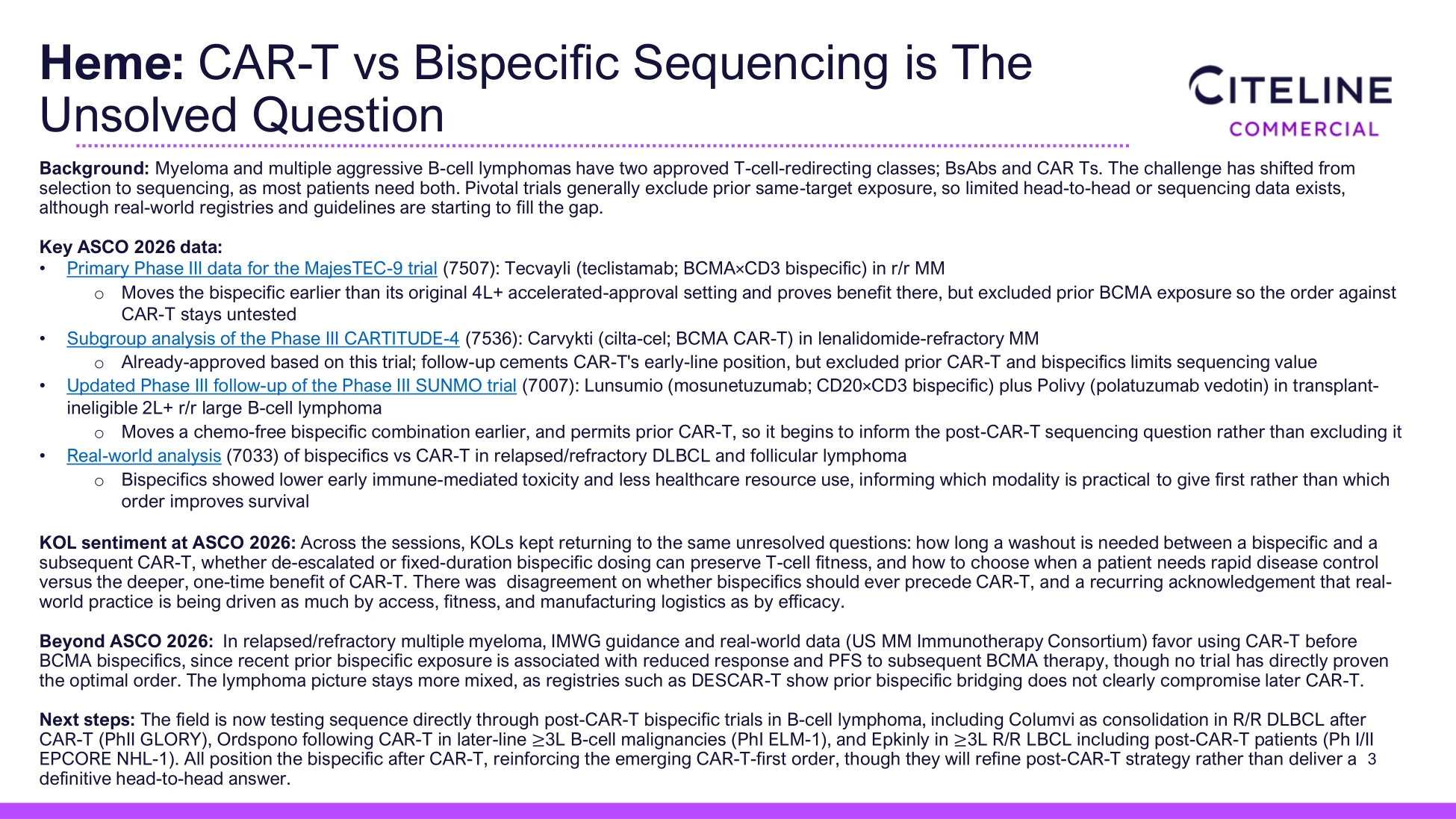
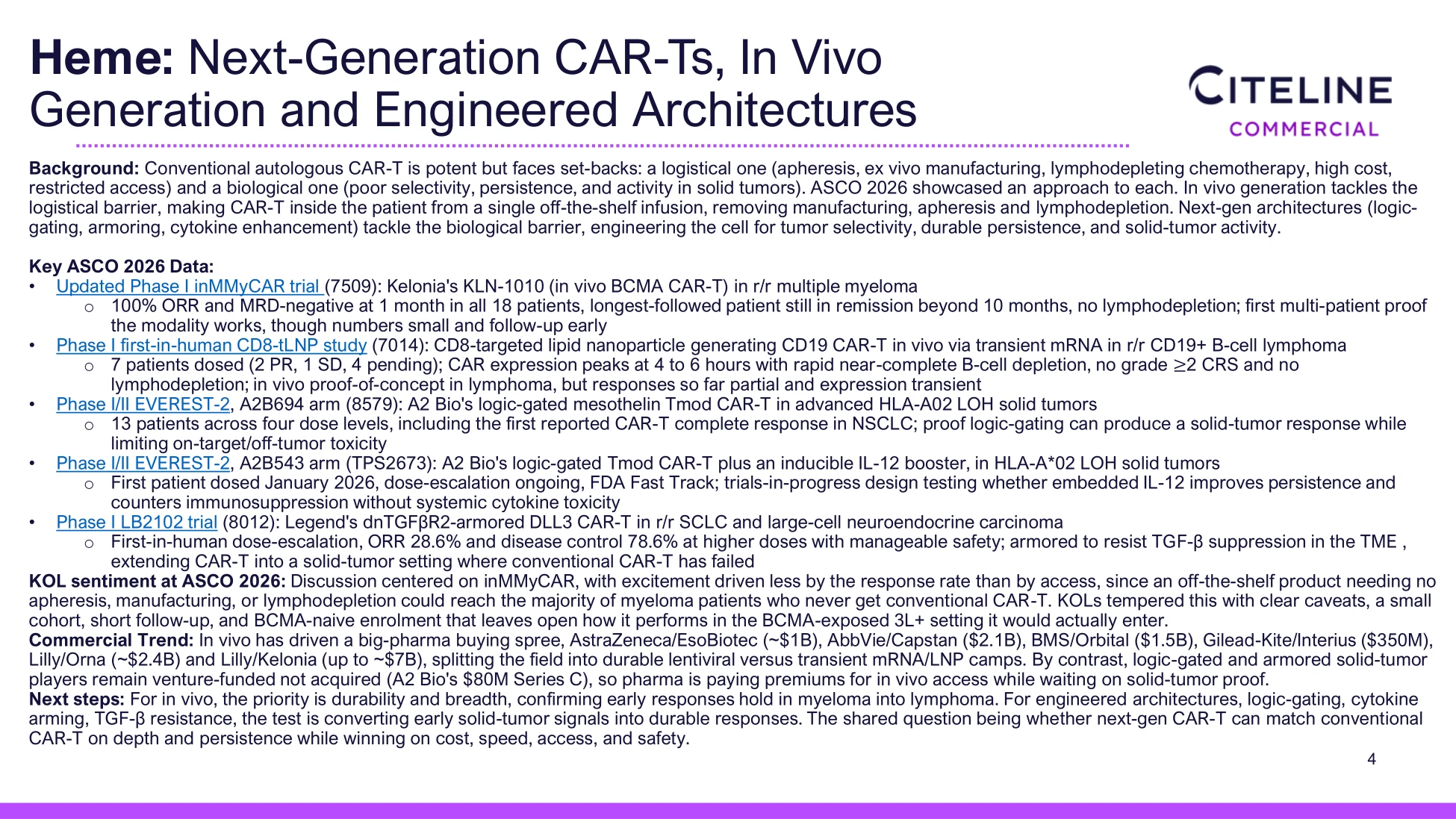

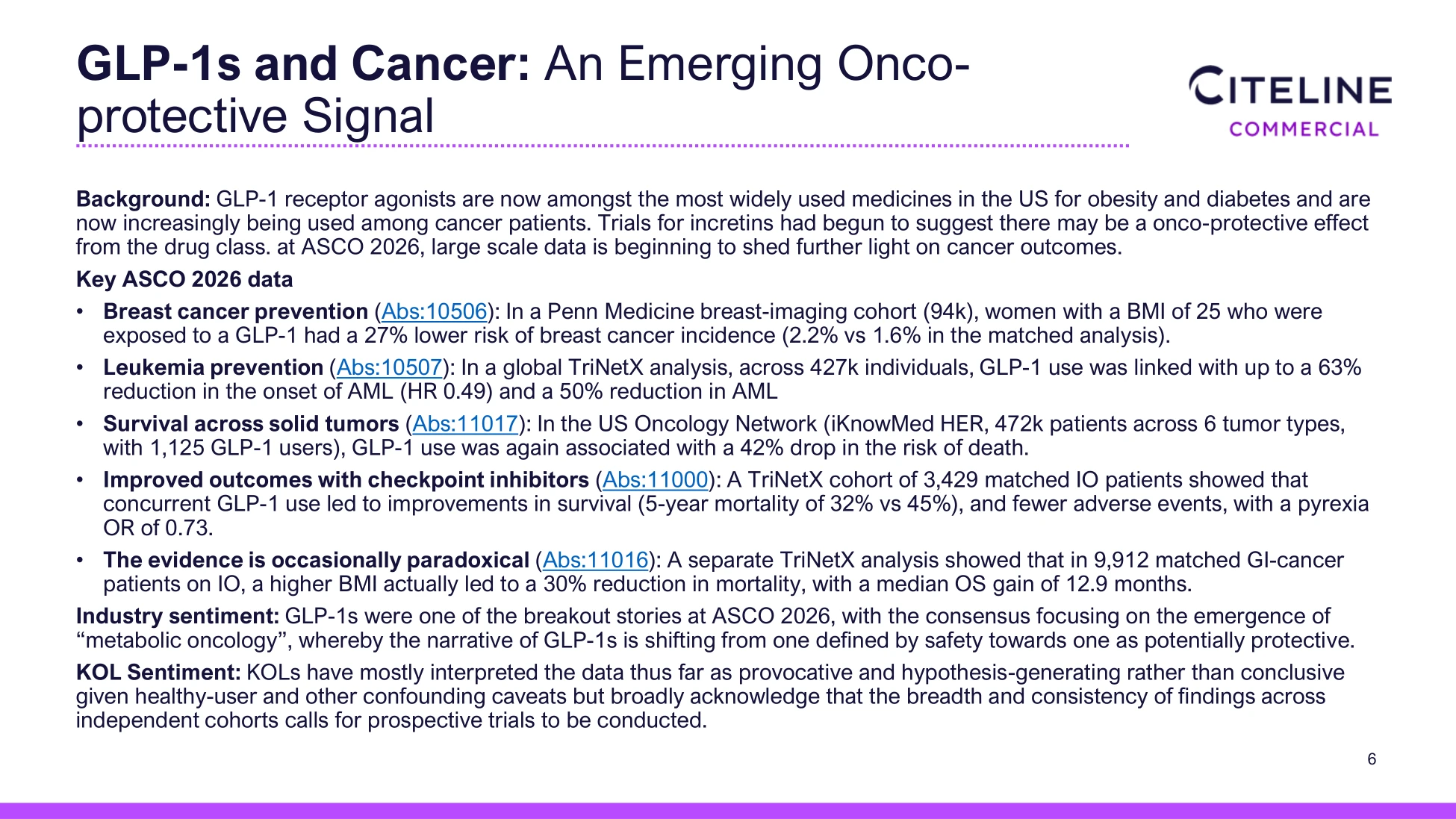
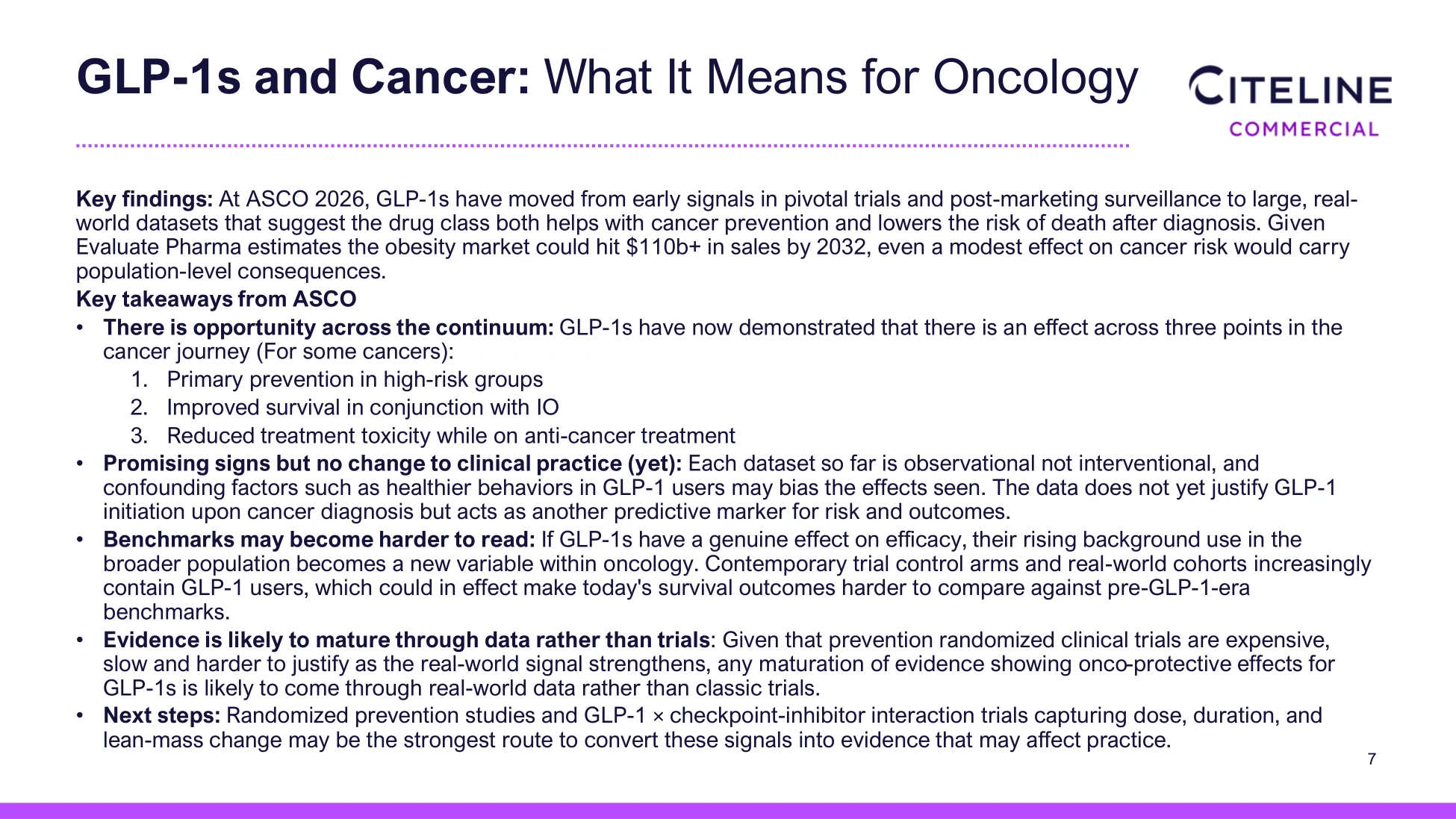
ICYMI: 6 Key Trends at ASCO 2026C I T E L I N E . C O MHeme: the CAR-T vs. bispecific sequencing question, plus in-vivo CAR-T arrivesBackground: Myeloma and multiple aggressive B-cell lymphomas have two approved T-cell-redirecting classes; BsAbs and CAR Ts. The challenge has shifted from selection to sequencing, as most patients need both. Pivotal trials generally exclude prior same-target exposure, so limited head-to-head or sequencing data exists, although real-world registries and guidelines are starting to fill the gap. Key ASCO 2026 data:•Primary Phase III data for the MajesTEC-9 trial (7507): Tecvayli (teclistamab; BCMA×CD3 bispecific) in r/r MMoMoves the bispecific earlier than its original 4L+ accelerated-approval setting and proves benefit there, but excluded prior BCMA exposure so the order against CAR-T stays untested•Subgroup analysis of the Phase III CARTITUDE-4 (7536): Carvykti (cilta-cel; BCMA CAR-T) in lenalidomide-refractory MM oAlready-approved based on this trial; follow-up cements CAR-T's early-line position, but excluded prior CAR-T and bispecifics limits sequencing value•Updated Phase III follow-up of the Phase III SUNMO trial (7007): Lunsumio (mosunetuzumab; CD20×CD3 bispecific) plus Polivy (polatuzumab vedotin) in transplant-ineligible 2L+ r/r large B-cell lymphoma oMoves a chemo-free bispecific combination earlier, and permits prior CAR-T, so it begins to inform the post-CAR-T sequencing question rather than excluding it•Real-world analysis (7033) of bispecifics vs CAR-T in relapsed/refractory DLBCL and follicular lymphomaoBispecifics showed lower early immune-mediated toxicity and less healthcare resource use, informing which modality is practical to give first rather than which order improves survivalKOL sentiment at ASCO 2026: Across the sessions, KOLs kept returning to the same unresolved questions: how long a washout is needed between a bispecific and a subsequent CAR-T, whether de-escalated or fixed-duration bispecific dosing can preserve T-cell fitness, and how to choose when a patient needs rapid disease control versus the deeper, one-time benefit of CAR-T. There was disagreement on whether bispecifics should ever precede CAR-T, and a recurring acknowledgement that real-world practice is being driven as much by access, fitness, and manufacturing logistics as by efficacy.Beyond ASCO 2026: In relapsed/refractory multiple myeloma, IMWG guidance and real-world data (US MM Immunotherapy Consortium) favor using CAR-T before BCMA bispecifics, since recent prior bispecific exposure is associated with reduced response and PFS to subsequent BCMA therapy, though no trial has directly proven the optimal order. The lymphoma picture stays more mixed, as registries such as DESCAR-T show prior bispecific bridging does not clearly compromise later CAR-T.Next steps: The field is now testing sequence directly through post-CAR-T bispecific trials in ...







































