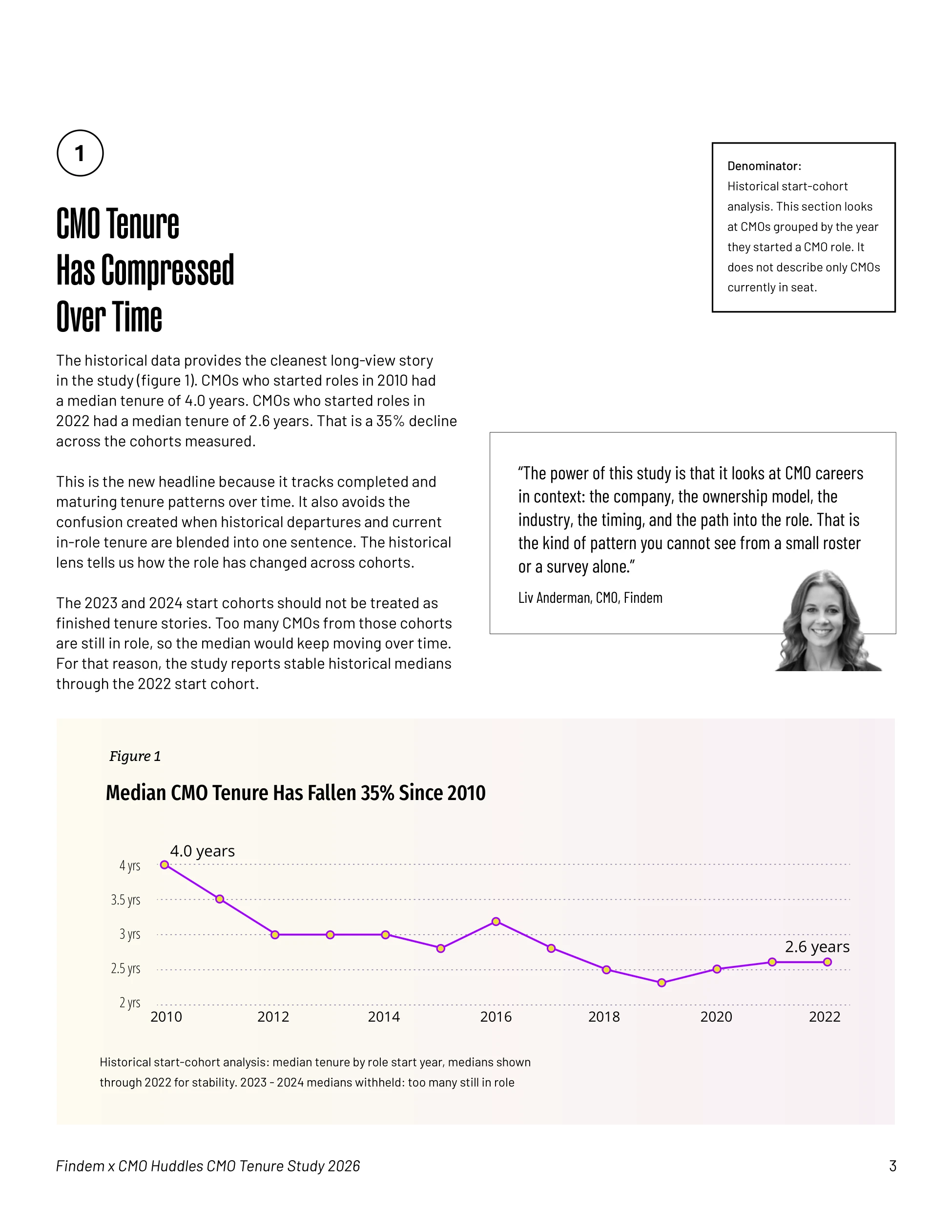
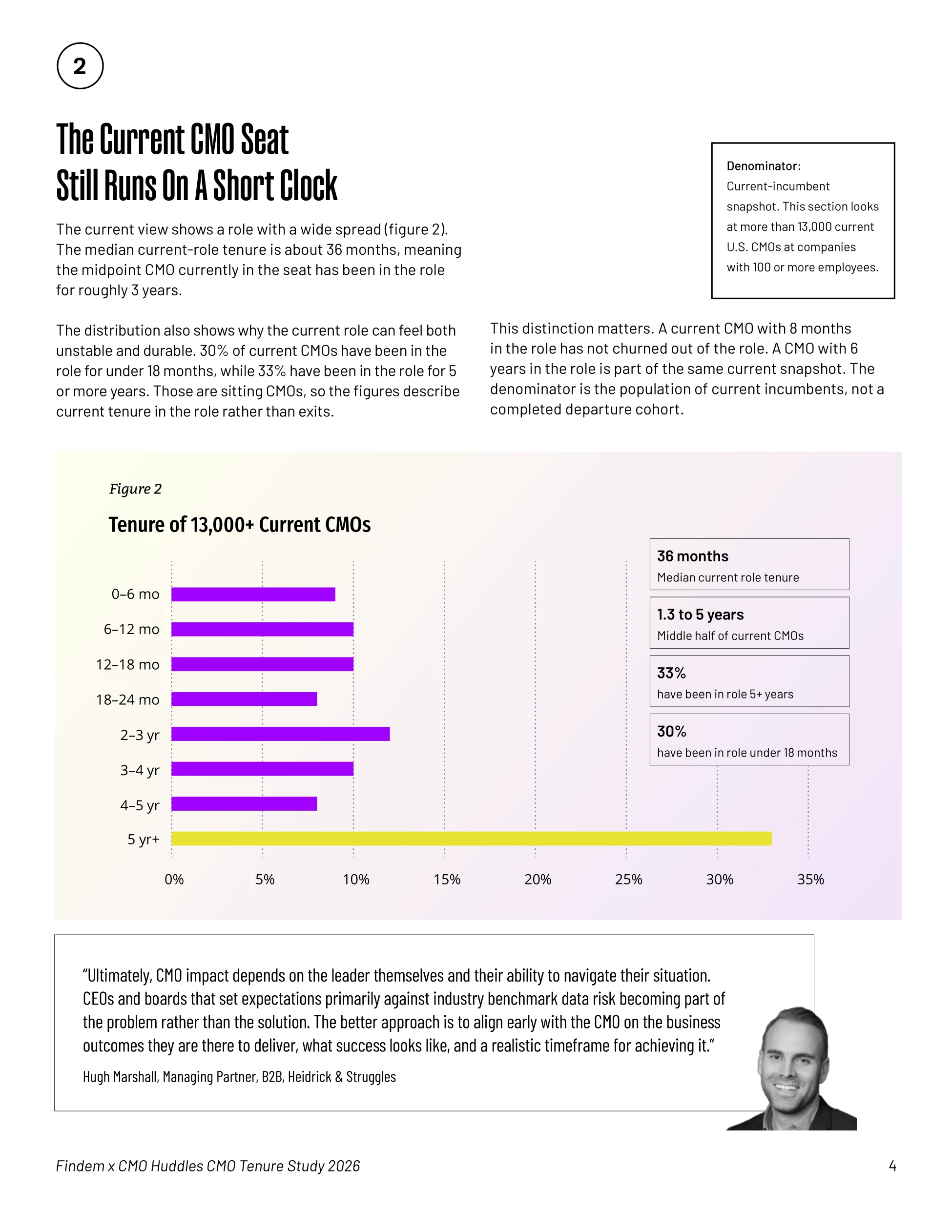
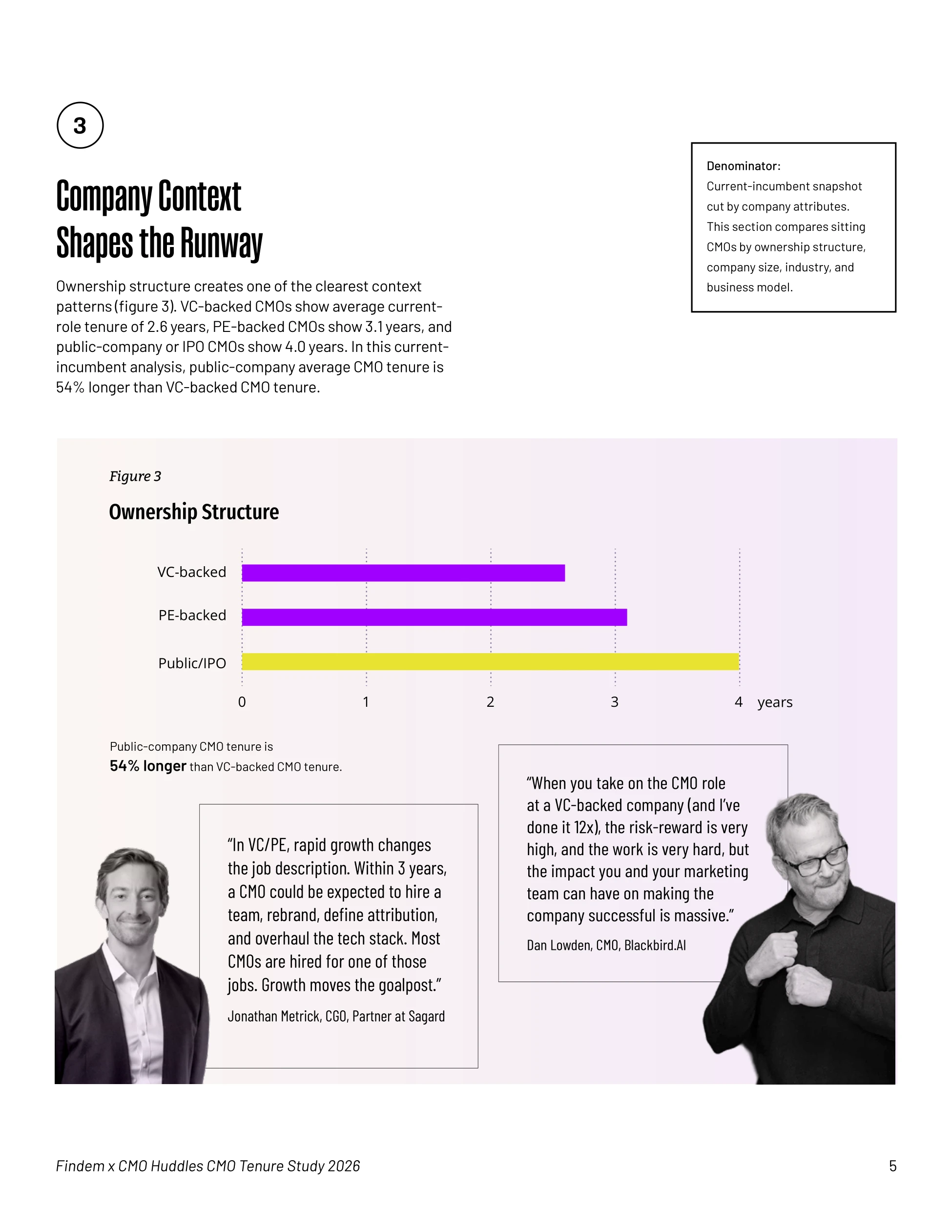
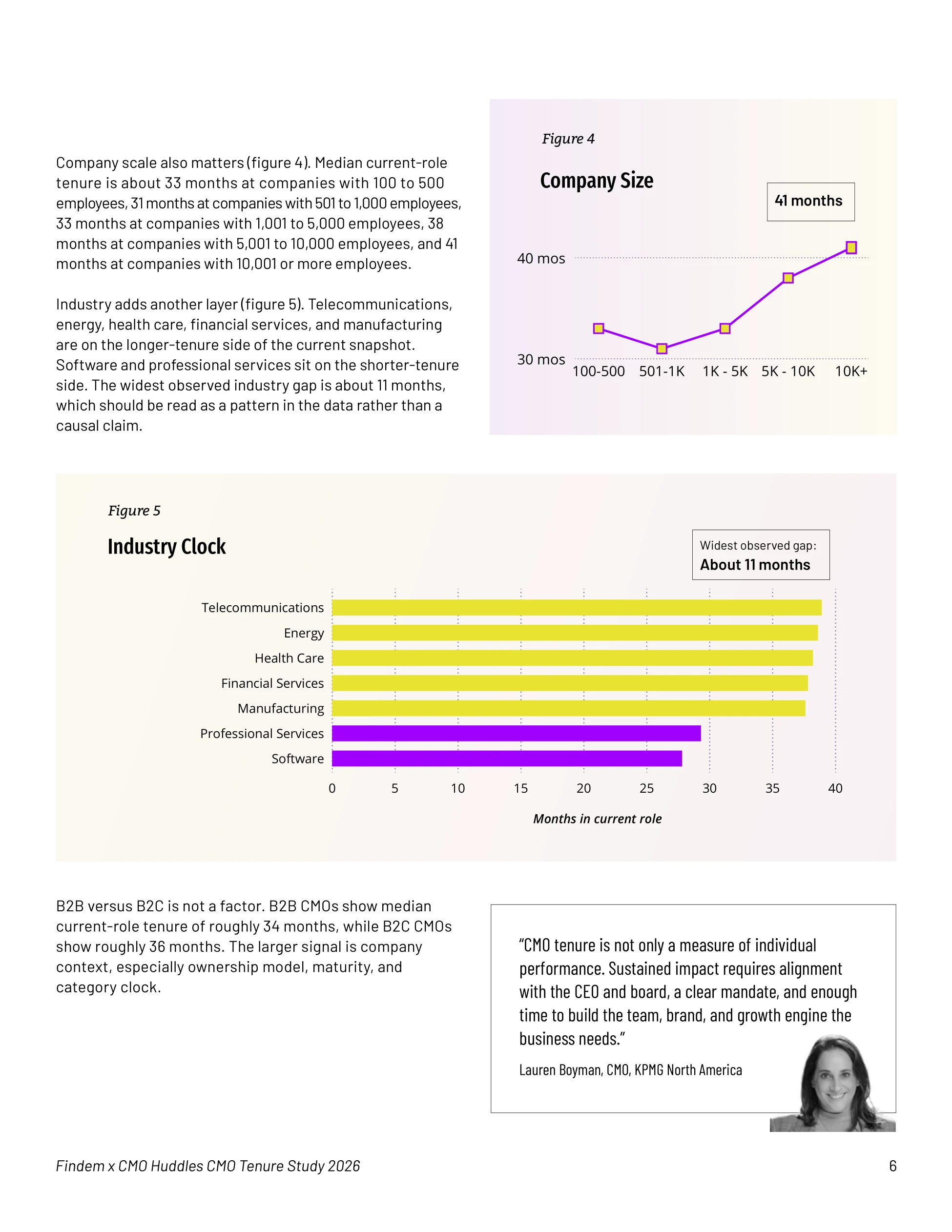
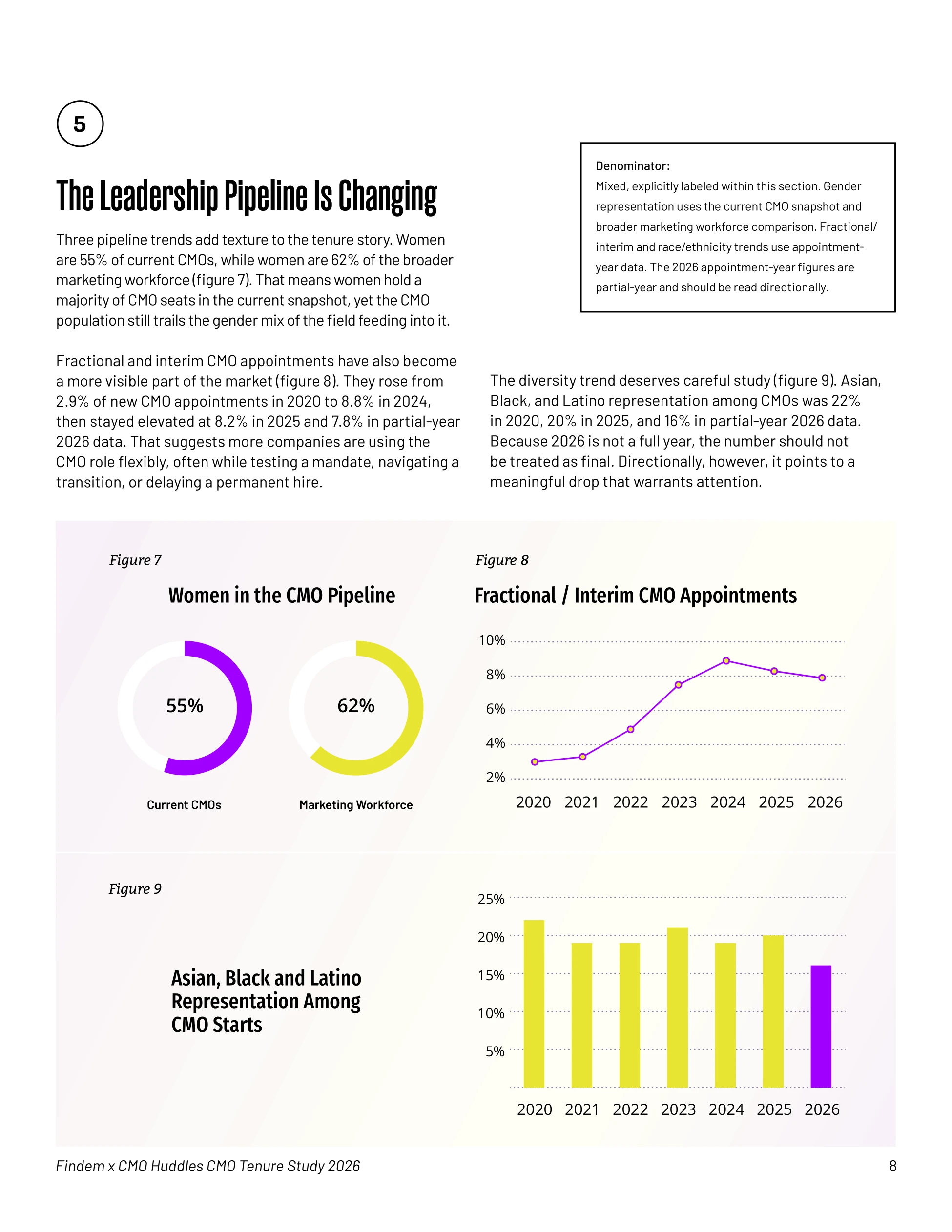
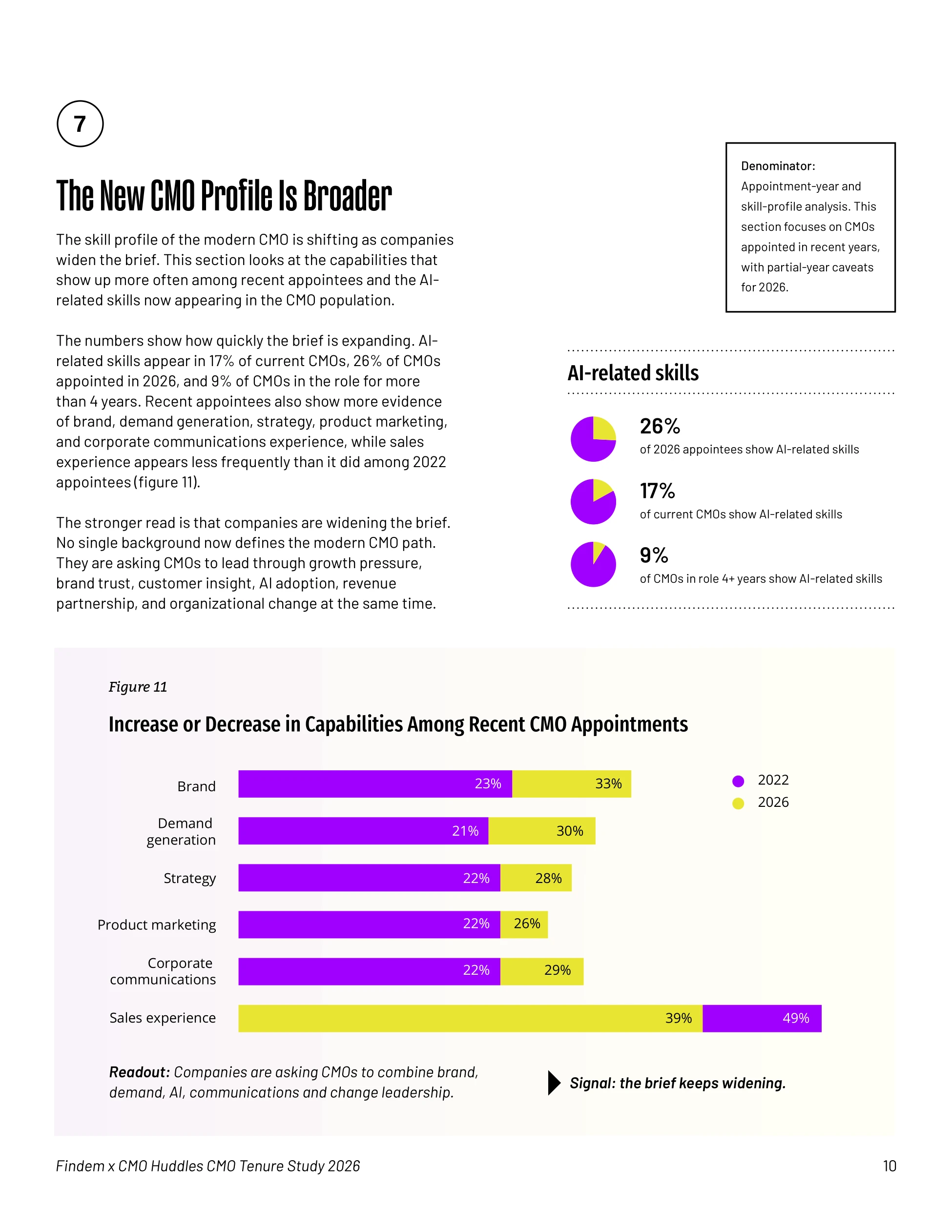
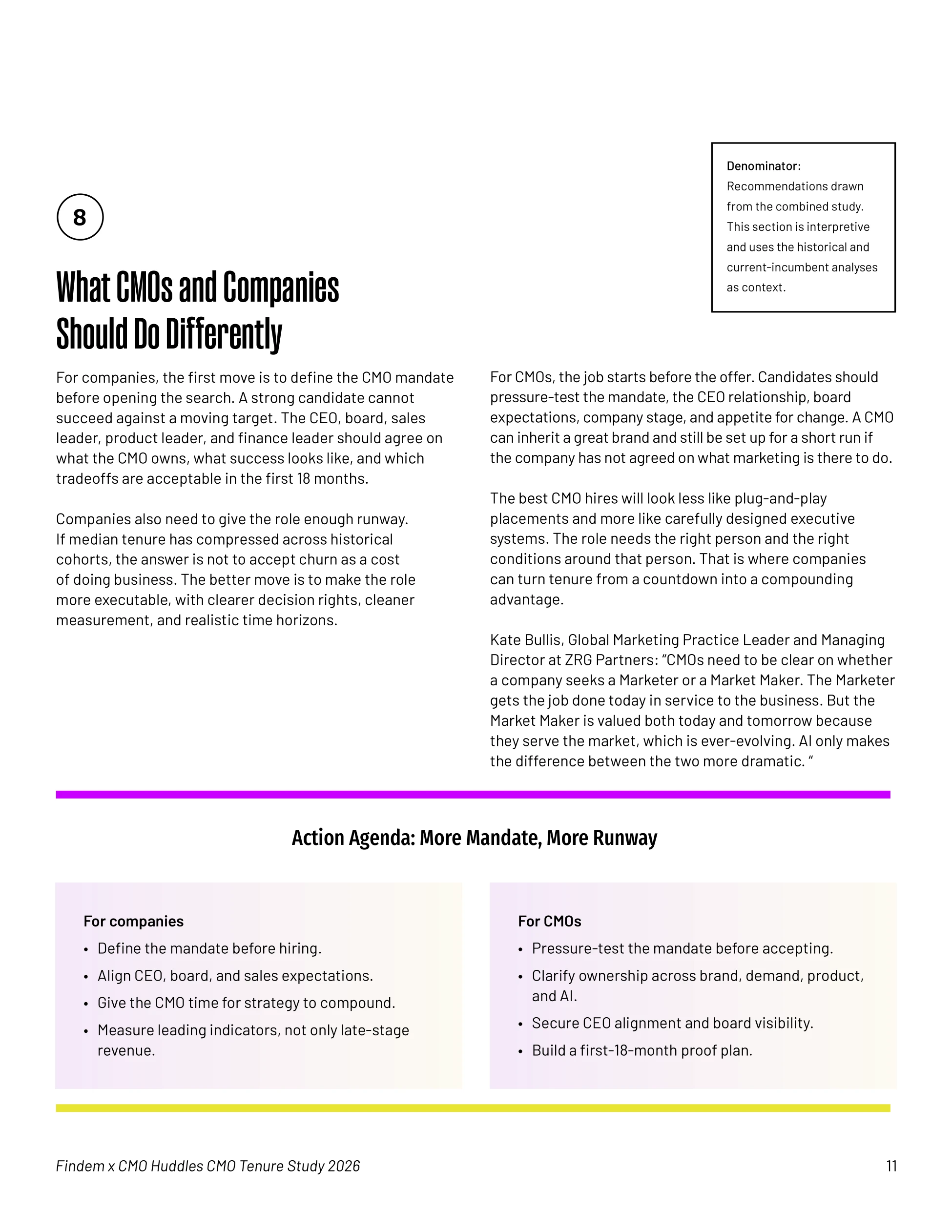
Largest CMO Tenure Study Ever Reveals An Evolving CMO RoleFindem x CMO Huddles CMO Tenure Study 20262Findem x CMO Huddles CMO Tenure Study 2026Executive SummaryFor years, short CMO tenure has been a headline without detail. What is new in this study is the scale of evidence showing how the role is changing, how tenure has compressed over time, and how much the runway still depends on the company around the CMO.Findem and CMO Huddles analyzed CMO tenure in two distinct ways. The historical start-cohort analysis looks back at CMOs by the year they started a role, which shows how tenure has changed over time. The current-incumbent snapshot looks at more than 13,000 current U.S. CMOs at companies with 100 or more employees, which shows who is in the seat today and how tenure varies by company context.The biggest historical finding is stark: median CMO tenure has fallen 35% since the 2010 start cohort, from 4.0 years for CMOs who started in 2010 to 2.6 years for CMOs who started in 2022. The analysis stops the median line at 2022 because more recent cohorts still have too many CMOs in role for their final medians to be stable.The current snapshot adds a second layer. Among current CMOs, median current-role tenure is about 36 months. The middle half of current CMOs have been in role for 1.3 to 5 years, 33% have been in role for 5 or more years, and 30% have been in role for under 18 months. The data also shows that CMO tenure is shaped by context. Public-company CMOs show longer average current-role tenure than VC-backed and PE-backed CMOs. Larger companies generally show longer current-role tenure. Industry differences are real too, with an observed gap of roughly 11 months between the longest-tenure and shortest-tenure industry groups.A final set of findings suggests the CMO pipeline is changing. Women are 55% of current CMOs, compared with 62% of the broader marketing workforce. Fractional and interim CMO appointments rose sharply after 2020 and remain elevated. Asian, Black, and Latino representation among CMO starts was 16% in partial-year 2026 data, down from 20% in 2025 and 22% in 2020. The appointment path adds another signal: among CMOs appointed in 2026, 60% are first-time CMOs and only 19% were promoted internally.The role is getting more complex, more situational, and more dependent on the match between mandate, company maturity, and executive alignment. Tenure compression is one symptom of a broader reset. For companies, the message is to design the role with clearer expectations and more runway. For CMOs, the message is to inspect the mandate before taking the seat.“This study is 20x larger than its predecessors, giving us a more definitive and granular look at CMO tenure. For CMOs and aspiring leaders, this new data is clear-eyed career guidance. For companies, this should be a fire alarm, callin...







































