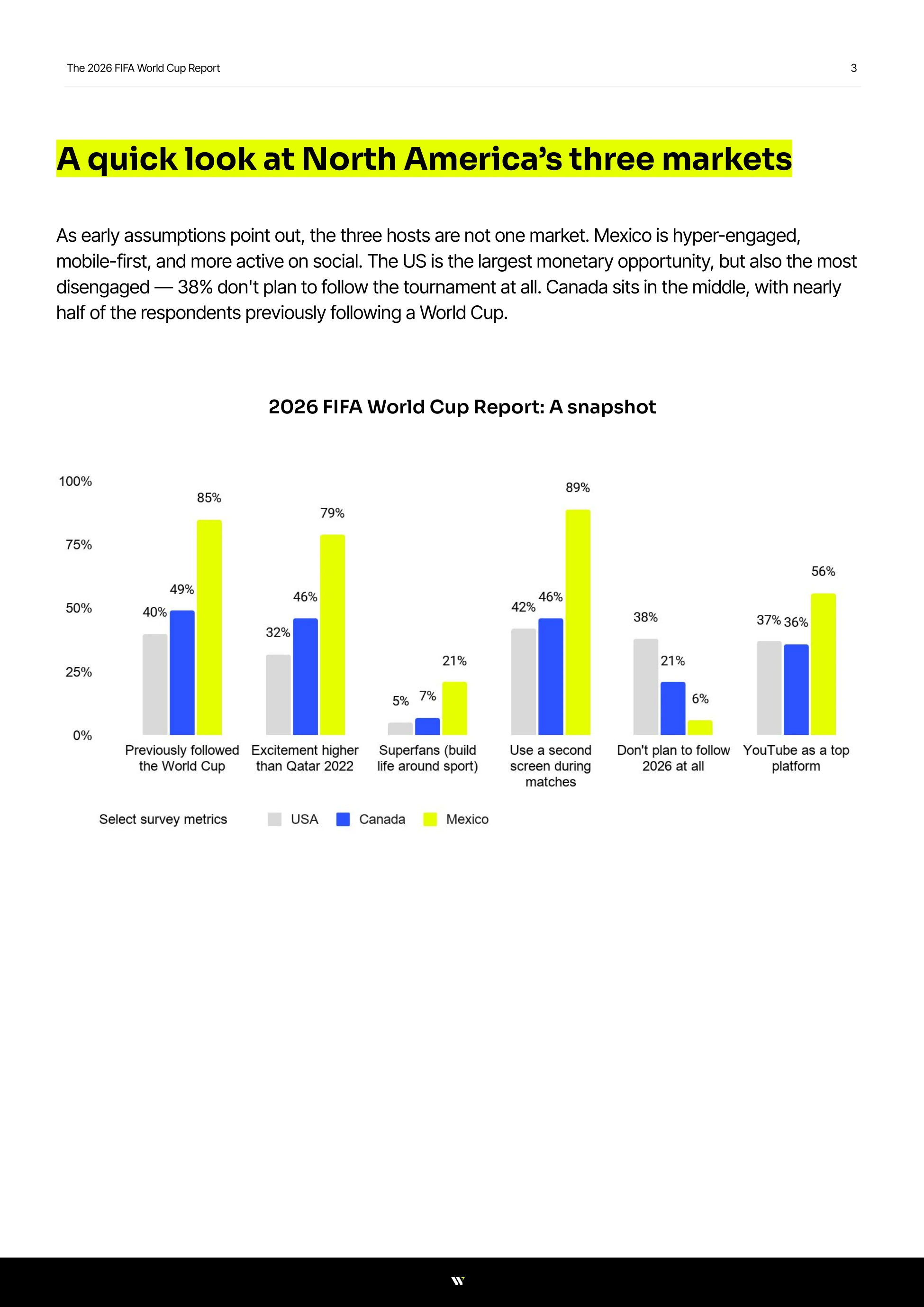
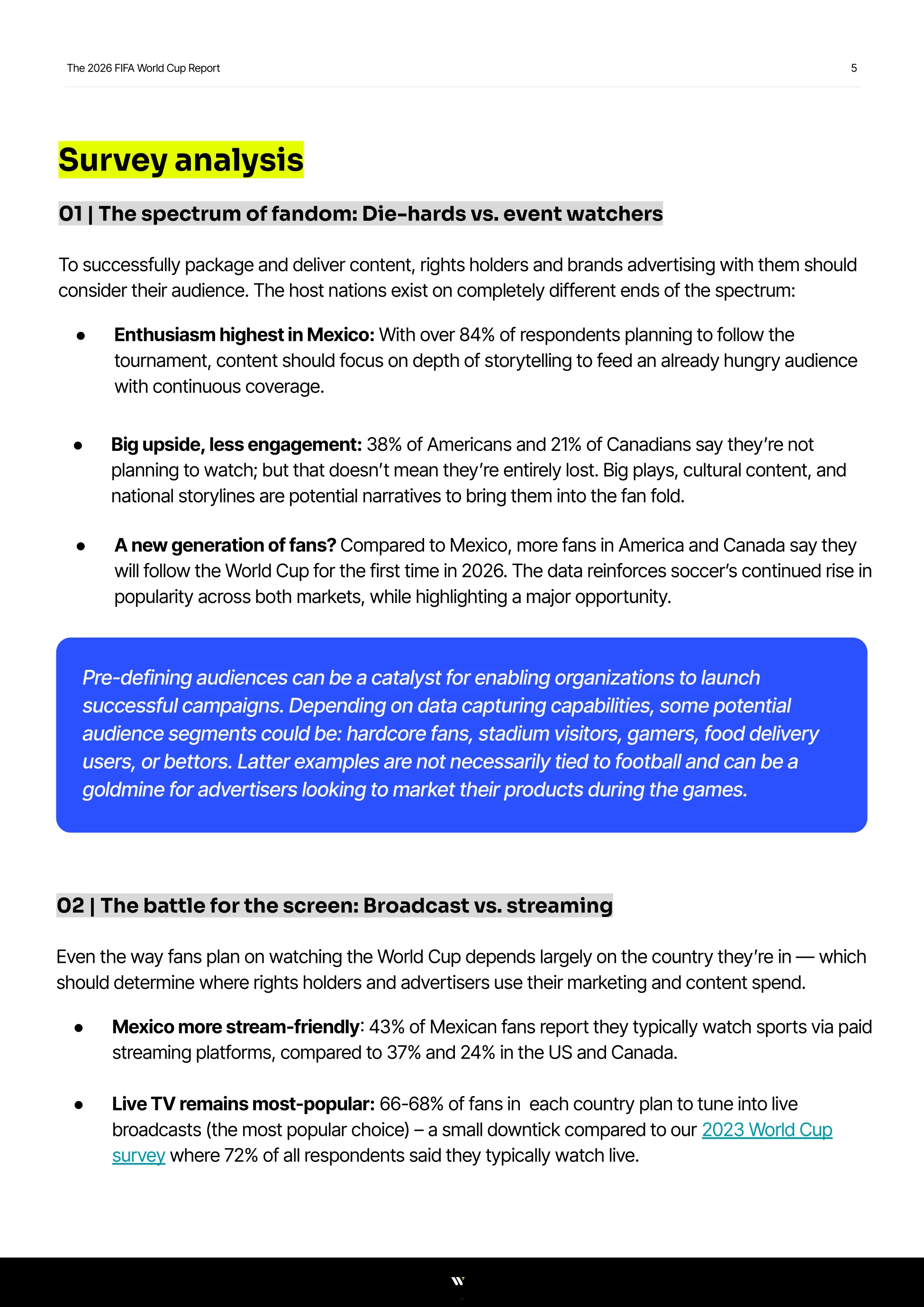
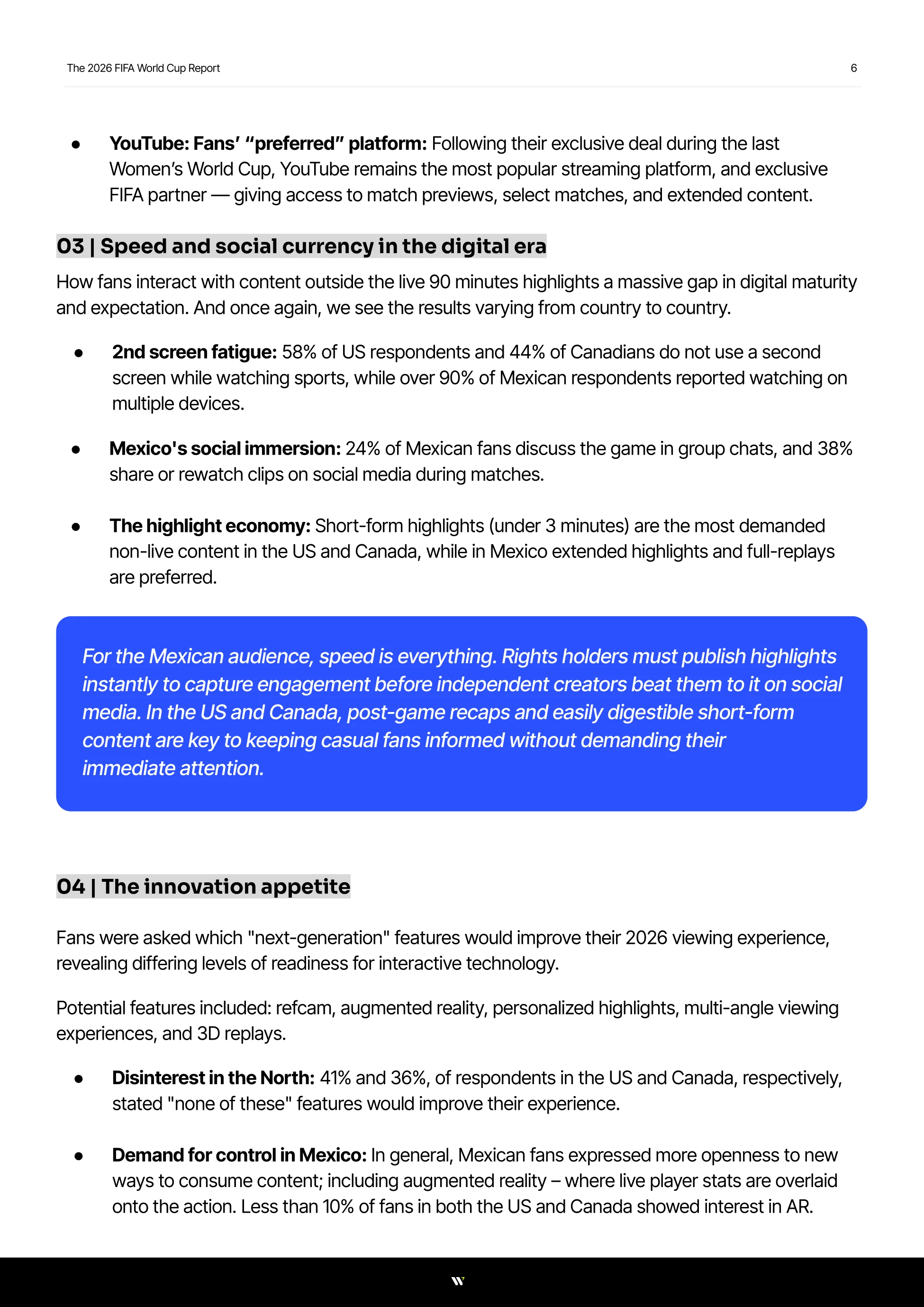

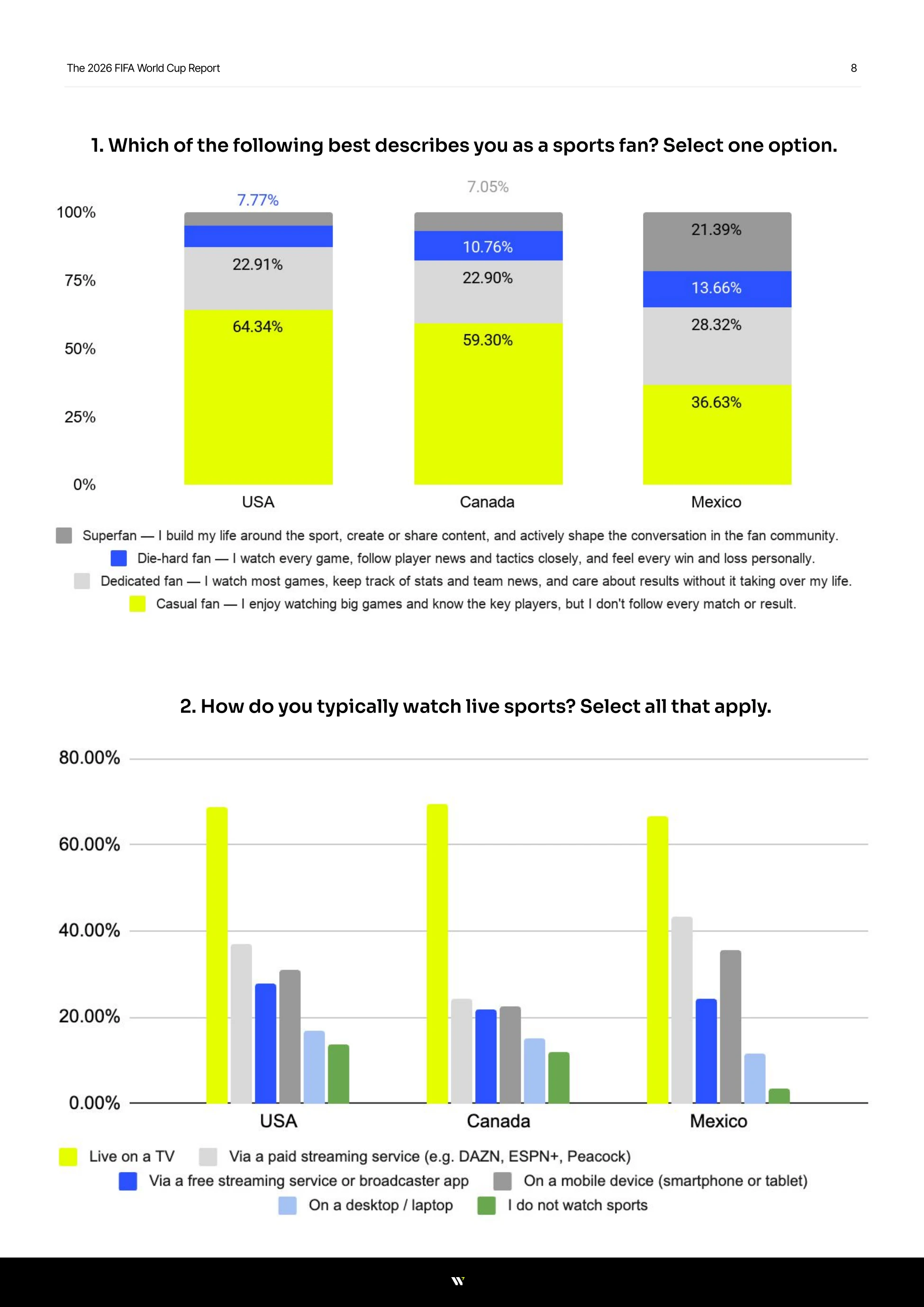
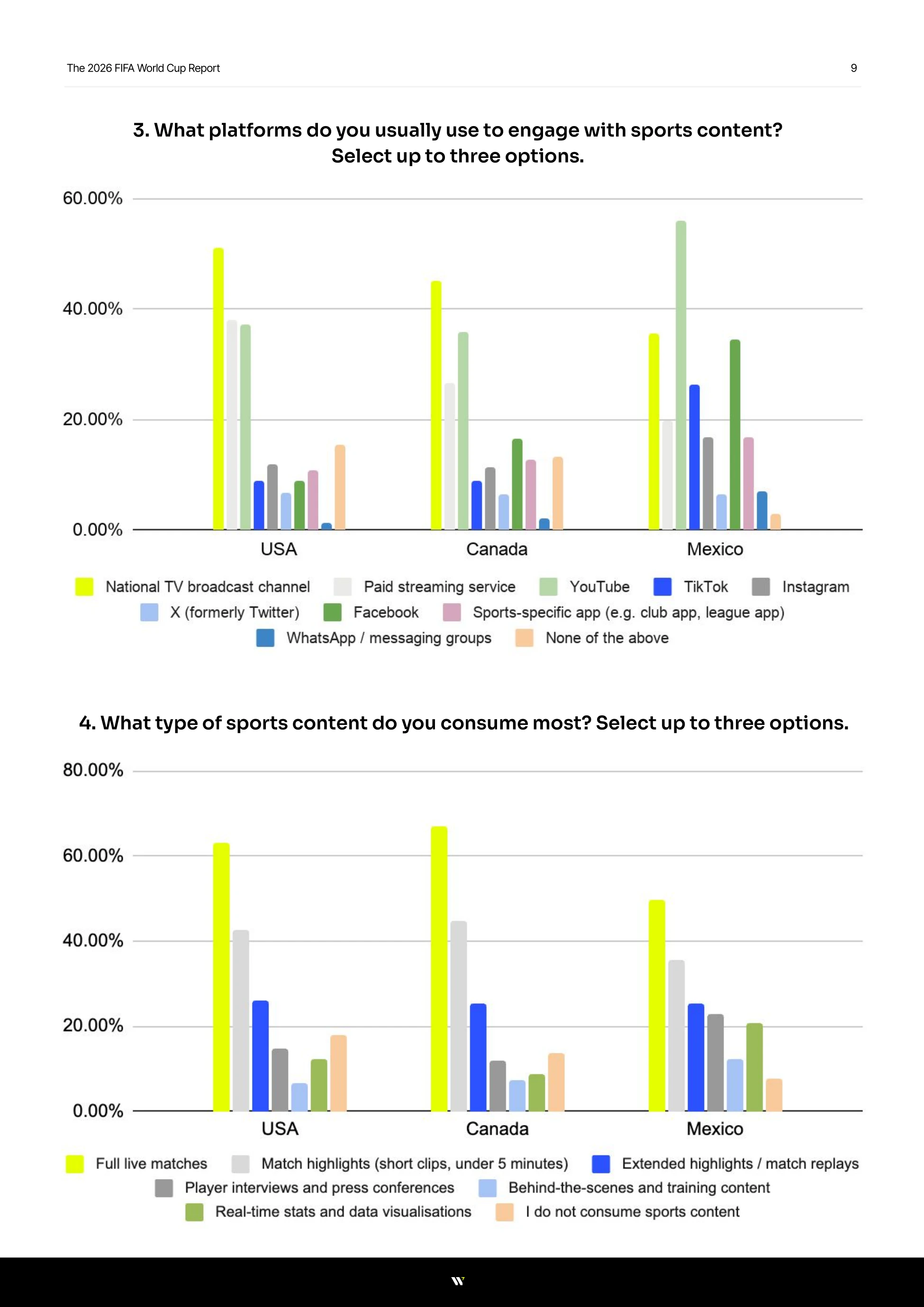
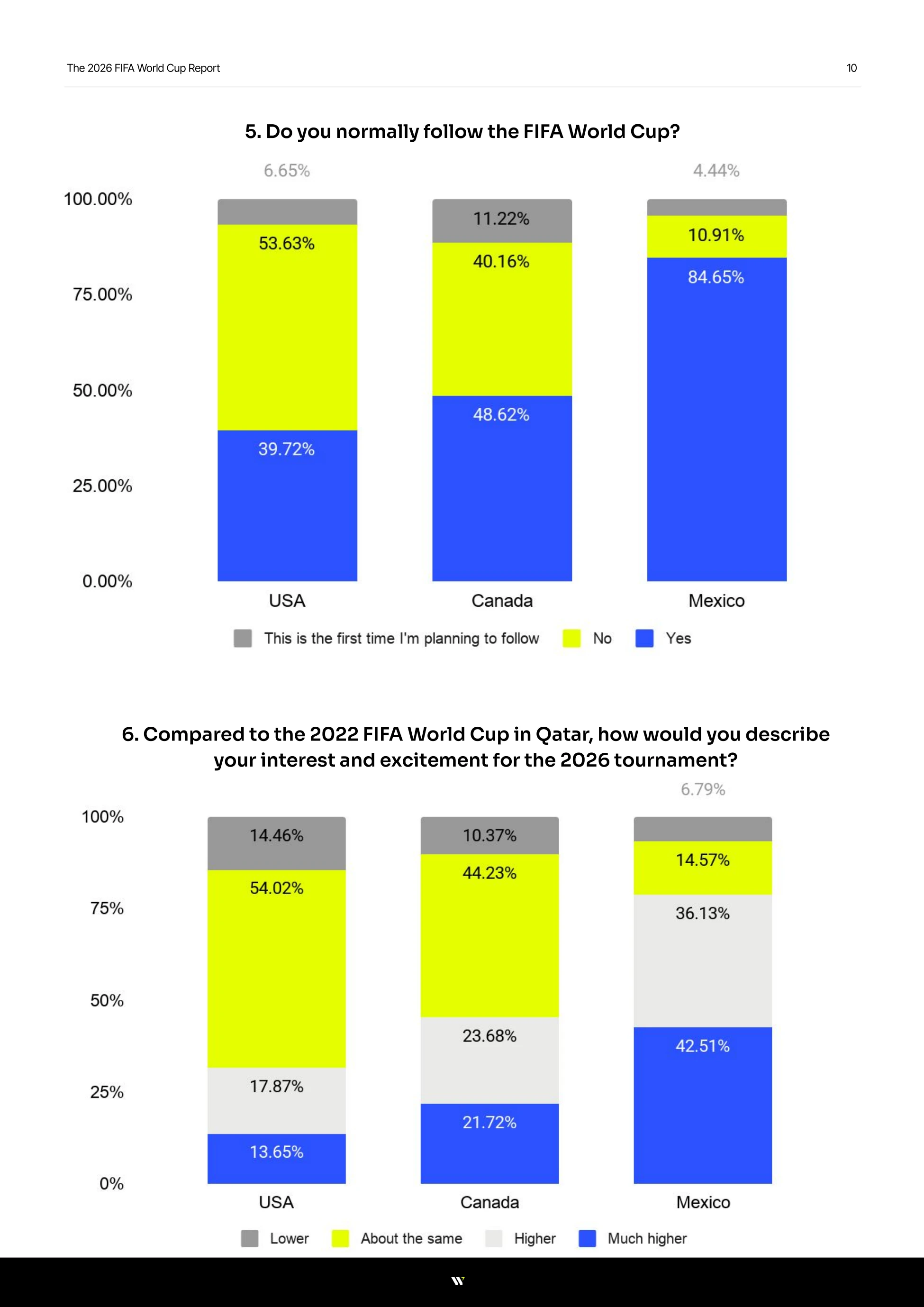
The 2026 FIFA World Cup Report: Engaging the Host Nations wsc-sports.com Linkedin | X | Podcast2To better understand fan behavior leading up to the 2026 FIFA World Cup, we surveyed over 1,500 sports fans about their viewing habits and expectations ahead of the world's biggest international tournament.Canada, Mexico, and the United States share hosting duties, but each countryʼs relationship with soccer, media, and fandom in general is entirely unique.In the US, soccer is gaining popularity but is overshadowed by the four major US sports. In Canada, sports fandom is dominated by hockey. More recently, though, soccer has increased its popularity among a younger, more diverse population and recent national team success. In stark contrast, soccer in Mexico is a symbol of national pride, and deeply part of street culture, daily life, and family gatherings — even more so during the World Cup. The survey data revealed deep divides in fandom intensity and consumption habits. For rights holders and brands looking to advertise during the tournament, success will depend on tailoring content and messaging to each audience. These findings can serve as a guideline. Executive summaryThe survey was completed by 1,500 self-identifying sports fans — 500 fans from each of the three host nations: Canada, Mexico, and the United States. Participants completed an online, quantitative questionnaire about their sports fandom, viewing habits, content preferences, and expectations during the tournament. MethodologyThe 2026 FIFA World Cup Report3As early assumptions point out, the three hosts are not one market. Mexico is hyper-engaged, mobile-first, and more active on social. The US is the largest monetary opportunity, but also the most disengaged — 38% don't plan to follow the tournament at all. Canada sits in the middle, with nearly half of the respondents previously following a World Cup. A quick look at North America’s three markets2026 FIFA World Cup Report: A snapshotThe 2026 FIFA World Cup Report4Soccer fandom in Canada, compared to more established football markets, is highly event-driven, with many viewers engaging primarily around major national moments rather than year-round competition. For rights holders and advertisers, the opportunity is not simply reach, but habit-building: using the World Cup to turn occasional viewers into consistent fans through exciting storytelling, national narratives, and post-match digital content.Canada: The momentum marketFootball in Mexico is already deeply embedded in culture, with fans engaging far beyond the live match itself. Unlike the US and Canada, the challenge is not building interest, but sustaining fansʼ attention across the entire tournament. The biggest opportunity is in real-time engagement: delivering instant highlights, new content formats, and socially-driven content that keeps fans connected before, during, ...







































