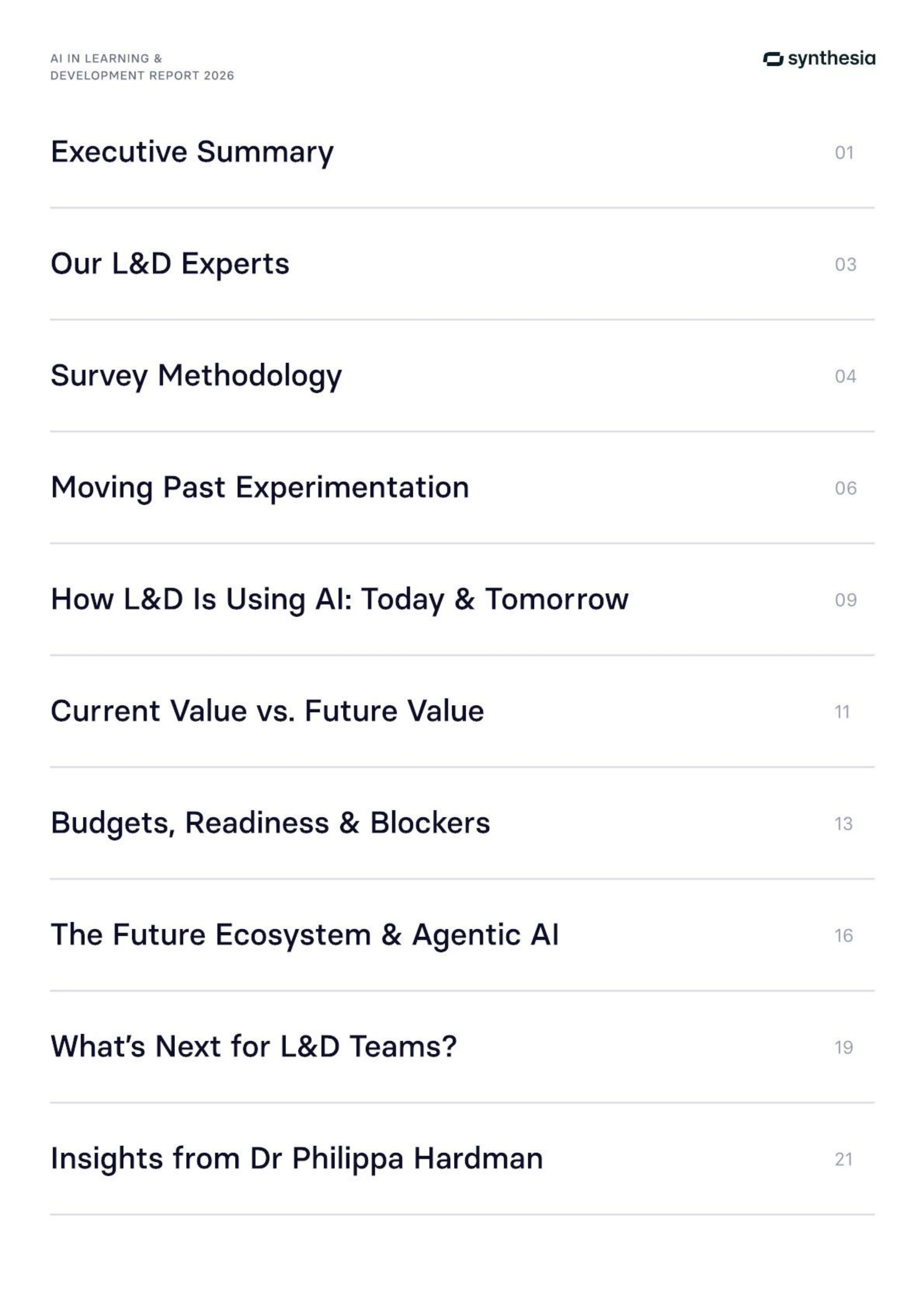
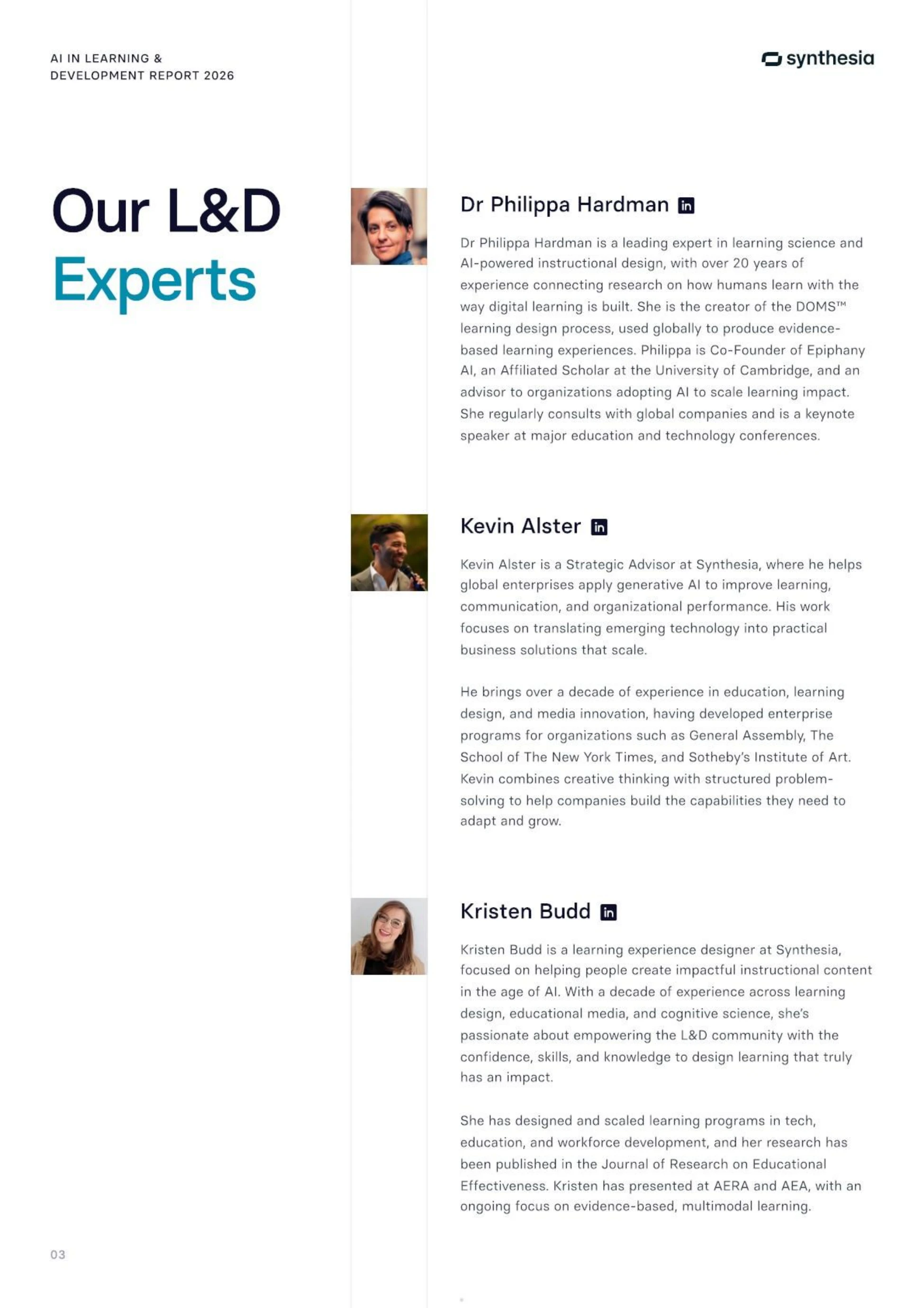
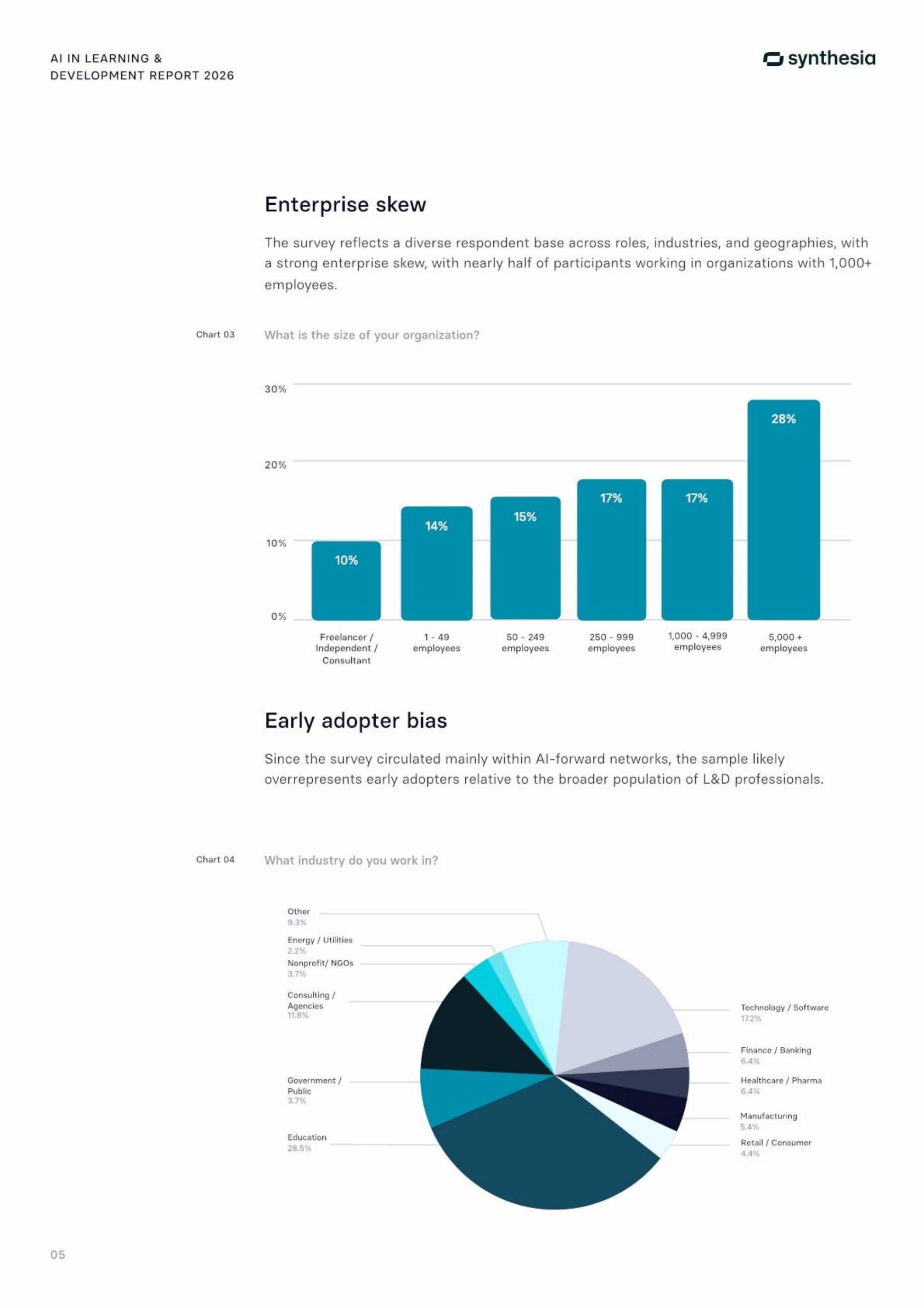
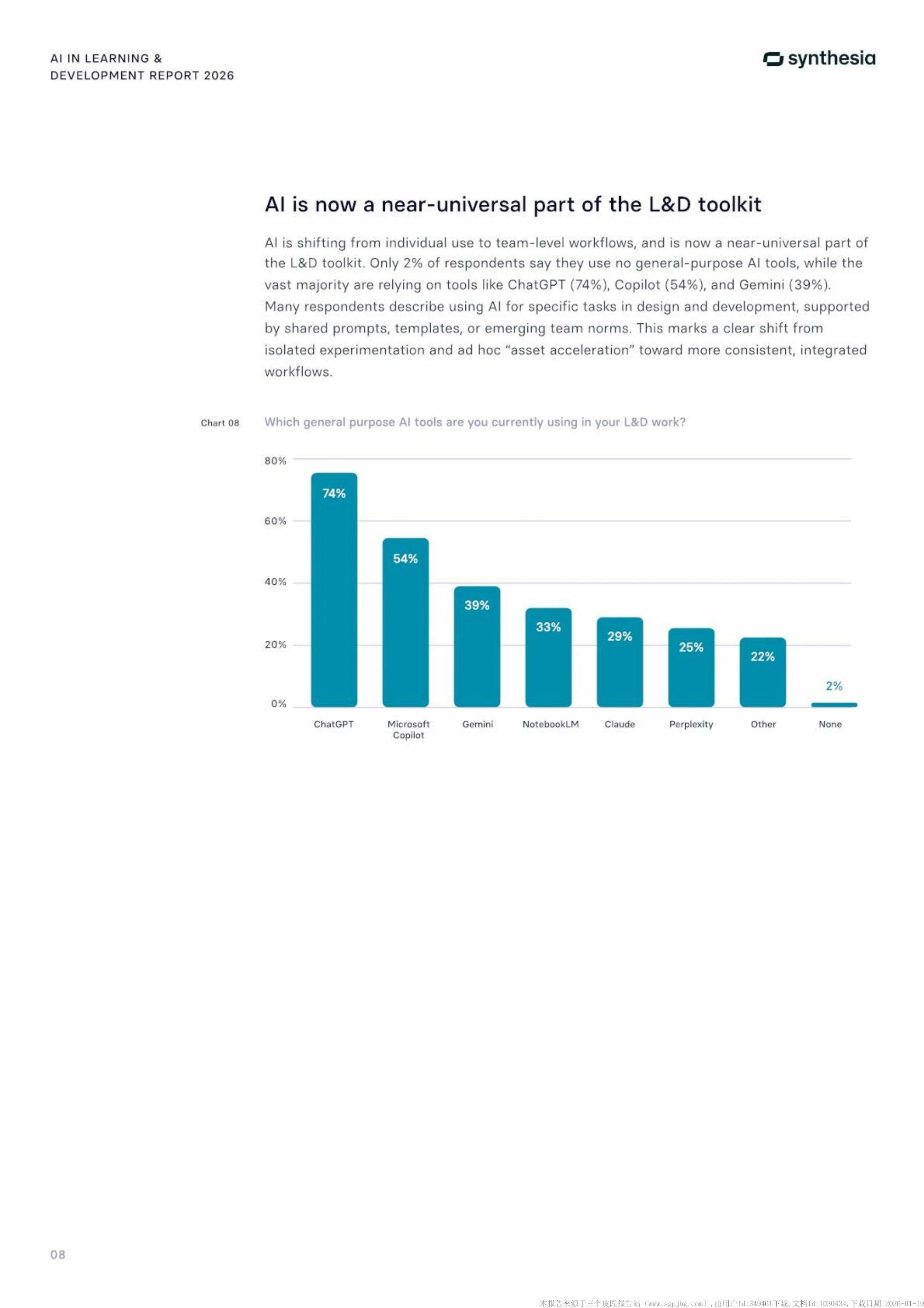
From Experimentationto Everyday: How Al IsTransforming L&DAIINLEARNING &DEVELOPMENTREPORT2026DsynthesiasynthesiaAI IN LEARNING &ExecutiveSummary01OurL&DExperts03Survey Methodology04MovingPastExperimentation06HowL&DIsUsingAl:Today&Tomorrow09Current Valuevs.FutureValue11Budgets,Readiness&Blockers13TheFutureEcosystem&AgenticAl16What'sNextforL&DTeams?19InsightsfromDrPhilippaHardman21synthesiaAI IN LEARNING &DEVELOPMENT REPORT 2026ExecutiveAl hasmovedbeyond experimentationandinto everydayL&DworkSummary87% of respondents are already using Al, and only 2% have noadoption plans, Most are past experimentation, with 36% usingtheir organization.Al's strongest value today is speedToday L&D teams use Al mainly for voice generation (63%)content and quiz drafting (60%), video creation (52%) andtranslation (38%) in the design and development stages. Thetop benefits are faster production (84%) and better learnerexperience (66%).Al has crossed a threshold in L&D. It has movedfrom experimental tool to everyday practice and,for a growing minority, to something closer tooperational infrastructure."-DR. PHILIPPA HARDMANThenextphase is aboutlearner impactL&D teams expect the biggest future gains in morepersonalized learning (72%), wider internal reach (65%) andimproved learner engagement (56%), Planned adoption is risingfor assessments and simulations (36%), adaptive pathways(33%), skills mapping (32%) and Al tutors (29%). And value isshifting from time saved (88%) to clearer business impact(55%) and easier global localization (54%).The learning ecosystem is becomingmore distributedOnly 47% think the Learning Management System (LMS) willremain the backbone of their ecosystem, Expectations forwhere Al will live split across embedded features (19%),productivity tools (17%), standalone systems (17%) and cross-system agentic layers (19%). 27% remain unsure.01synthesiaAI IN LEARNING &DEVELOPMENT REPORT 2026Agentic Al (Al that can autonomouslytake actions)interest is high, but teams are cautiousMost are excited (27%), cautious (39%) or say they need to learn more (29%). Explorationfocuses on Al tutors (49%), coaching and mentoring (43%), personalized guidance (43%) andadmin automation (38%).Budgets remainlow and fragmented39% spend 5% or less of their L&D budget on Al, and 30% don't know their spend. Dedicatedfunding is still developing.Readiness challengesare slowingprogressSecurity (58%), accuracy (52%), legal constraints (41%) and integration challenges (36%)remain major obstacles. Although 74% say their culture encourages experimentation, only45% feel IT is enabling Al adoption.We finally have the tools to create dynamic learning content at a speed andscale we've never seen before. The opportunity is massive, but impact stilldepends on skill. As Al becomes an everyday part of L&D, our focus has to shiftfrom experimenting to upskillingso we can design learning that's not justfaster, but smarter.-KRISTEN BUDDDespite these frictions, optimism is strong...







































