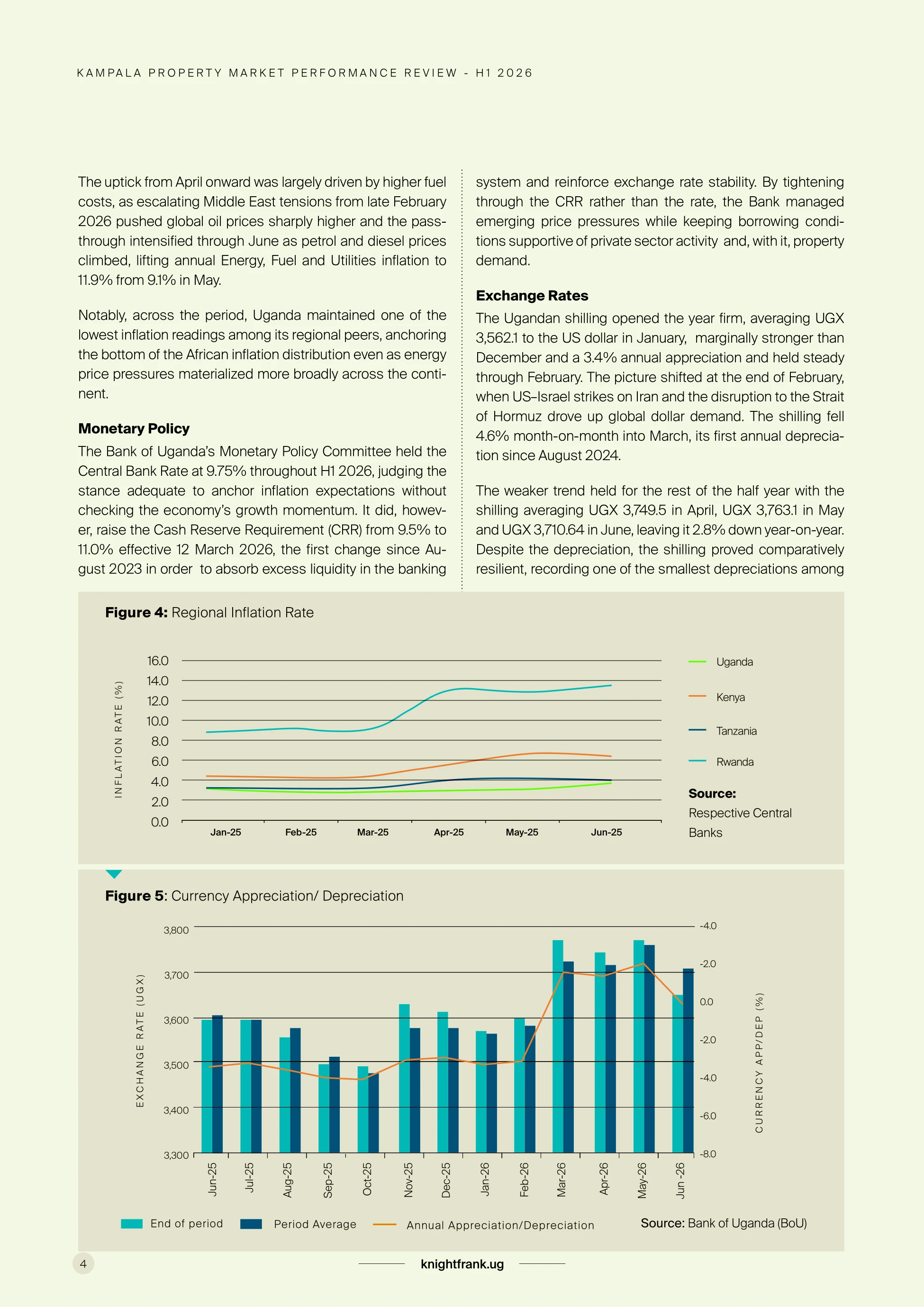

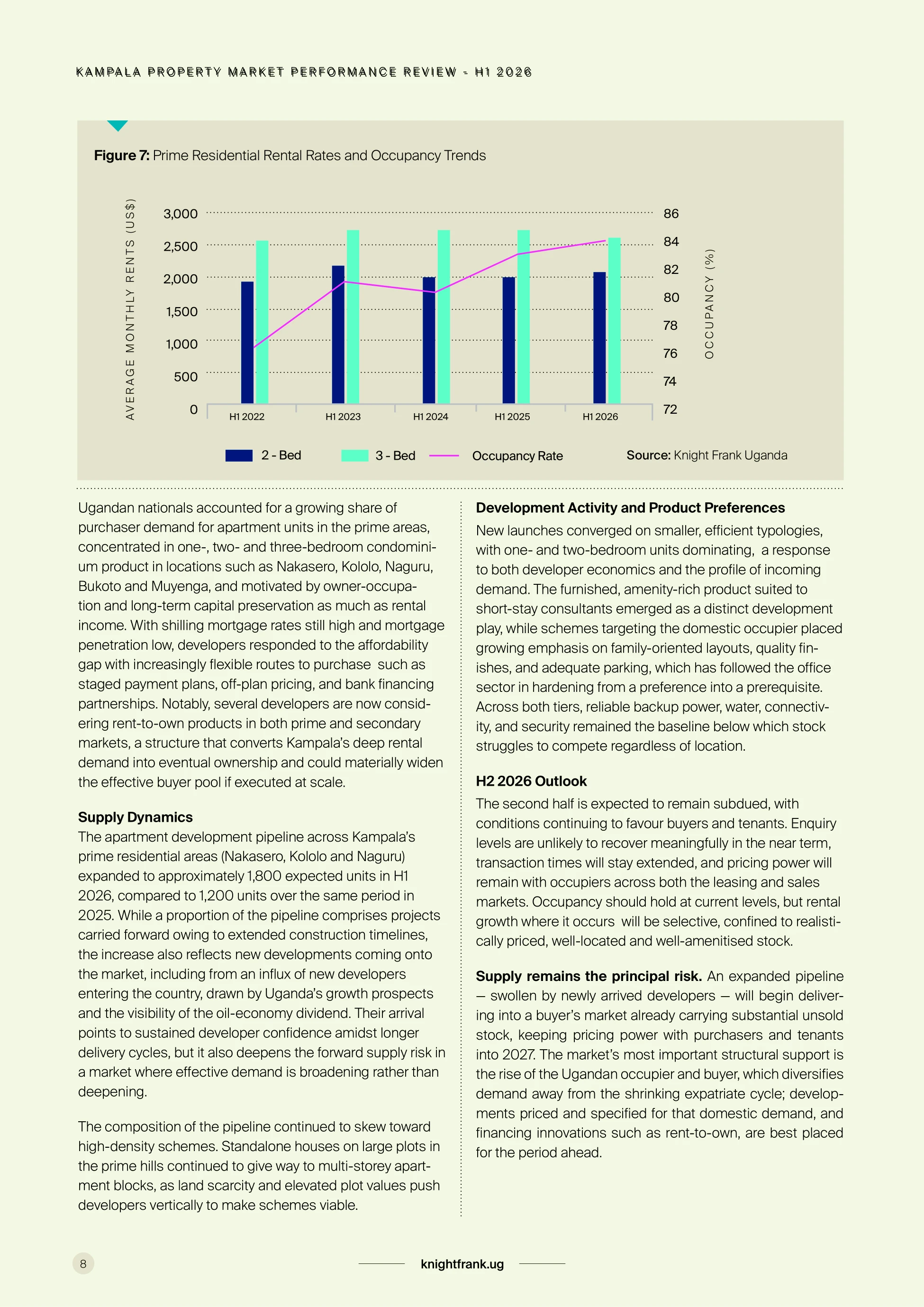
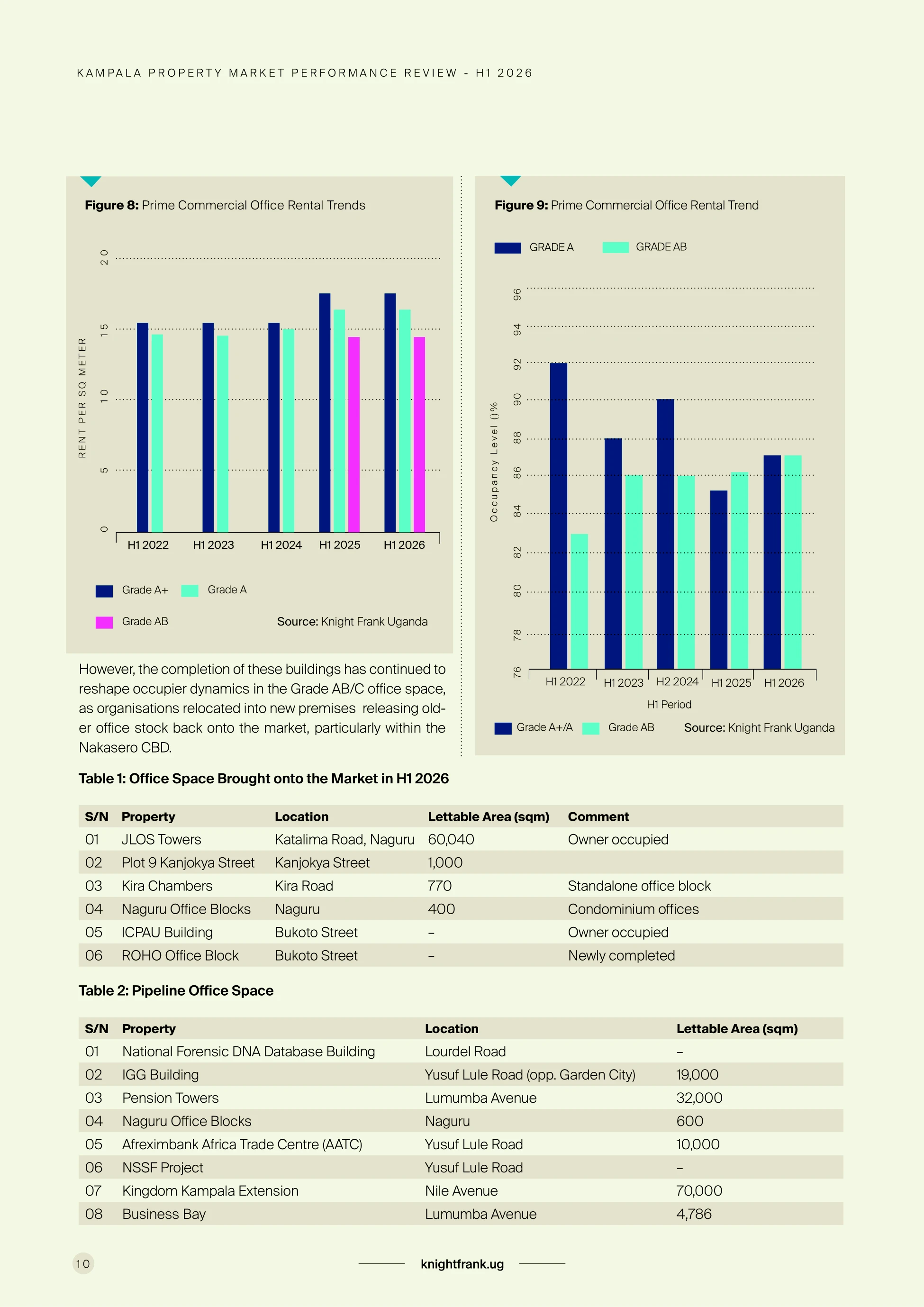
K A M P A L A P R O P E R T Y M A R K E T P E R F O R M A N C E R E V I E W - H 1 2 0 2 61knightfrank.ugThe Kampala PropertyMarket Performance ReviewH1 2026Knight Frank Uganda’s performance review of Kampala'sproperty market over the first half of 2026knightfrank.com/researchASSOCIATIONOF REALESTATEAGENTSUGANDAKNIGHT FRANK UGANDA2024 - 2025K A M P A L A P R O P E R T Y M A R K E T P E R F O R M A N C E R E V I E W - H 1 2 0 2 62knightfrank.ugFigure 1: Sectoral Contribution to GDPSource: Bank of Uganda (BoU)SERVICESAGRICULTUREINDUSTRY42.1026.224.1G D P G R O W T H B Y S E C T O R ( % )Uganda’s economy carried solid momentum into 2026, with GDP growth projected at 6.4% for FY2025/26 and seventeen consecutive months of private-sector expansion recorded by June. The half’s defining shock was external, the escalation of the Middle East conflict from late February disrupted the Strait of Hormuz, lifted Brent crude above US$100 per barrel, and fed through to domestic pump prices, a weaker shilling (down 2.8% year-on-year), and rising fuel-driven inflation, which climbed to 3.7% by June though still the lowest in the region. The Bank of Uganda held the Central Bank Rate at 9.75%, tightening instead through a Cash Reserve Require-ment increase to 11.0%, keeping borrowing conditions broad-ly supportive of property demand. The January general elec-tions paused activity across every property sector in the first quarter; the release of deferred decisions thereafter shaped much of the half’s performance.ResidentialThe market remained subdued and firmly in buyers’ and tenants’ favour, with low enquiry levels, extended transac-tion times, and abundant stock for sale. Prime rents edged up (2-bed +1.7%, 3-bed +0.6%) and occupancy improved to 84%, gains driven by absorption and realistic pricing rather than stronger demand. The tenant base continued to rebalance, expatriate enquiries declined while demand from Ugandan nationals rose, international consultants arrived in greater numbers but on leaner monthly budgets, and 3–6 month furnished lets proliferated. Developers are respond-ing to a widening affordability gap with flexible payment structures, including rent-to-own products under consider-ation in both prime and secondary markets.OfficePerformance was defined by recovering confidence and new supply. Grade A rents strengthened to US$17.0 per sqm with occupancy at 87%, driven by flight-to-quality reloca-tions, most visibly the JLOS institutions’ move to JLOS Tow-ers while the Grade AB segment softened to US$14.0 per sqm as vacated secondary stock returned to a saturated market. Parking hardened from a preference into a prerequi-site. The market remains tenant-driven, with well-managed modern assets outperforming ageing stock.RetailFormal retail traded unevenly: footfall softened as fuel costs, tighter household budgets and t...







































