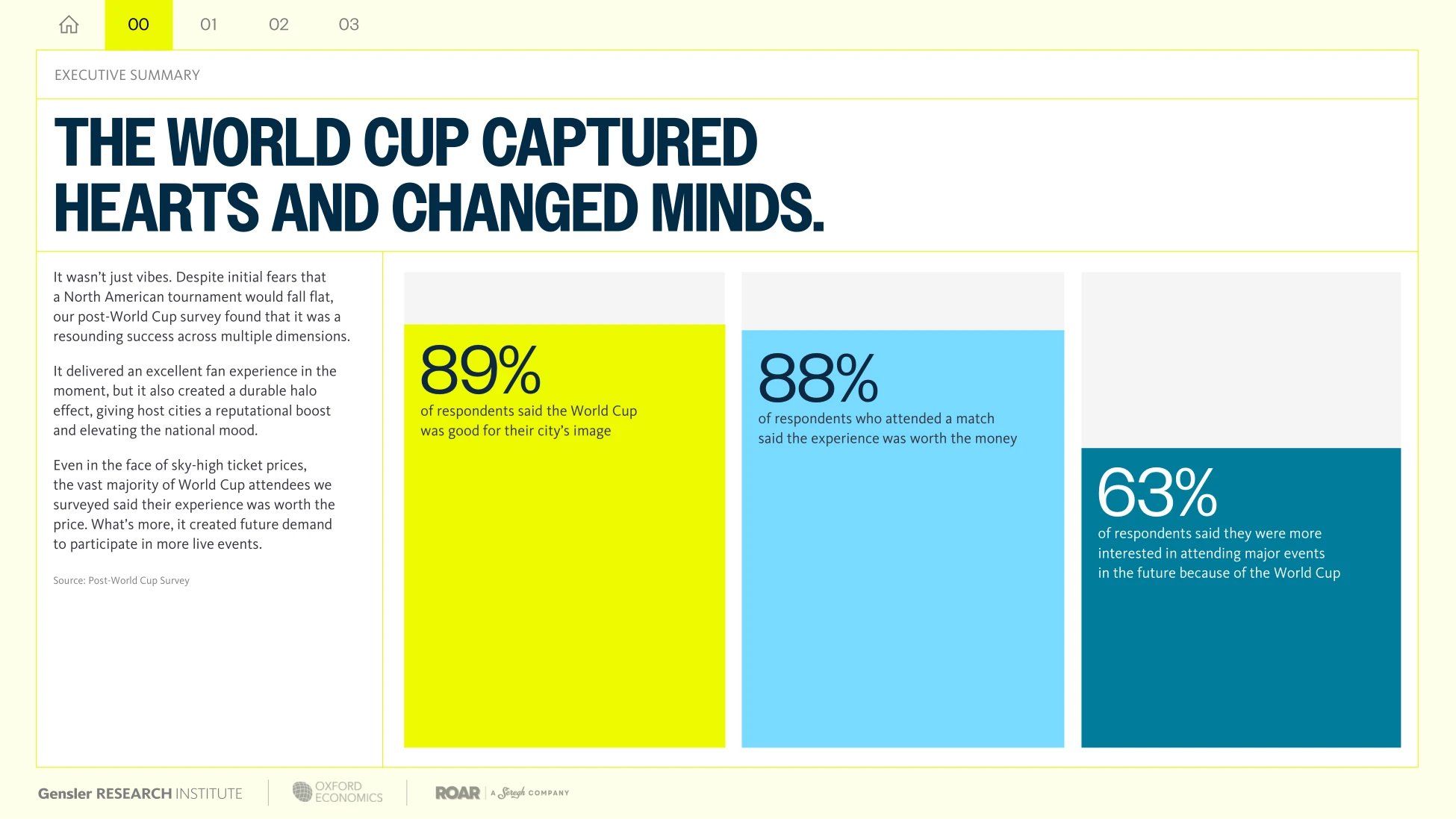
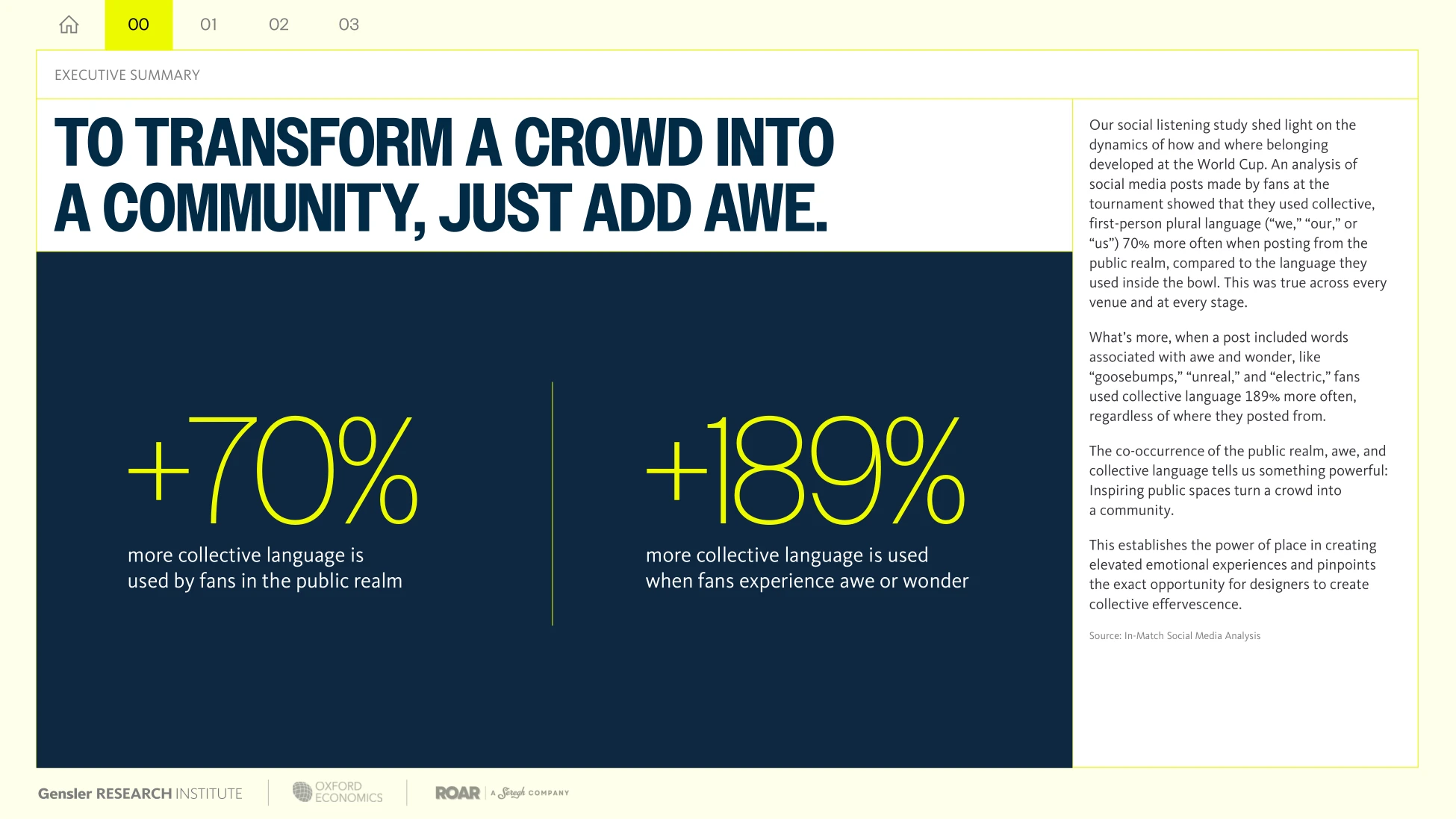
TABLE OF CONTENTSEXECUTIVE SUMMARYESTABLISHING A BASELINE PRE-WORLD CUP SURVEYLISTENING TO THE FANS IN-MATCH SOCIAL MEDIA ANALYSISMEASURING THE IMPACT POST-WORLD CUP SURVEY000203010001020300010203EXECUTIVE SUMMARYLive sporting events are a powerful force. They unify us across cultural divides. They compel us to pay attention for longer than just a few minutes. And they bring us together for heightened experiences. It’s no wonder that cities are looking to sports teams to ignite engagement. Tapping into fans’ passions can galvanize a community and forge a shared identity. It’s also good for business and great for people.Sports-anchored mixed-use districts (SMDs)are expected to attract well over $100B in investment over the next 15 years globally as cities, teams, owners, and universities recognize this real estate has enormous potential to unlock new streams of revenue. In North America alone, 37 teams across major sports leagues in the last two years announced they would be developing SMDs.Before another golden shovel goes in the ground, we wanted to understand: What dofans want? Do SMDs actually offer the best experience? What’s the right mix of uses to generate repeat engagement? And what is the real potential of stadiums and other venues to become economic engines and platforms for community — on game day and beyond?00010203EXECUTIVE SUMMARYBefore the World Cup, in April 2026, we partnered withOxford Economics to launch a 5,858-person survey in 17North American markets. We sought to understand how people currently engage with the sports venues in their area, what kindof experience they want from the venues and their surrounding districts, and what might compel them to visit on non-game days.During the World Cup, we conducted a social listening study with data analysis partner ROAR, a Seregh company. We geofenced every host stadium so we could follow the fan conversation as it happened in real time. We analyzed hundreds of thousands of user-generated posts pertaining to the fan experience: access, atmosphere, place, and space to learn what was most important to them. This allowed us to identify the touchpoints on the fan journey and compare how they played out in each host city.Following the tournament, in August 2026, we surveyed 2,752 people across all 16 World Cup host cities to understand how they engaged with the event, their experience attending a match, and how it made them feel about sporting events and the image of their city.PRE-WORLD CUP SURVEYIN-MATCH SOCIAL MEDIA ANALYSISPOST-WORLD CUP SURVEYThe arrival of the FIFA 2026 World Cupin North America offered Gensler a unique opportunity to launch a first-of-its-kind research program: a mixed-methods study before, during, and after the World Cup.Establishinga Baseline Listeningto FansMeasuringthe Impact00010203It wasn’t just vibes. Despite initial fears thata North American tou...







































