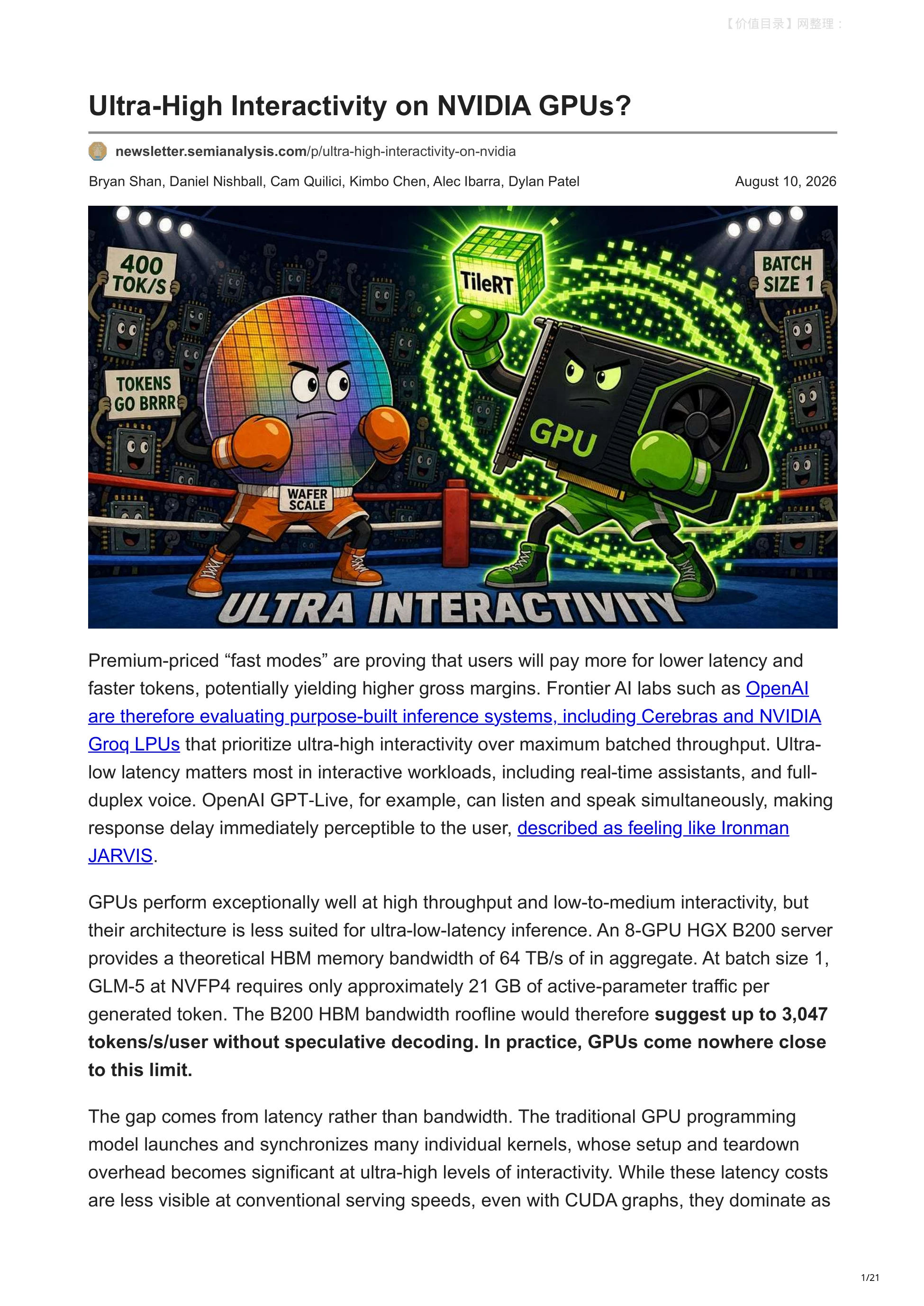
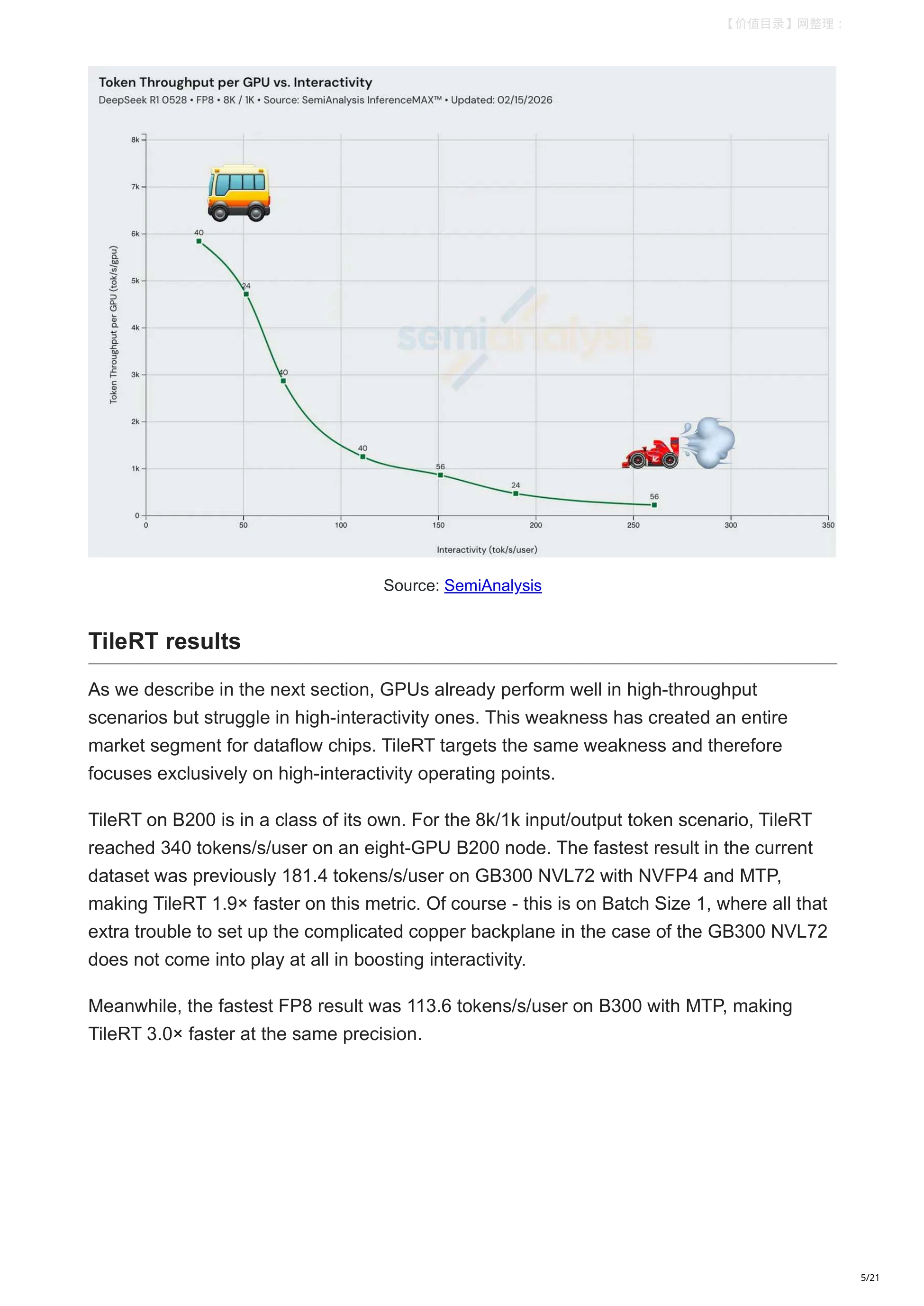
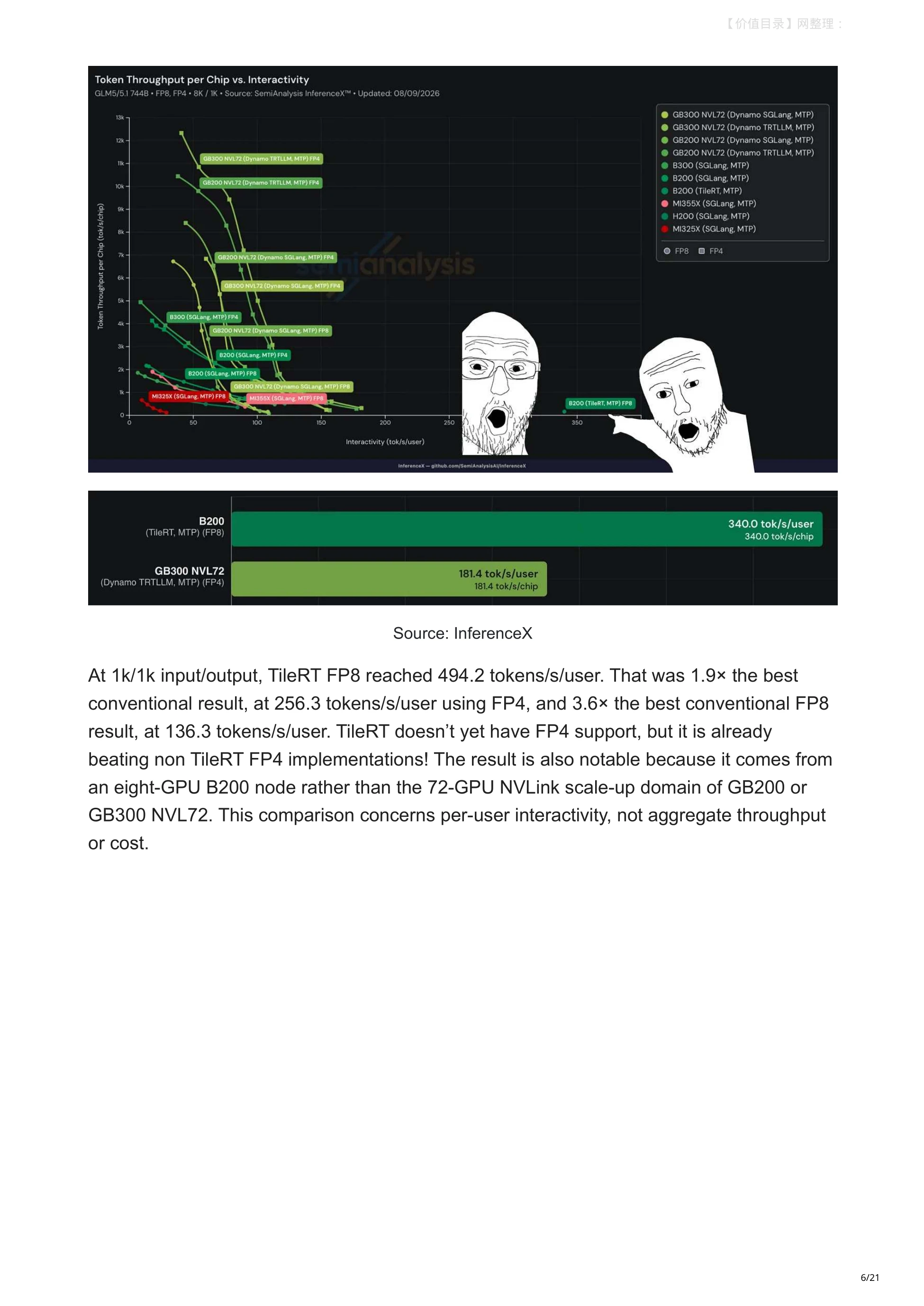
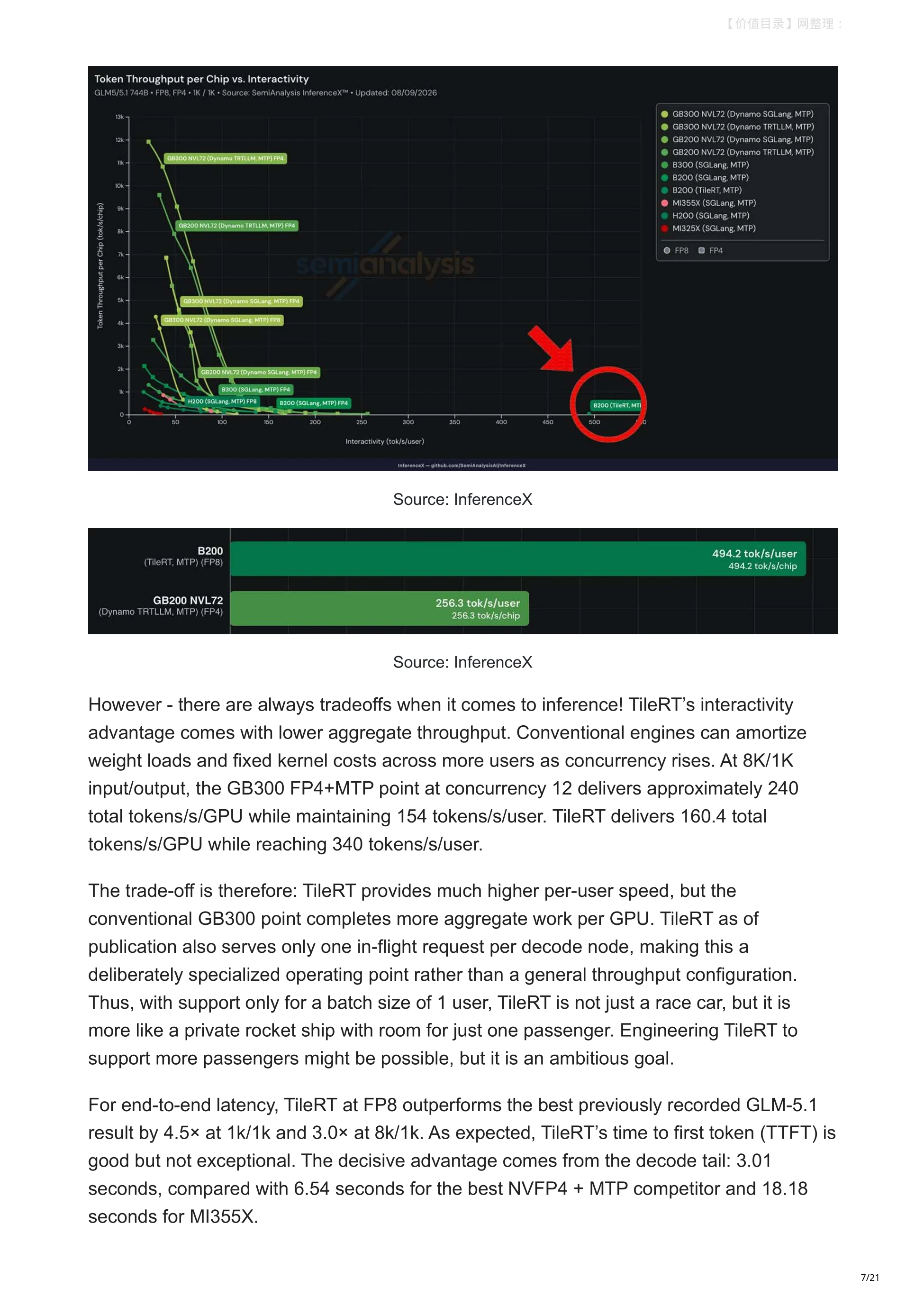
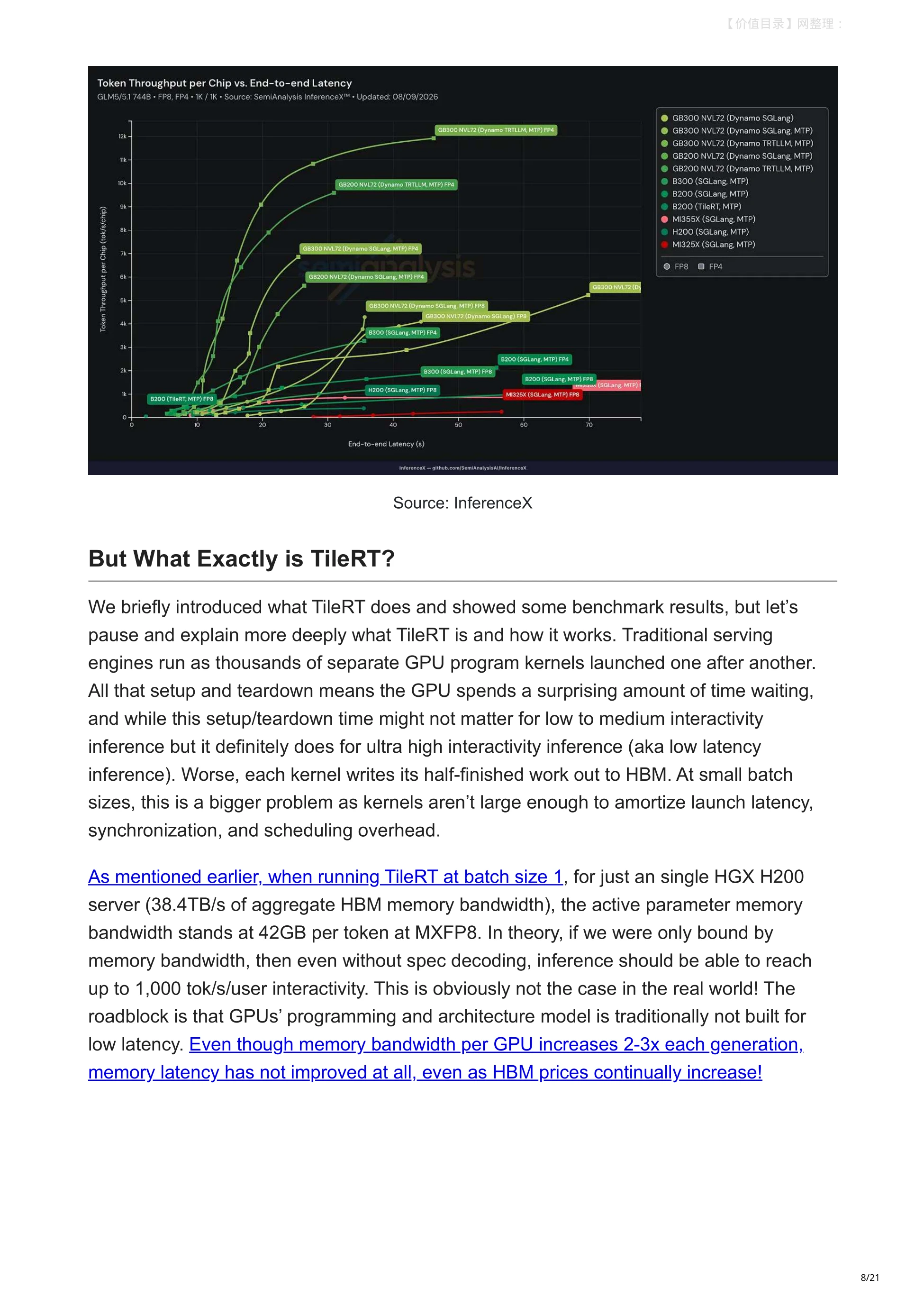
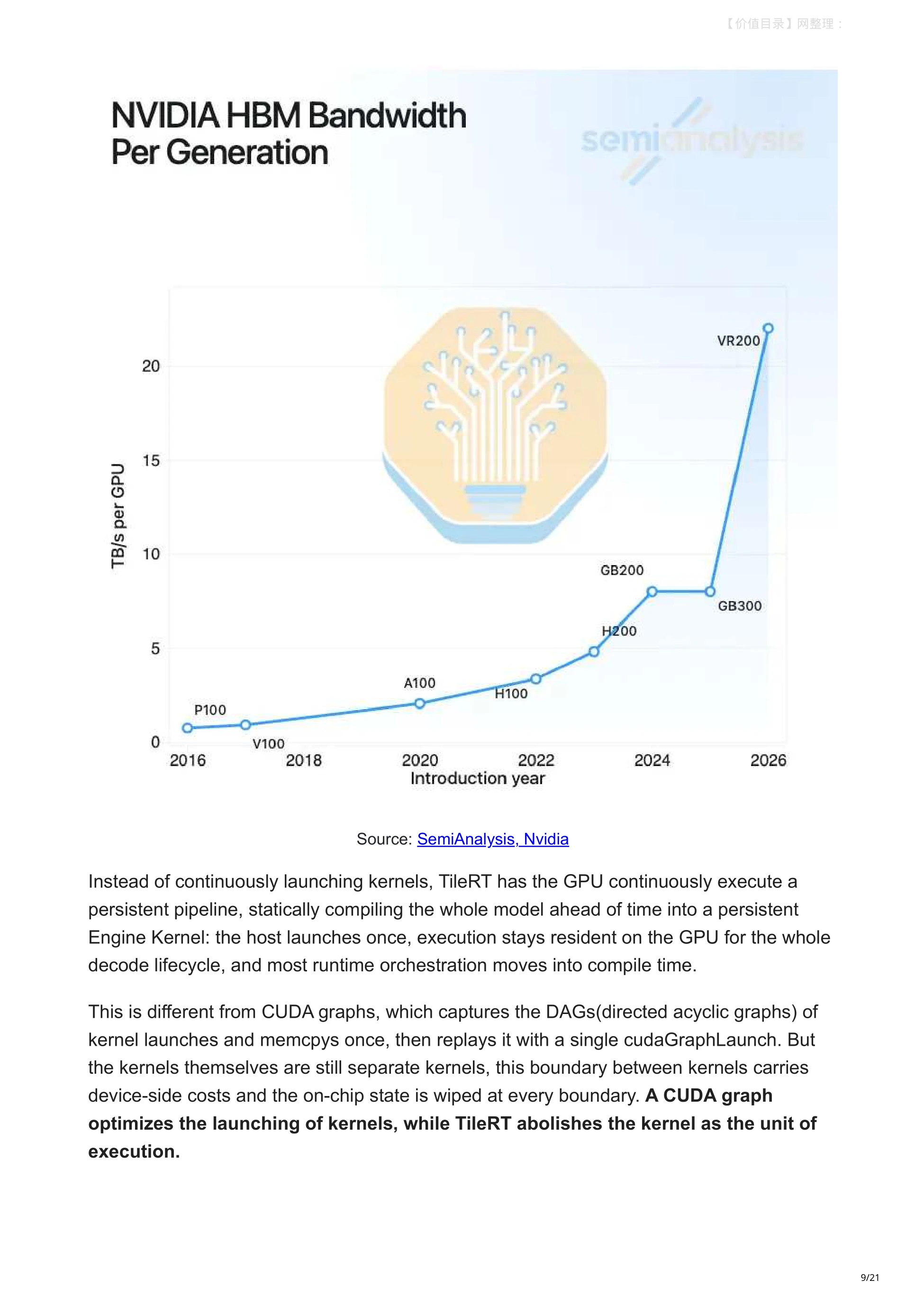
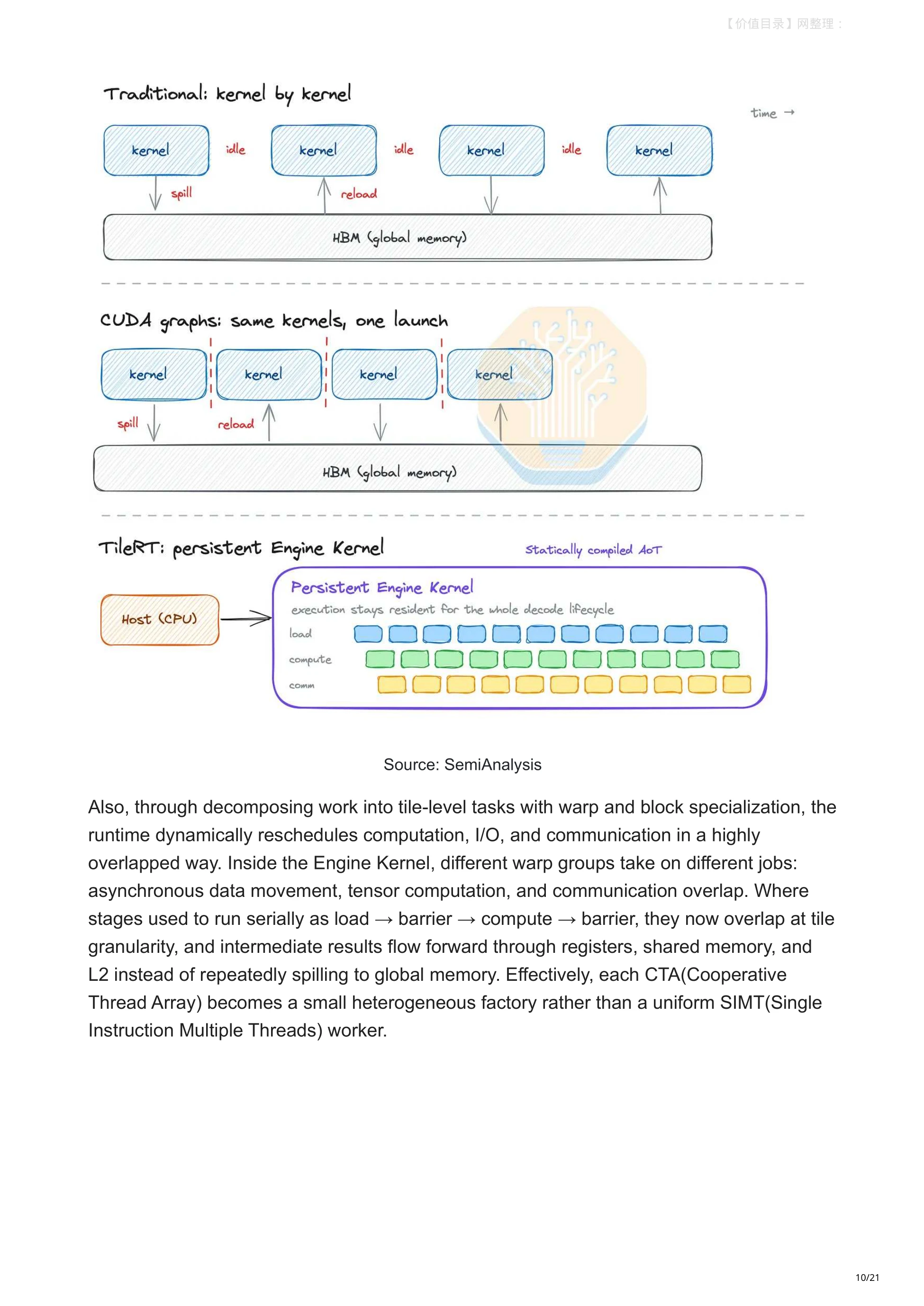
Bryan Shan, Daniel Nishball, Cam Quilici, Kimbo Chen, Alec Ibarra, Dylan PatelAugust 10, 2026Ultra-High Interactivity on NVIDIA GPUs? newsletter.semianalysis.com/p/ultra-high-interactivity-on-nvidiaPremium-priced “fast modes” are proving that users will pay more for lower latency andfaster tokens, potentially yielding higher gross margins. Frontier AI labs such as OpenAIare therefore evaluating purpose-built inference systems, including Cerebras and NVIDIAGroq LPUs that prioritize ultra-high interactivity over maximum batched throughput. Ultra-low latency matters most in interactive workloads, including real-time assistants, and full-duplex voice. OpenAI GPT‑Live, for example, can listen and speak simultaneously, makingresponse delay immediately perceptible to the user, described as feeling like IronmanJARVIS.GPUs perform exceptionally well at high throughput and low-to-medium interactivity, buttheir architecture is less suited for ultra-low-latency inference. An 8-GPU HGX B200 serverprovides a theoretical HBM memory bandwidth of 64 TB/s of in aggregate. At batch size 1,GLM-5 at NVFP4 requires only approximately 21 GB of active-parameter traffic pergenerated token. The B200 HBM bandwidth roofline would therefore suggest up to 3,047tokens/s/user without speculative decoding. In practice, GPUs come nowhere closeto this limit.The gap comes from latency rather than bandwidth. The traditional GPU programmingmodel launches and synchronizes many individual kernels, whose setup and teardownoverhead becomes significant at ultra-high levels of interactivity. While these latency costsare less visible at conventional serving speeds, even with CUDA graphs, they dominate as1/21嶮錴闿�㭠嶯�䆃��token latency approaches the sub-millisecond Time Per Output Token (TPOT) range.Furthermore, although GPU memory bandwidth increases by roughly 2–3× eachgeneration, memory latency has not improved at all.While using alternative hardware is popular, there are ways to use GPUs to do this too.This is where TileRT’s persistent engine comes in. TileRT statically compiles the entiredecode graph into a single persistent kernel on NVIDIA GPUs, maximizing overlap acrosscomputation, memory loads and stores, and communication. On the InferenceX GLM5FP8 744B benchmark on a single B200 decode server, tileRT has been verified toreach up to 500 tokens/s/user, approximately 3× faster than GB300 NVL72 runningtraditional inference engines. Iso-cost per output token, TileRT can achieve up to 2xfaster interactivity than traditional engines.We thank the TileRT maintainers for collaborating on TileRT InferenceX benchmarks andalso in general thankful to the vLLM community for their amazing design on the V1connector. TileRT comes from the same community maintainer organization that built thewidely popular TileLang DSL.With PD disaggregation inference technique, the hyperspecialized TileRT engine handleslatency-sensitive decode while throu...







































