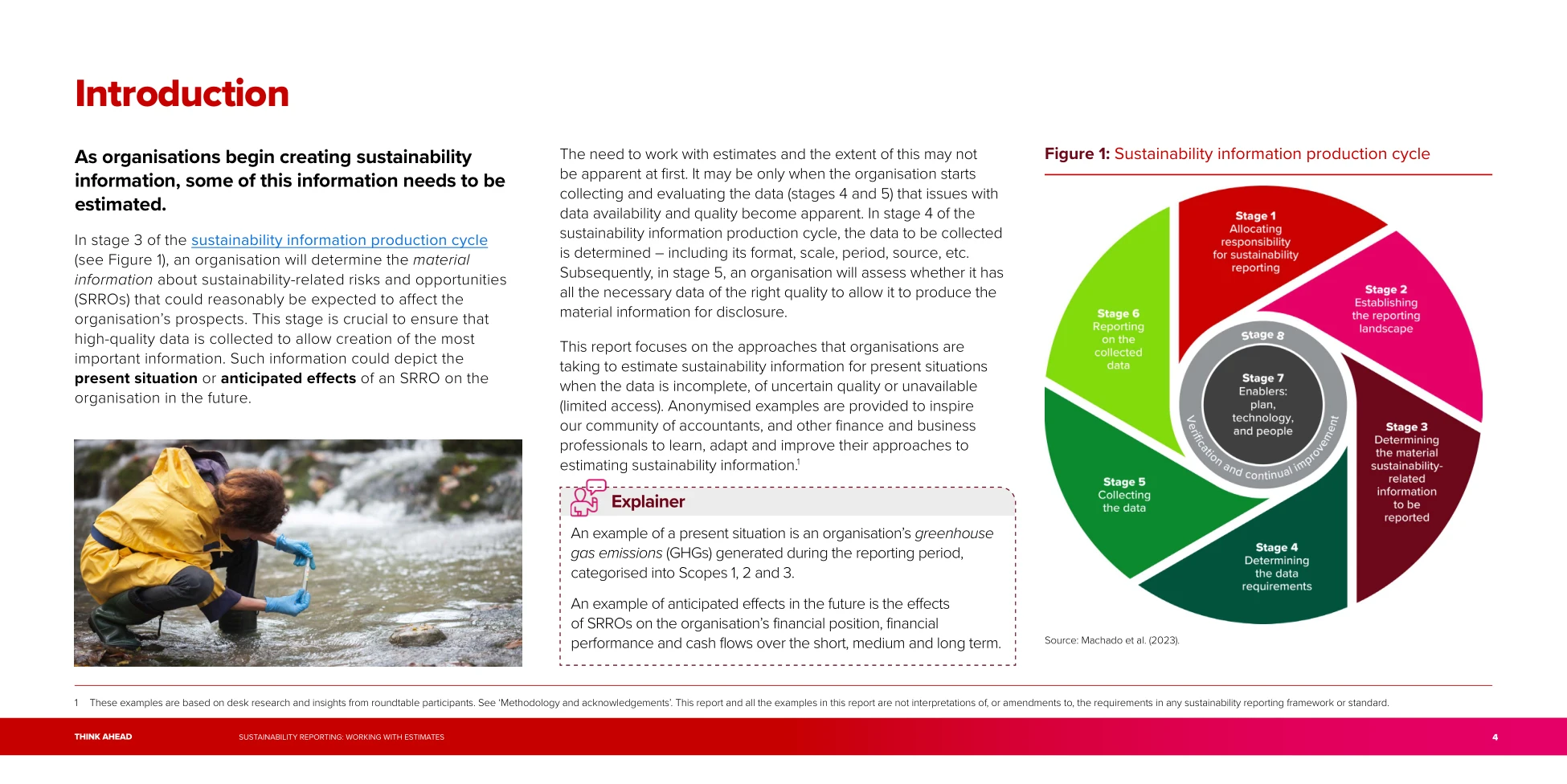
Sustainability reporting: working with estimates.About ACCA. We are ACCA (the Association of Chartered Certified Accountants), a globally recognised professional accountancy body providing qualifications and advancing standards in accountancy worldwide. Founded in 1904 to widen access to the accountancy profession, we’ve long championed inclusion and today proudly support a diverse community of over 252,500 members and 526,000 future members in 180 countries. Our forward-looking qualifications, continuous learning and insights are respected and valued by employers in every sector. They equip individuals with the business and finance expertise and ethical judgment to create, protect, and report the sustainable value delivered by organisations and economies. Guided by our purpose and values, our vision is to develop the accountancy profession the world needs. Partnering with policymakers, standard setters, the donor community, educators and other accountancy bodies, we’re strengthening and building a profession that drives a sustainable future for all.Find out more at accaglobal.com2SUSTAINABILITY REPORTING: WORKING WITH ESTIMATESContents.Introduction 4Creating sustainability information when the data is incomplete, uncertain or unavailable 5Using estimates when direct measurement is not possible 5Using third-party or proxy data 6Concern about decision-usefulness of proxy data 7Ensuring staff know what they are doing 8Systems and processes enabling sustainability-related estimates 9Systems and processes need to be deliberately designed to collect sustainability data 9Integrating systems and processes as much as possible 9Implementing processes and controls 11Deriving sustainability data from financial data 13Conclusion 15Glossary 16Methodology and acknowledgements 18References 193SUSTAINABILITY REPORTING: WORKING WITH ESTIMATESAuthorAaron Saw Head of Corporate Reporting Insights – Financial IntroductionAs organisations begin creating sustainability information, some of this information needs to be estimated.In stage 3 of the sustainability information production cycle (see Figure 1), an organisation will determine the material information about sustainability-related risks and opportunities (SRROs) that could reasonably be expected to affect the organisation’s prospects. This stage is crucial to ensure that high-quality data is collected to allow creation of the most important information. Such information could depict the present situation or anticipated effects of an SRRO on the organisation in the future.The need to work with estimates and the extent of this may not be apparent at first. It may be only when the organisation starts collecting and evaluating the data (stages 4 and 5) that issues with data availability and quality become apparent. In stage 4 of the sustainability information production cycle, the data to be collected is determined – including its format, scale, ...