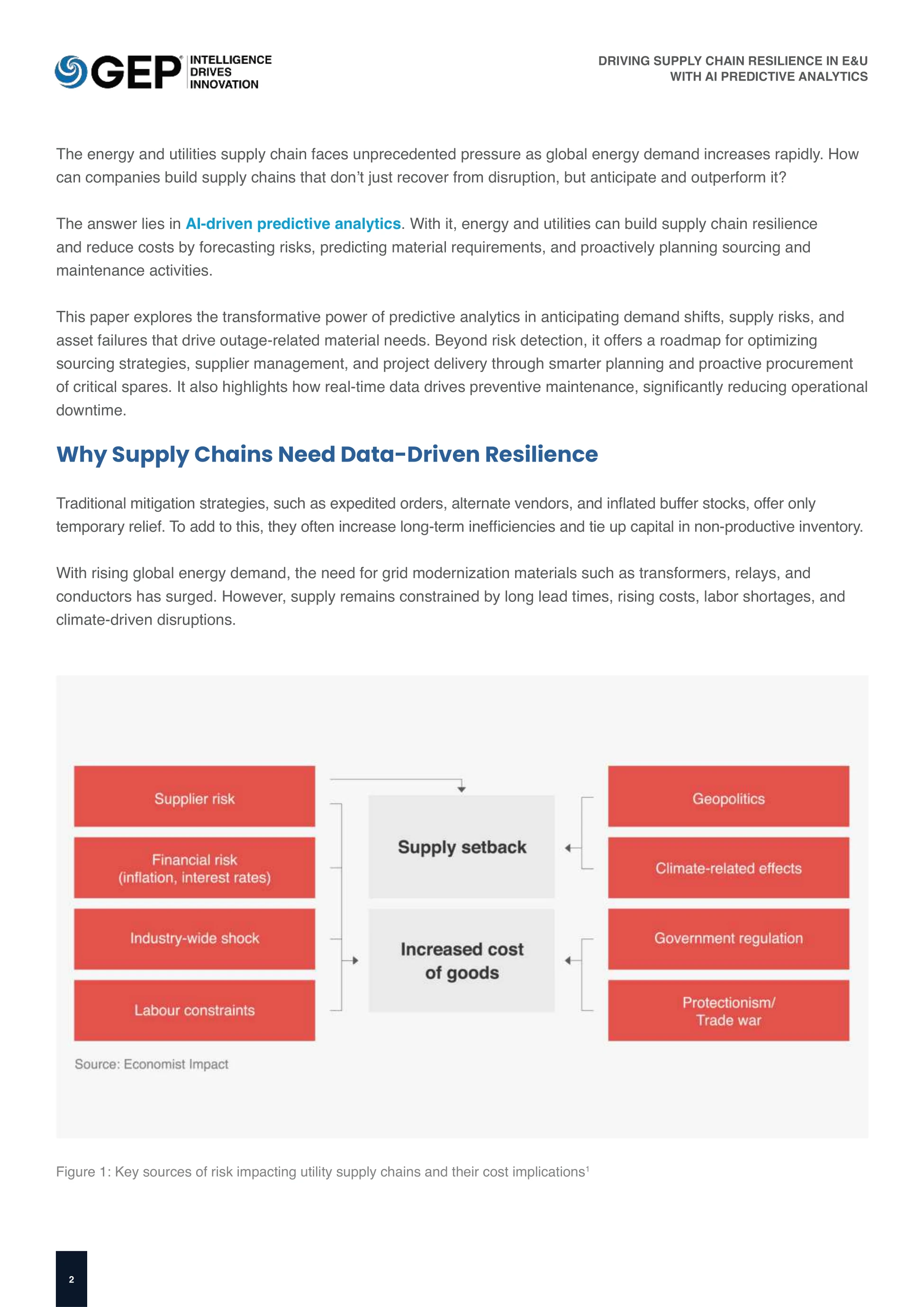
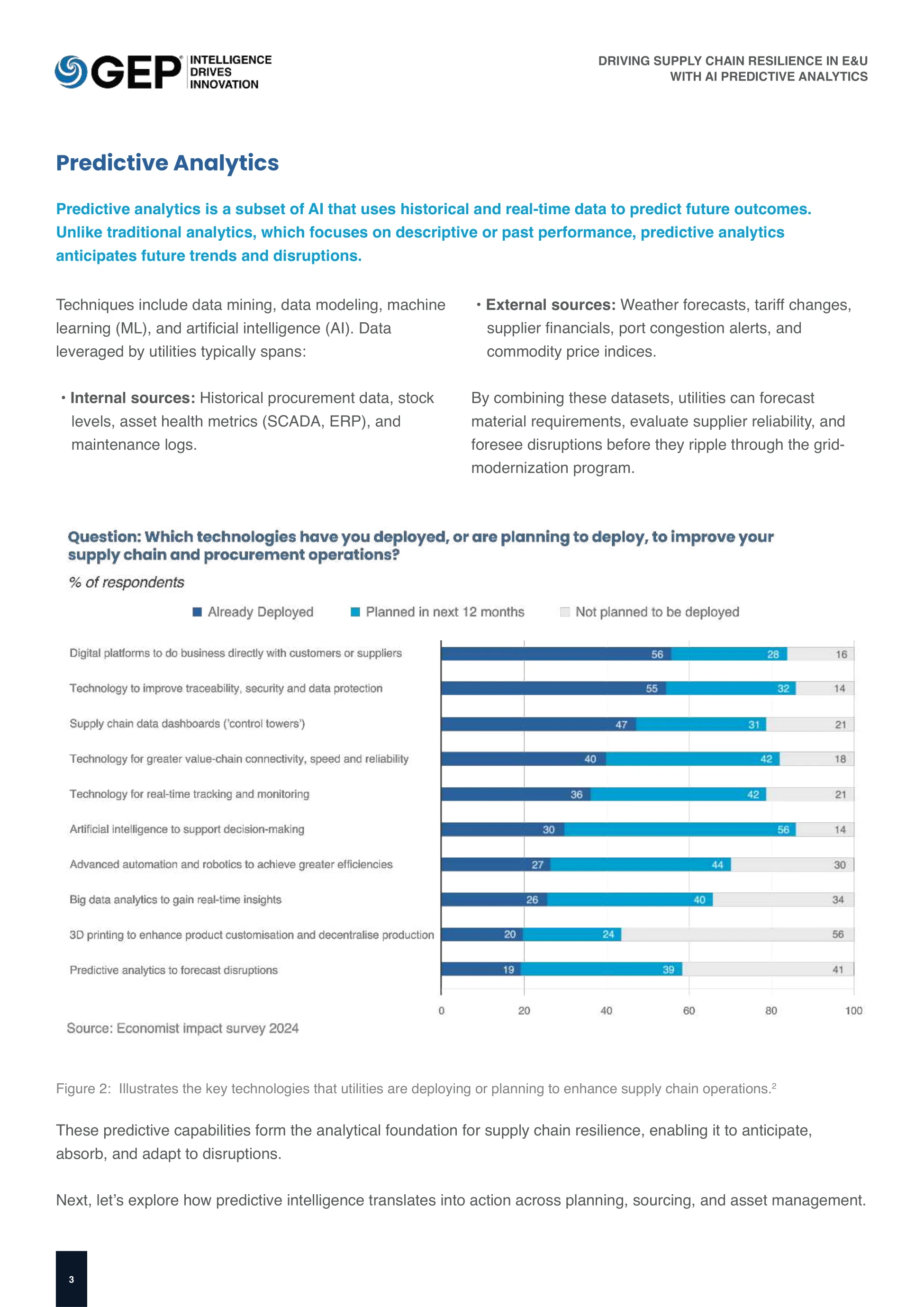

2DRIVING SUPPLY CHAIN RESILIENCE IN E&U WITH AI PREDICTIVE ANALYTICSThe energy and utilities supply chain faces unprecedented pressure as global energy demand increases rapidly. How can companies build supply chains that don’t just recover from disruption, but anticipate and outperform it?The answer lies in AI-driven predictive analytics. With it, energy and utilities can build supply chain resilience and reduce costs by forecasting risks, predicting material requirements, and proactively planning sourcing and maintenance activities. This paper explores the transformative power of predictive analytics in anticipating demand shifts, supply risks, and asset failures that drive outage-related material needs. Beyond risk detection, it offers a roadmap for optimizing sourcing strategies, supplier management, and project delivery through smarter planning and proactive procurement of critical spares. It also highlights how real-time data drives preventive maintenance, significantly reducing operational downtime.Why Supply Chains Need Data-Driven Resilience Traditional mitigation strategies, such as expedited orders, alternate vendors, and inflated buffer stocks, offer only temporary relief. To add to this, they often increase long-term inefficiencies and tie up capital in non-productive inventory.With rising global energy demand, the need for grid modernization materials such as transformers, relays, and conductors has surged. However, supply remains constrained by long lead times, rising costs, labor shortages, and climate-driven disruptions. Figure 1: Key sources of risk impacting utility supply chains and their cost implications13DRIVING SUPPLY CHAIN RESILIENCE IN E&U WITH AI PREDICTIVE ANALYTICSPredictive analytics is a subset of AI that uses historical and real-time data to predict future outcomes. Unlike traditional analytics, which focuses on descriptive or past performance, predictive analytics anticipates future trends and disruptions. Predictive Analytics Techniques include data mining, data modeling, machine learning (ML), and artificial intelligence (AI). Data leveraged by utilities typically spans:• Internal sources: Historical procurement data, stocklevels, asset health metrics (SCADA, ERP), andmaintenance logs.• External sources: Weather forecasts, tariff changes,supplier financials, port congestion alerts, andcommodity price indices.By combining these datasets, utilities can forecast material requirements, evaluate supplier reliability, and foresee disruptions before they ripple through the grid-modernization program.Figure 2: Illustrates the key technologies that utilities are deploying or planning to enhance supply chain operations.2These predictive capabilities form the analytical foundation for supply chain resilience, enabling it to anticipate, absorb, and adapt to disruptions. Next, let’s explore how predictive intelligence translates into action across planning, sourcing, and asse...







































