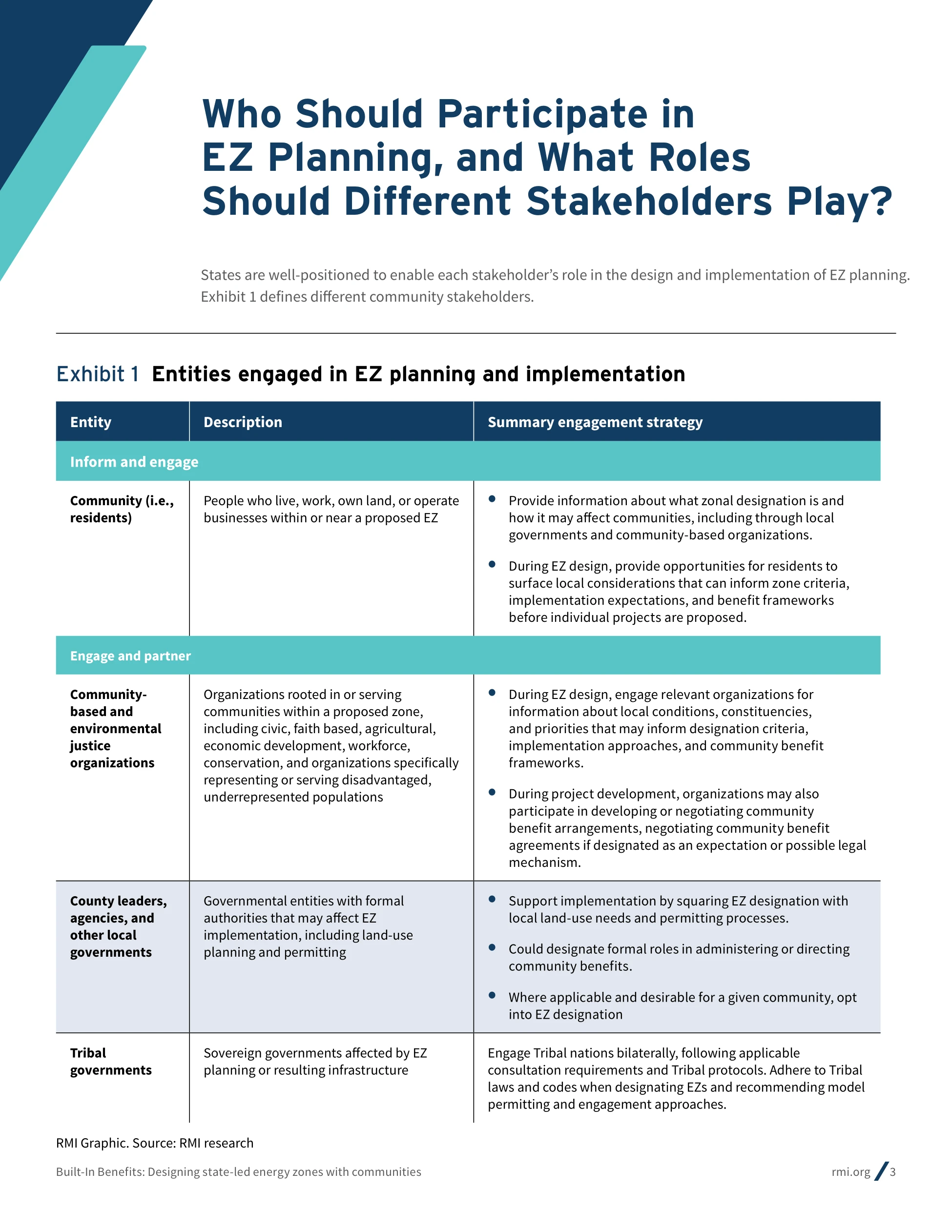

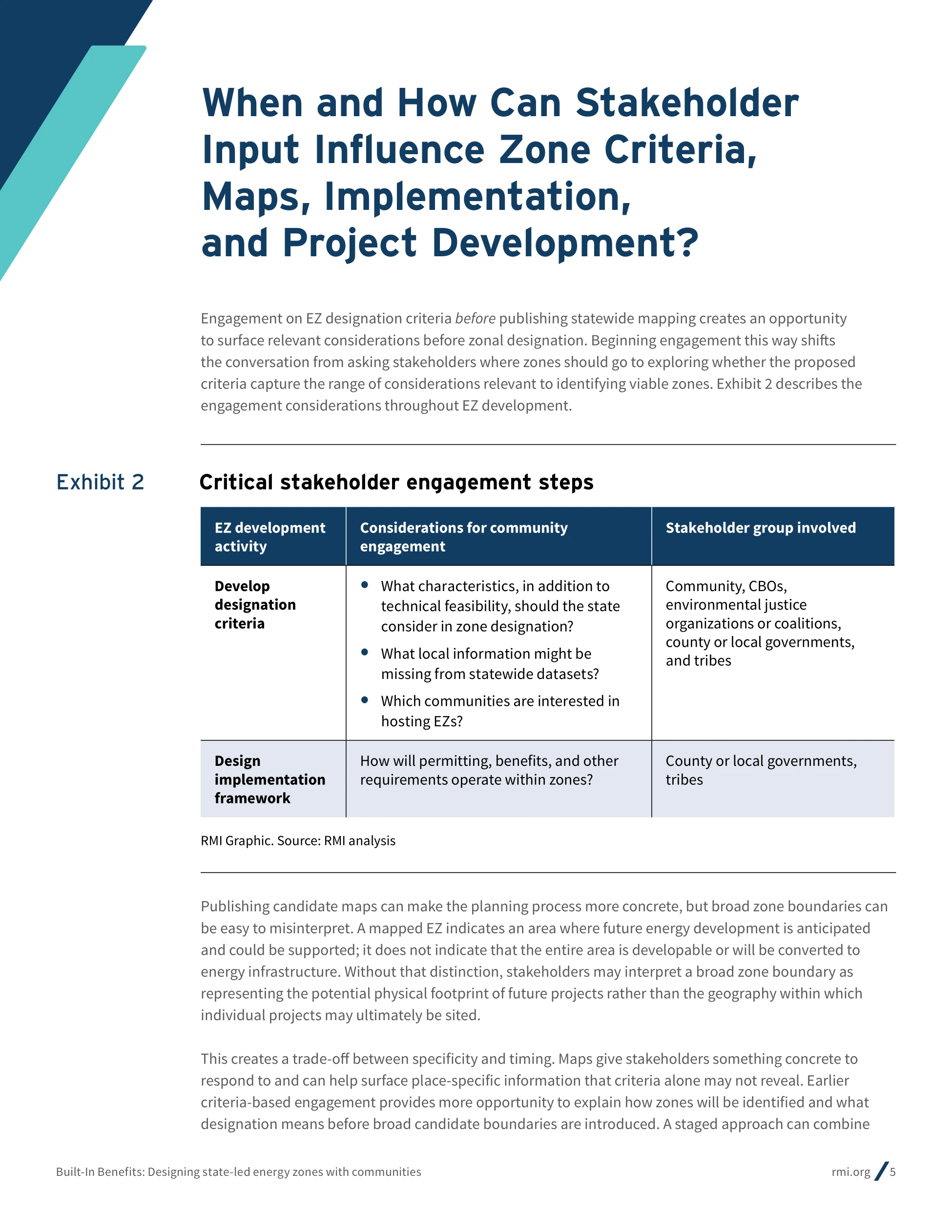

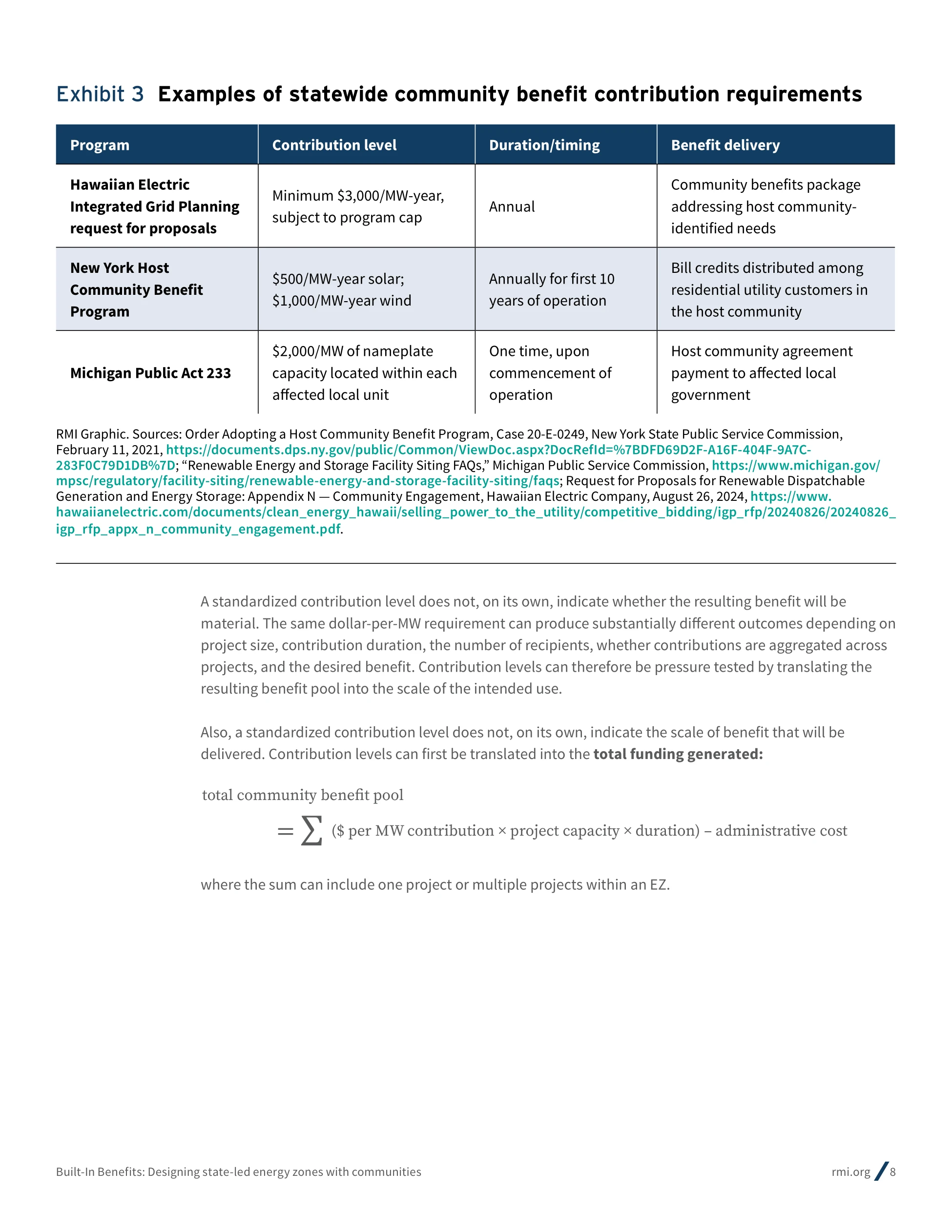
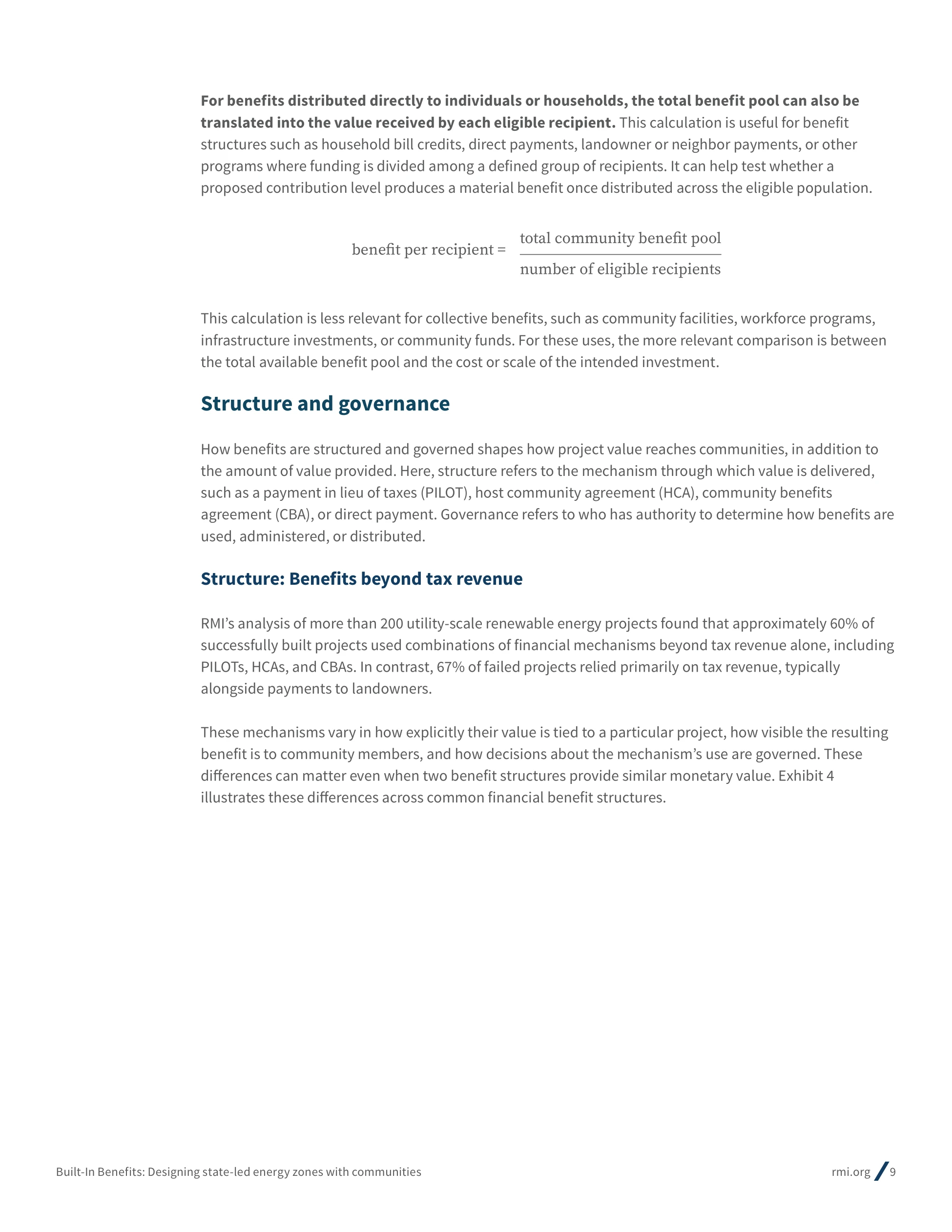
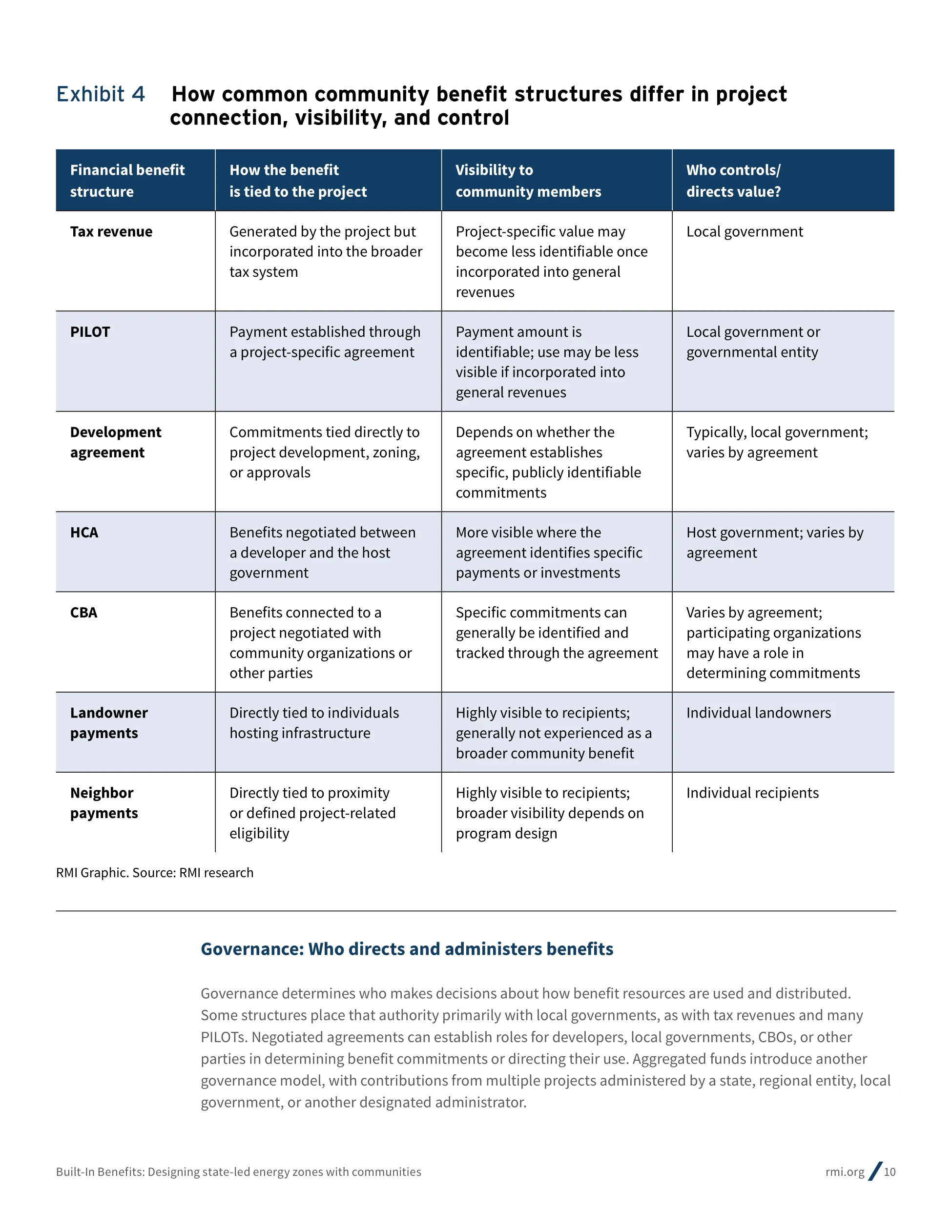
Insight Brief / October 2026Built-In BenefitsAligning community and state needs with energy zonesAuthors: Erifili Draklellis, Kristine Chan Lizardo, Leah Komosrmi.org / 2Built-In Benefits: Designing state-led energy zones with communitiesIntroductionEnergy Zones (EZs) are emerging as a proactive statewide planning strategy that identifies areas well suited for future energy development. They may be used as a mechanism for improved community engagement and holistic delivery of benefits from projects to communities. This insight brief provides a detailed look at how community engagement and benefits can be incorporated into EZ design and implementation and accompanies RMI’s broader work to support EZ planning.Today, planning for energy generation and grid build-out often happens in reaction to project-by-project proposals. This pushes community input further from early planning, and strong reactionary responses occur. This delay-and-react cycle results in piecemeal, costly, and insufficient energy infrastructure. Investing in EZ design is a way to invest the effort and resources consumed in typical adversarial processes into the opportunity to align stakeholders productively around energy infrastructure development.Public engagement in designing and designating state EZs leads to beneficial outcomes for the grid, the economy, and communities because it will: • Surface local priorities and concerns to inform EZ implementation, particularly local land-use needs;• Establish community benefit expectations before individual projects are proposed, including expectations of project developers;• Create tangible local economic value from EZ development by delivering benefits that are meaningful, practical to administer, and responsive to locally identified priorities; and• Reduce project-by-project friction and negotiation by resolving appropriate permitting, engagement, and community benefit questions up front. We consider the following questions to be the key design considerations for incorporating community engagement into EZ planning: 1. Who should participate in EZ planning, and what roles should different stakeholders play?2. When and how can stakeholder input influence zone designation criteria, maps, implementation, and project development?3. How should benefits be calculated, structured, governed, and allocated?rmi.org / 3Built-In Benefits: Designing state-led energy zones with communitiesWho Should Participate in EZ Planning, and What Roles Should Different Stakeholders Play? States are well-positioned to enable each stakeholder’s role in the design and implementation of EZ planning. Exhibit 1 defines different community stakeholders. Exhibit 1 Entities engaged in EZ planning and implementationEntityDescriptionSummary engagement strategyInform and engageCommunity (i.e., residents)People who live, work, own land, or operate businesses within or near a proposed EZ• Provide information abou...