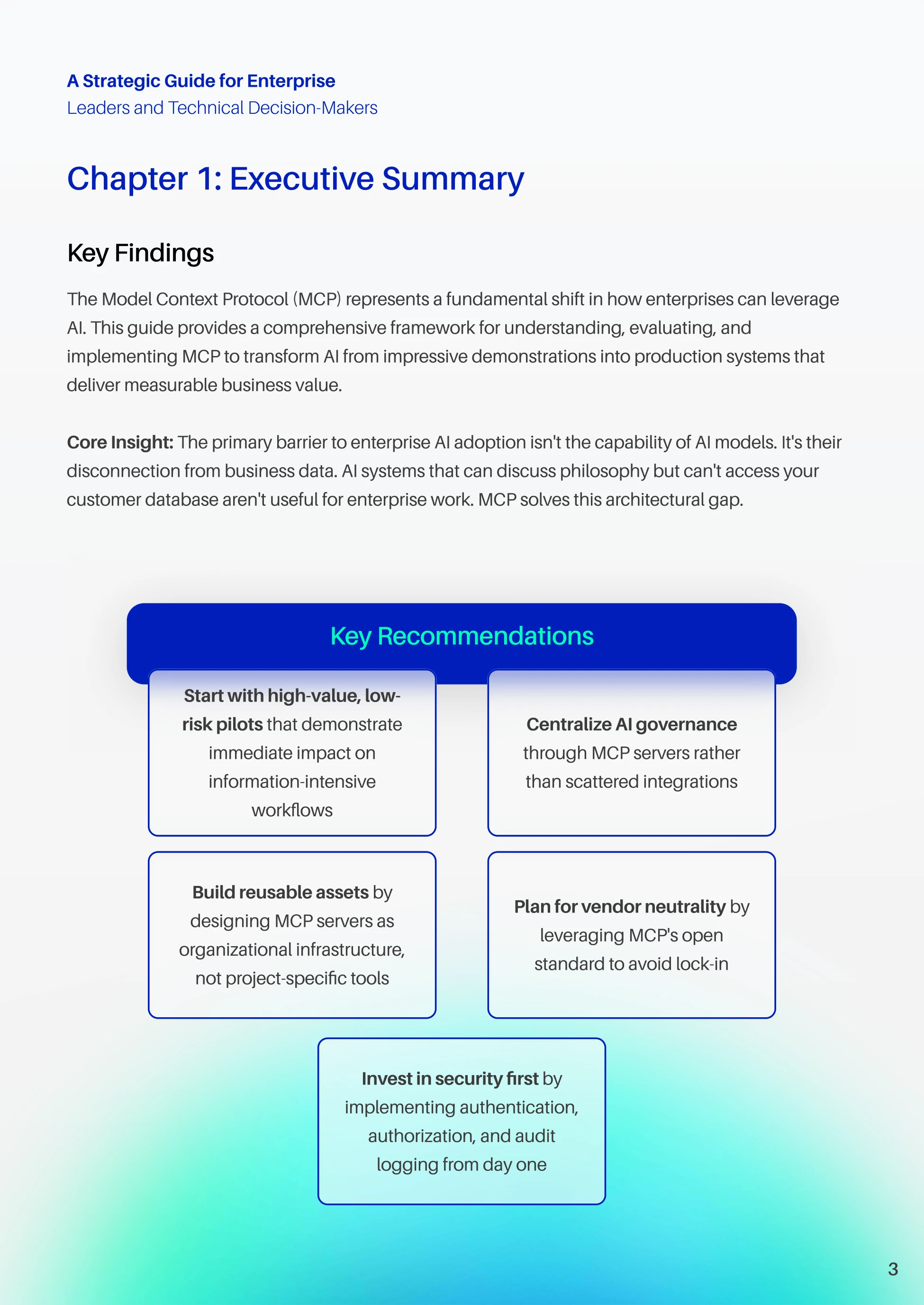
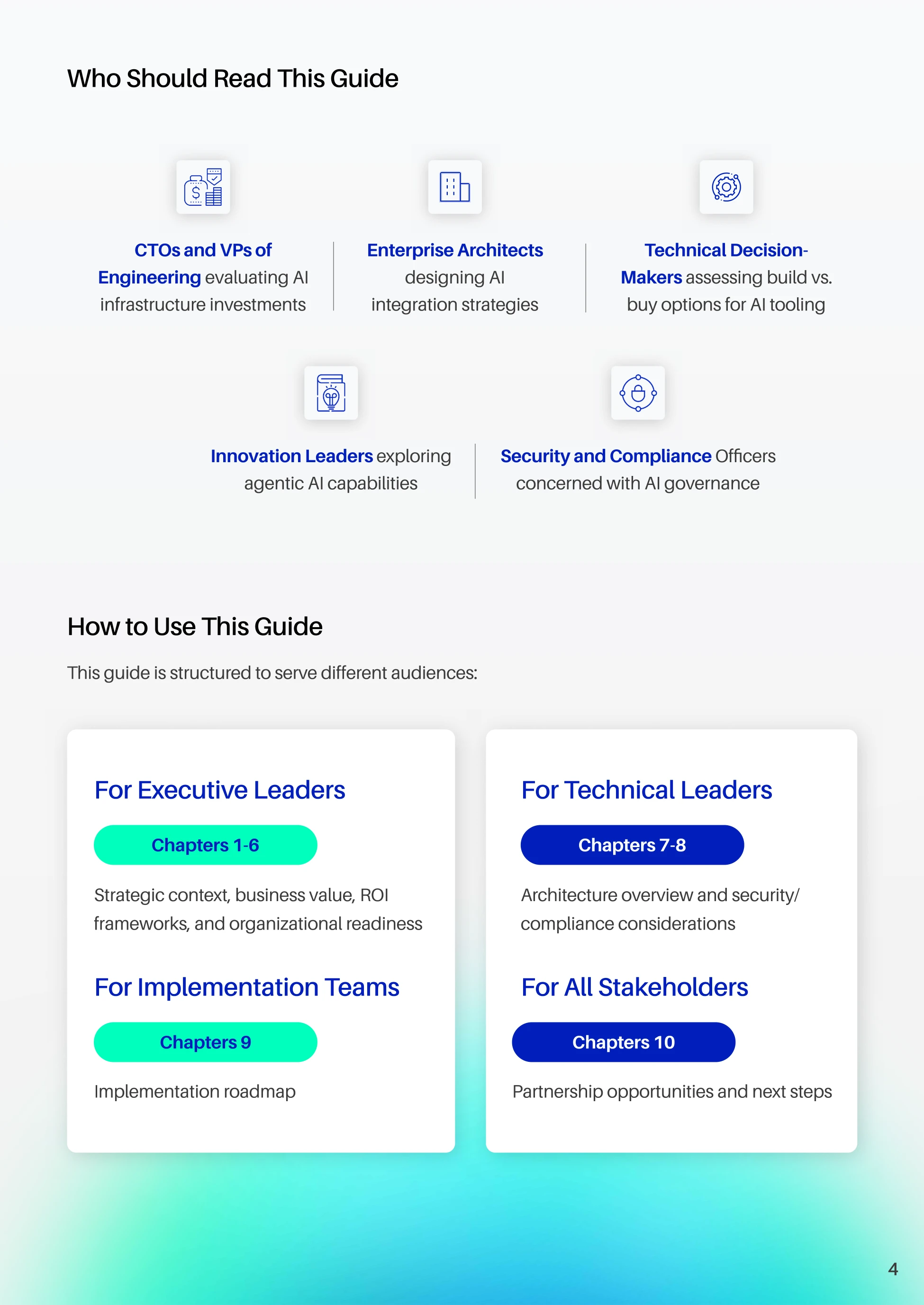
ciklum.comMCP for Enterprise: The Complete Guide toConnecting AI with Your Business DataA Strategic Guide for Enterprise Leaders and Technical Decision-Makers1A Strategic Guide for EnterpriseLeaders and Technical Decision-MakersTable of ContentsExecutive SummaryIntroduction: The AI Context CrisisUnderstanding the Model Context ProtocolBusiness Value and Strategic ImplicationsBuilding the Business Case: ROI and Investment FrameworkArchitecture Overview (For Technical Stakeholders)Security, Governance, and ComplianceGetting Started with Ciklum2A Strategic Guide for EnterpriseLeaders and Technical Decision-MakersChapter 1: Executive SummaryKey FindingsThe Model Context Protocol (MCP) represents a fundamental shift in how enterprises can leverage AI. This guide provides a comprehensive framework for understanding, evaluating, and implementing MCP to transform AI from impressive demonstrations into production systems that deliver measurable business value.Core Insight: The primary barrier to enterprise AI adoption isn't the capability of AI models. It's their disconnection from business data. AI systems that can discuss philosophy but can't access your customer database aren't useful for enterprise work. MCP solves this architectural gap.Key RecommendationsStart with high-value, low-risk pilots that demonstrate immediate impact on information-intensive workfowsCentralize AI governance through MCP servers rather than scattered integrationsBuild reusable assets by designing MCP servers as organizational infrastructure, not project-specifc toolsPlan for vendor neutrality by leveraging MCP's open standard to avoid lock-inInvest in security frst by implementing authentication, authorization, and audit logging from day one3Who Should Read This GuideCTOs and VPs of Engineering evaluating AI infrastructure investmentsEnterprise Architects designing AI integration strategiesTechnical Decision-Makers assessing build vs. buy options for AI toolingInnovation Leaders exploring agentic AI capabilitiesSecurity and Compliance Offcers concerned with AI governanceHow to Use This GuideThis guide is structured to serve different audiences:For Executive LeadersFor Technical LeadersChapters 1-6Chapters 7-8Strategic context, business value, ROI frameworks, and organizational readinessArchitecture overview and security/compliance considerationsFor Implementation TeamsFor All StakeholdersChapters 9Chapters 10Implementation roadmapPartnership opportunities and next steps4Chapter 2: Introduction: The AI Context CrisisThe Promise vs. Reality of Enterprise AILarge language models have captured enterprise imagination with their remarkable reasoning capabilities. They can analyze complex documents, generate sophisticated code, and engage in nuanced strategic discussions. Yet despite these capabilities, most organizations struggle to move beyond AI demonstrations to production systems that deliver sustained business value.The gap isn't about AI capability. It's a...







































