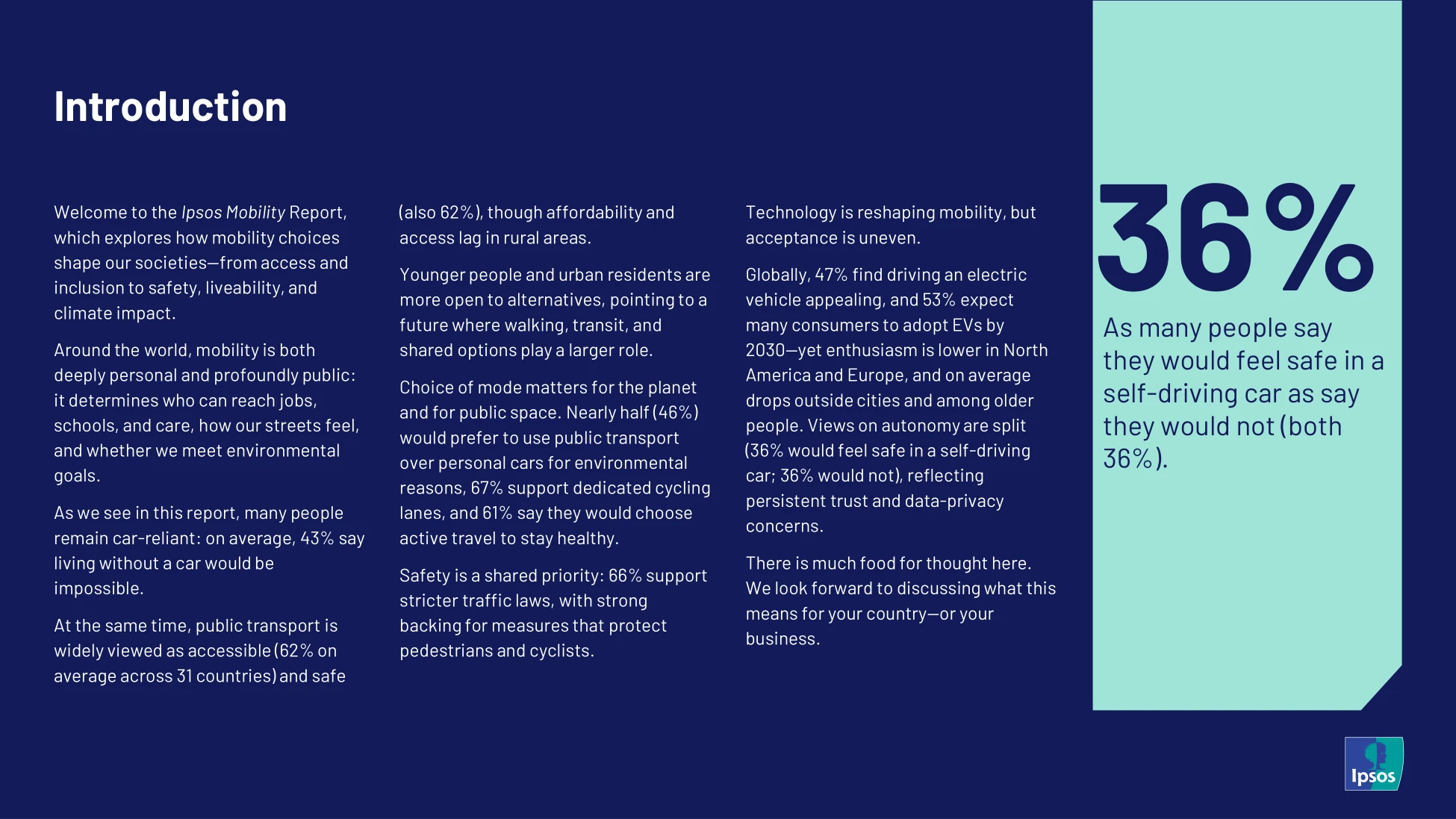
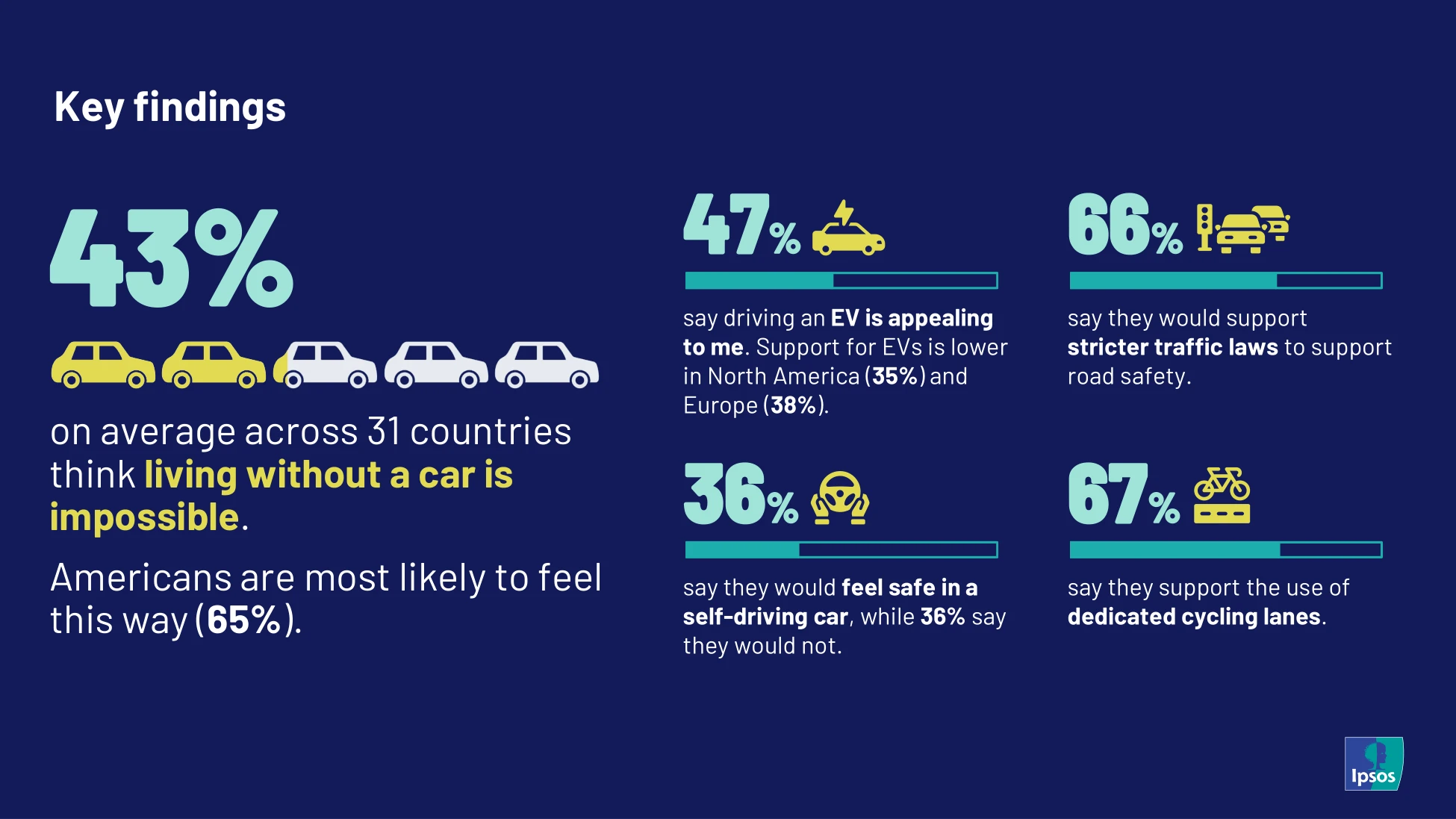
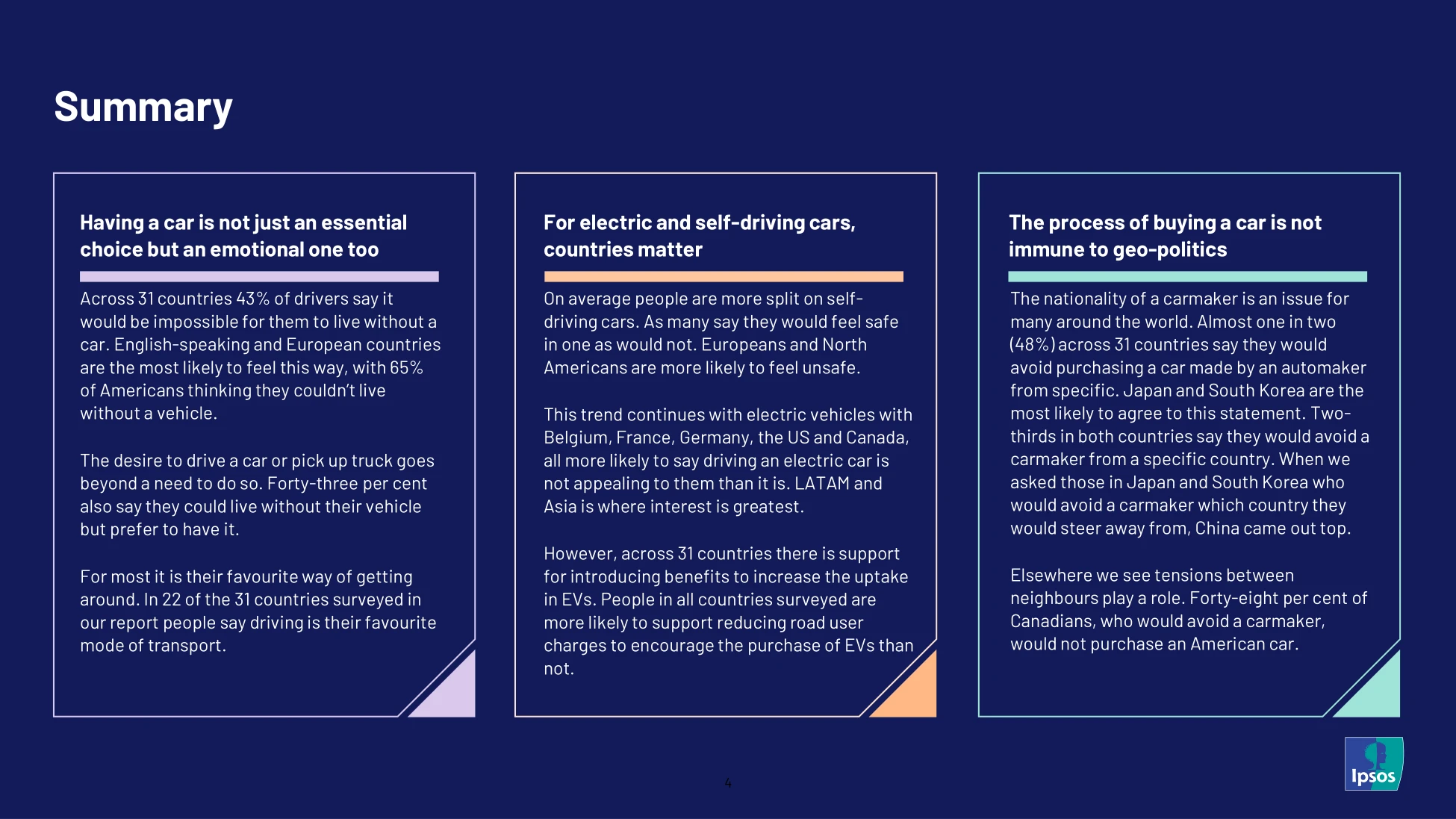
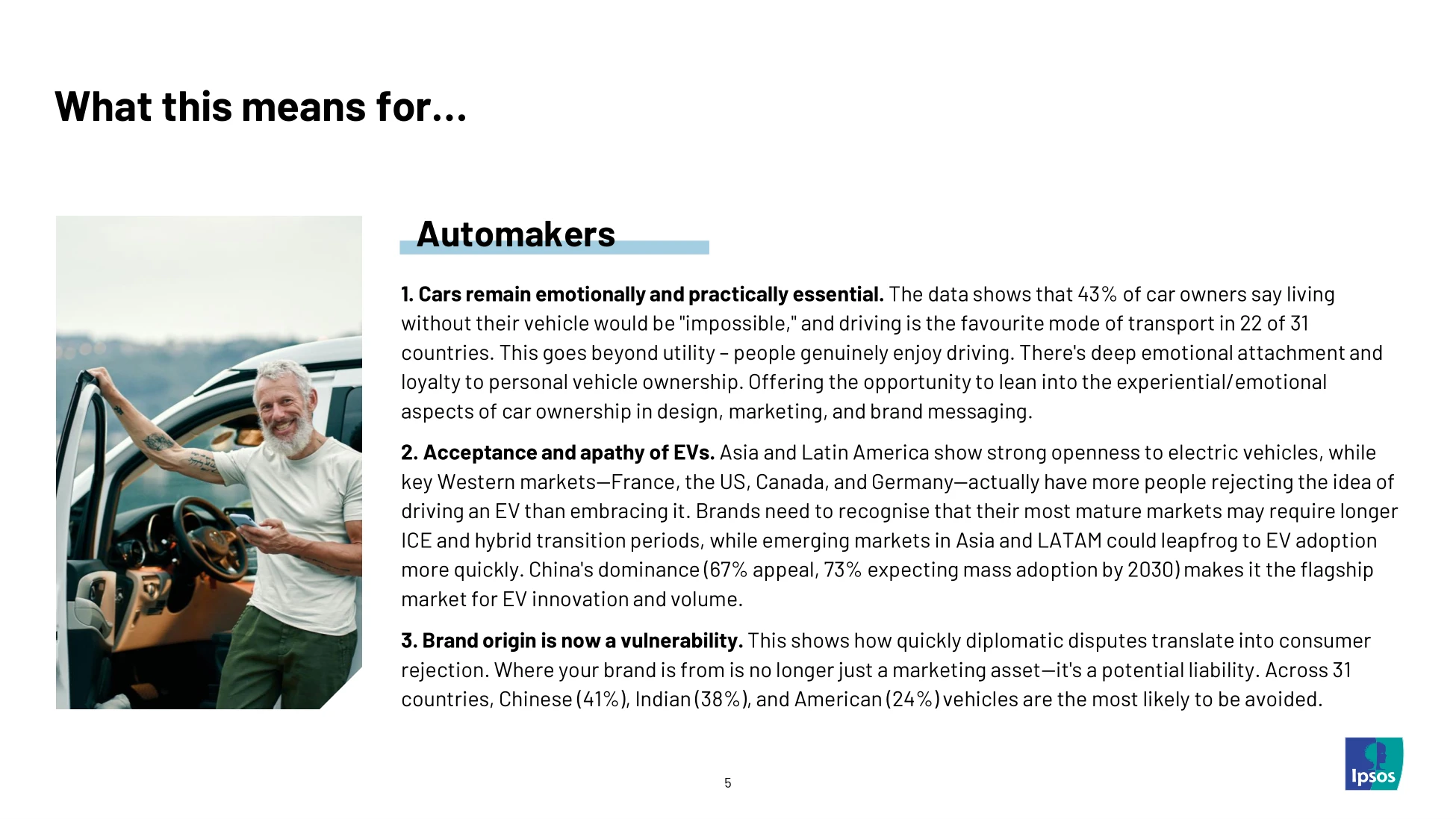
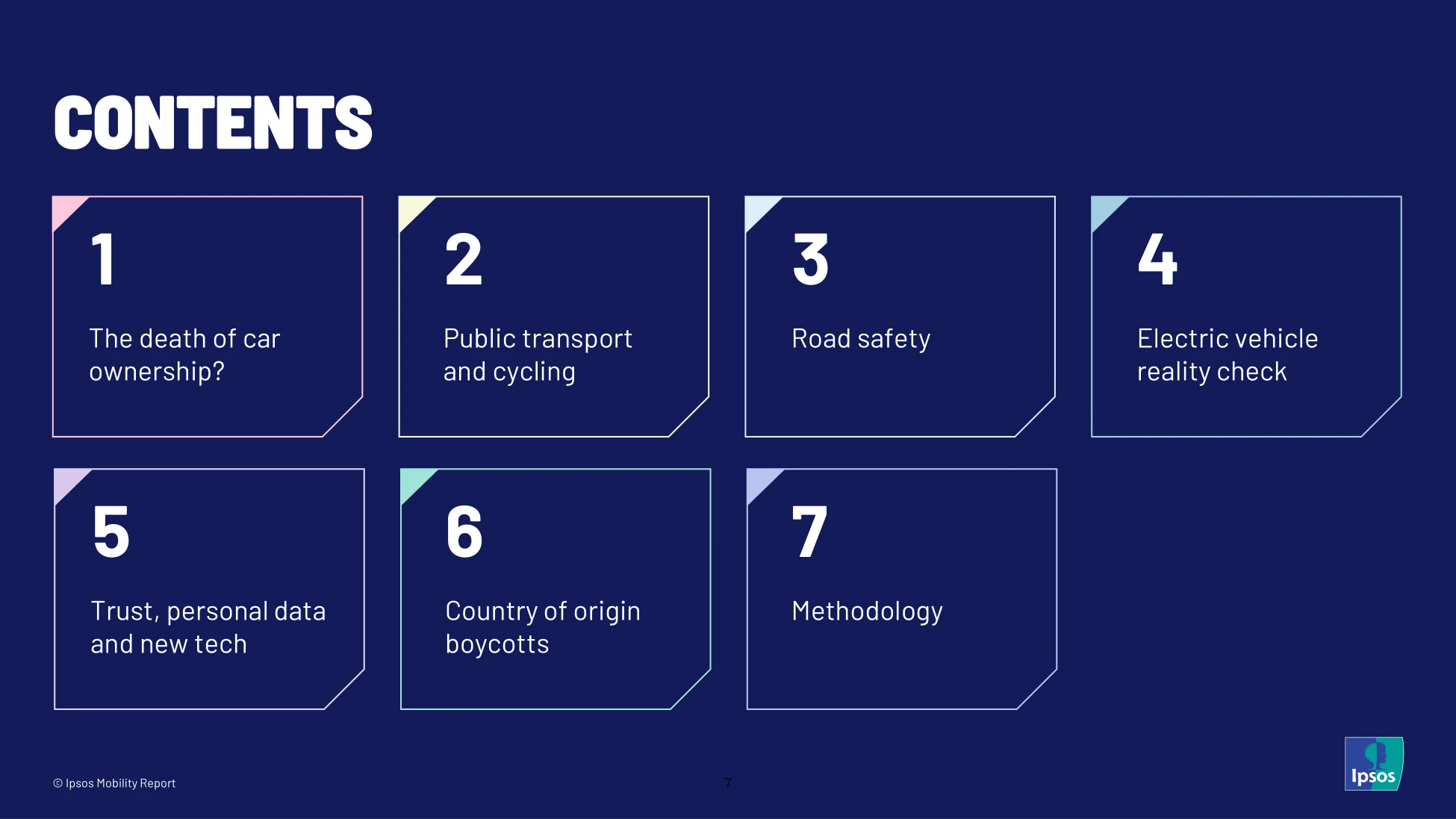
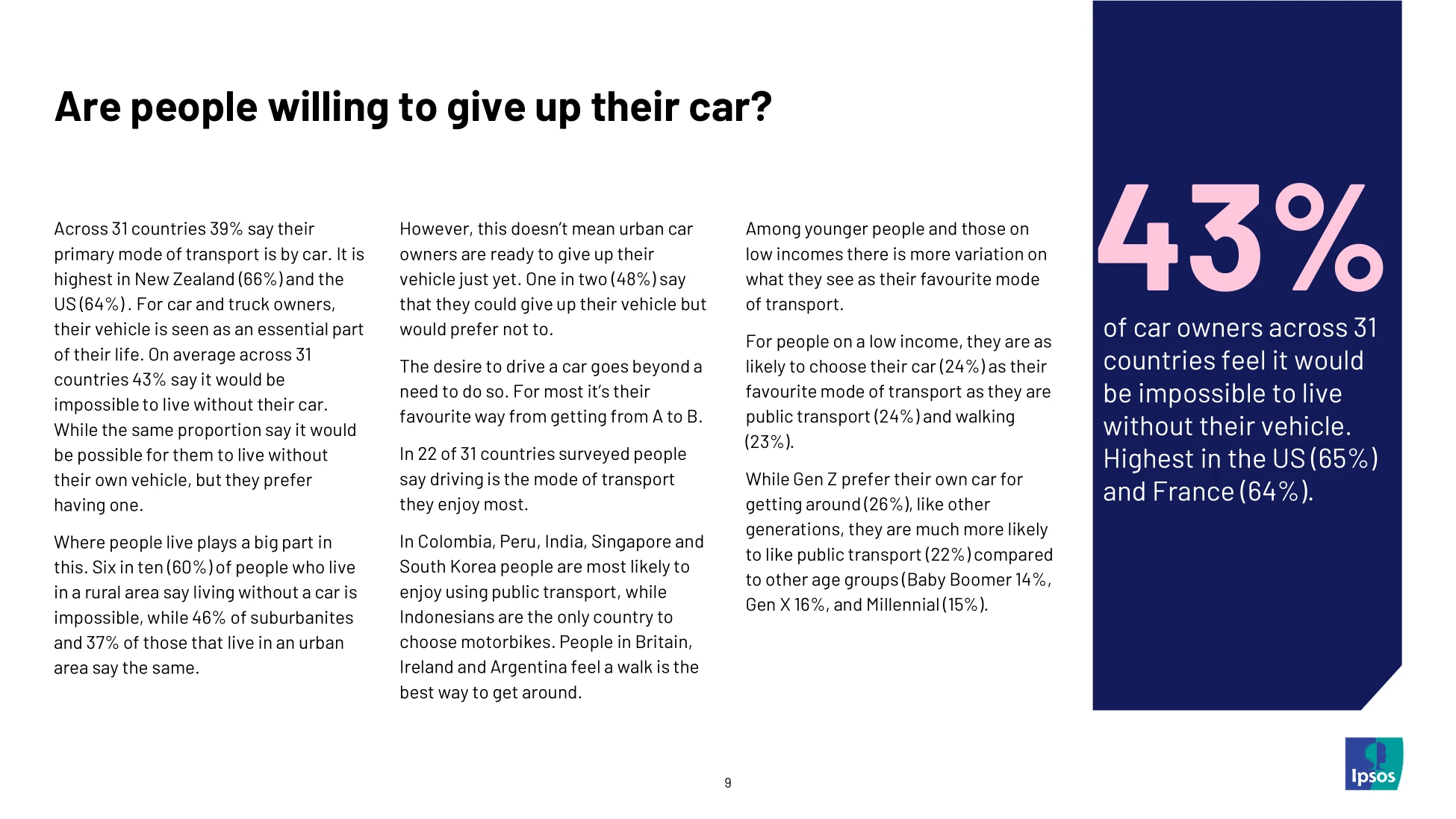
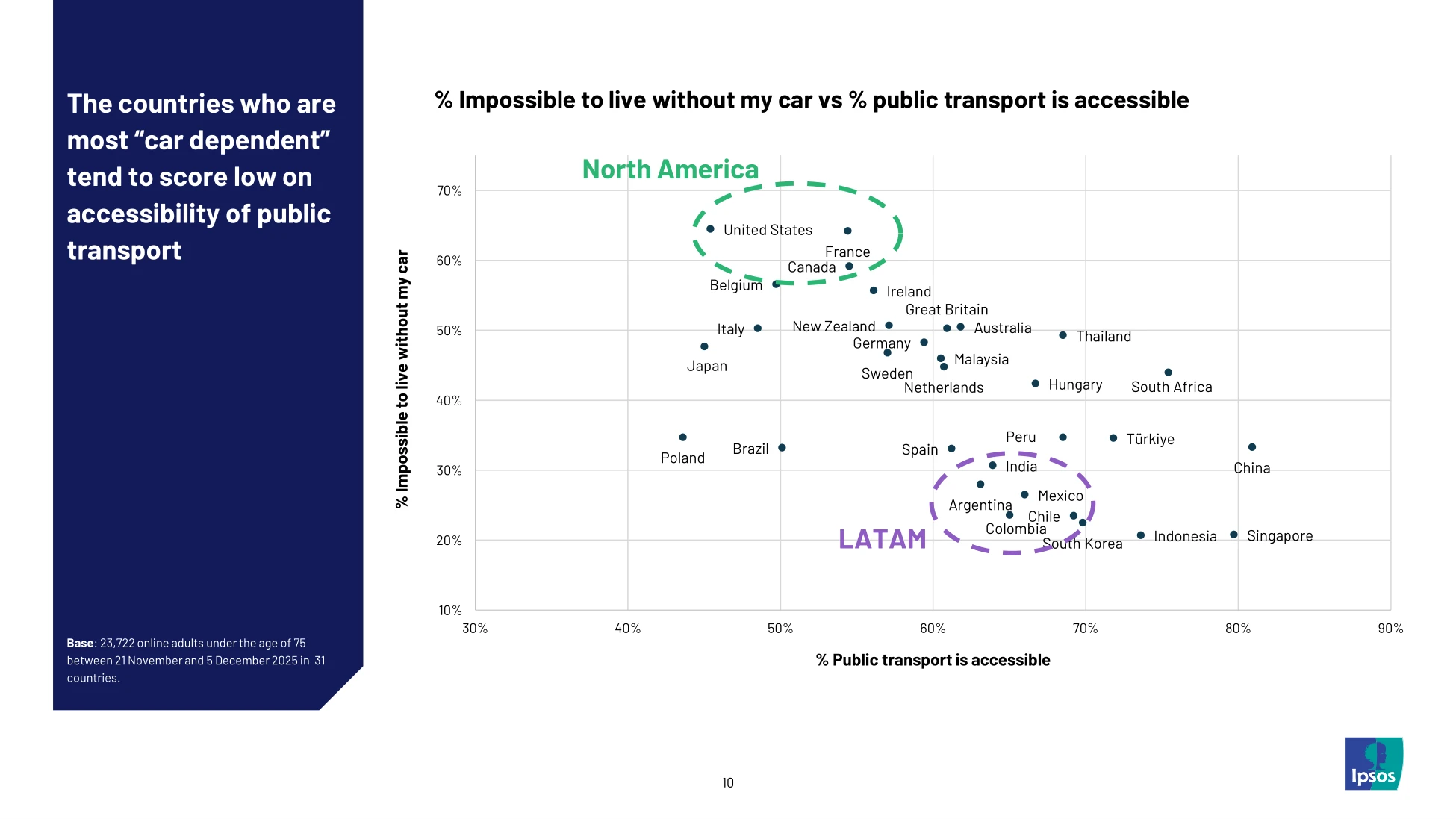
THE IPSOS MOBILITY REPORTA 31-Country Global Advisor SurveyMarch 2026 2Introduction Welcome to the Ipsos Mobility Report, which explores how mobility choices shape our societies—from access and inclusion to safety, liveability, and climate impact. Around the world, mobility is both deeply personal and profoundly public: it determines who can reach jobs, schools, and care, how our streets feel, and whether we meet environmental goals. As we see in this report, many people remain car-reliant: on average, 43% say living without a car would be impossible. (also 62%), though affordability and At the same time, public transport is widely viewed as accessible (62% on average across 31 countries) and safe access lag in rural areas. Younger people and urban residents are more open to alternatives, pointing to a future where walking, transit, and shared options play a larger role. Choice of mode matters for the planet and for public space. Nearly half (46%) would prefer to use public transport over personal cars for environmental reasons, 67% support dedicated cycling lanes, and 61% say they would choose active travel to stay healthy. Technology is reshaping mobility, but Safety is a shared priority: 66% support stricter traffic laws, with strong backing for measures that protect pedestrians and cyclists. acceptance is uneven. Globally, 47% find driving an electric vehicle appealing, and 53% expect many consumers to adopt EVs by 2030—yet enthusiasm is lower in North America and Europe, and on average drops outside cities and among older people. Views on autonomy are split (36% would feel safe in a self-driving car; 36% would not), reflecting persistent trust and data-privacy concerns.There is much food for thought here. We look forward to discussing what this means for your country—or your business.As many people say they would feel safe in a self-driving car as say they would not (both 36%).36% 343% Key findings on average across 31 countries think living without a car is impossible.Americans are most likely to feel this way (65%).say driving an EV is appealing to me. Support for EVs is lower in North America (35%) and Europe (38%).47%say they would feel safe in a self-driving car, while 36% say they would not.36%say they would support stricter traffic laws to support road safety.66%say they support the use of dedicated cycling lanes.67% 4Having a car is not just an essential choice but an emotional one tooAcross 31 countries 43% of drivers say it would be impossible for them to live without a car. English-speaking and European countries are the most likely to feel this way, with 65% of Americans thinking they couldn’t live without a vehicle. The desire to drive a car or pick up truck goes beyond a need to do so. Forty-three per cent also say they could live without their vehicle but prefer to have it.For most it is t...