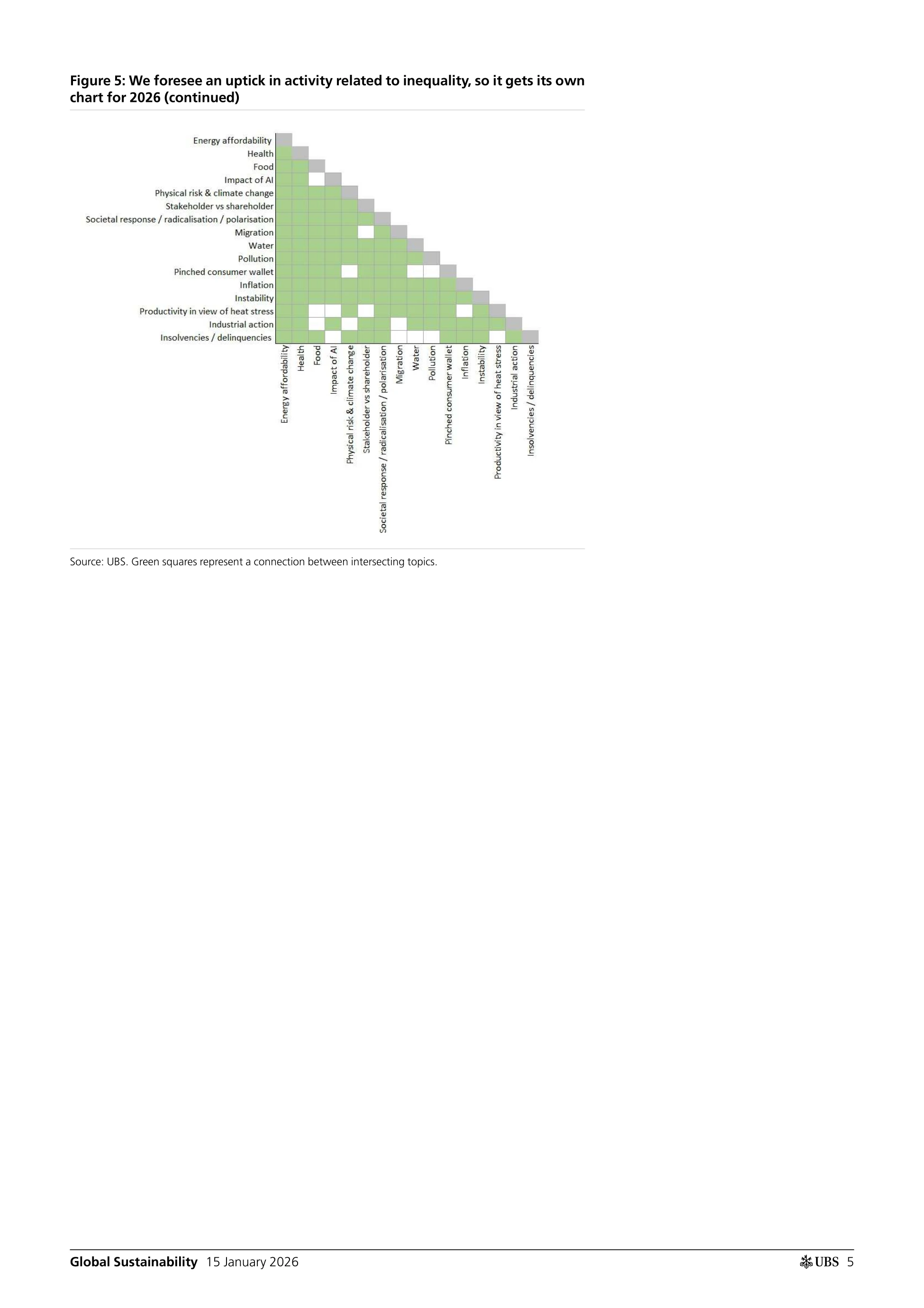
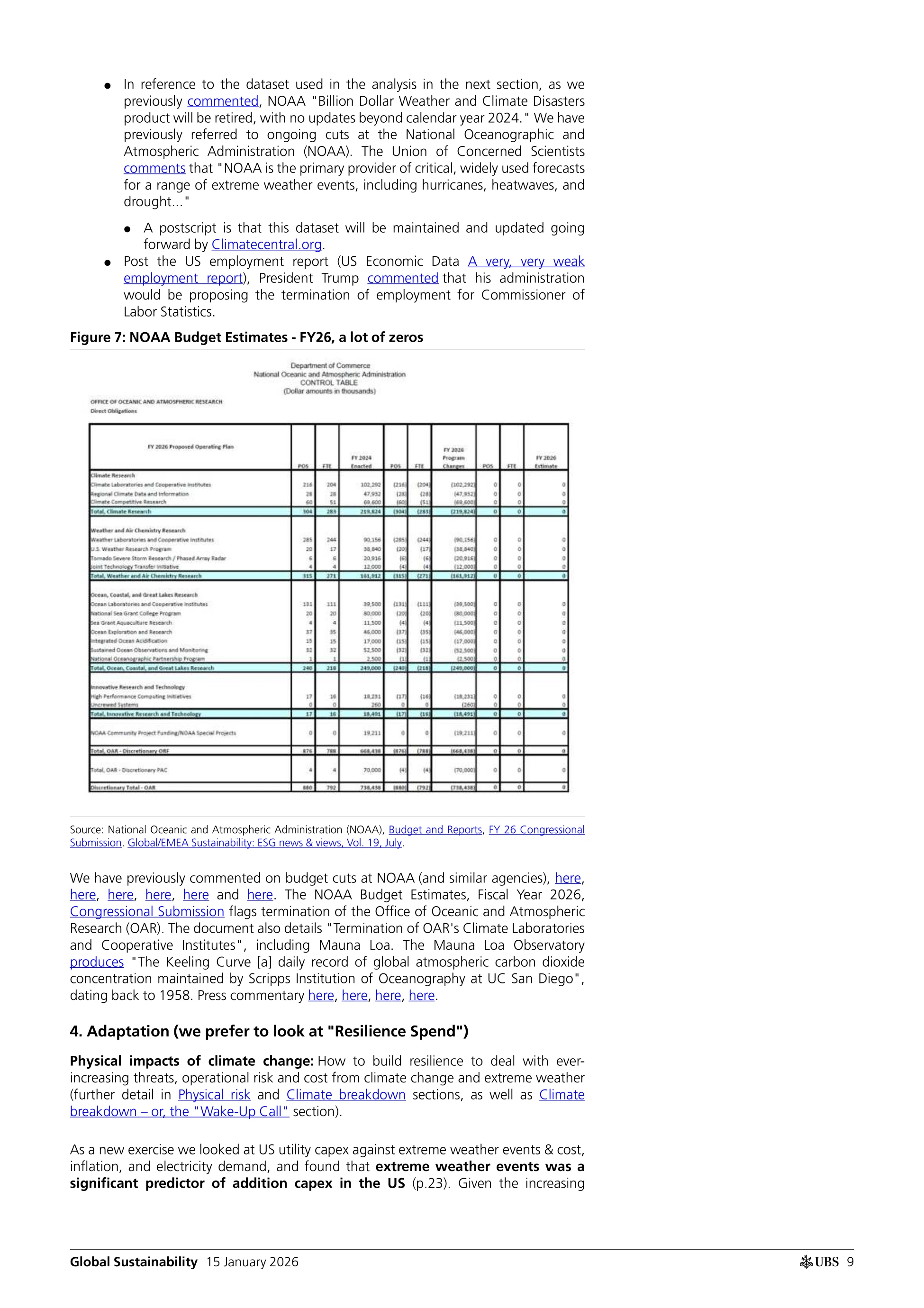
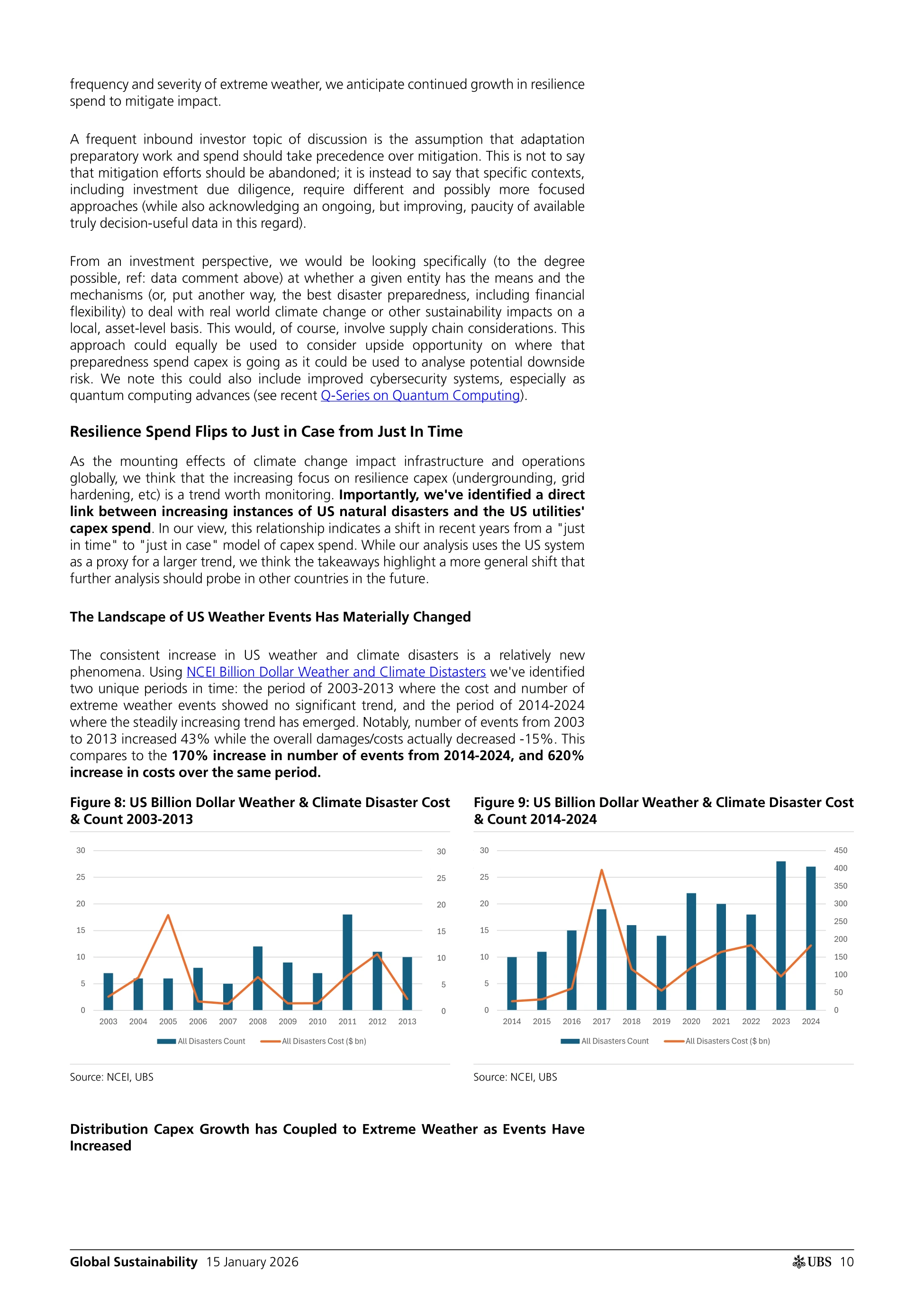
ab15 January 2026Global ResearchPowered byUBS Evidence LabYESGlobal Sustainability2026 Outlook: Buckle Up Our ESG watchlist for 2026: the whole is greater than the sum of the partsOur annual key topics list typically remains fairly constant. Of that list, this year we are watching System Resilience & Inequality particularly closely. A reminder: ESG risks often cross-connect and multiplier effects can be significant. See Figure 2 & analysis of each topic on our list from p.16 (also, US, APAC, Japan 2026 ESG Outlooks). What price resilience? Resilience, alongside Systems Thinking, is a key ESG concept that we return to repeatedly. We see two critical questions to address. First, what is any given company's "plan b" (and c, d, & e) when assessing any number of (potentially) highly disruptive sustainability-related risks? Anything from supply chains & geopolitical risk, to physical effects of climate change, to contract "disruption" (ref: US offshore wind intervention, China critical material export restrictions), to whether just in time inventory becomes just in case inventory, and much more. The second is to assess how resilient companies are in terms of balance sheet, cash flow, and overall returns in an environment where higher "resilience spend" becomes necessary. And, when addressing both questions, asking if you think your assumed risk premium is correct (or, worse, how meaningful is it in the first place in this environment)? Resilience spend analysis: extreme weather pushing addition capexWe looked at US utility capex against extreme weather events & cost, inflation, and electricity demand. Using our novel multifactor resilience spend model, we've identified a direct, quantitative relationship between increasing count and cost of US natural disasters and predictive US utility distribution capex spend (p.23). We anticipate continued growth in resilience spend to mitigate extreme weather impact. Why Social may really matter this year (even to non-ESG people)We see potentially significant market impact in civil society actions around inequality, and any resulting regulatory responses. For example, banning institutional investors from owning US homes. On AI, we are closely watching protest activity proving impediments to data centre rollouts. A related basket of considerations that are already impacting political and operational stability and may further impact social license to operate include: job stability concerns in relation to AI, mental health impact of social media and tech (ref: Aus social media ban), and more. Sustainability continues to drive capex and returnsPoliticisation of ESG has slid a bit on our list of "noisiest" factors for the year, not because it's gone away (it hasn't), but because we think: 1) it's now (mostly, see p.8) baked into expectations, & 2) we are seeing a combination of more robust ESG processes, more embed...