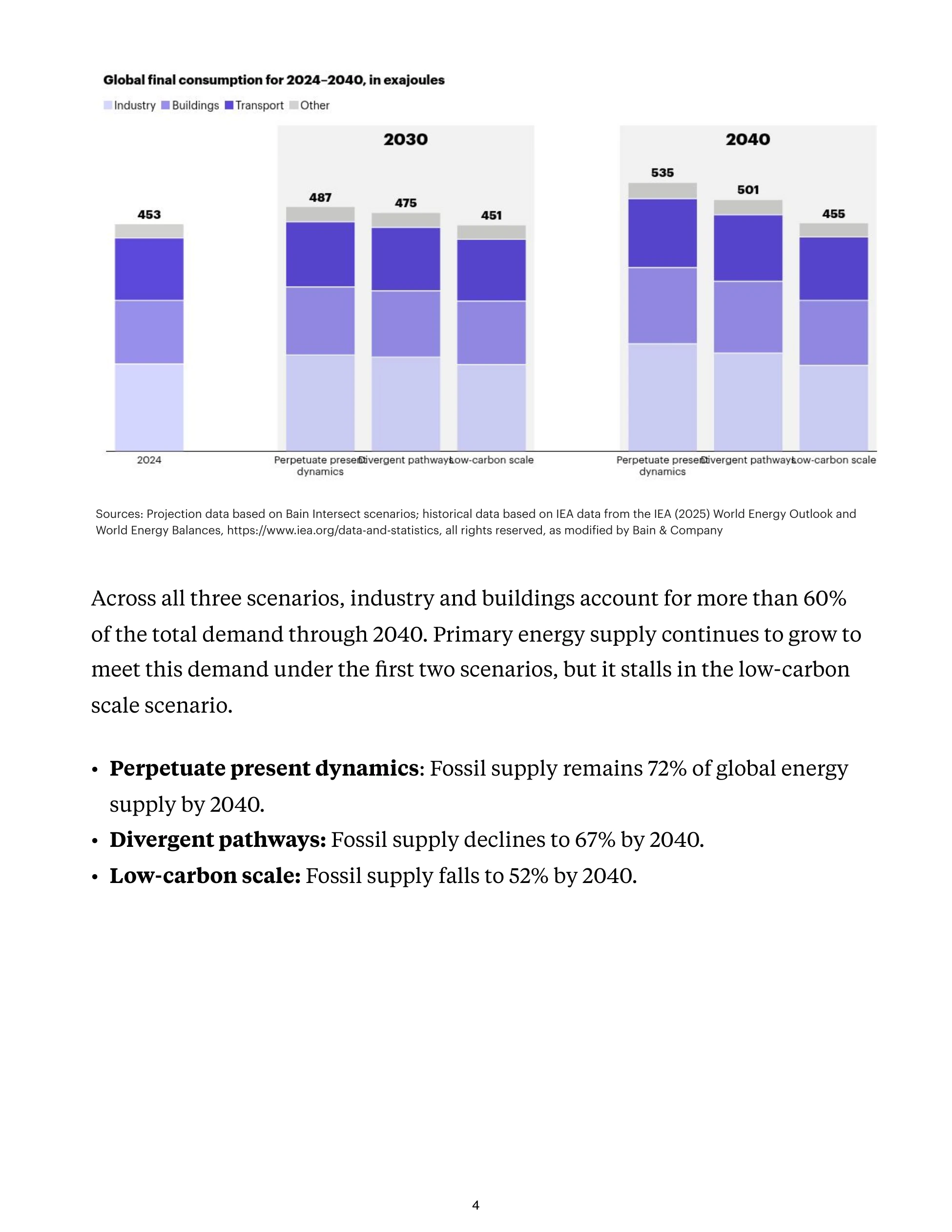
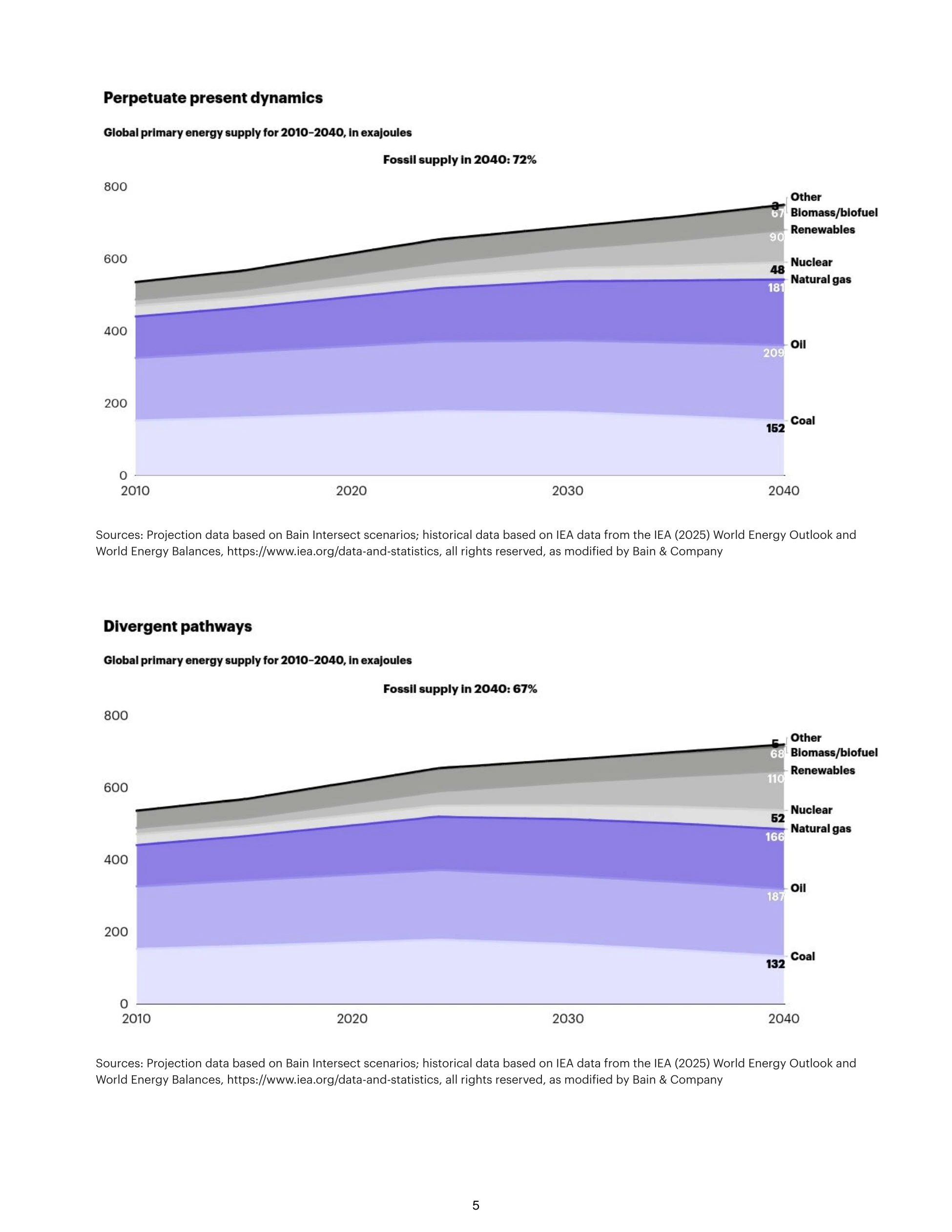
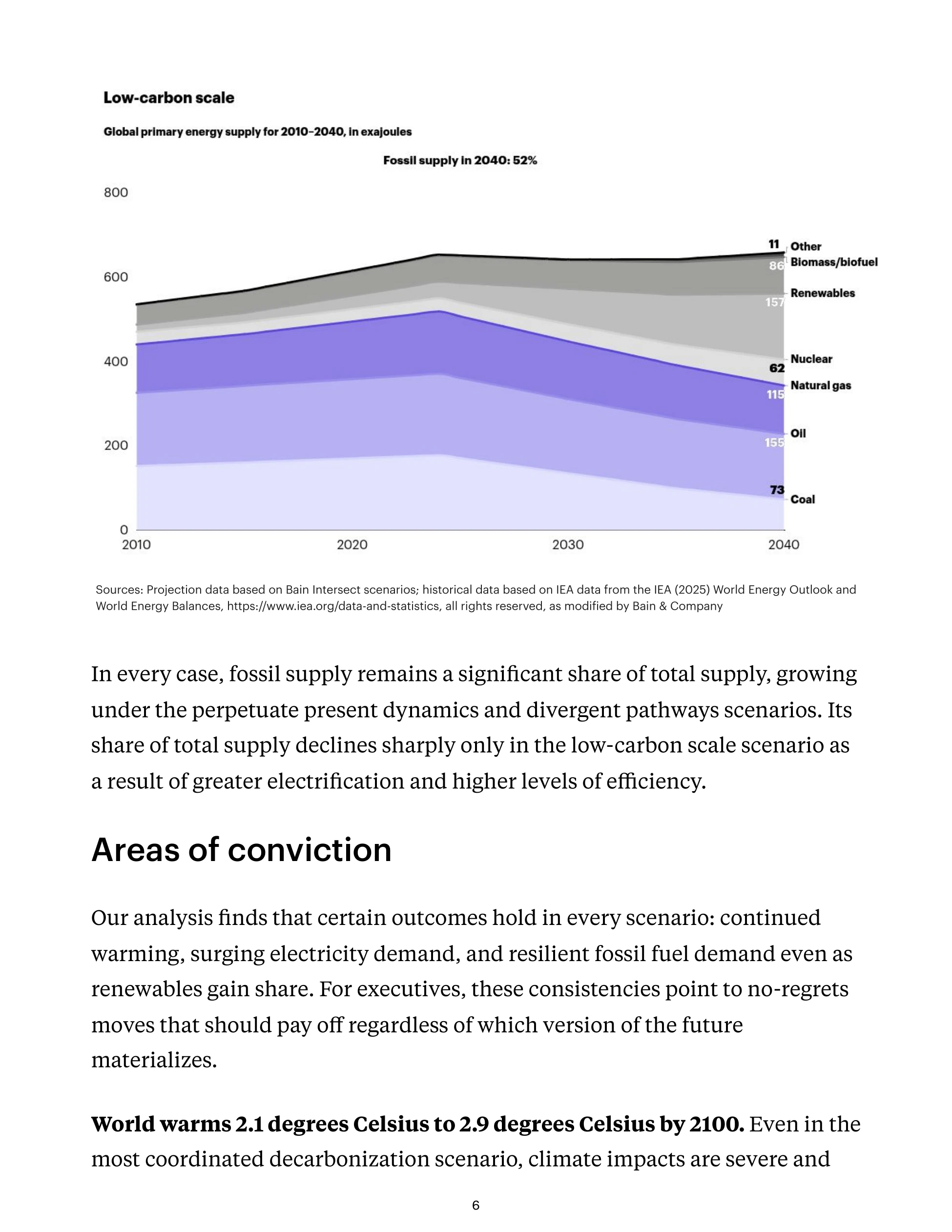
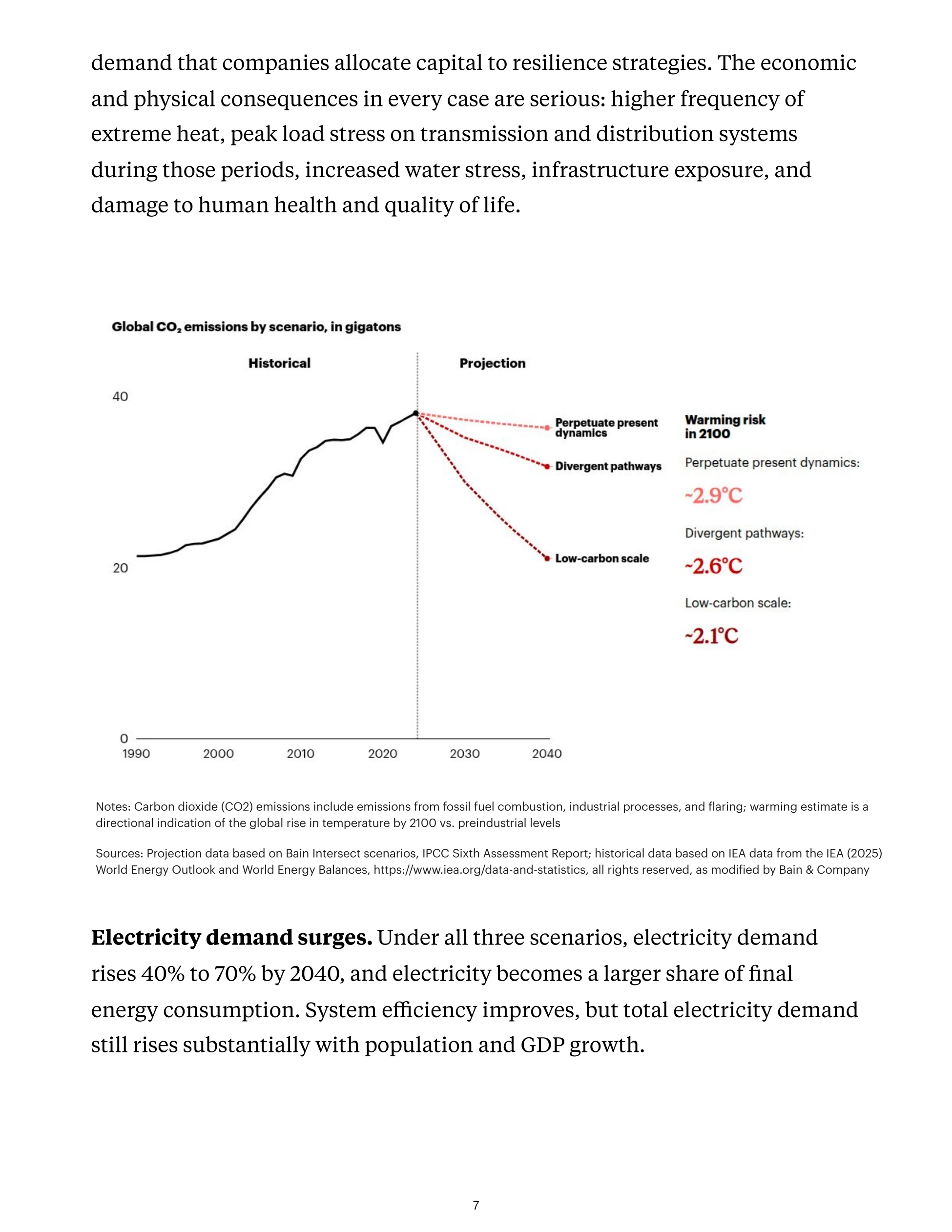
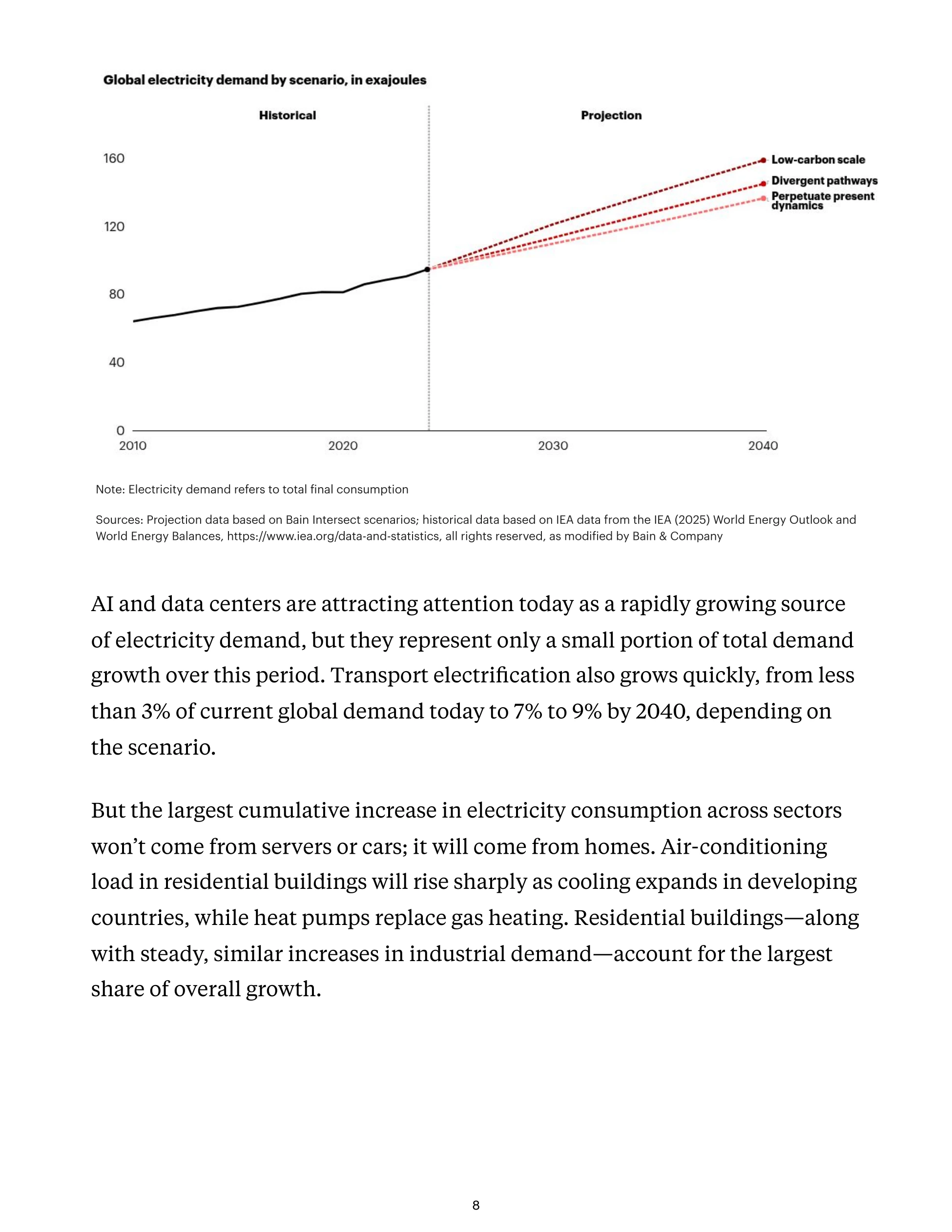
Global Energy & Materials Outlook 2026Modeling growth, build rates, and resource constraints helps shed light on the opportunities and risks ahead.ReportGlobal Energy and MaterialsOutlook 2026Modeling growth, build rates, and resource constraints helps shed lighton the opportunities and risks ahead.By Alasdair Robbie, Grant Dougans, Brian Murphy, Dayle Nel, Kate Ramsey, Peter Meijer,and James Nixon19 min readAt a GlanceThree scenarios for 2040, grounded in economic, physical, andengineering realities, help executives identify risks, opportunities, and no-regrets moves.Bain’s Intersect model shows electricity demand and renewables risewhile fossil fuels persist. The world warms 2.1 degrees Celsius to 2.9degrees Celsius by 2100.Supply of gas/liquefied natural gas, nuclear, minerals, and sustainablefuels will depend on region, policy, and cost, with big swings possible.Understanding local markets, planning for adaptability, and buildingresilience will help companies find opportunities and navigate withconviction in an uncertain future...SM..1The fundamentals endureThe past five years have tested assumptions about global energy and materialsmarkets. Supply chain shocks, a shifting ESG movement, and two wars withsignificant impact on energy flows have heightened uncertainty forexecutives: How fast are markets growing, and how is policy shaping them?Where are demand and margin pools moving? What supply bottlenecks willshape new developments? Where to invest, and when?That uncertainty only reaffirms Bain’s long-standing view of thefundamentals: Energy demand rises with GDP, population growth, andindustrial activity. The system’s ability to meet demand is constrained by thephysical and engineering realities of what can be built, how fast it can be built,and the availability of materials, capital, and energy resources. Policymakersaim to improve standards of living, but lowest cost remains the decidingfactor, making sustained investment more difficult.Those fundamentals mean efforts to solve the dual challenge—the worldneeds more energy even as it transitions to a lower carbon footprint—will beuneven and, in some scenarios, messy. Across industries, the best decisionsabout energy transition pathways and value creation will be based onplausible outcomes that are grounded in market data, physical realities,technology development, and trade dynamics.2040: Three futures for the transitionWe maintain three standing global scenarios through 2040, modeled andrefreshed regularly using Intersect , Bain’s proprietary economic modelingcapability. Each scenario describes a realistic and distinct path from today,excluding the still-unfolding effects from the war in Iran.℠2Total energy demand in 2040 and the most pragmatic supply mix that candeliver it offer a first read on each of these three futures. Beyond that, a closerlook shows what remains consistent across scenarios and where the pathsdiverge, ...







































