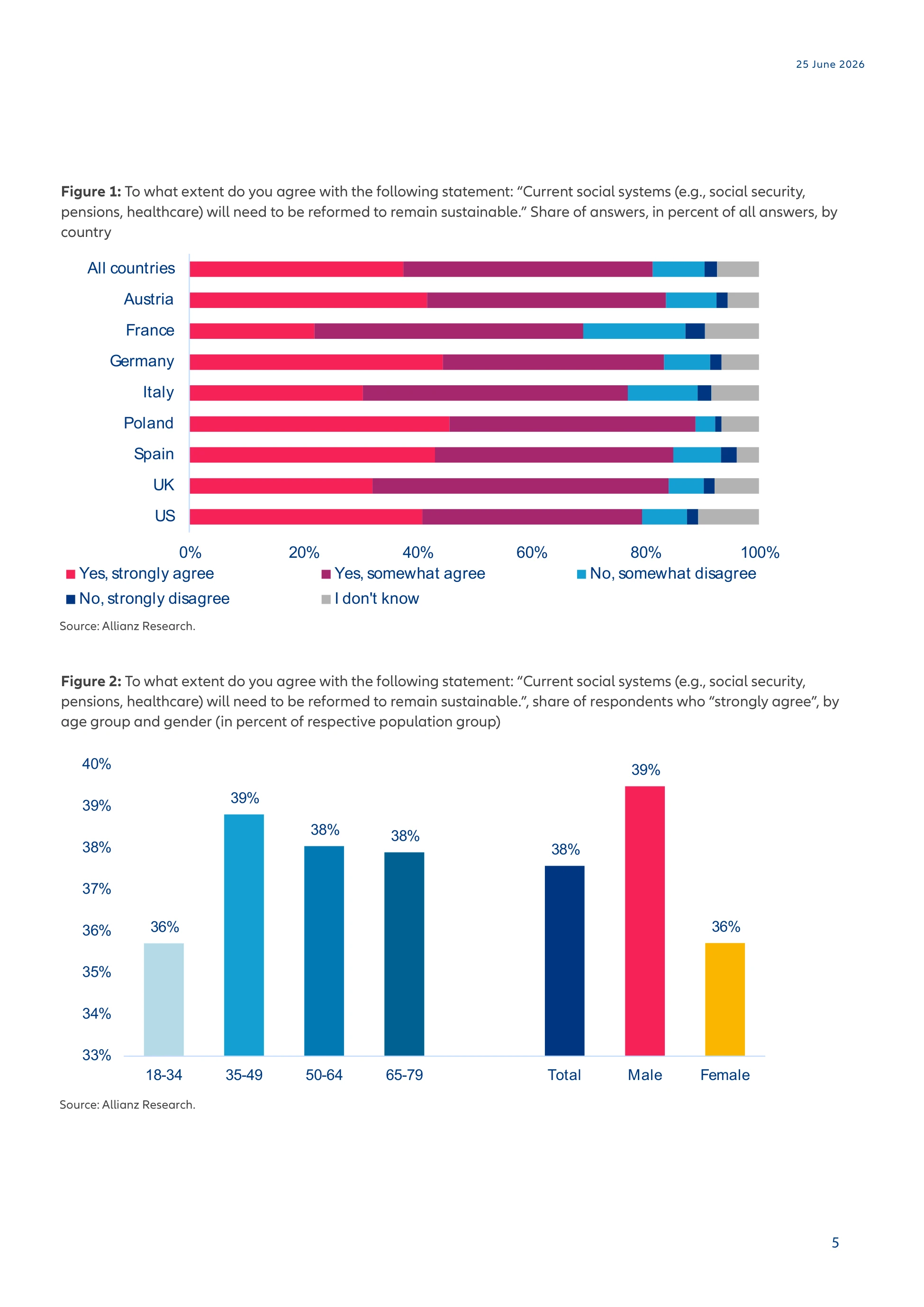
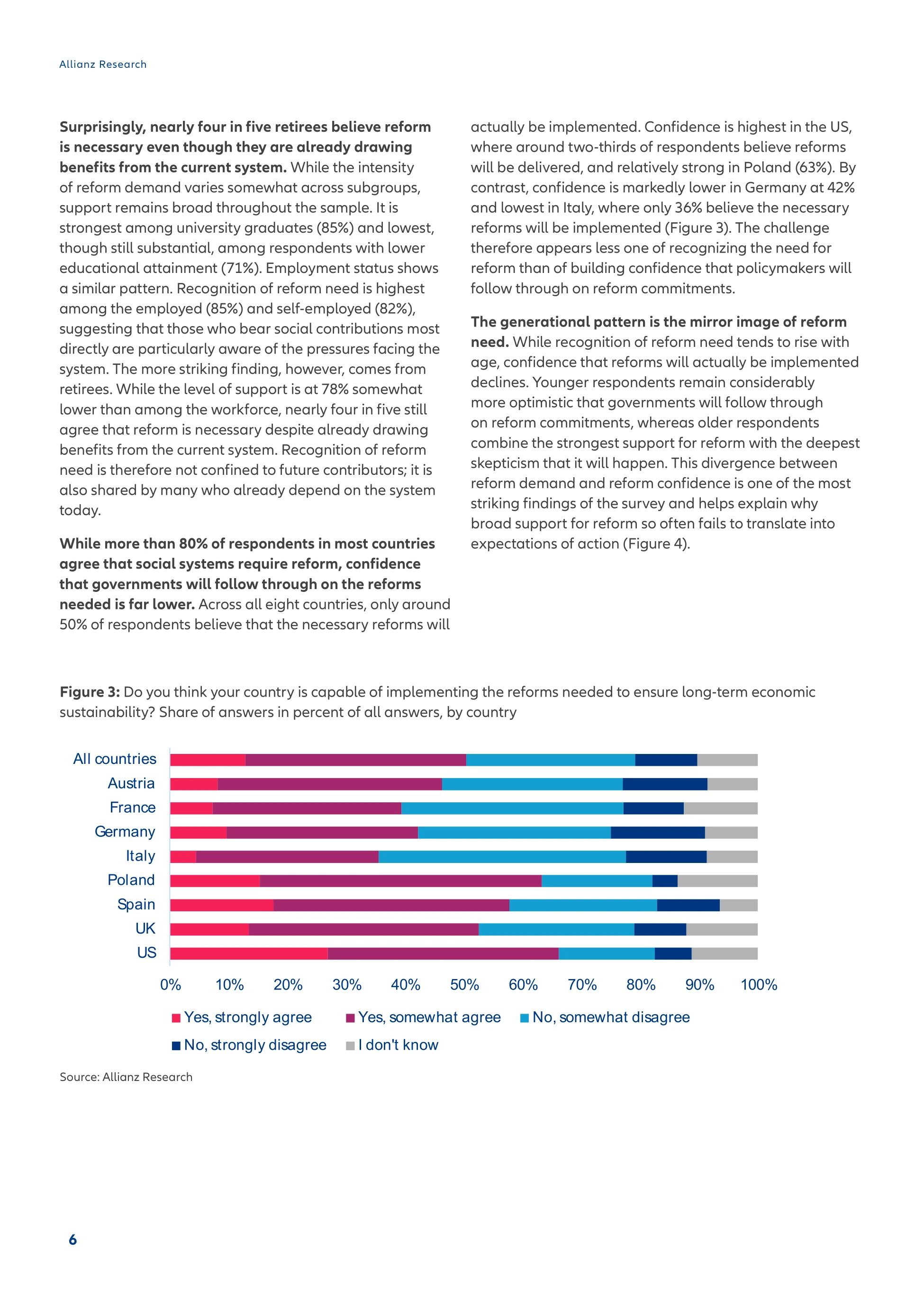
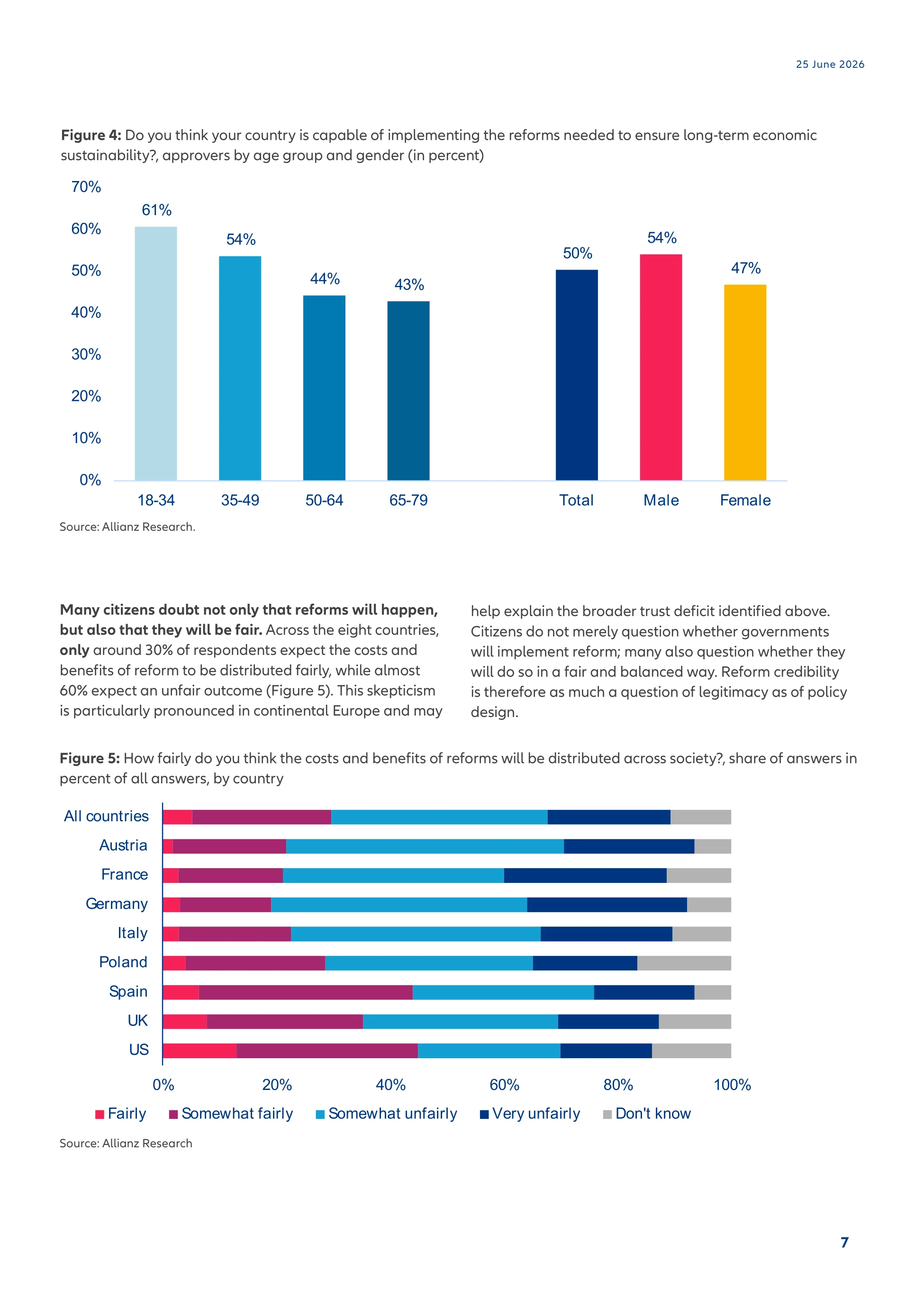
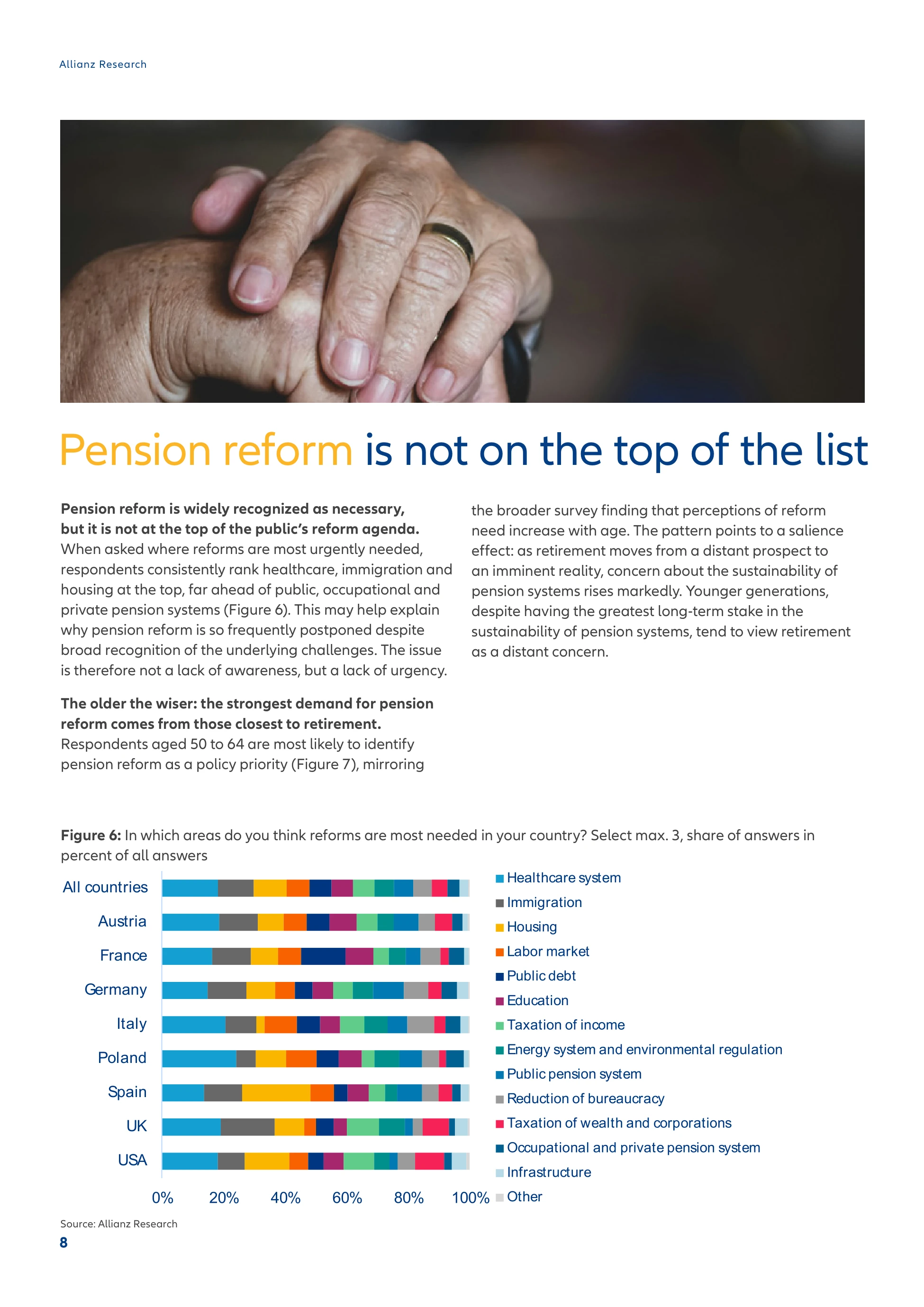
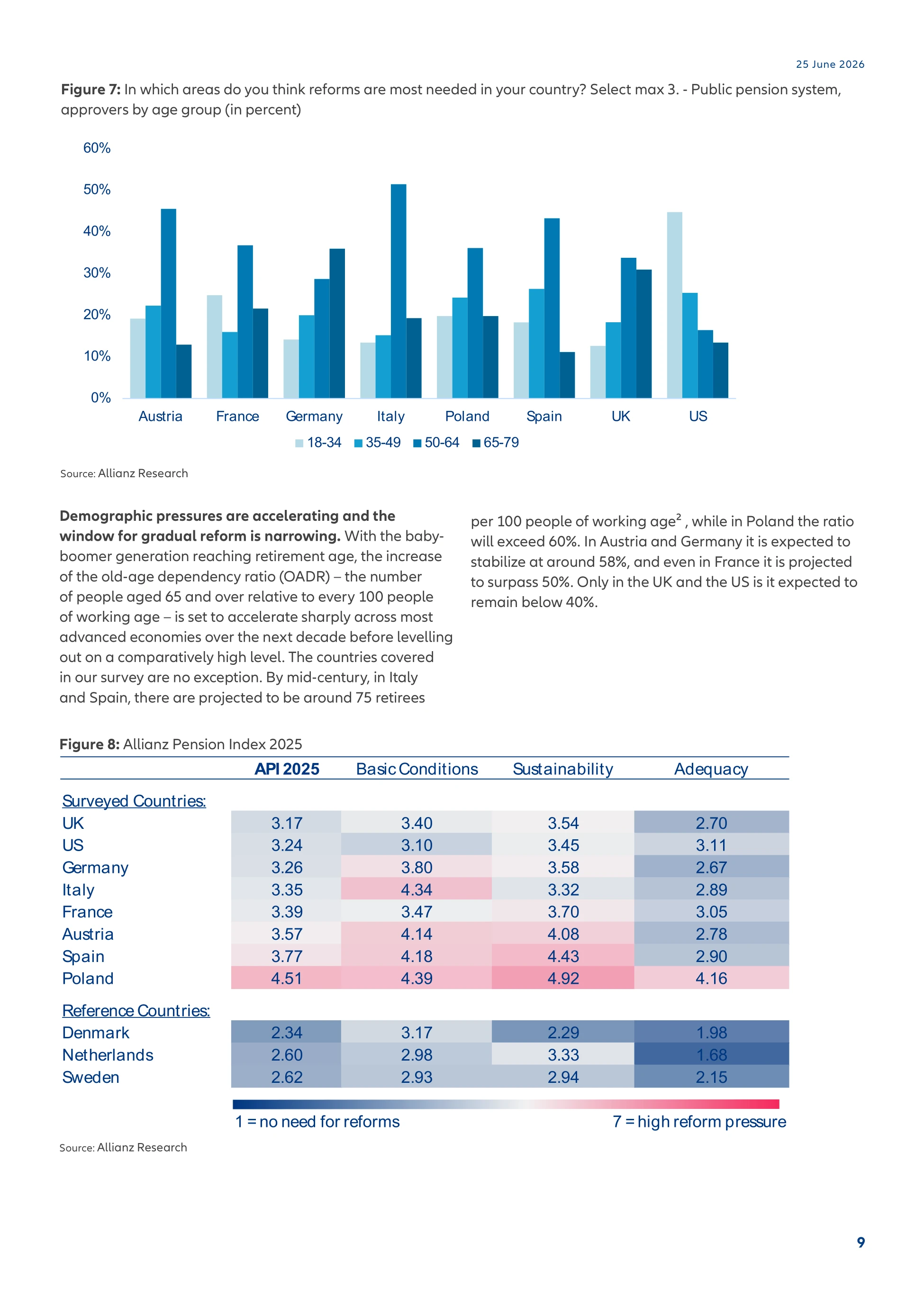
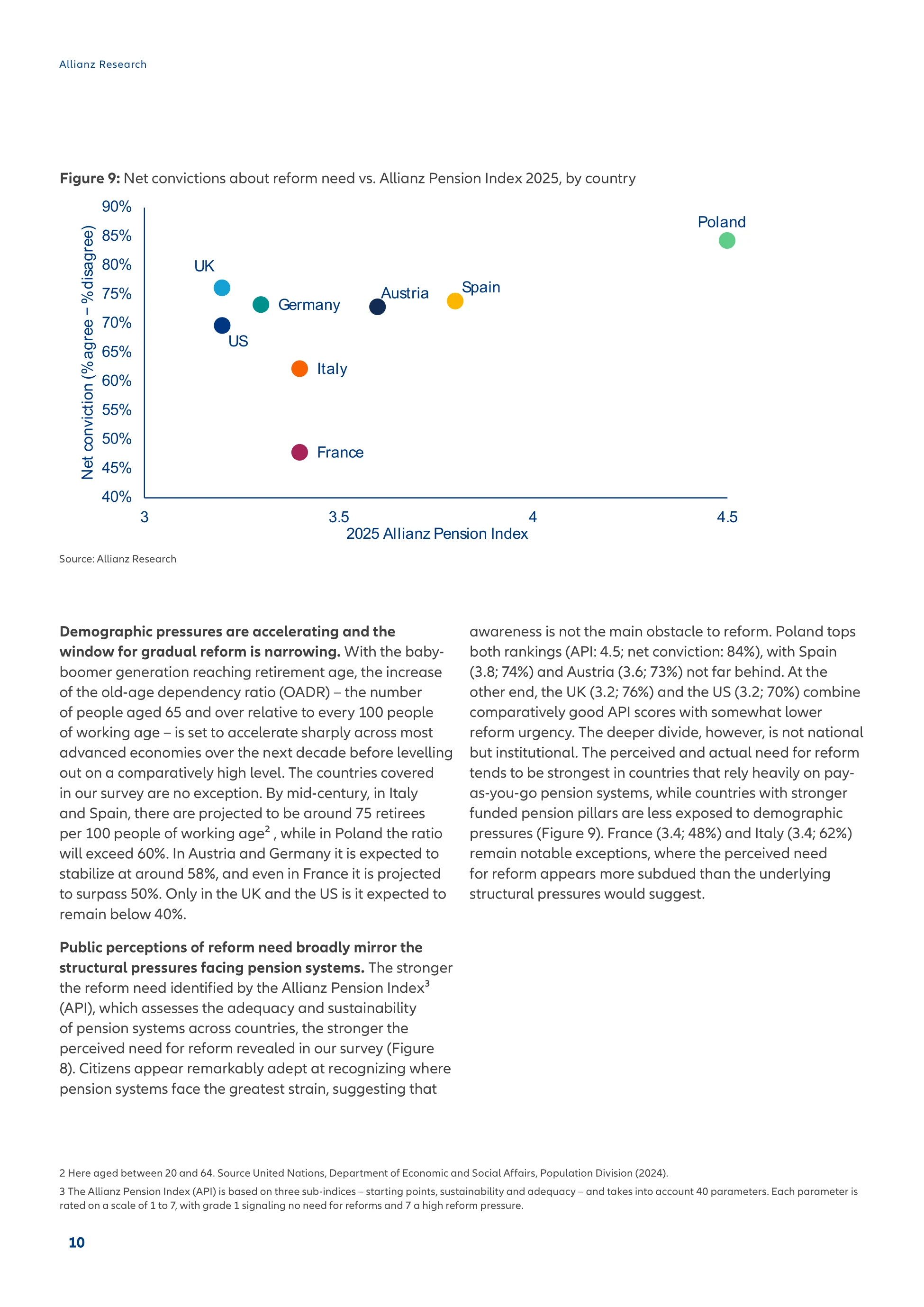
Allianz Research25 June 2026Pension Reform Survey 2026: Everyone knows reform is needed, few expect it to happen Allianz Research2Allianz ResearchContent Page 3 Executive SummaryPage 4-7 Most agree reform is needed – few believe it will be deliveredPage 8-10 Pension reform is not on the top of the list Page 11-13 The reform options are known – but there is no one size fits all Page 14-19 Retirement preparedness starts with knowing the numbers Page 20-21 Financial literacy, a growing imperative for pension policy Page 22-23 More capital-funded pension provision is a win-win Page 24 Appendix 25 June 2026• Citizens recognize the need for social security reforms, but have far less confidence that reforms will actually be delivered. Our survey of more than 8,000 respondents across Austria, France, Germany, Italy, Poland, Spain, the UK and the US explores public attitudes towards social security reform, pension sustainability and retirement preparedness. Recognition of the need for reform is overwhelming, exceeding 80% in most countries. Yet confidence in governments' ability to implement the reforms needed to ensure long-term sustainability is much weaker. The latter ranges from just 36% in Italy and 42% in Germany to 63% in Poland and 66% in the US. Views diverge more sharply when it comes to how the adjustment burden should be shared. Taking greater personal responsibility through additional saving is the most widely accepted option, while higher taxes and social contributions receive little support. Importantly, while respondents differ on how adjustment should be achieved, only a minority rejects all proposed measures outright. The challenge for policymakers is therefore no longer convincing citizens that reform is needed, but demonstrating that reforms can be delivered and designing politically viable reform packages.• Older generations are not blocking reform. Recognition of the need for reform increases with age, but trust that governments will successfully implement the necessary reforms declines. While 61% of respondents aged 18 to 34 express confidence that the necessary reforms will be implemented, this falls to 54% among those aged 35 to 49 and to just 44% and 43% among respondents aged 50 to 64 and 65 to 79, respectively. The result is a striking paradox: the older cohorts are most convinced that reform is necessary, while younger respondents attach less urgency to the issue, suggesting that pensions suffer from a salience gap despite their long-term importance. Contrary to common stereotypes, respondents aged 50 to 64 are also among the most willing to accept measures such as working longer, postponing retirement or receiving lower public benefits.• Responsibility for retirement is increasingly shifting onto individuals, yet many lack the knowledge to prepare for it. Only half of respondents expect the public pension syste...