
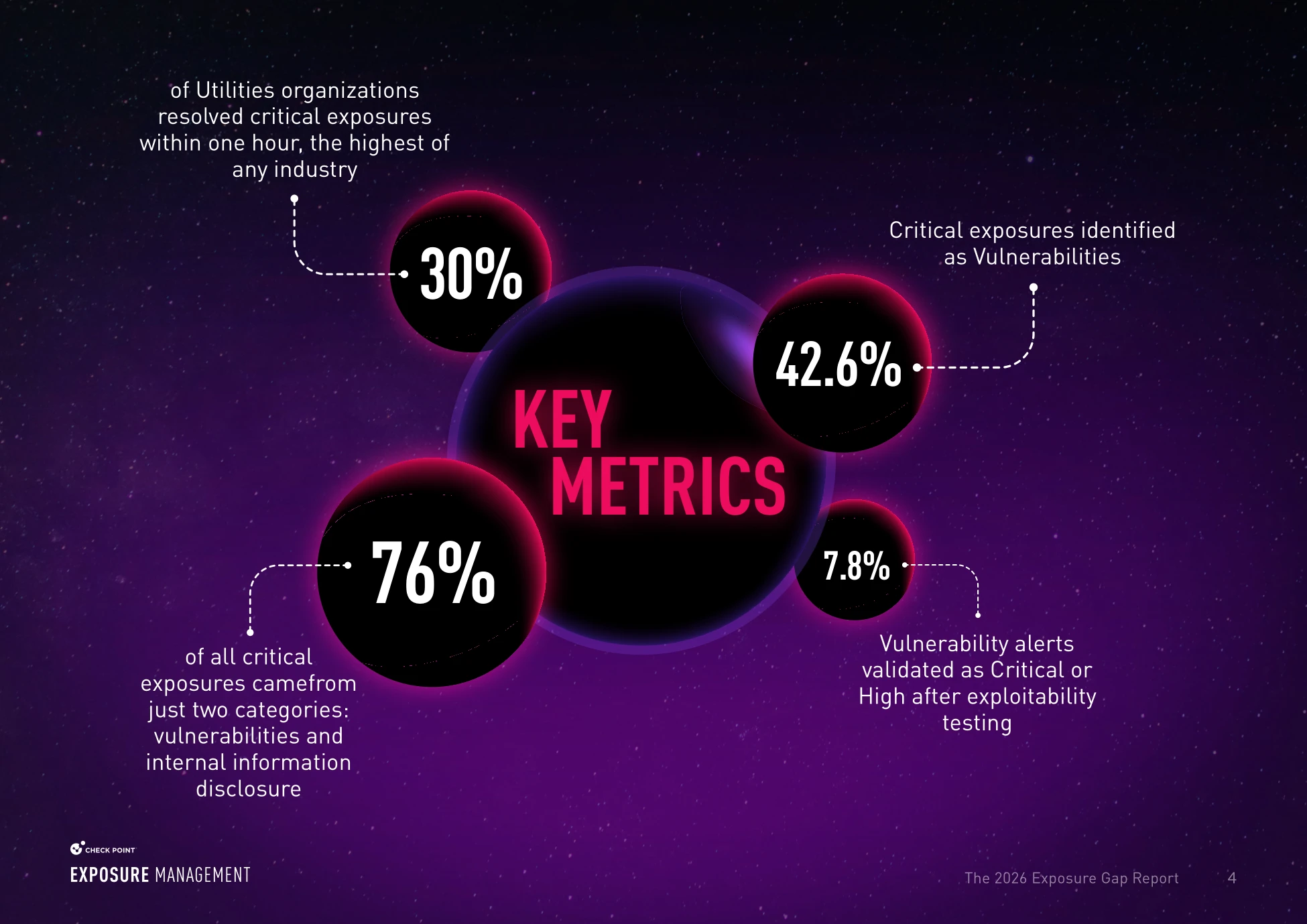
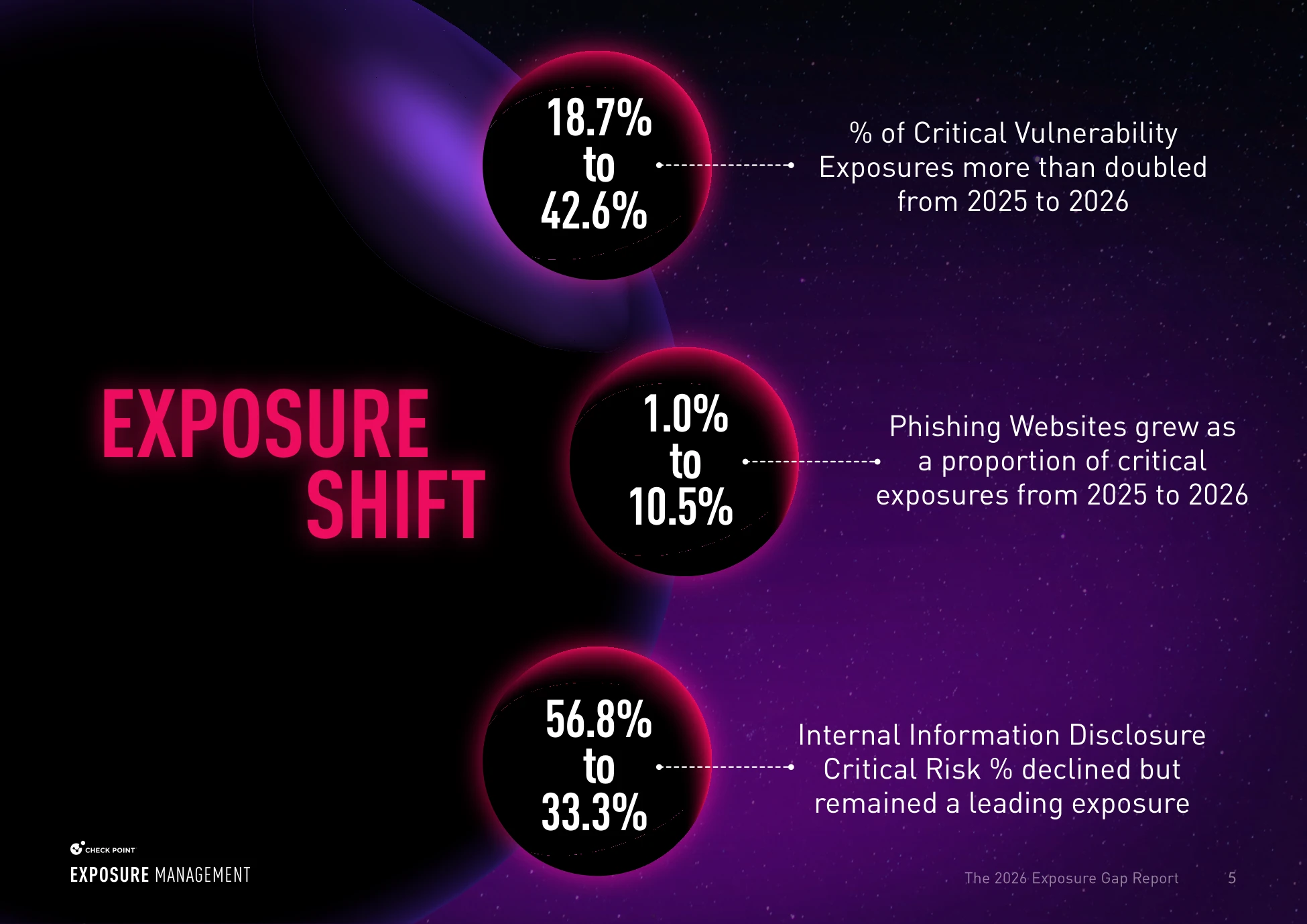
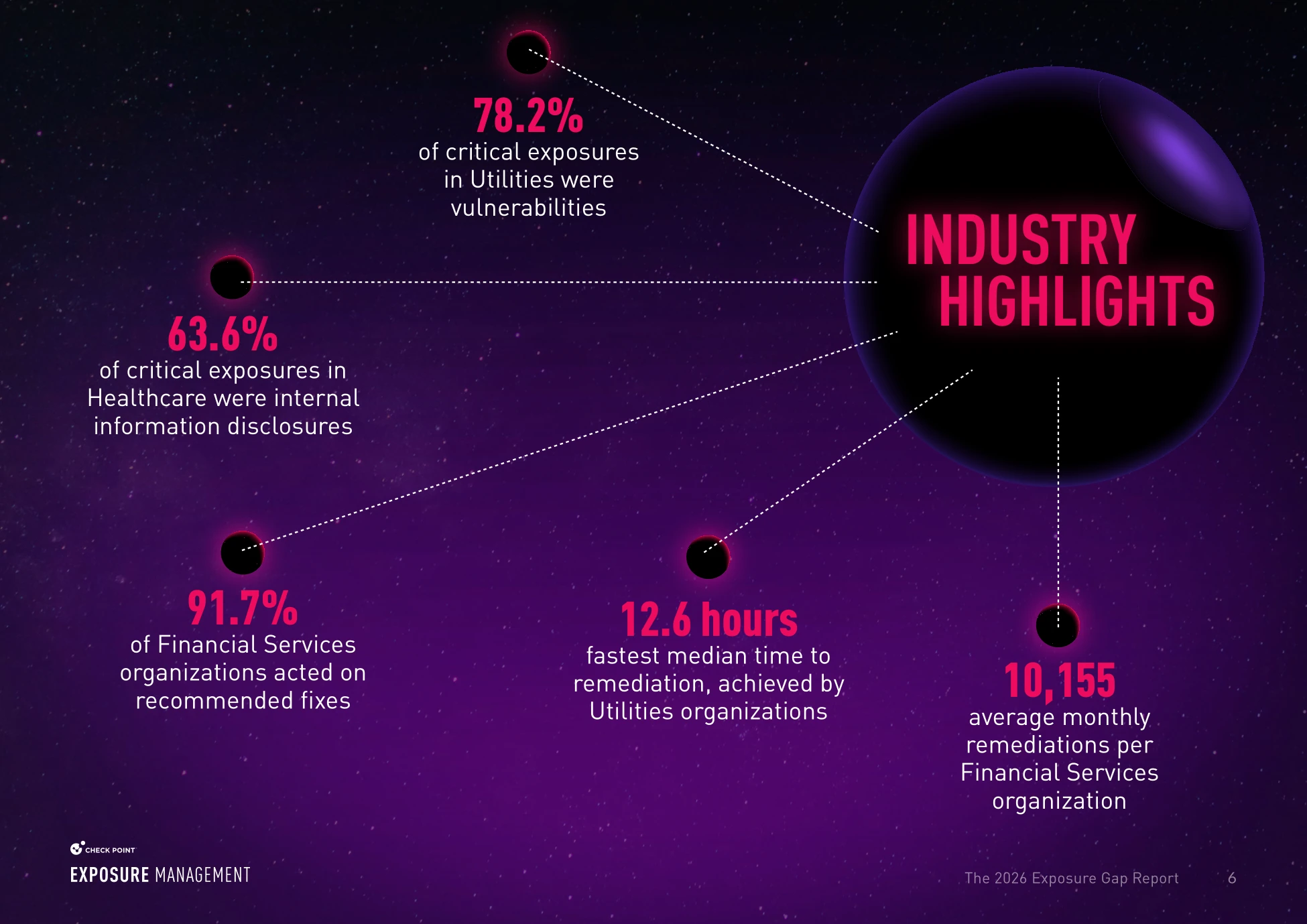

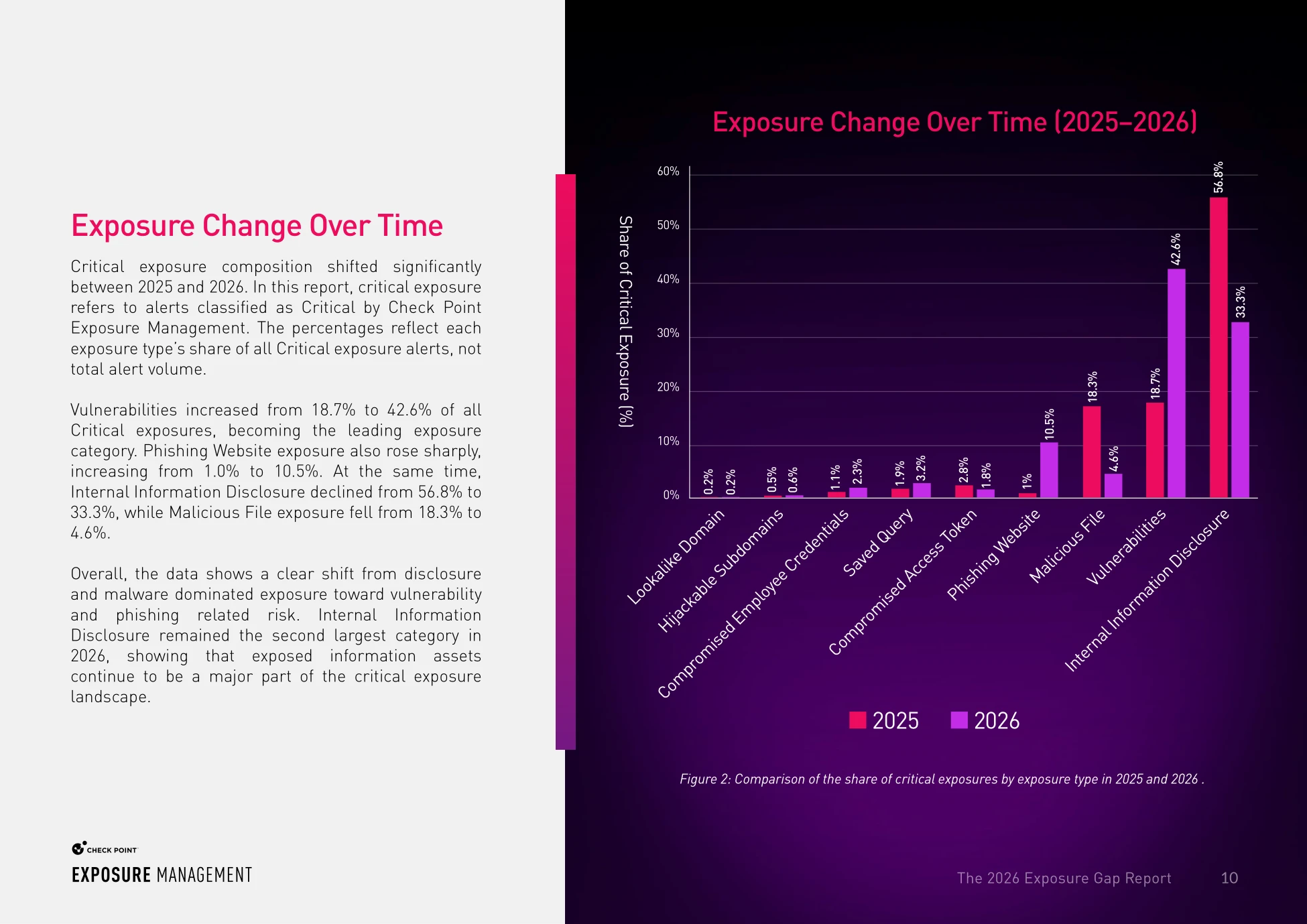
The 2026 Exposure Gap ReportThe 2026 Exposure Gap Report 2TABLE OFCONTENTSExecutive SummaryWhy is there an Exposure Gap?ExposurePrioritizationConclusion: Exposure & Remediation ProfileAppendixContact Us37816272932The 2026 Exposure Gap Report 3EXECUTIVESUMMARYAttackers are moving faster across a larger and more complex exposure surface. In 2026, vulnerabilities more than doubled as a share of critical exposures, rising from 18.7% to 42.6%, while phishing website exposure grew from 1.0% to 10.5%. As automation and AI-assisted tools accelerate testing across systems, credentials, phishing infrastructure, and known weaknesses, traditional patch cycles and manual triage are struggling to keep pace. This is the exposure gap: the distance between visibility, prioritization, and safe remediation.That gap is why exposure management cannot stop at visibility. As vulnerability-related risk grows, teams need a way to separate urgent, exploitable issues from the broader alert population. Across the analyzed vulnerability alert population, only 7.8% warranted Critical or High attention after exploitability validation. More than 90% did not require the same immediate remediation focus. This is the value of Exposure Management: reducing a large alert population into a smaller, validated set of exploitable issues that security teams can prioritize with confidence.Check Point Exposure Management helps close this gap by connecting discovery, evidence-based prioritization, exploitability validation, control assessment, and safe remediation in one workflow. The report shows faster remediation is achievable: Utilities led one-hour remediation at 30.0%, followed by Financial Services at 23.1%, Government at 14.3%, and Healthcare at 7.7%. Across the four industries, organizations acted on 85.9% of recommended fixes on average.Exposure management is becoming a measure of operational readiness. Mature programs will be defined by how quickly they identify urgent exposures, validate risk, assess control coverage, apply fixes safely, and reduce exposure before attacker opportunity becomes business impact.The 2026 Exposure Gap Report 4Critical exposures identified as VulnerabilitiesVulnerability alerts validated as Critical or High after exploitability testingof Utilities organizations resolved critical exposures within one hour, the highest of any industry76%42.6% 30%7.8%METRICSKEYof all critical exposures camefrom just two categories: vulnerabilities and internal information disclosure% of Critical Vulnerability Exposures more than doubled from 2025 to 2026SHIFTEXPOSUREThe 2026 Exposure Gap Report 5Internal Information Disclosure Critical Risk % declined but remained a leading exposure 56.8%to33.3% Phishing Websites grew asa proportion of critical exposures from 2025 to 20261.0%to10.5% 18.7%to42.6% HIGHLIGHTSINDUSTRY The 2026 Exposure Gap Report 678.2%of critical exposures in Utilities were vulnerabilities12.6 hours fastest...







































