
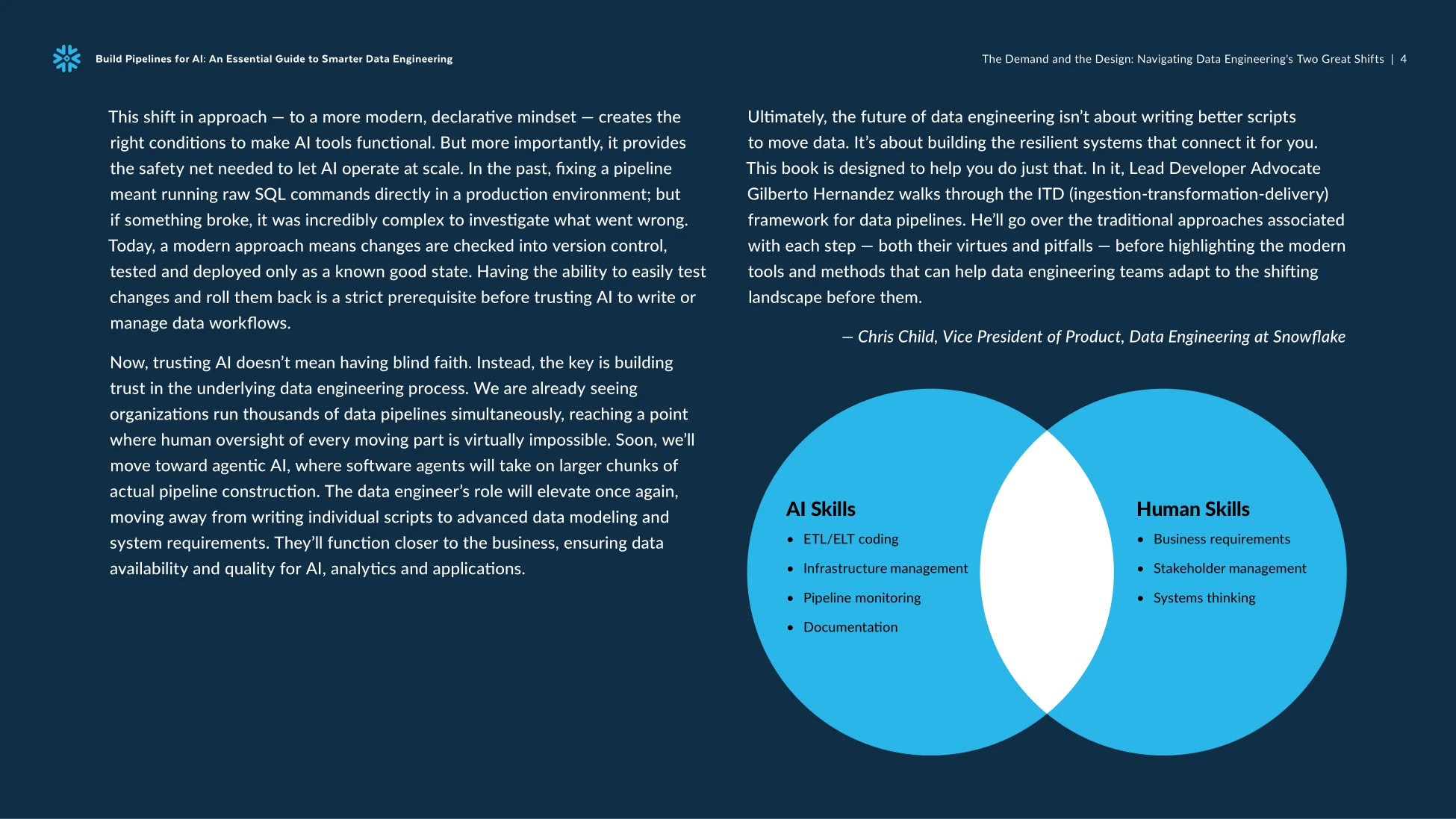
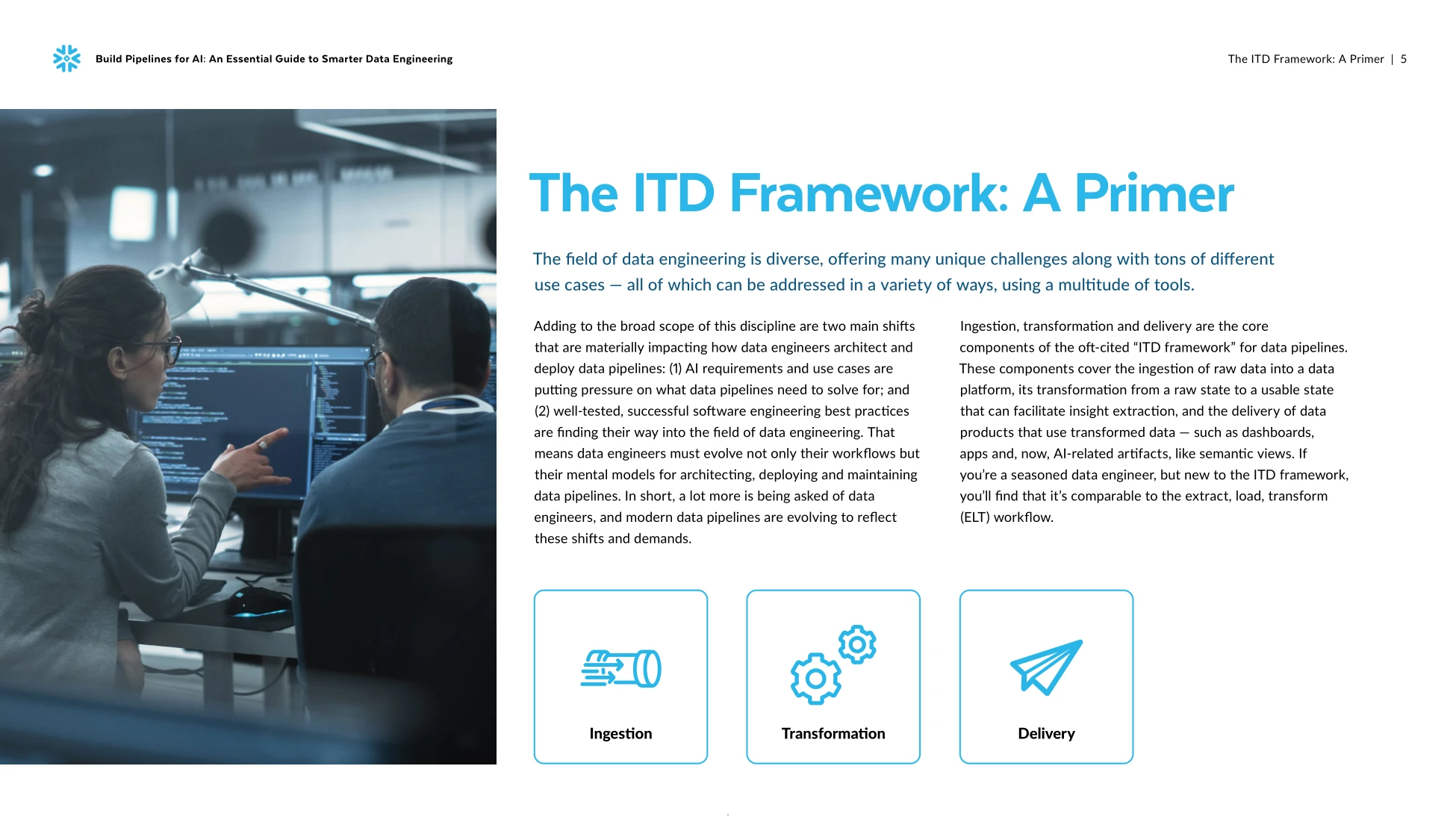
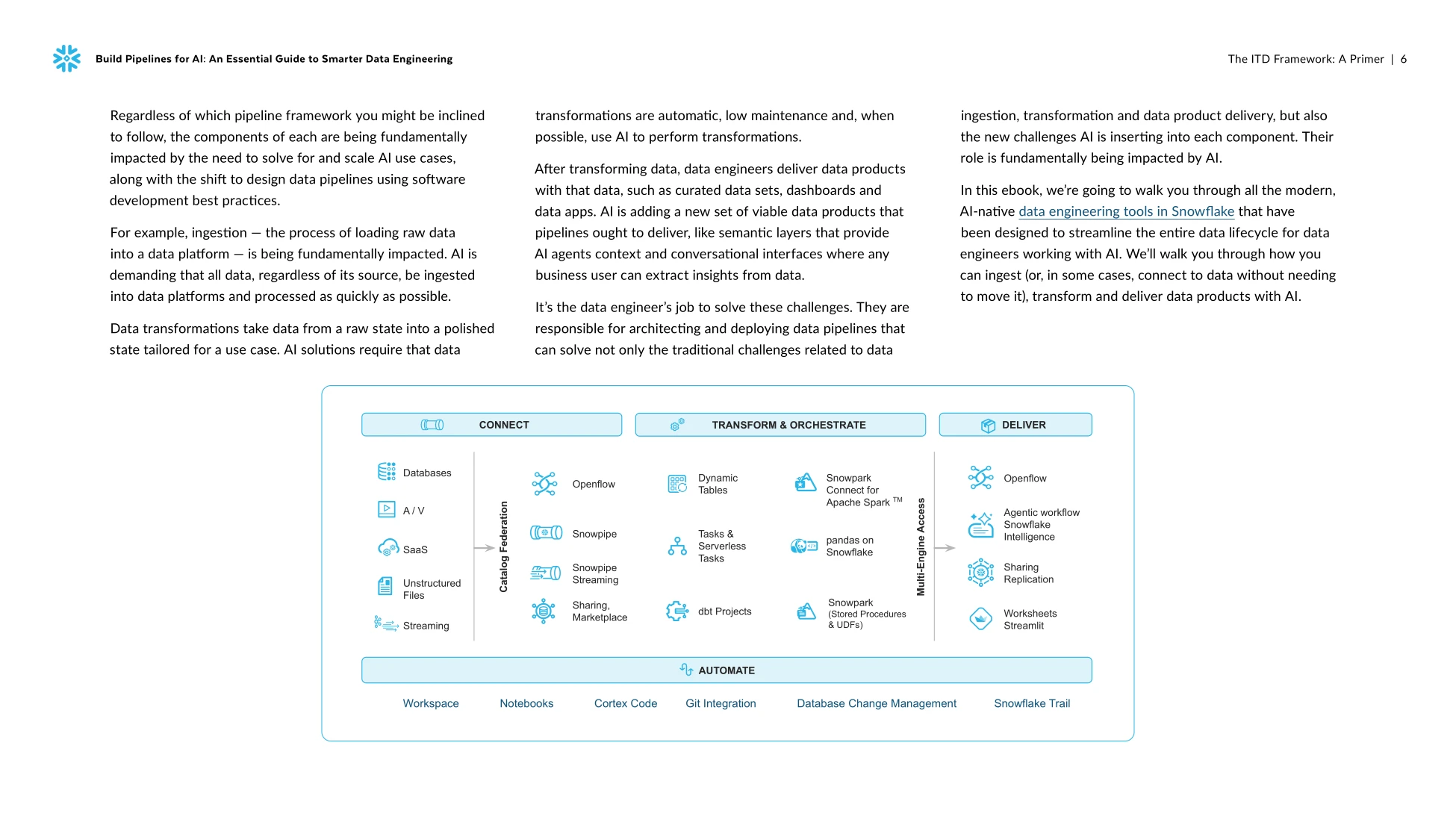
Build Pipelines for AI: An Essential Guide to Smarter Data EngineeringBy Gilberto Hernandez Lead Developer Advocate, SnowflakeTable of ContentsThe Demand and the Design: Navigating Data Engineering’s Two Great Shifts by Chris Child . . . . . . . . . . 3The ITD Framework: A Primer . . . . . . . . . . . . . . . . . . . . . . . . . . . . . . . . . . . . . . . . . . . . . . . . . . . . . . . . . . . . . . . . . . . . . . . . . . . . . . . . . . . . . 5The Continuous Flow: Architecting Data Ingestion for AI Velocity . . . . . . . . . . . . . . . . . . . . . . . . . . . . . . . . . . . . . . . . . . 7Transforming Data, Not Code: The Shift to Declarative Workflows . . . . . . . . . . . . . . . . . . . . . . . . . . . . . . . . . . . . . . . .10Beyond the Dashboard: Delivering Semantic Layers to Human and AI Consumers . . . . . . . . . . . . . . . . . . . . . . 13Scaling with Safety: Implementing DataOps for High-Stakes AI Workloads . . . . . . . . . . . . . . . . . . . . . . . . . . . . . . . 15The Future of the Data Engineer: Operational Architects in the Age of AI . . . . . . . . . . . . . . . . . . . . . . . . . . . . . . . . 18Table of Contents | 2 Build Pipelines for AI: An Essential Guide to Smarter Data EngineeringThe Demand and the Design: Navigating Data Engineering’s Two Great ShiftsData engineering today is in the midst of two major shifts — one of function and one of form. The first is obvious: AI is fundamentally redefining the function of data engineers at almost every level. Its insatiable appetite for data has created outsized demands of data engineering teams — demands needed for success and yet incredibly difficult to maintain. The second is a shift in form, in how data engineers must meet these new and growing demands. We’ve seen data engineers go from doing mostly rote, manual labor to more strategic execution, adopting best practices from software development to elevate the work they do. They’re no longer mere data plumbers and pipeline constructors; they are the operational architects of any data-driven organization. And at this point, there is no going back. When we think about modern data engineering, the focus is no longer on manually connecting each and every dot. That simply doesn’t scale to meet the needs of AI. With exponentially increasing volumes of data rapidly becoming both available and usable, engineers need to work more efficiently to keep pace. That is where a more modern, declarative approach to building pipelines changes the whole game for data engineers. By abstracting away the minutia of each step and instead focusing on the desired end state, data engineers have the power to multiply their productivity and make gains that previously see...