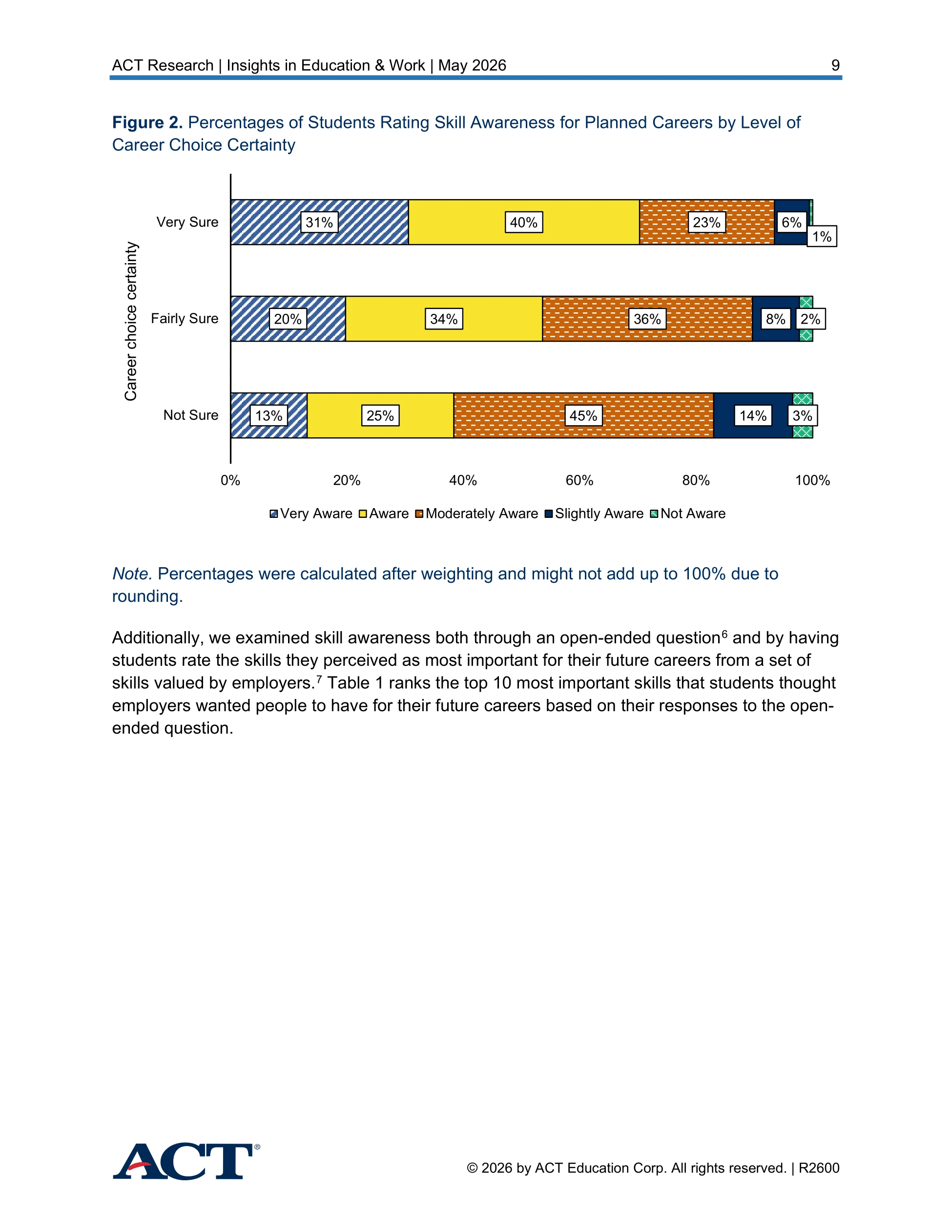
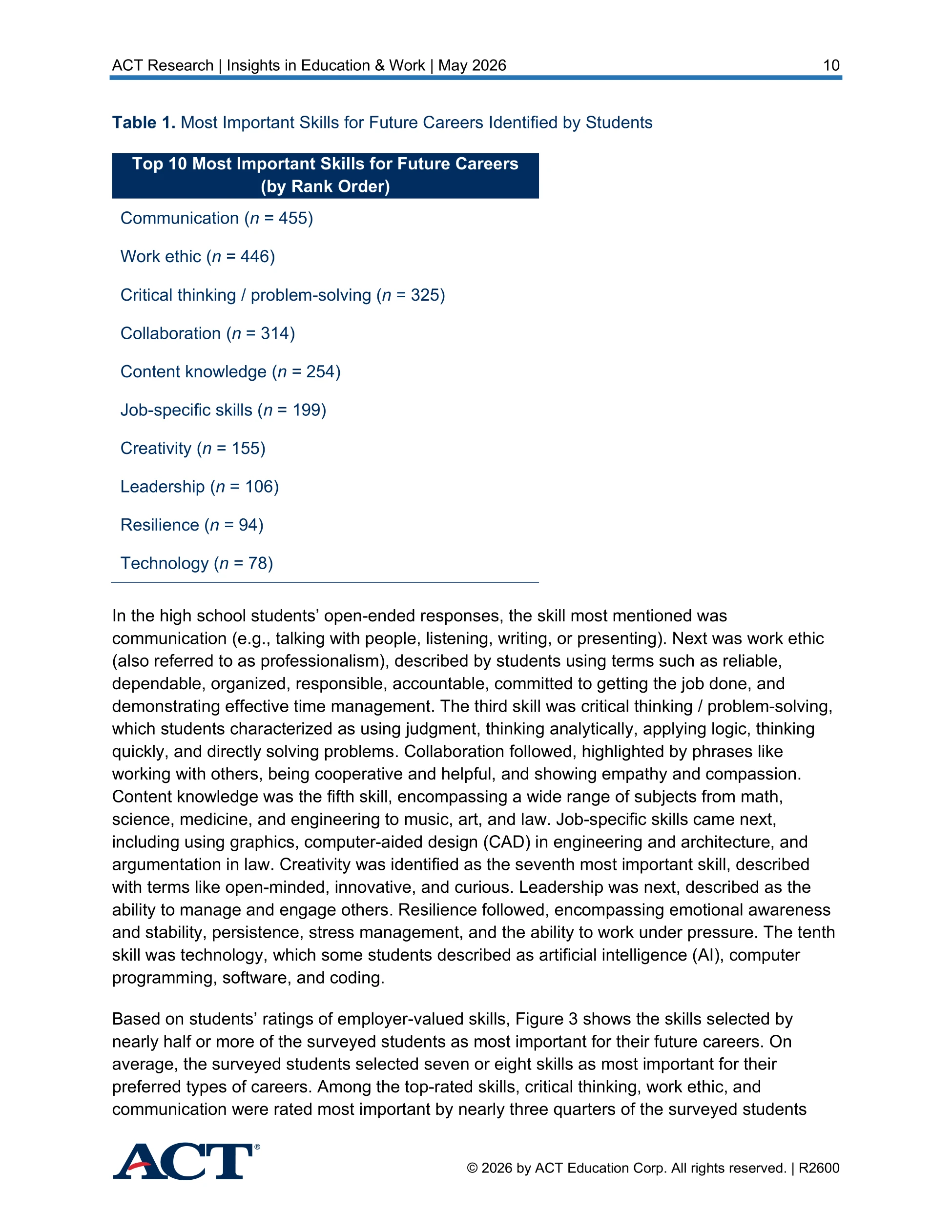
Research Insights 2026-05 Bridging the Skills Gap: Insights Into High School Students’ Perspectives on Skills Important for Their Future Careers BECKY L. BOBEK, JOYCE Z. SCHNIEDERS, ALEX CASILLAS, NOLA DALEY, AND DIVYA MANDHOTRA © 2026 by ACT Education Corp. All rights reserved. | R2600ACT Research | Insights in Education & Work | May 2026 2 © 2026 by ACT Education Corp. All rights reserved. | R2600 Conclusions This study demonstrates that high school students vary in their awareness of and the importance they attribute to skills that employers value for the careers they plan to pursue. Findings reveal that students who are more certain about their career choices have greater skill awareness. Students are also strongly aligned to the top skills that employers consider important, making communication, work ethic, critical thinking, and collaboration necessary for career success. While these skills emerged as highly important across career fields for many students, others varied by career field, suggesting that students’ perceptions of the importance of these skills are based on the unique demands of their planned careers. These results reinforce the need to provide broad skill development, along with targeted skill support aligned with students’ career aspirations. This study also shows that the extent to which essential, transferable, and foundational skills are taught in school is significantly related to students’ self-rated proficiency in these skills. Findings highlight that most students perceive being taught nearly all the skills in school, with essential skills being most frequently taught in schools and those in which students rate themselves the highest. Overall, this pattern is similar for transferable skills, although fewer students consider themselves highly proficient in these skills. Students think foundational skills in math, documents, and graphics are taught more frequently, and yet they rate themselves lower in skill proficiency. The prevalence of “average” self-ratings across transferable skills and foundational skills may reflect variability in students’ perceptions related to the focus or quality of instruction. These results underscore the value of intentional curriculum design that prioritizes skills important for career success. So What? There is a clear and persistent gap between the skills that employers need and the skills that individuals have when entering the U.S. workforce. This skills gap poses a risk to the success of both individuals and the organizations that support the U.S. economy. The employment, productivity, and innovation implications of this skills gap must be addressed in part by future workforce entrants, making it imperative to gain greater awareness of high school students’ perspectives on work skills valued by employers. Insights from this research help us better understand the views of futu...







































