

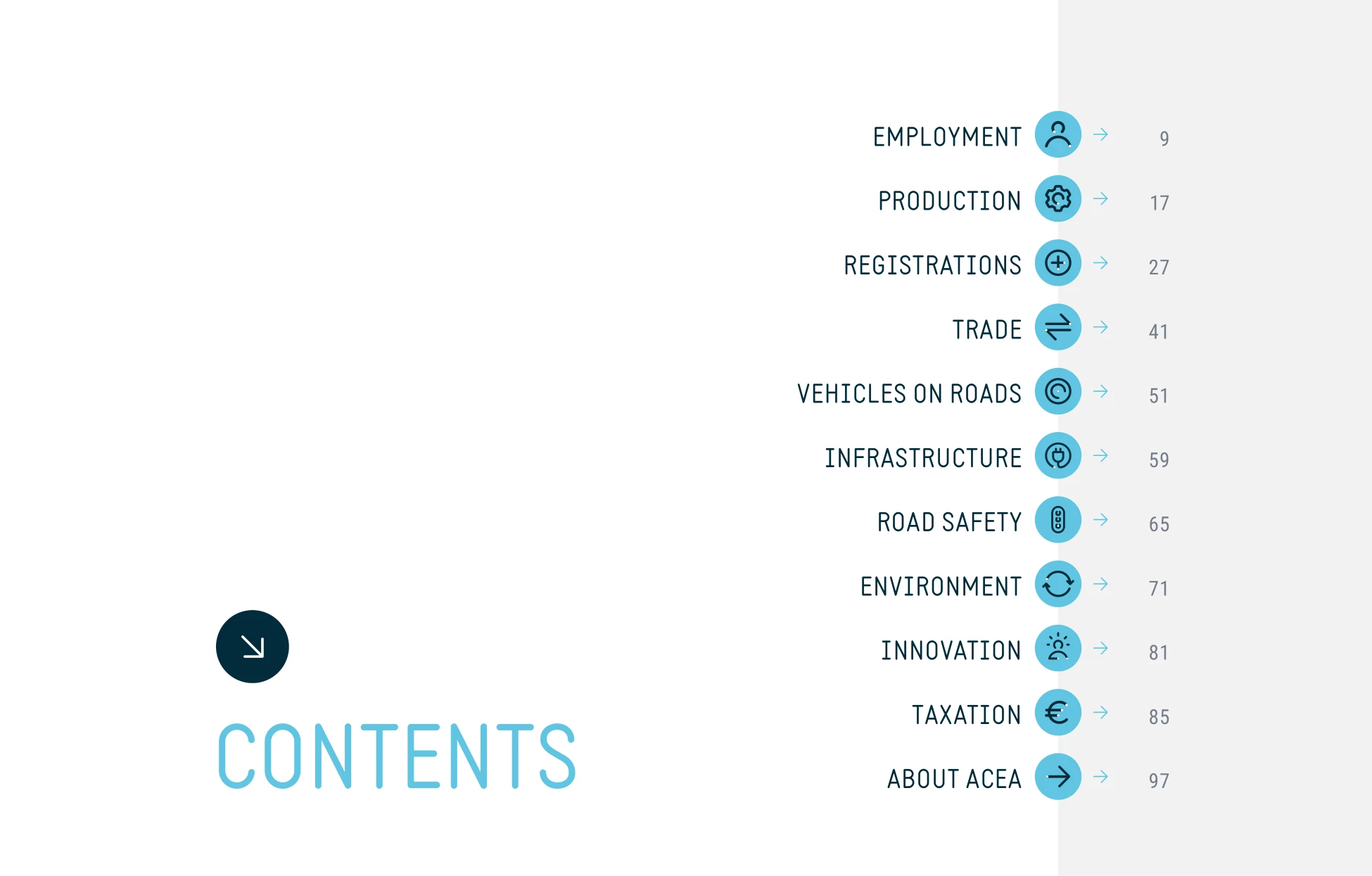
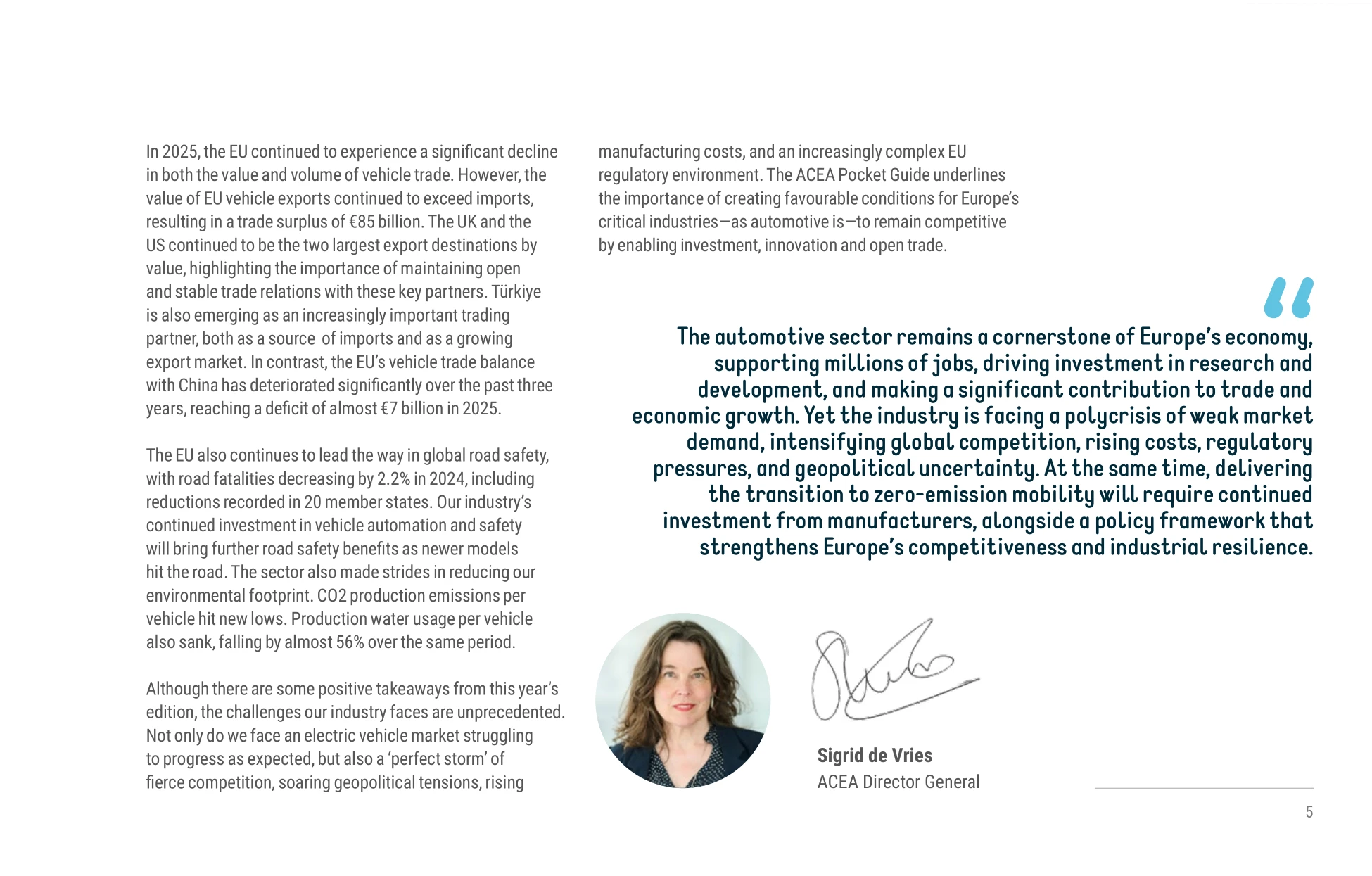
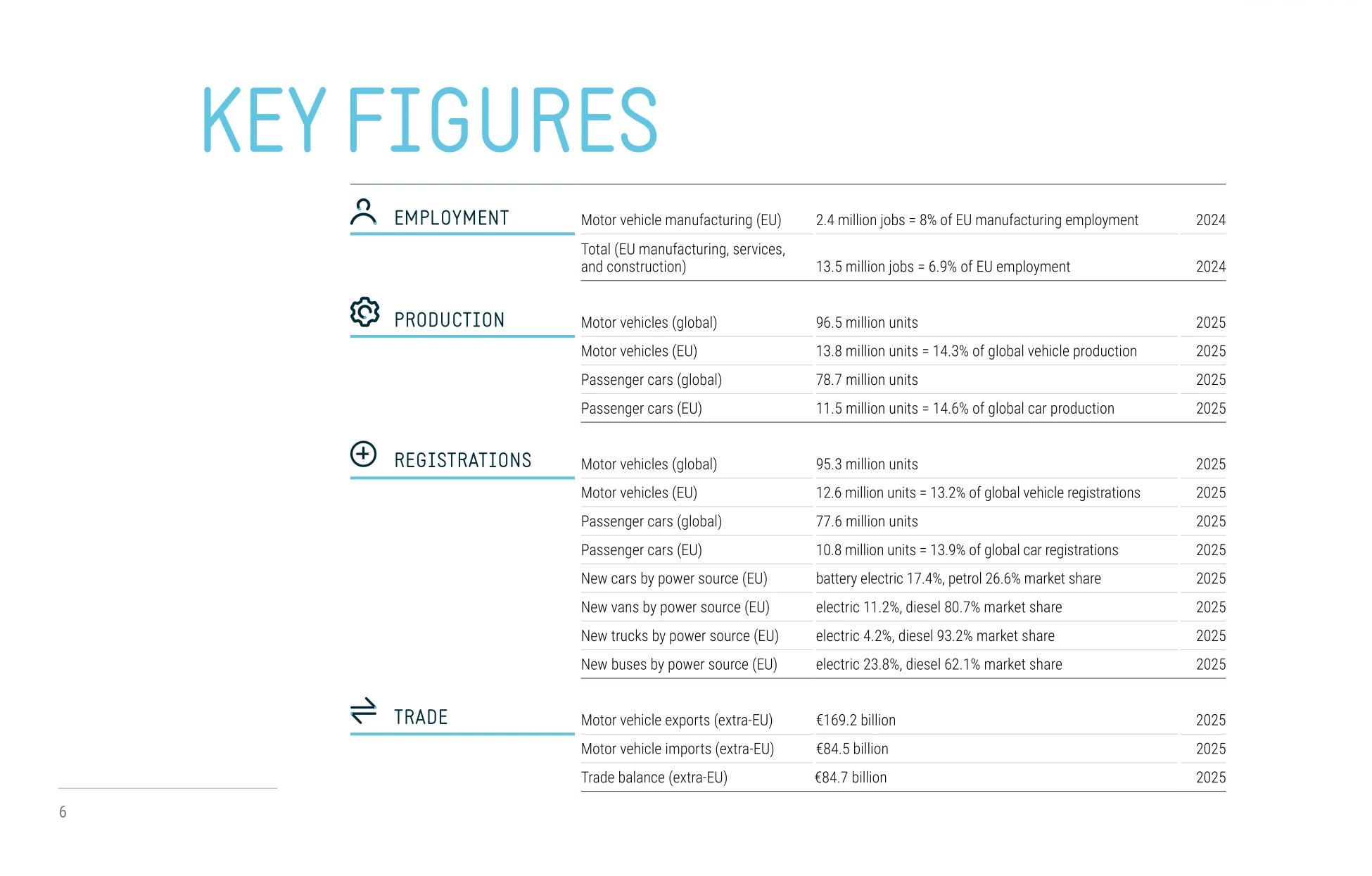
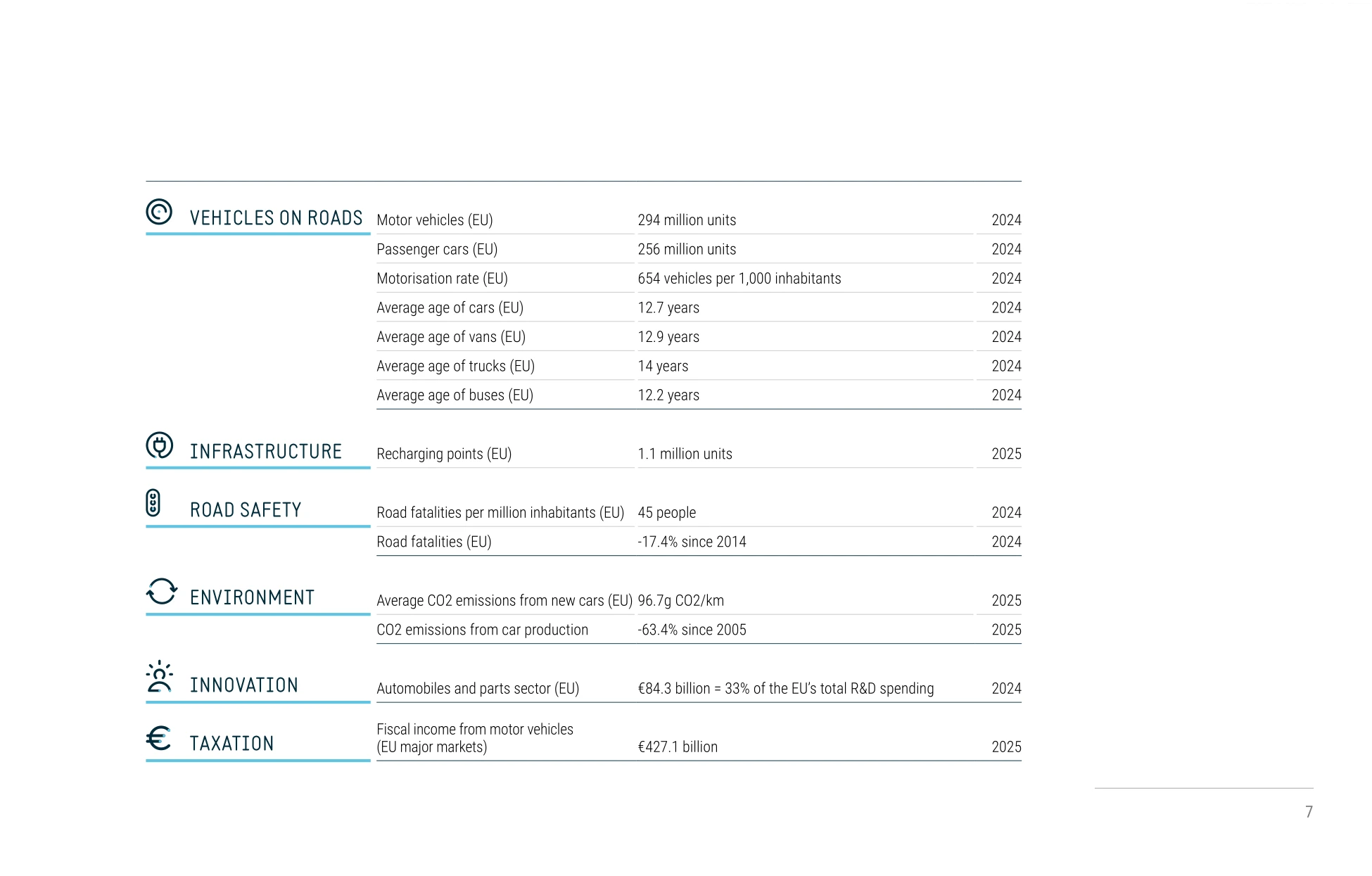

来源:发现报告(www.fxbaogao.com/view?id=5724962)| 引用请注明出处POCKET GUIDE 2026来源:发现报告(www.fxbaogao.com/view?id=5724962)| 引用请注明出处来源:发现报告(www.fxbaogao.com/view?id=5724962)| 引用请注明出处 EMPLOYMENT 9 PRODUCTION 17 REGISTRATIONS 27 TRADE 41 VEHICLES ON ROADS 51 INFRASTRUCTURE 59 ROAD SAFETY 65 ENVIRONMENT 71 INNOVATION 81 TAXATION 85 ABOUT ACEA 97来源:发现报告(www.fxbaogao.com/view?id=5724962)| 引用请注明出处ACEA’s Pocket Guide remains the go-to reference for the latest insights into the automotive industry and market, with updated data and analysis published each year. This edition provides a timely snapshot of a sector navigating a rapidly evolving landscape, where growing concerns about competitiveness are compounded by an increasingly uncertain global geopolitical environment.Despite these headwinds, Europe’s automotive industry remains the continent’s largest private investor in research and development, allocating €84 billion to R&D in 2024. This represents an increase of €18 billion compared with 2021 and is nearly twice the investment made by the next-largest industrial sector. These figures underscore our industry’s steady commitment to advancing zero-emission road transport while reinforcing Europe’s position as a global technology leader.EU vehicle production remains well below pre-pandemic levels, with around 3 million fewer vehicles produced in 2025 compared with 2019, highlighting the ongoing challenge of preserving Europe’s attractiveness as a global automotive manufacturing base. Passenger car production remained broadly stable at 11.5 million units, while commercial vehicle output declined further, falling by nearly 5.5% last year.Global car sales grew by 3.5% last year, with the EU’s market share at around 14%. EU car sales continued their upward trend, with battery-electric models increasing their market share to 17.4%. Commercial vehicle registrations declined by 8%, with electric vans reaching 11%, while trucks also declined by around 6%. Buses remained the standout performer, surpassing 38,000 registrations to achieve a new all-time high.Manufacturers now offer more than 400 electrically-chargeable models across the EU, but the share of vehicles on Europe’s roads with a plug is still less than 5%, underscoring the need for more robust measures to stimulate the market and replace older vehicles. While most EU governments offer some form of incentive or tax scheme for EV buyers, less than half offer incentives for building recharging infrastructure. Today, the EU averages around seven battery-electric vehicles per public recharging point, with France, Germany and the Netherlands together accounting for 56% of the EU’s recharging points.4THE AUTOMOBILE INDUSTRYPOCKET GUIDE 2026来源:发现报告(www.fxbaogao.com/view?id=5724962)| 引用请注明出处In 2025, the EU continued to experience a significant decline in both the value and volume of ve...







































