
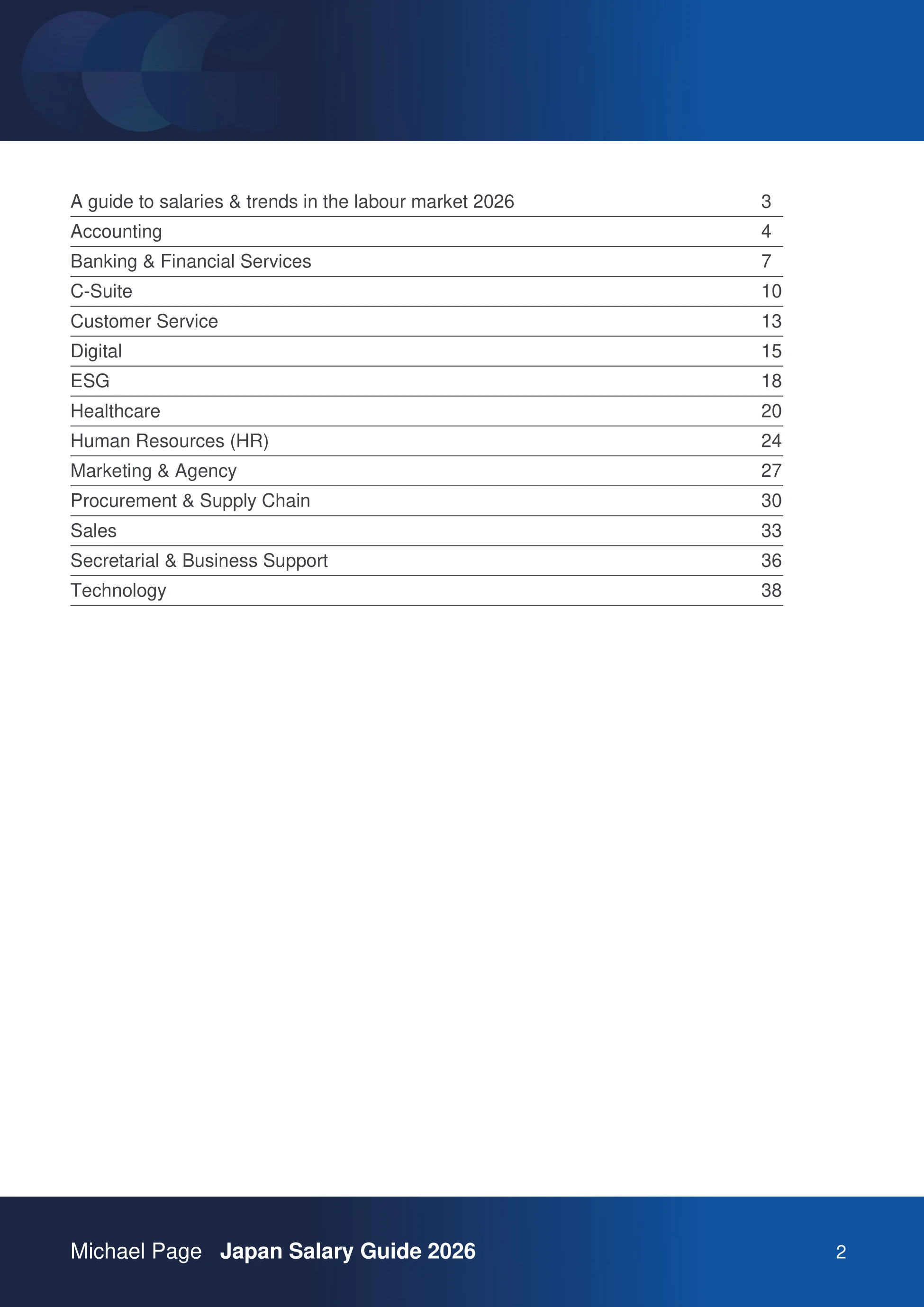
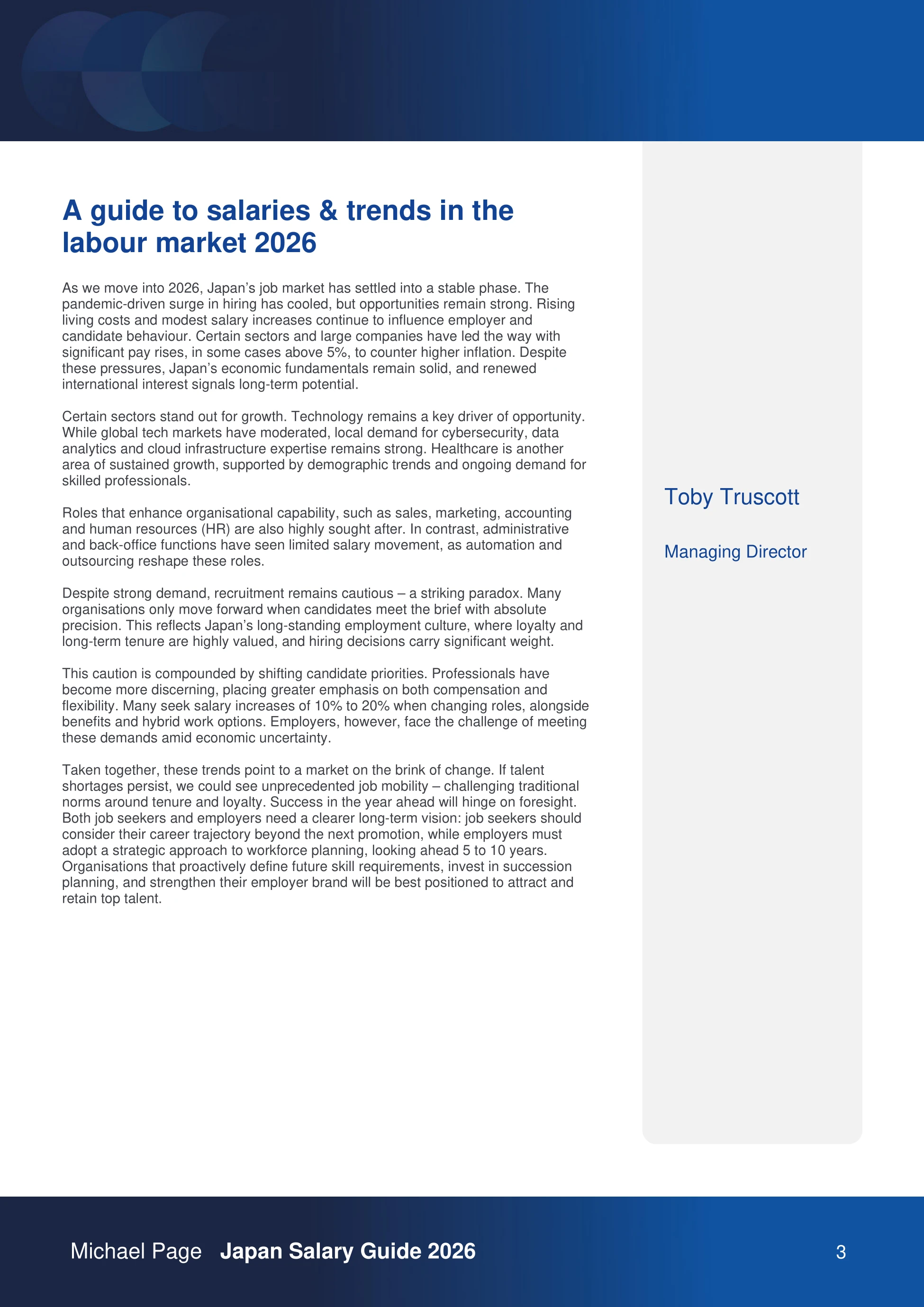
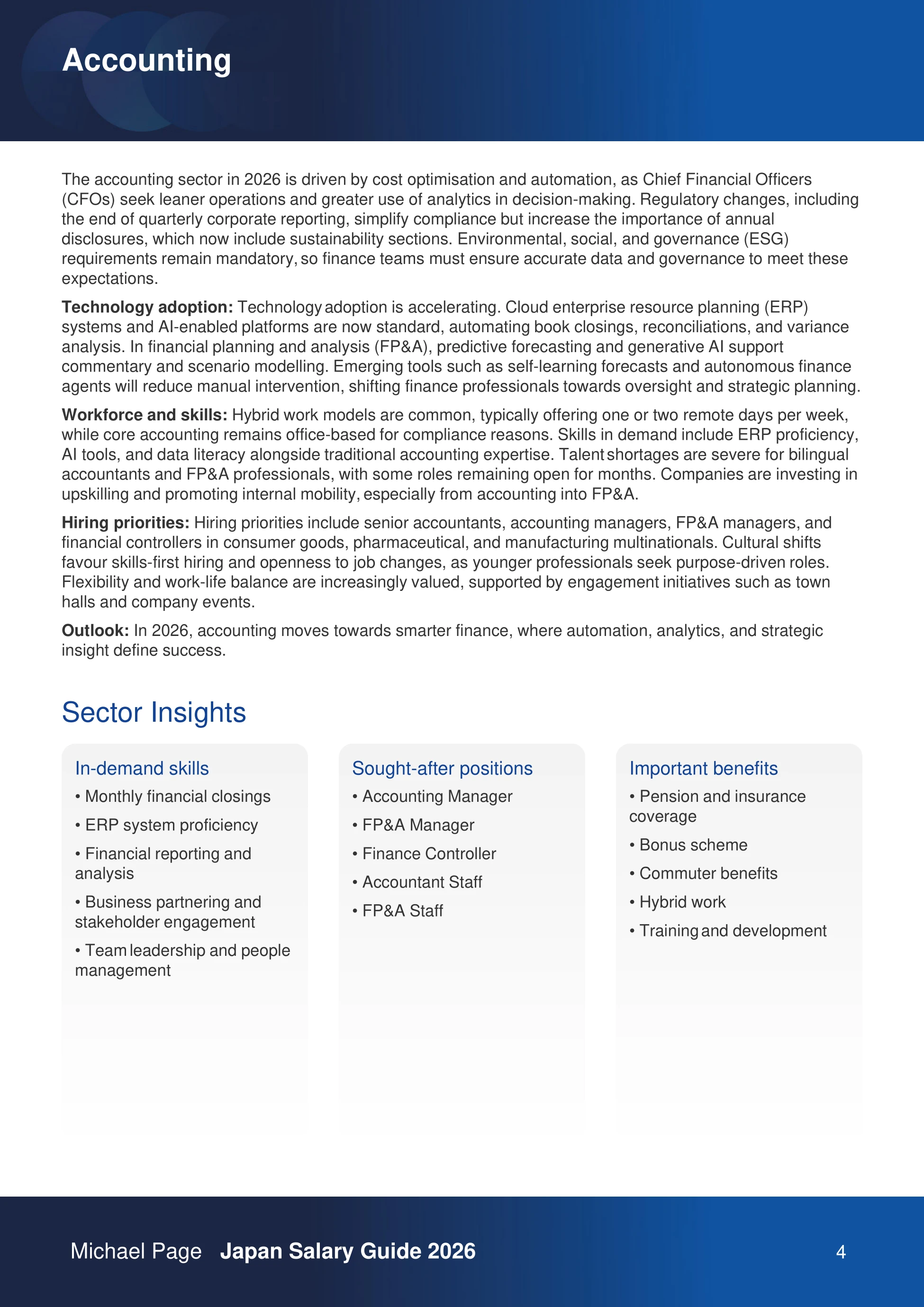
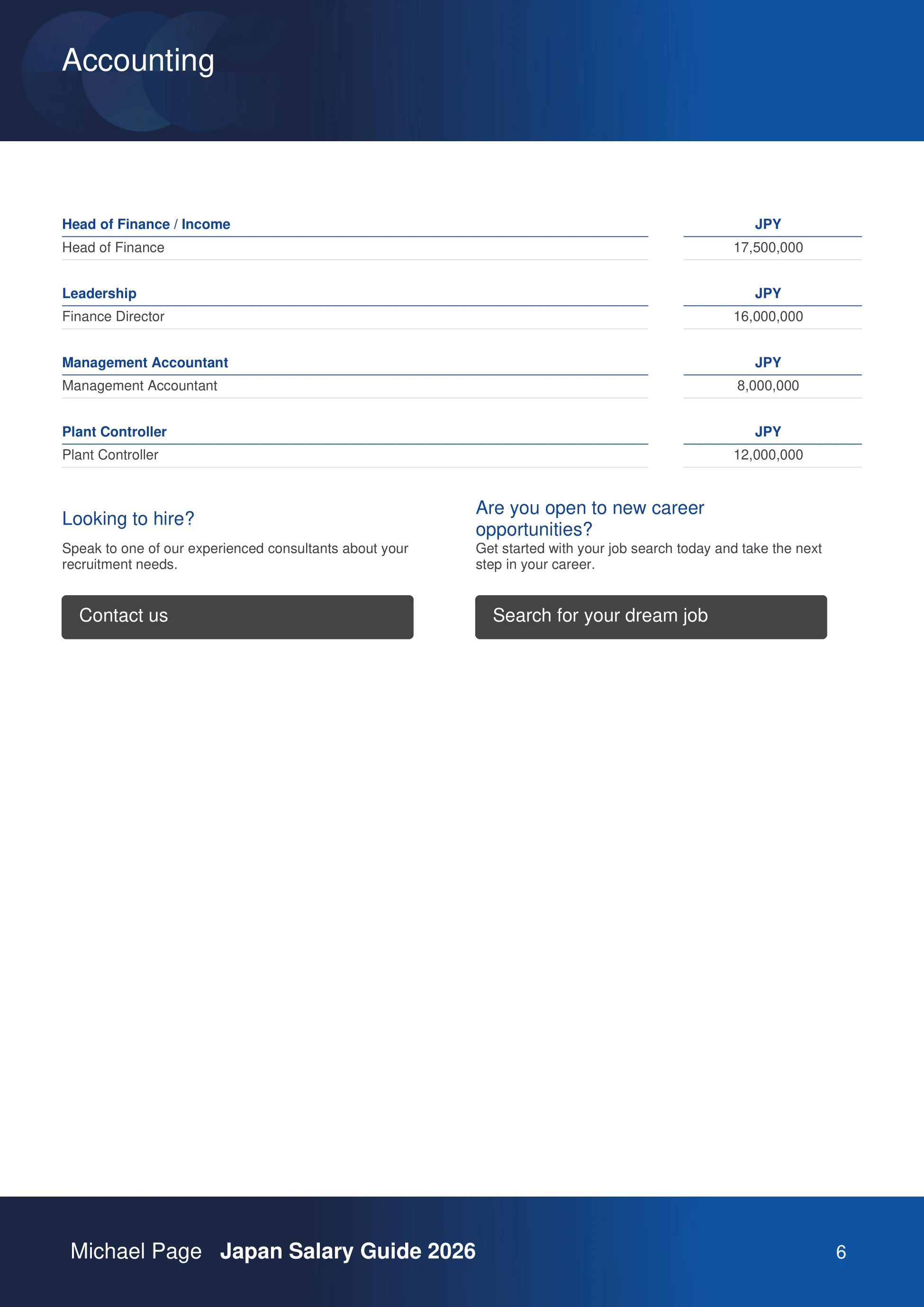
Japan Salary Guide 20262Michael PageJapan Salary Guide 2026A guide to salaries & trends in the labour market 20263Accounting4Banking & Financial Services7C-Suite10Customer Service13Digital15ESG18Healthcare20Human Resources (HR)24Marketing & Agency27Procurement & Supply Chain30Sales33Secretarial & Business Support36Technology38Toby TruscottManaging DirectorA guide to salaries & trends in thelabour market 2026As we move into 2026, Japan’s job market has settled into a stable phase. Thepandemic-driven surge in hiring has cooled, but opportunities remain strong. Risingliving costs and modest salary increases continue to influence employer andcandidate behaviour. Certain sectors and large companies have led the way withsignificant pay rises, in some cases above 5%, to counter higher inflation. Despitethese pressures, Japan’s economic fundamentals remain solid, and renewedinternational interest signals long-term potential.Certain sectors stand out for growth. Technology remains a key driver of opportunity.While global tech markets have moderated, local demand for cybersecurity, dataanalytics and cloud infrastructure expertise remains strong. Healthcare is anotherarea of sustained growth, supported by demographic trends and ongoing demand forskilled professionals.Roles that enhance organisational capability, such as sales, marketing, accountingand human resources (HR) are also highly sought after. In contrast, administrativeand back-office functions have seen limited salary movement, as automation andoutsourcing reshape these roles.Despite strong demand, recruitment remains cautious – a striking paradox. Manyorganisations only move forward when candidates meet the brief with absoluteprecision. This reflects Japan’s long-standing employment culture, where loyalty andlong-term tenure are highly valued, and hiring decisions carry significant weight.This caution is compounded by shifting candidate priorities. Professionals havebecome more discerning, placing greater emphasis on both compensation andflexibility. Many seek salary increases of 10% to 20% when changing roles, alongsidebenefits and hybrid work options. Employers, however, face the challenge of meetingthese demands amid economic uncertainty.Taken together, these trends point to a market on the brink of change. If talentshortages persist, we could see unprecedented job mobility – challenging traditionalnorms around tenure and loyalty. Success in the year ahead will hinge on foresight.Both job seekers and employers need a clearer long-term vision: job seekers shouldconsider their career trajectory beyond the next promotion, while employers mustadopt a strategic approach to workforce planning, looking ahead 5 to 10 years.Organisations that proactively define future skill requirements, invest in successionplanning, and strengthen their employer brand will be best positioned to attract andretain top talent.3Michael PageJapan Salary Guide 2026Accounting4Micha...







































