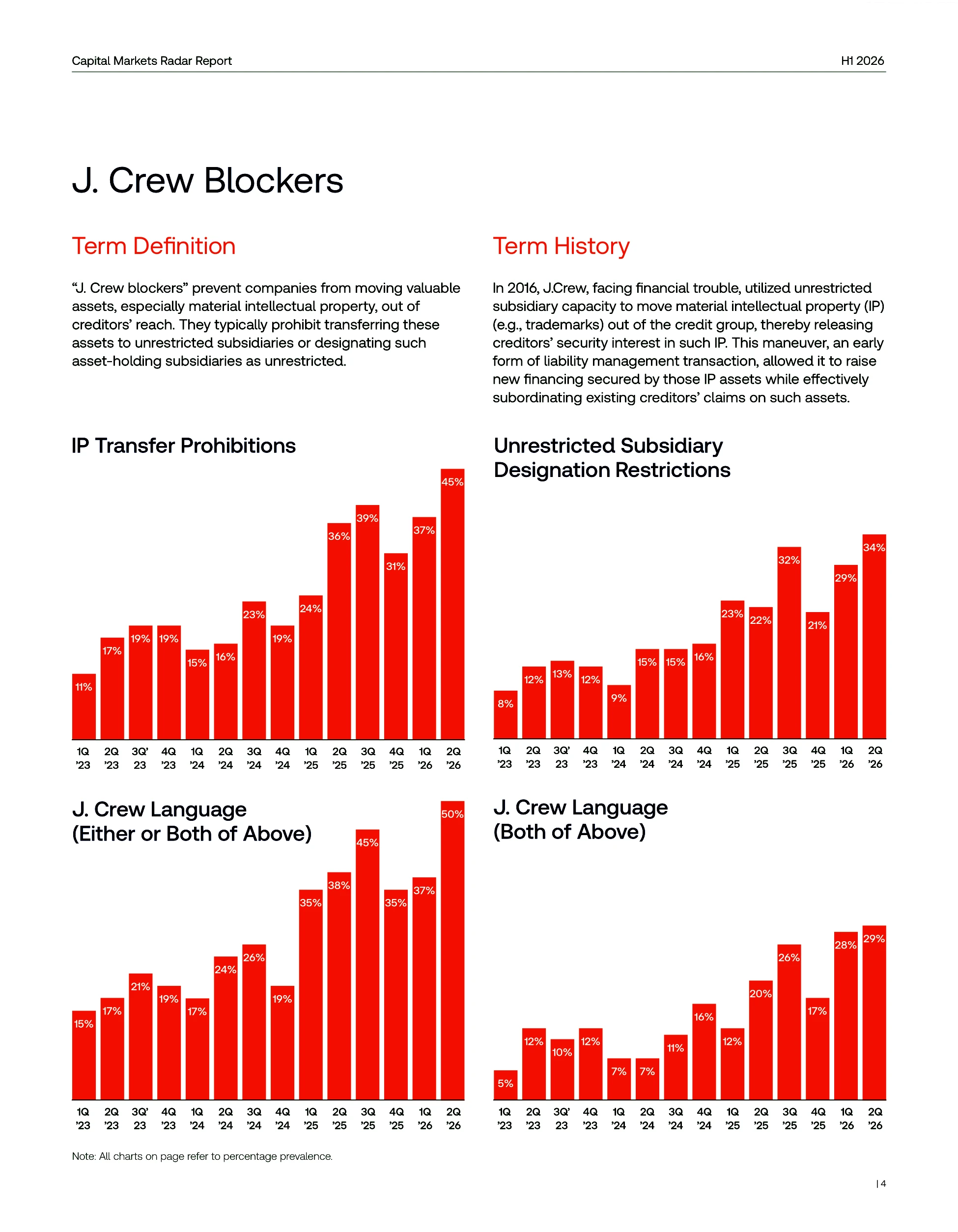
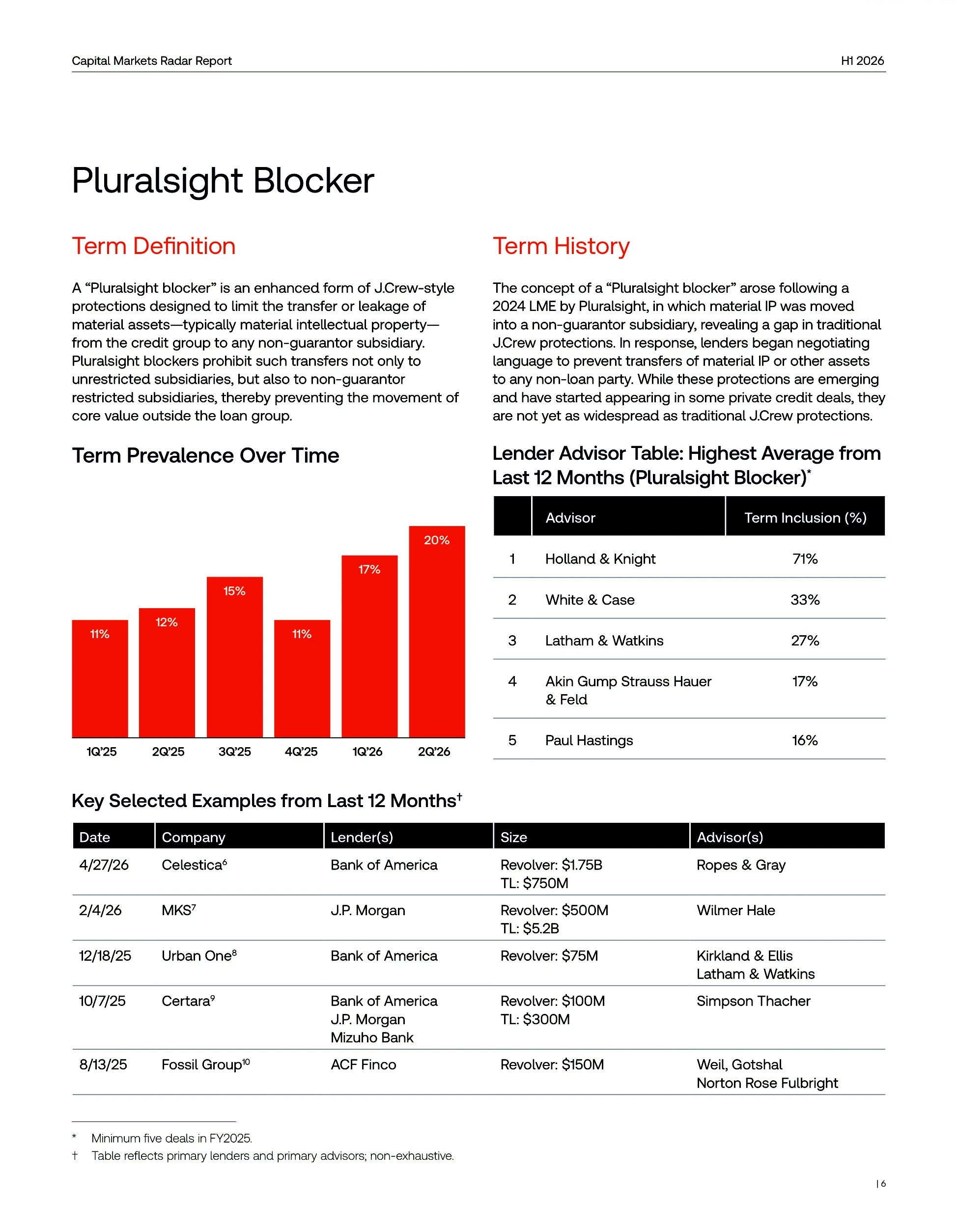
来源:发现报告(www.fxbaogao.com/view?id=5725900)| 引用请注明出处Capital Markets Radar ReportTerms-level Benchmarking Analysis & Industry TrendsH1 2026来源:发现报告(www.fxbaogao.com/view?id=5725900)| 引用请注明出处Capital Markets Radar Report H1 2026| 2Letter from Noetica, part of Thomson Reuters The Pause Is Over This February, Noetica joined Thomson Reuters — and we’re only beginning to see what that unlocks. Our platform is being built directly into CoCounsel, putting real-time market intelligence in front of the deal professionals negotiating these terms every day. We set out to answer one question for this market: what do “market terms” look like on this deal? Now, we can do it at a scale no standalone platform can match. That platform is what surfaced the pattern we’ve been tracking for the past year: creditors trading structural protections for issuer-friendly flexibility. H1 2026 confirms that market theme is still accelerating. Q4 2025 saw several key protections pull back from Q3’s highs. H1 2026 didn’t just recover that ground. It pushed almost every major term to a new record. The pattern underneath the numbers is specific: creditors have stopped treating bankruptcy risk as a tail scenario and started pricing it as a base case, and they’ve stopped reacting to individual liability management tactics one at a time in favor of closing every door at once. New Highs Across the Board J. Crew language rose from 35% of deals in Q4 2025 to 37% in Q1 2026 and 50% in Q2 2026 — above the 45% peak in Q3 2025. Anti-PetSmart terms moved from 15% to 29% to 32% over the same periods, also a new high. Pluralsight blockers climbed from 11% to 20%. This isn’t a rebound back to where we left off in Q3 2025. It’s the market moving past it. For borrowers, the practical read is that terms which counted as aggressive lender asks twelve months ago are now the market standard. Anything drafted off a pre-2026 precedent is already out of date. Closing Every Door at Once The sharpest growth is in the newest, narrowest protections. Envision blockers went from 1% of deals in Q4 to 9% in Q1 to 18% in Q2 — eighteen times their Q4 level in two quarters. Wesco/Incora protections tripled over the same stretch, and LME omniblockers more than tripled, both reaching 3% and 4% respectively. None of these terms are common yet, but all of them are growing together, which is the real signal: lenders no longer trust any single protection to close every gap, so they’re running narrow, tactic-specific blockers and broad omniblockers side by side. Whack-a-mole assumes you wait for the next mole. This market stopped waiting — and the next LME to make headlines will need a genuinely novel structure, not a variation on J. Crew or Pluralsight with different assets. The Exception Lien subordination protection — 2025’s biggest mover, up 23...







































