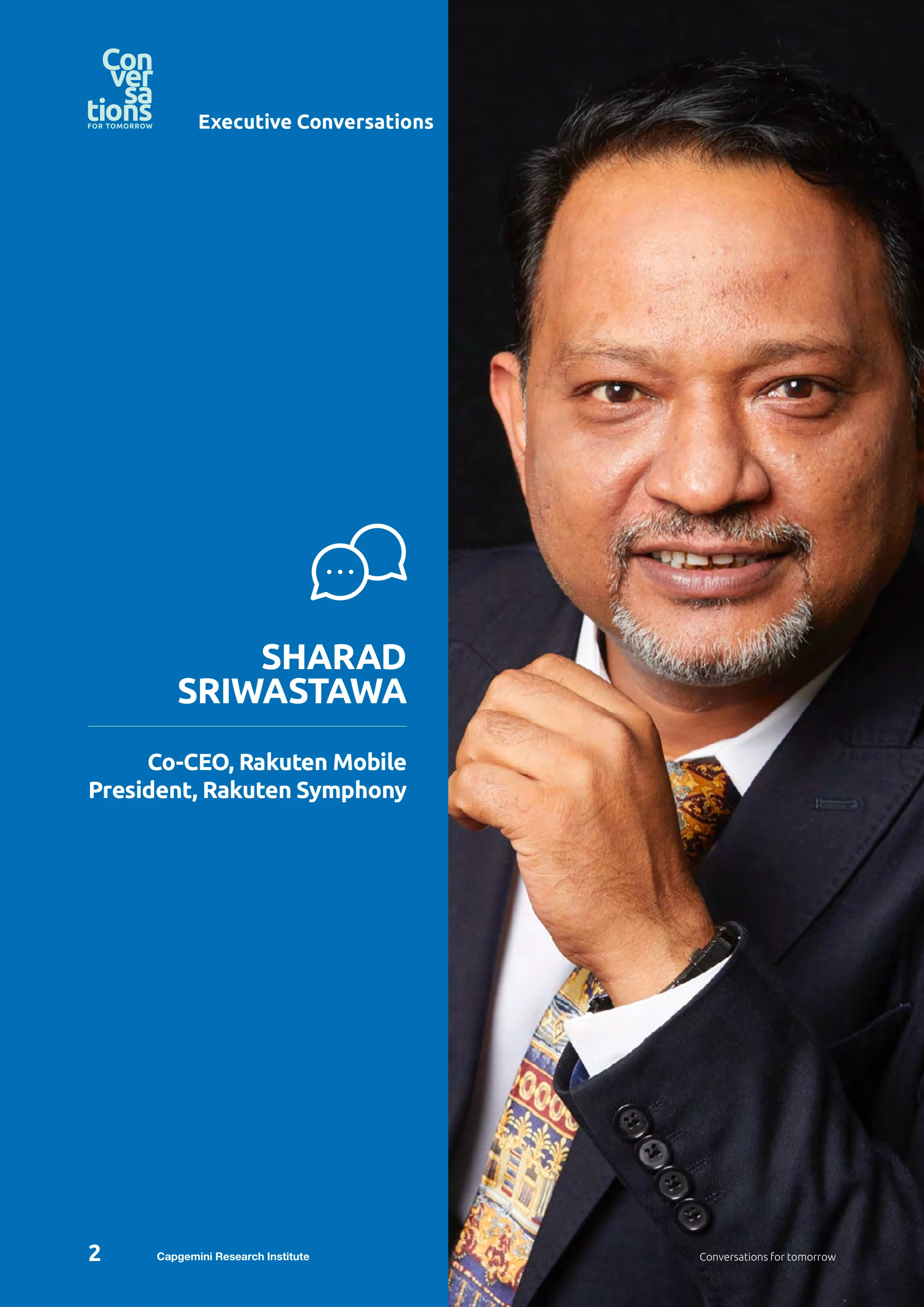
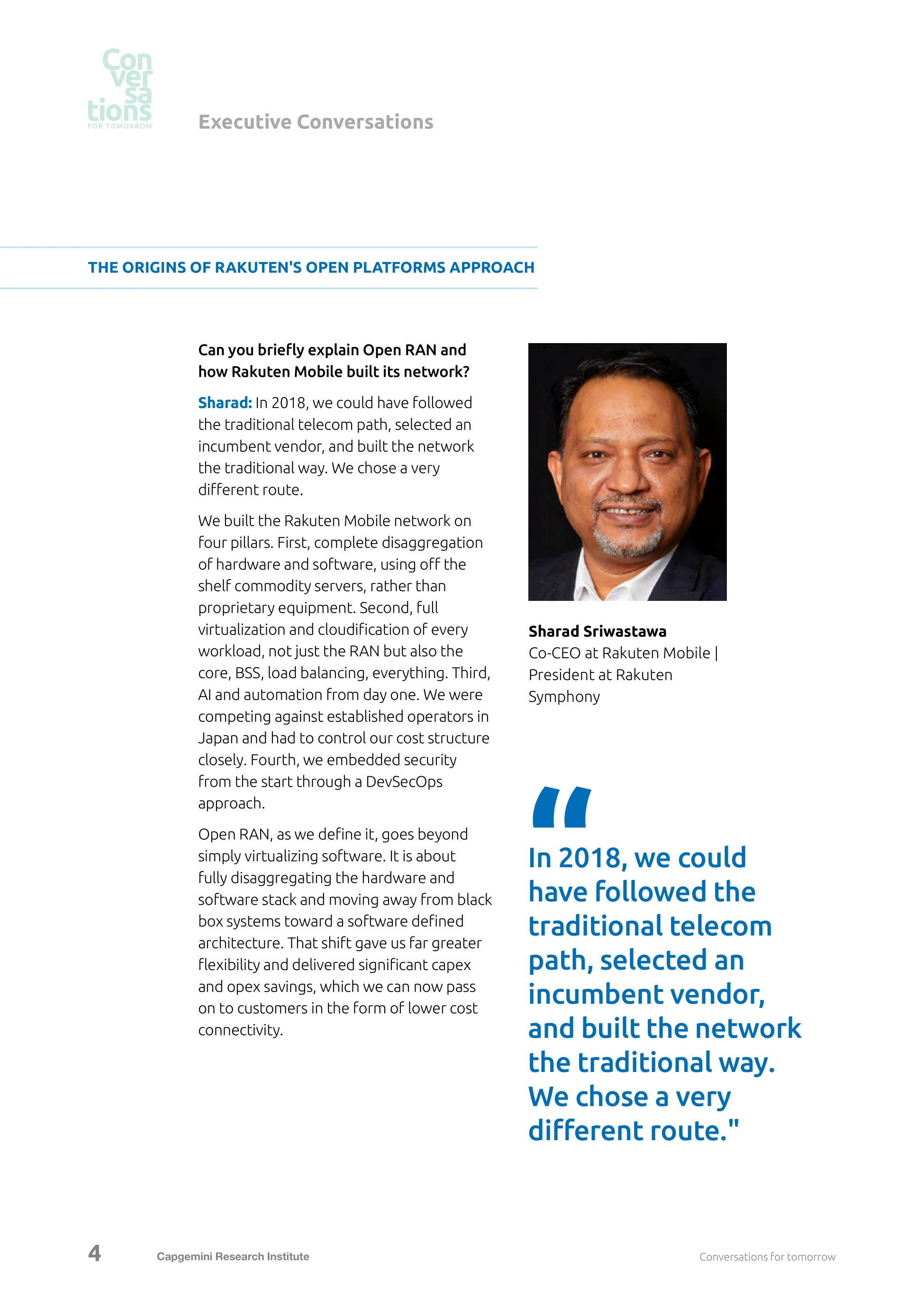
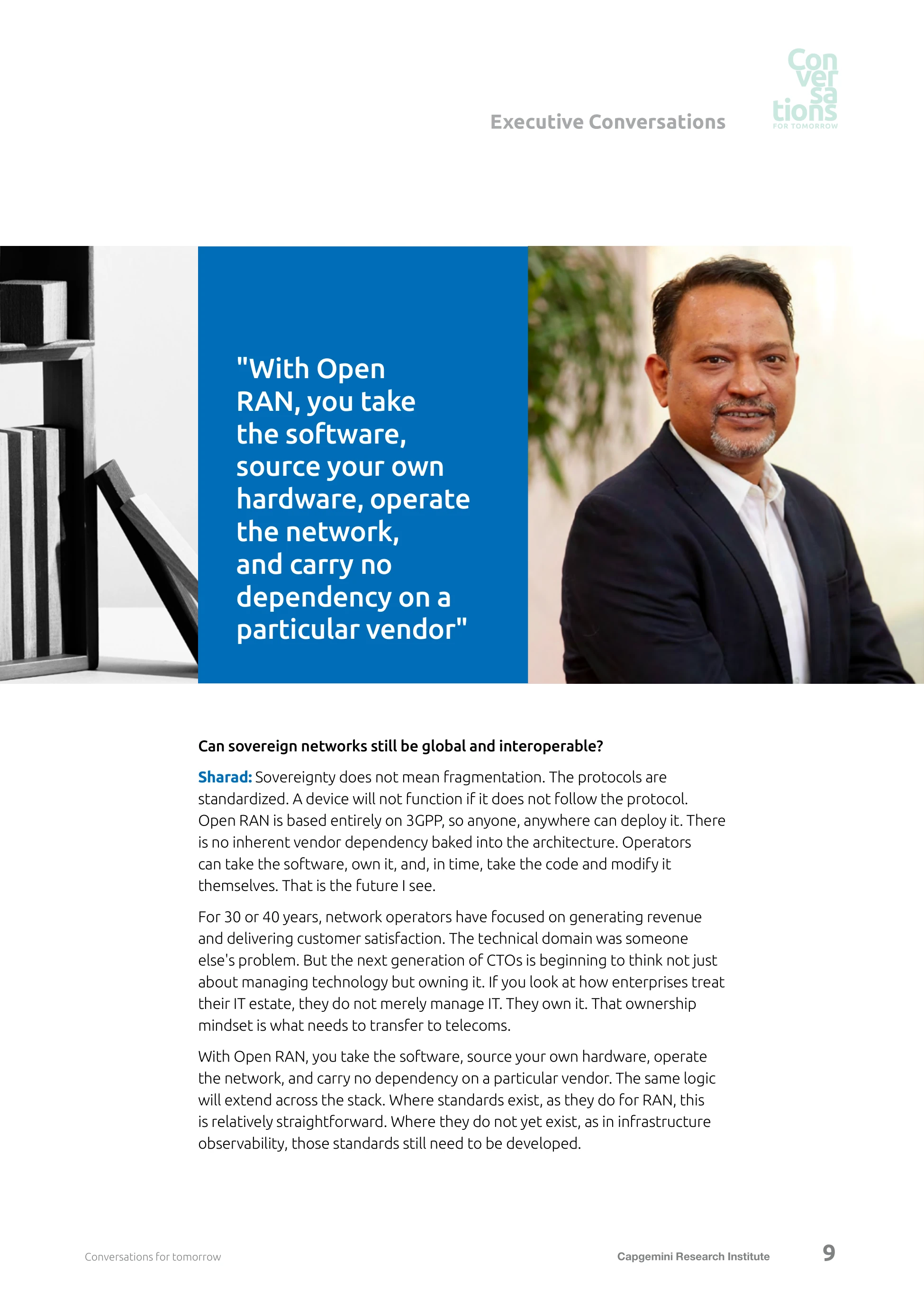
DigitalSovereigntyN°11 — 2026Balancing Control, Dependencies, and Innovation2Capgemini Research InstituteConversations for tomorrowExecutive ConversationsSHARADSRIWASTAWACo-CEO, Rakuten MobilePresident, Rakuten SymphonyOWNING THE NETWORK: WHY SOVEREIGNTY IS THE NEXT FRONTIER FOR TELECOMSSharad Sriwastawa serves as co-Chief Executive Officer and Chief Technology Officer of Rakuten Mobile and President of Rakuten Symphony, a Rakuten Group company spearheading the global adoption of open, cloud-native platforms. Sharad joined Rakuten in 2018 to lead the deployment of Rakuten Mobile, Japan’s newest and most modern mobile network. He was appointed to his current positions in 2023. Sharad has held global executive roles in India, the Middle East, Australia, the US, and Asia, working with major mobile operators and vendors including Reliance, T-Mobile, Telstra, Siemens, and RAN technology vendor Airspan Networks.Executive Conversations3Capgemini Research InstituteConversations for tomorrowSharad SriwastawaCo-CEO at Rakuten Mobile |President at Rakuten SymphonyCan you briefly explain Open RAN and how Rakuten Mobile built its network?Sharad: In 2018, we could have followed the traditional telecom path, selected an incumbent vendor, and built the network the traditional way. We chose a very different route.We built the Rakuten Mobile network on four pillars. First, complete disaggregation of hardware and software, using off the shelf commodity servers, rather than proprietary equipment. Second, full virtualization and cloudification of every workload, not just the RAN but also the core, BSS, load balancing, everything. Third, AI and automation from day one. We were competing against established operators in Japan and had to control our cost structure closely. Fourth, we embedded security from the start through a DevSecOps approach.Open RAN, as we define it, goes beyond simply virtualizing software. It is about fully disaggregating the hardware and software stack and moving away from black box systems toward a software defined architecture. That shift gave us far greater flexibility and delivered significant capex and opex savings, which we can now pass on to customers in the form of lower cost connectivity.THE ORIGINS OF RAKUTEN'S OPEN PLATFORMS APPROACHIn 2018, we could have followed the traditional telecom path, selected an incumbent vendor, and built the network the traditional way. We chose a very different route."Executive Conversations4Capgemini Research InstituteConversations for tomorrowWhat does network sovereignty mean to Rakuten?Sharad: Network sovereignty means you own the infrastructure; you control what runs inside your network; and you control your own software roadmap based on the needs of your geography.At its core, network sovereignty is the end of permission based innovation. For decades, operators had to wait for vendor release cycles to introduce new capabili...







































