桌面
添加运营动脉到电脑桌面
安装后将用独立窗口打开,并可在电脑桌面快捷访问
足迹
浏览记录
加载中...
查看更多

2026-老年群体AI应用研究报告-安永-23页

2026-老年群体AI应用研究报告-安永-23页 复制标题
2026-老年群体AI应用研究报告-安永-23页_第1页
1/25页
2026-老年群体AI应用研究报告-安永-23页_第2页
2/25页
2026-老年群体AI应用研究报告-安永-23页_第3页
3/25页
2026-老年群体AI应用研究报告-安永-23页_第4页
4/25页
2026-老年群体AI应用研究报告-安永-23页_第5页
5/25页
2026-老年群体AI应用研究报告-安永-23页_第6页
6/25页
2026-老年群体AI应用研究报告-安永-23页_第7页
7/25页
2026-老年群体AI应用研究报告-安永-23页_第8页
8/25页
2026-老年群体AI应用研究报告-安永-23页_第9页
9/25页
2026-老年群体AI应用研究报告-安永-23页_第10页
10/25页
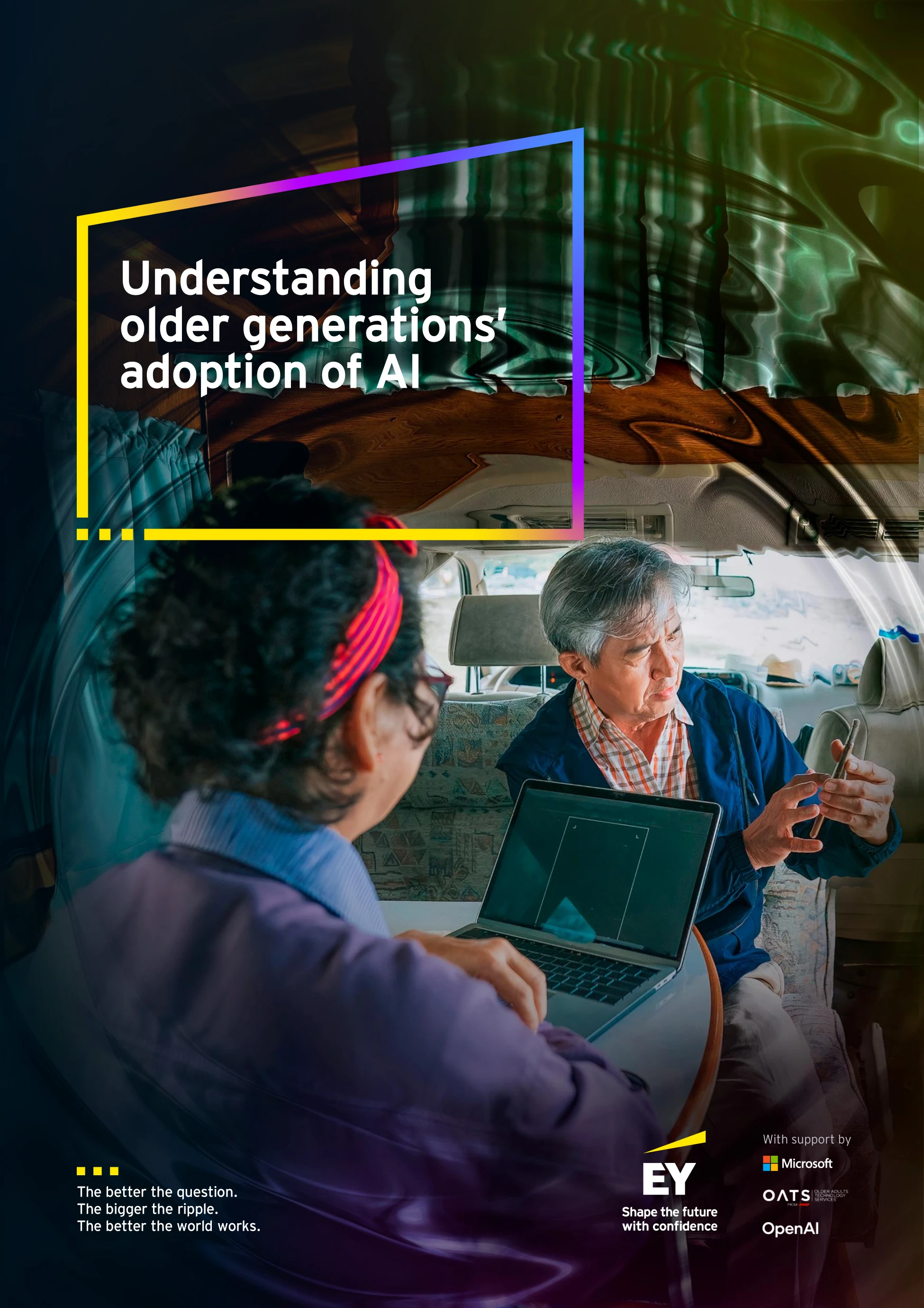
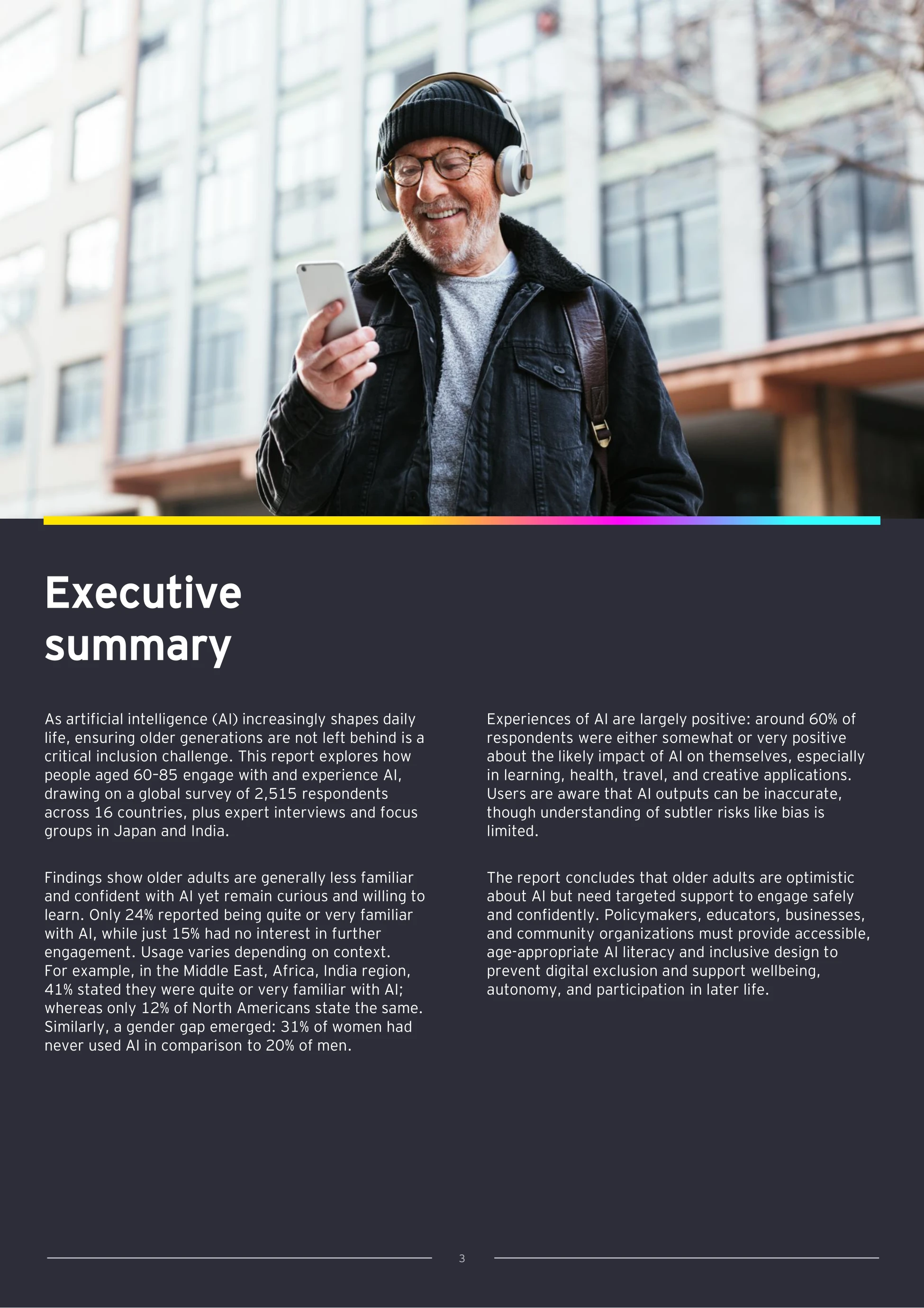
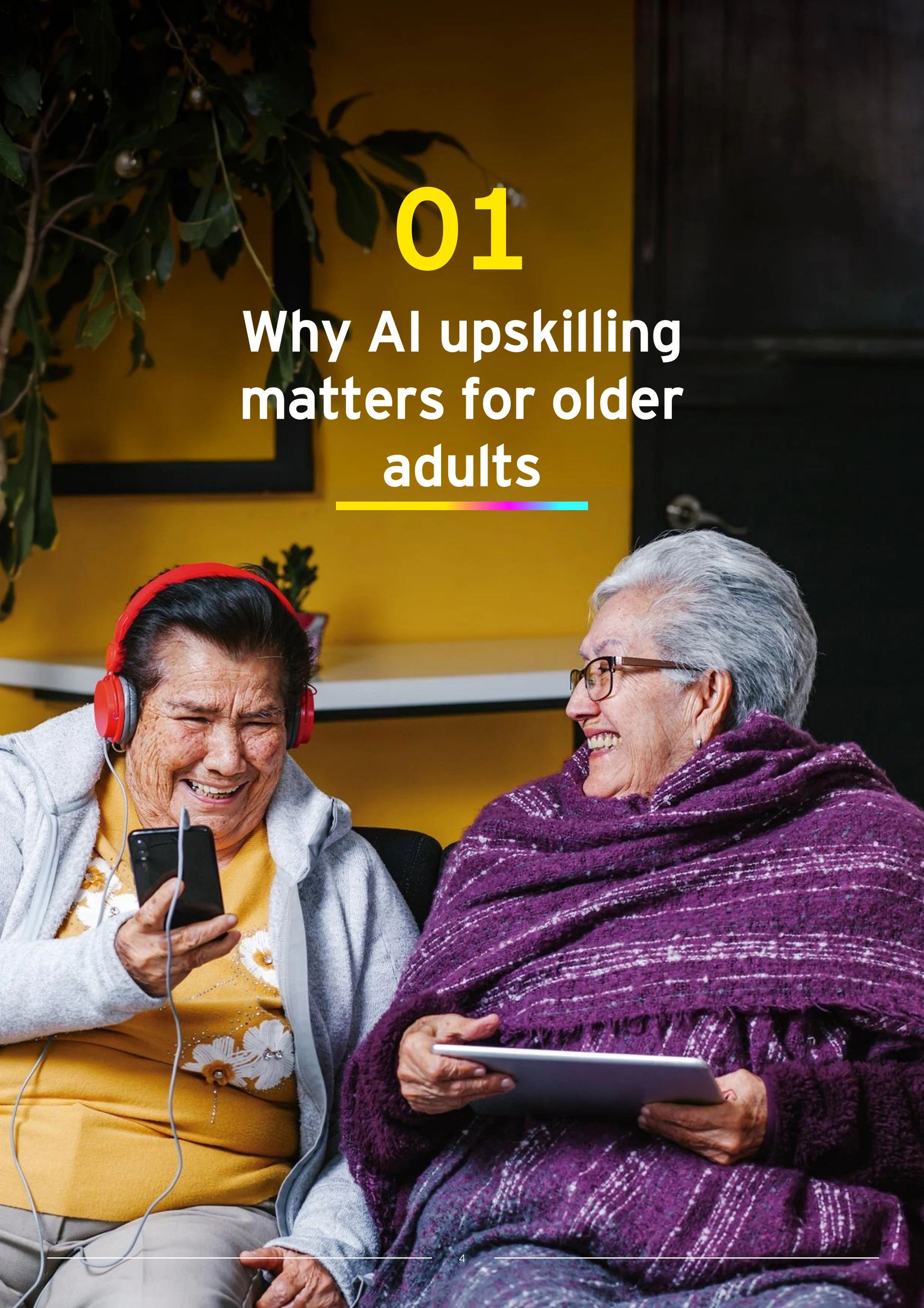
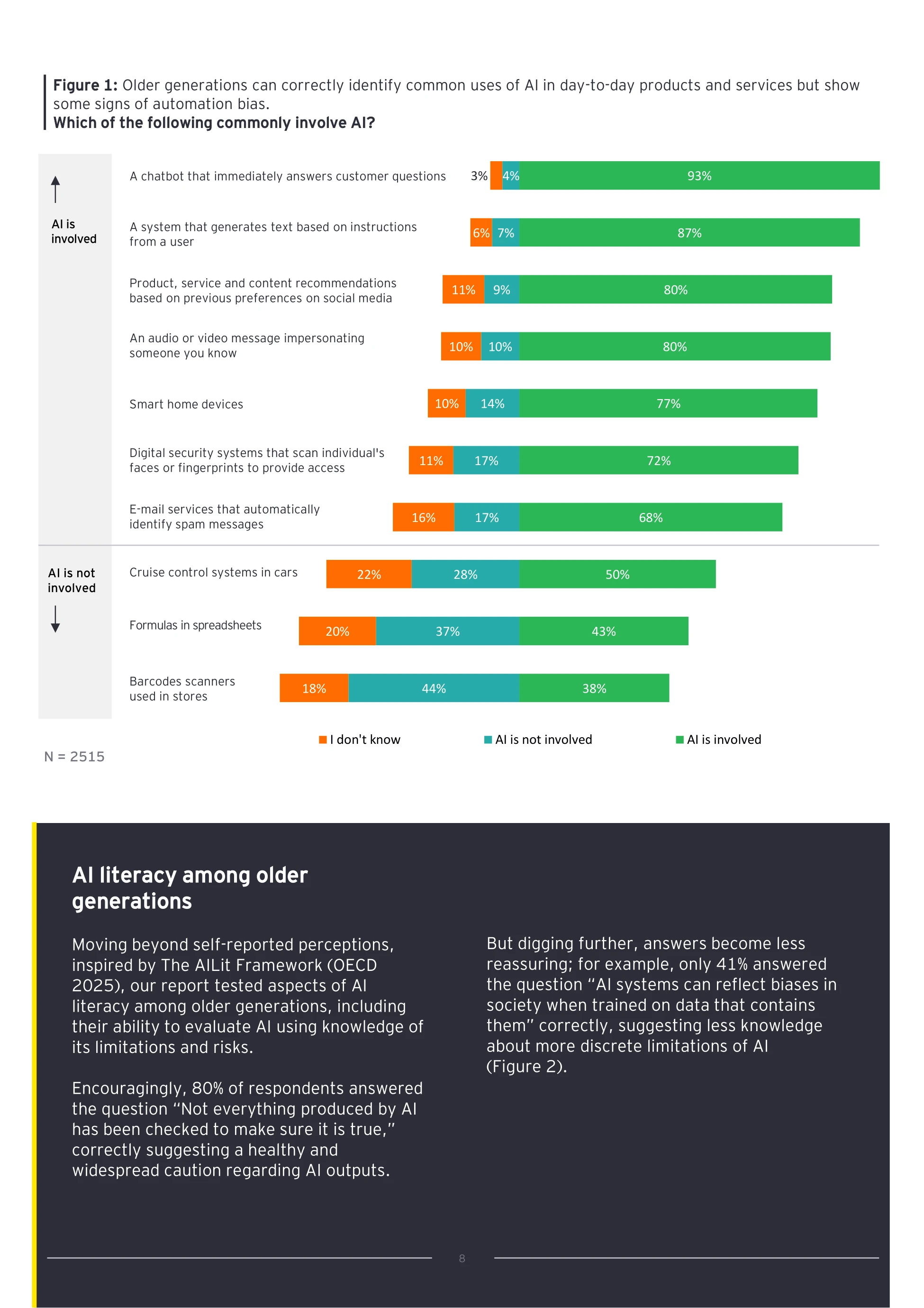
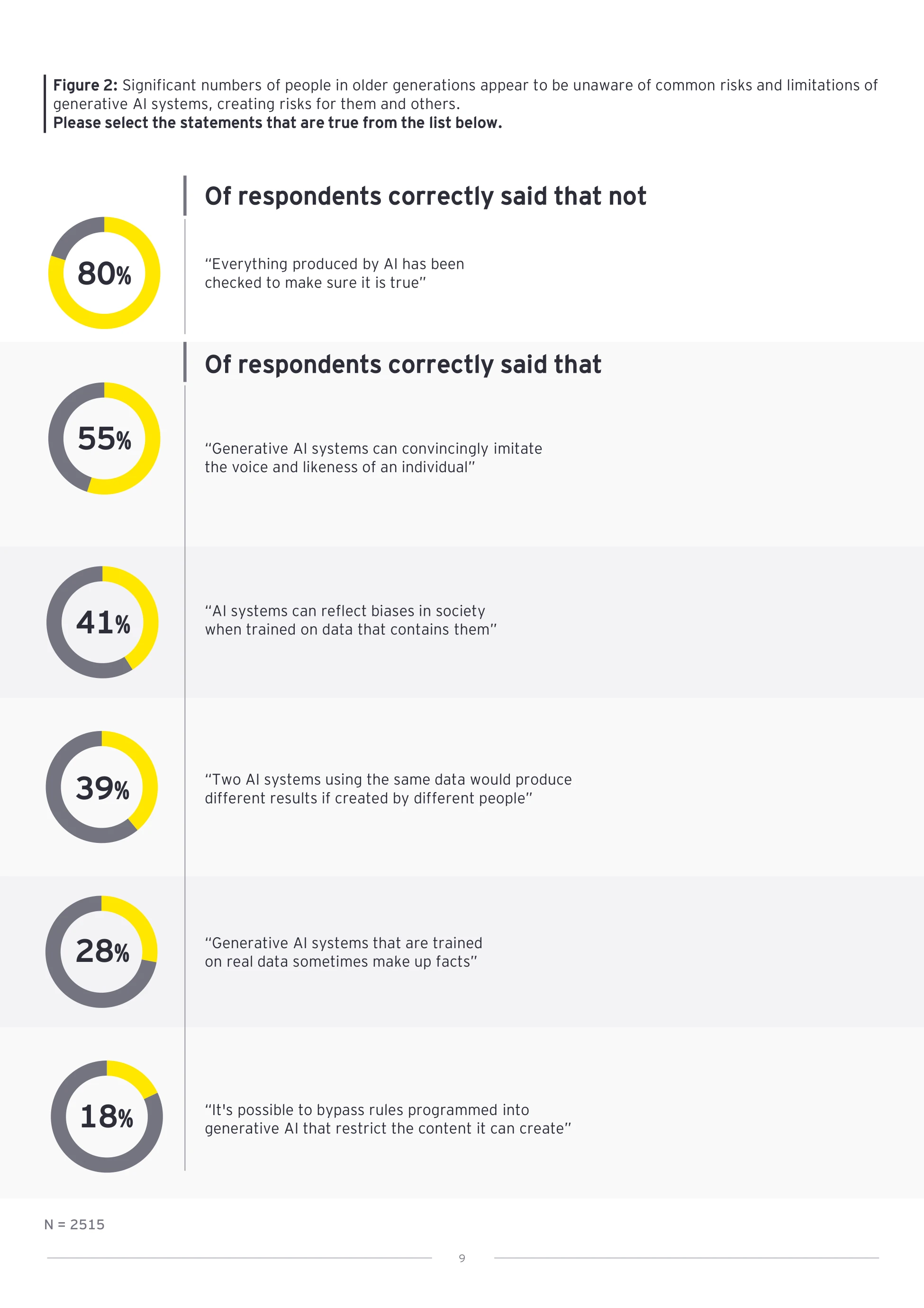
The better the question. The bigger the ripple. The better the world works.With support byUnderstanding older generations’ adoption of AI 2ContentExecutive summary0102030405Acknowledgments and referencesWhy AI upskilling matters for older adults What older adults know, and don't yet know How older adults are incorporating AI in daily lifeHow older adults perceive its risks and benefits What’s next?3Executive summaryAs artificial intelligence (AI) increasingly shapes daily life, ensuring older generations are not left behind is a critical inclusion challenge. This report explores how people aged 60–85 engage with and experience AI, drawing on a global survey of 2,515 respondents across 16 countries, plus expert interviews and focus groups in Japan and India.Findings show older adults are generally less familiar and confident with AI yet remain curious and willing to learn. Only 24% reported being quite or very familiar with AI, while just 15% had no interest in further engagement. Usage varies depending on context. For example, in the Middle East, Africa, India region, 41% stated they were quite or very familiar with AI; whereas only 12% of North Americans state the same. Similarly, a gender gap emerged: 31% of women had never used AI in comparison to 20% of men.Experiences of AI are largely positive: around 60% of respondents were either somewhat or very positive about the likely impact of AI on themselves, especially in learning, health, travel, and creative applications. Users are aware that AI outputs can be inaccurate, though understanding of subtler risks like bias is limited. The report concludes that older adults are optimistic about AI but need targeted support to engage safely and confidently. Policymakers, educators, businesses, and community organizations must provide accessible, age-appropriate AI literacy and inclusive design to prevent digital exclusion and support wellbeing, autonomy, and participation in later life. 401Why AI upskilling matters for older adults 501As artificial intelligence (AI) reshapes nearly every facet of modern life, society’s adaptation to these changes is becoming a question not only of technological progress but also of inclusion. One demographic remains under-discussed: older generations. New research commissioned by EY Ripplesexamines how people from 60 to 85 years old engage with AI. With the share of the global population over the age of 65 having doubled between 1974 and 2024 (United Nations Population Fund 2026), failing to ensure digital inclusion could marginalize this group, affecting their autonomy, social participation, and quality of life. Conversely, creating AI that meets their needs is a major opportunity for businesses and government.Recent data from the United Kingdom —indicative of global trends—show that a significant number of older generations lack basic digital skills: more than a...

1、当您付费下载文档后,您只拥有了使用权限,并不意味着购买了版权,文档只能用于自身使用,不得用于其他商业用途(如 [转卖]进行直接盈利或[编辑后售卖]进行间接盈利)。
2、本站所有内容均由合作方或网友上传,本站不对文档的完整性、权威性及其观点立场正确性做任何保证或承诺!文档内容仅供研究参考,付费前请自行鉴别。
3、如文档内容存在违规,或者侵犯商业秘密、侵犯著作权等,请点击“违规举报”。

查找下载文件的指引

一、电脑端

- Windows 系统:按下键盘快捷键 `Ctrl + J`,即可打开下载列表。  

- Mac 系统:按下键盘快捷键 `⌘ + J`,即可打开下载列表。  

二、手机端

1. 打开手机浏览器,点击浏览器右下角的 “≡”(或“更多”)图标。  

2. 在弹出的菜单中找到并点击 “下载内容”(或类似选项),即可查看已下载的文件。  

提示:不同浏览器界面略有差异,若未找到“下载”入口,可尝试在浏览器设置中搜索“下载”关键词。


2026-老年群体AI应用研究报告-安永-23页

¥9.9
会员免费
下载本文档
安全支付  |  可重复下载
格式pdf
大小3.31 MB
页数约25页
下载4 次
古玉白 + 关注
实名认证
确认删除?
会员
教程
联系
  • 站长微信
顶部






































