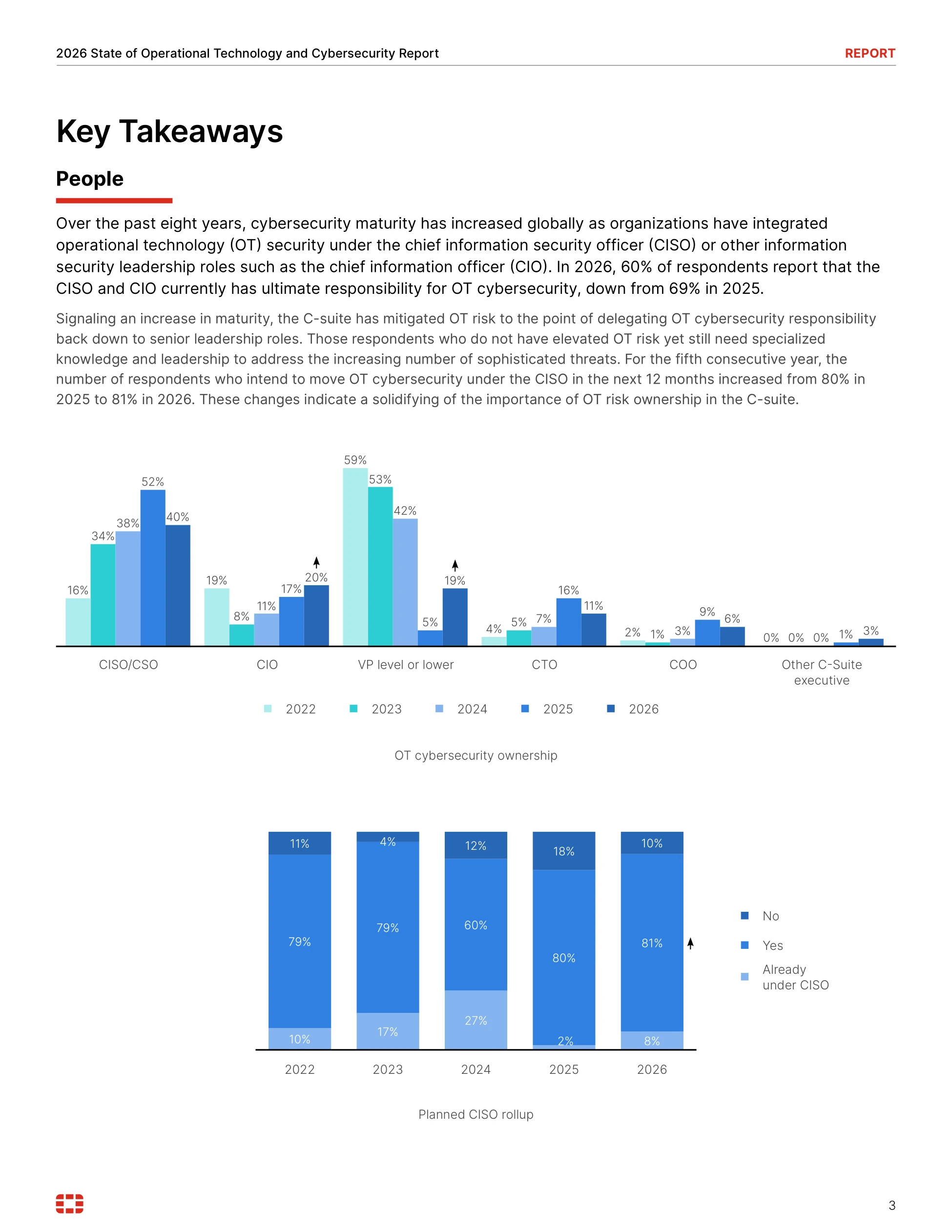
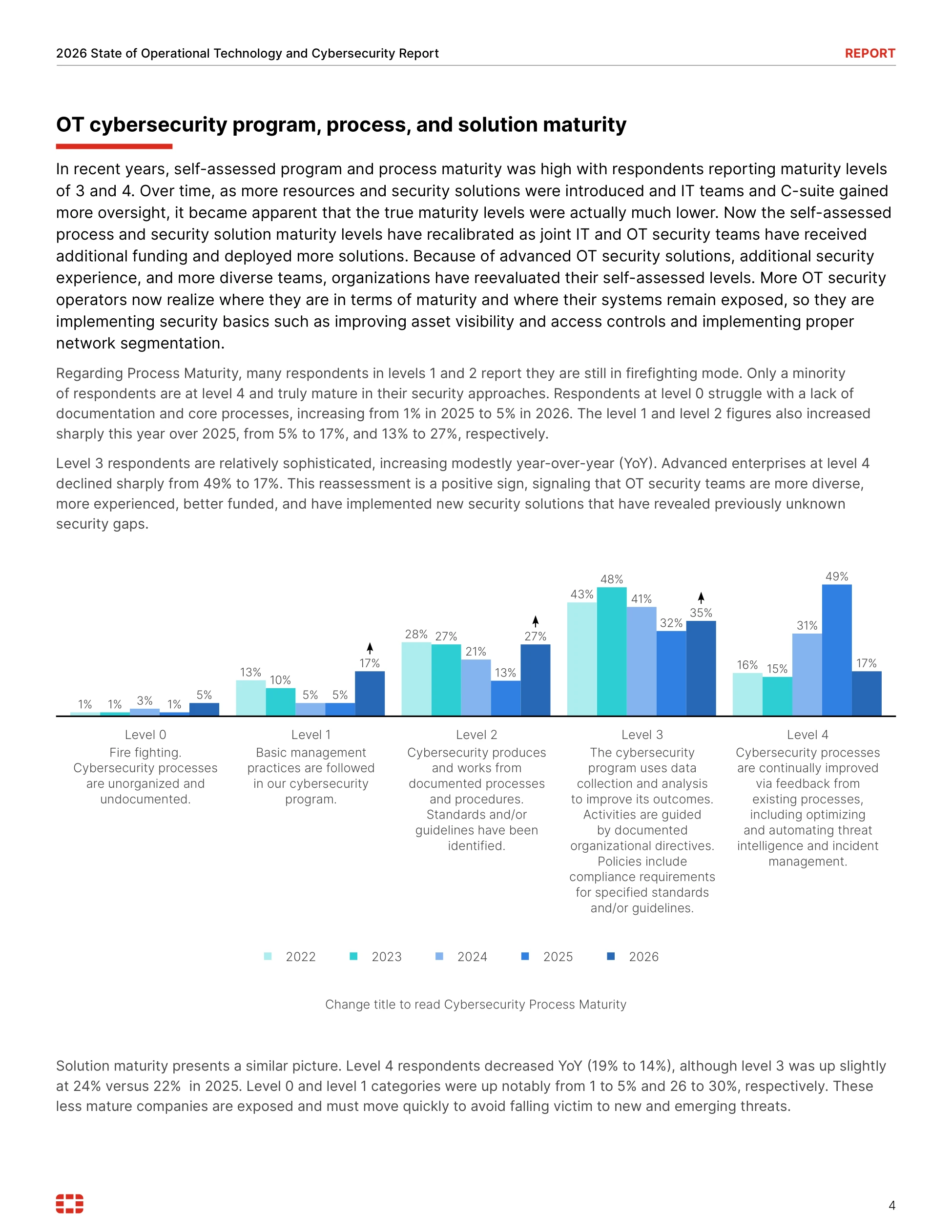
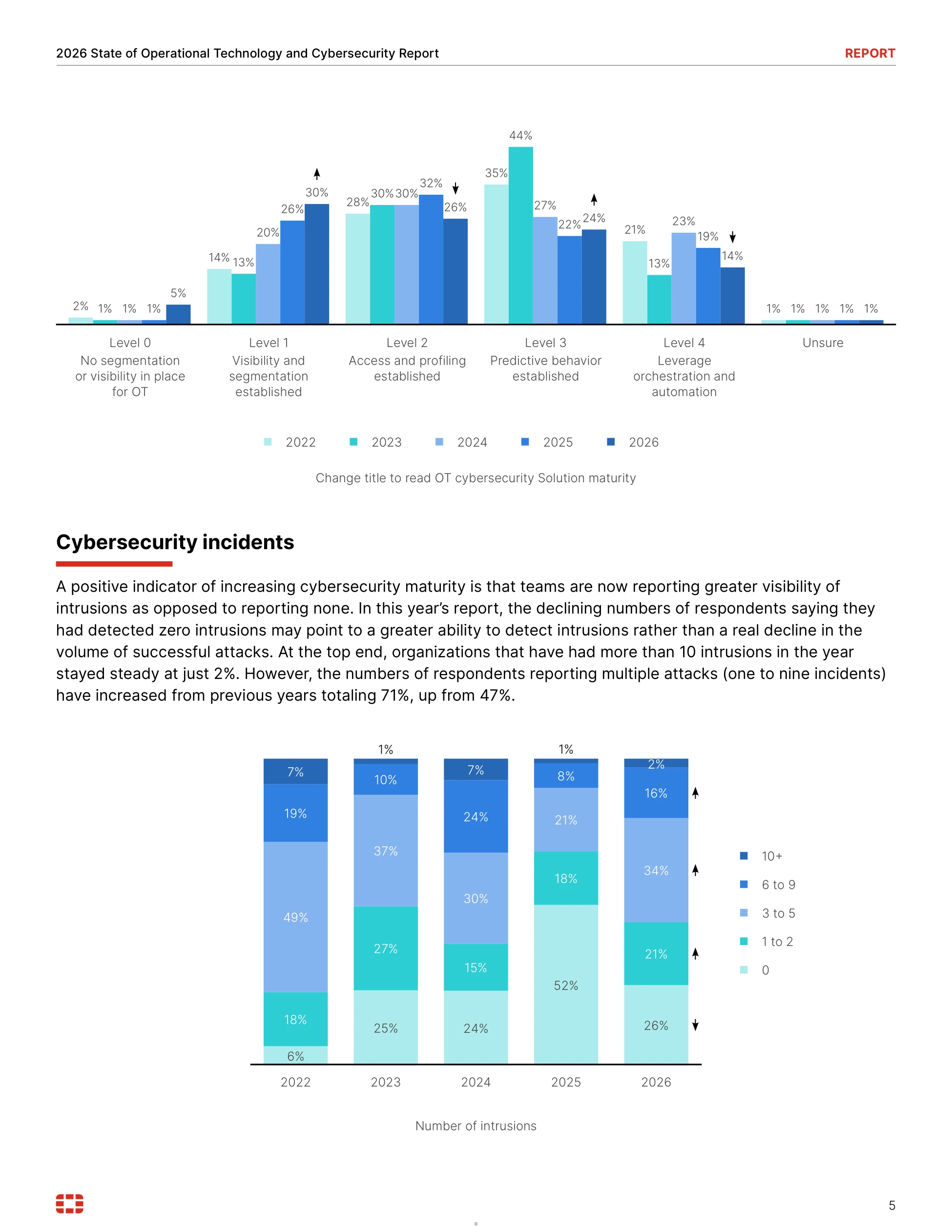
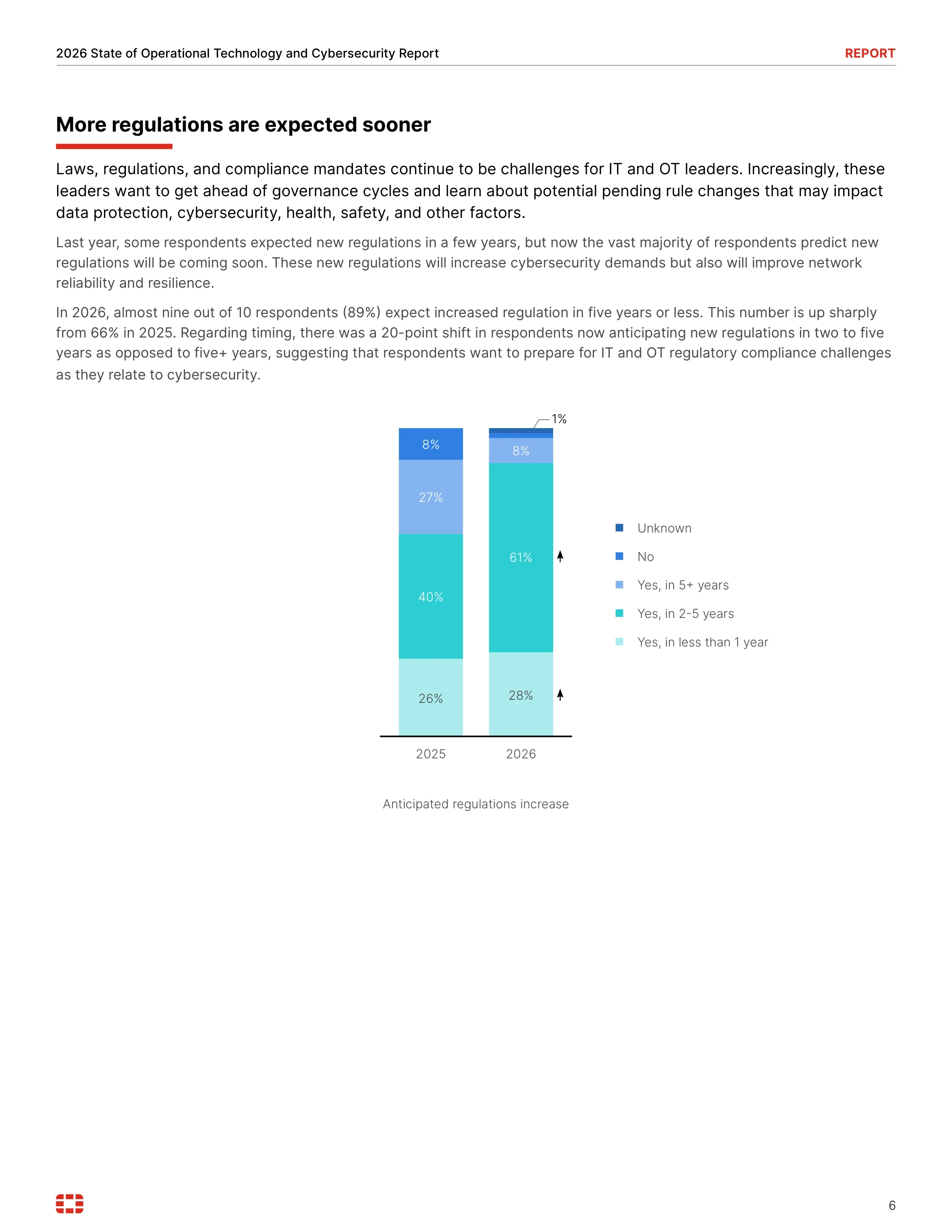
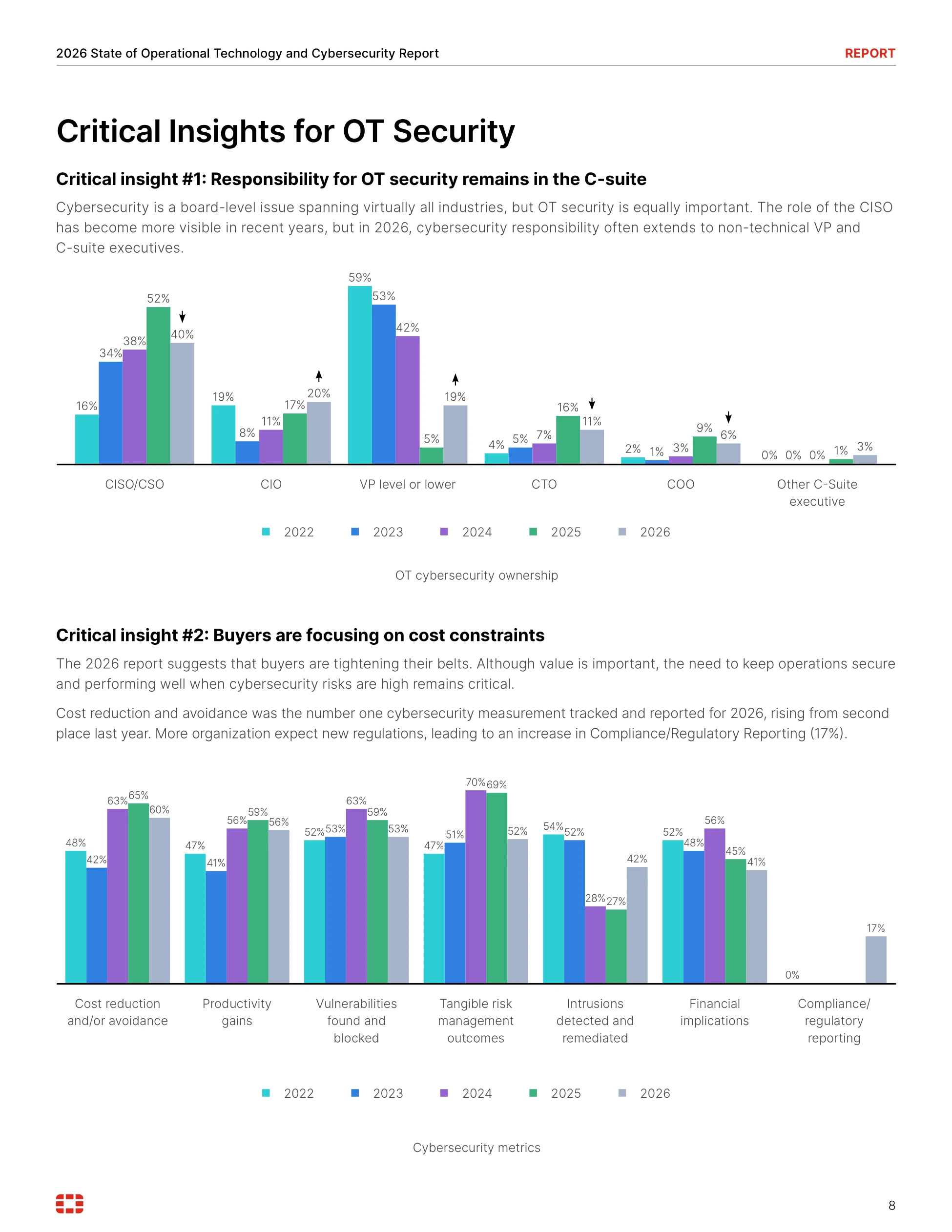
2026 State of Operational Technology and Cybersecurity ReportKey Takeaways 3Executive Summary 7Introduction 7Critical Insights for OT Security 8Best Practices 15Conclusion 19Table of Contents22026 State of Operational Technology and Cybersecurity ReportREPORTKey TakeawaysPeopleOver the past eight years, cybersecurity maturity has increased globally as organizations have integrated operational technology (OT) security under the chief information security officer (CISO) or other information security leadership roles such as the chief information officer (CIO). In 2026, 60% of respondents report that the CISO and CIO currently has ultimate responsibility for OT cybersecurity, down from 69% in 2025. Signaling an increase in maturity, the C-suite has mitigated OT risk to the point of delegating OT cybersecurity responsibility back down to senior leadership roles. Those respondents who do not have elevated OT risk yet still need specialized knowledge and leadership to address the increasing number of sophisticated threats. For the fifth consecutive year, the number of respondents who intend to move OT cybersecurity under the CISO in the next 12 months increased from 80% in 2025 to 81% in 2026. These changes indicate a solidifying of the importance of OT risk ownership in the C-suite. 20232024202520262022Other C-Suite executive0%1%3%0%0%COO3%9% 6%1%2%CTO7%16%11%5%4%VP level or lower42%5%19%53%59%CIO11%17%20%8%19%CISO/CSO38%52%40%34%16%OT cybersecurity ownershipPlanned CISO rollup202210%79%11%202317%79%4%202427%60%12%20252%80%18%20268%2%81%10%NoYesAlready under CISO32026 State of Operational Technology and Cybersecurity ReportREPORTOT cybersecurity program, process, and solution maturityIn recent years, self-assessed program and process maturity was high with respondents reporting maturity levels of 3 and 4. Over time, as more resources and security solutions were introduced and IT teams and C-suite gained more oversight, it became apparent that the true maturity levels were actually much lower. Now the self-assessed process and security solution maturity levels have recalibrated as joint IT and OT security teams have received additional funding and deployed more solutions. Because of advanced OT security solutions, additional security experience, and more diverse teams, organizations have reevaluated their self-assessed levels. More OT security operators now realize where they are in terms of maturity and where their systems remain exposed, so they are implementing security basics such as improving asset visibility and access controls and implementing proper network segmentation.Regarding Process Maturity, many respondents in levels 1 and 2 report they are still in firefighting mode. Only a minority of respondents are at level 4 and truly mature in their security approaches. Respondents at level 0 struggle with a lack of documentation and core processes, increasing from 1% in 2025 to 5% i...







































