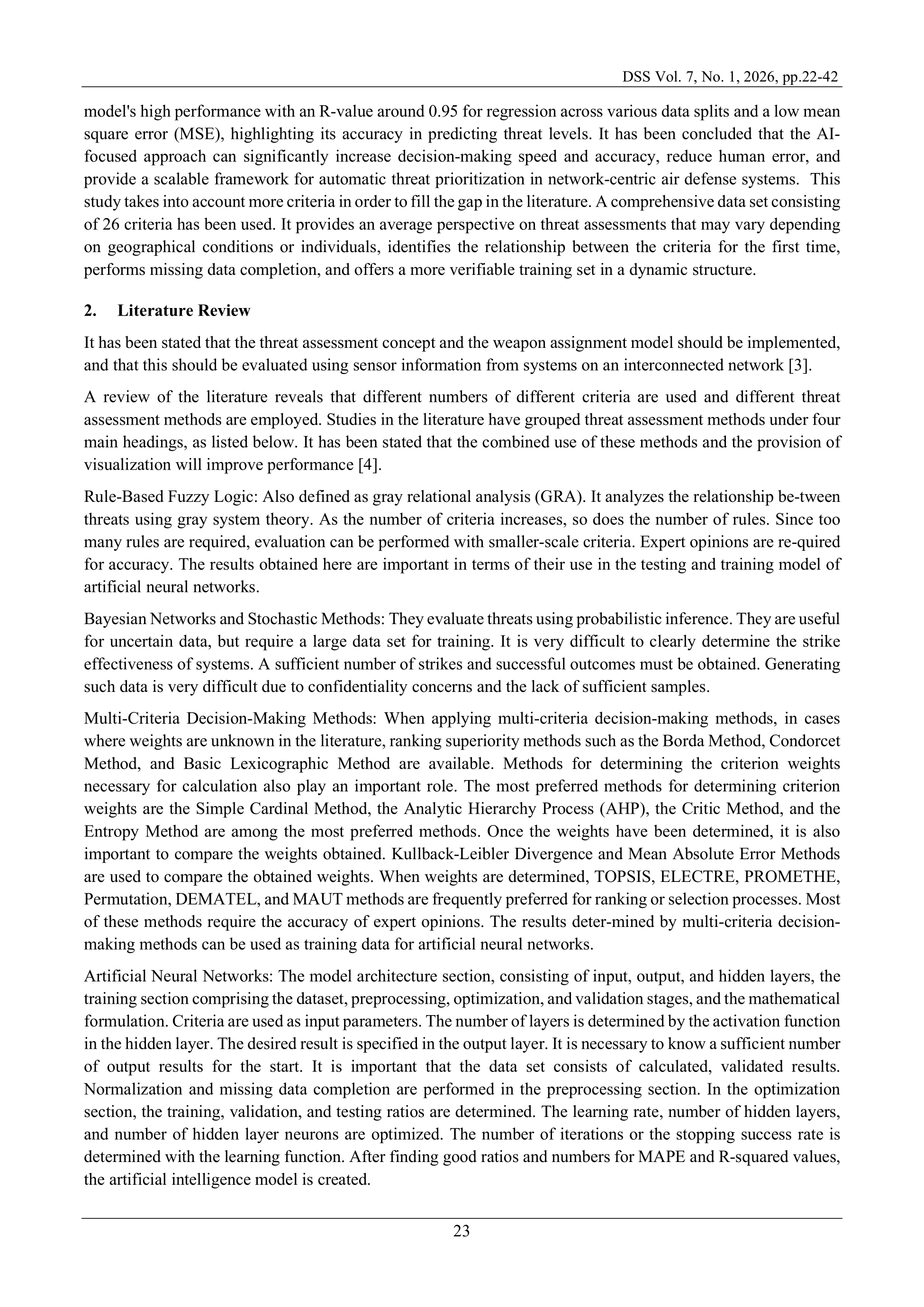
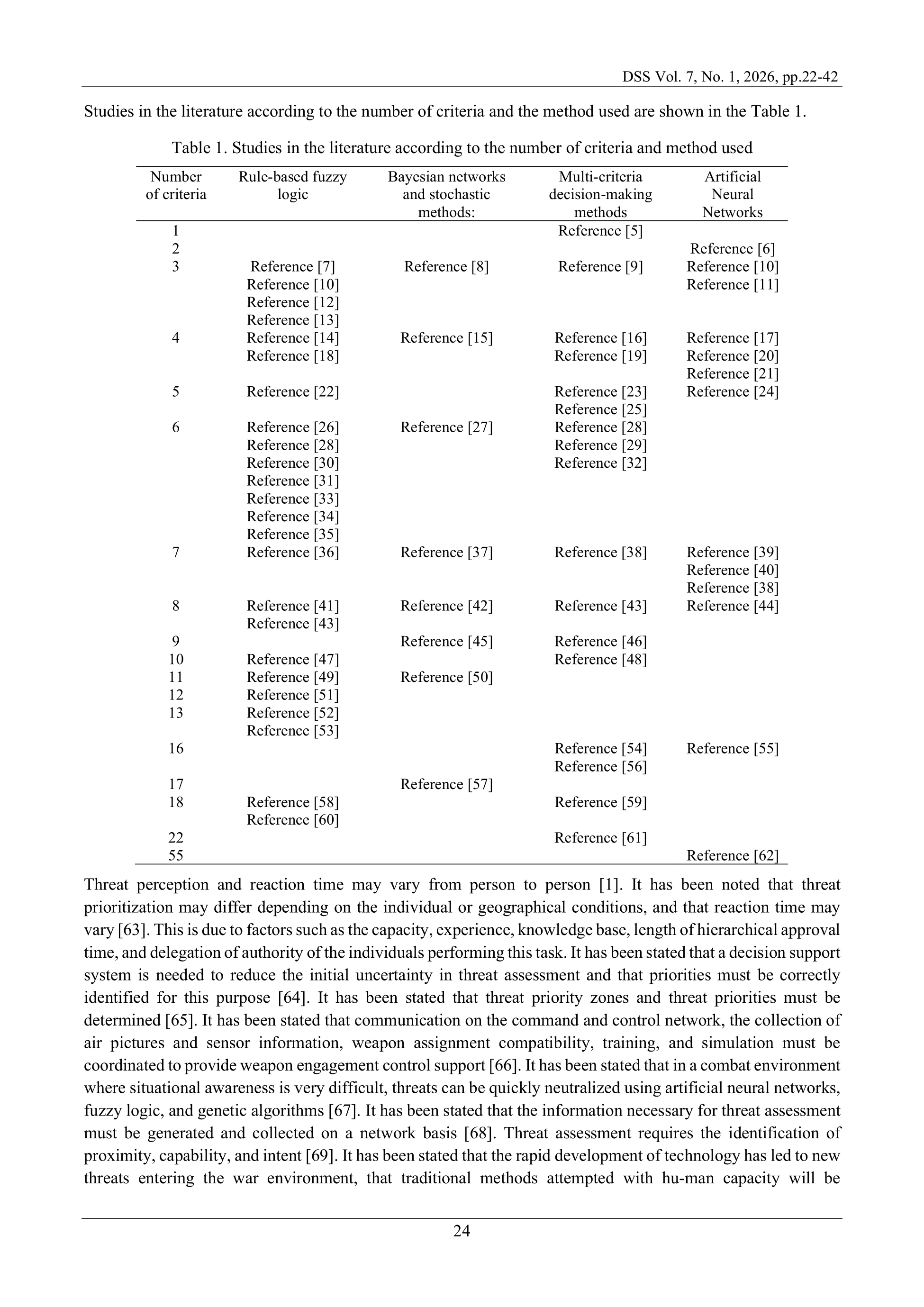
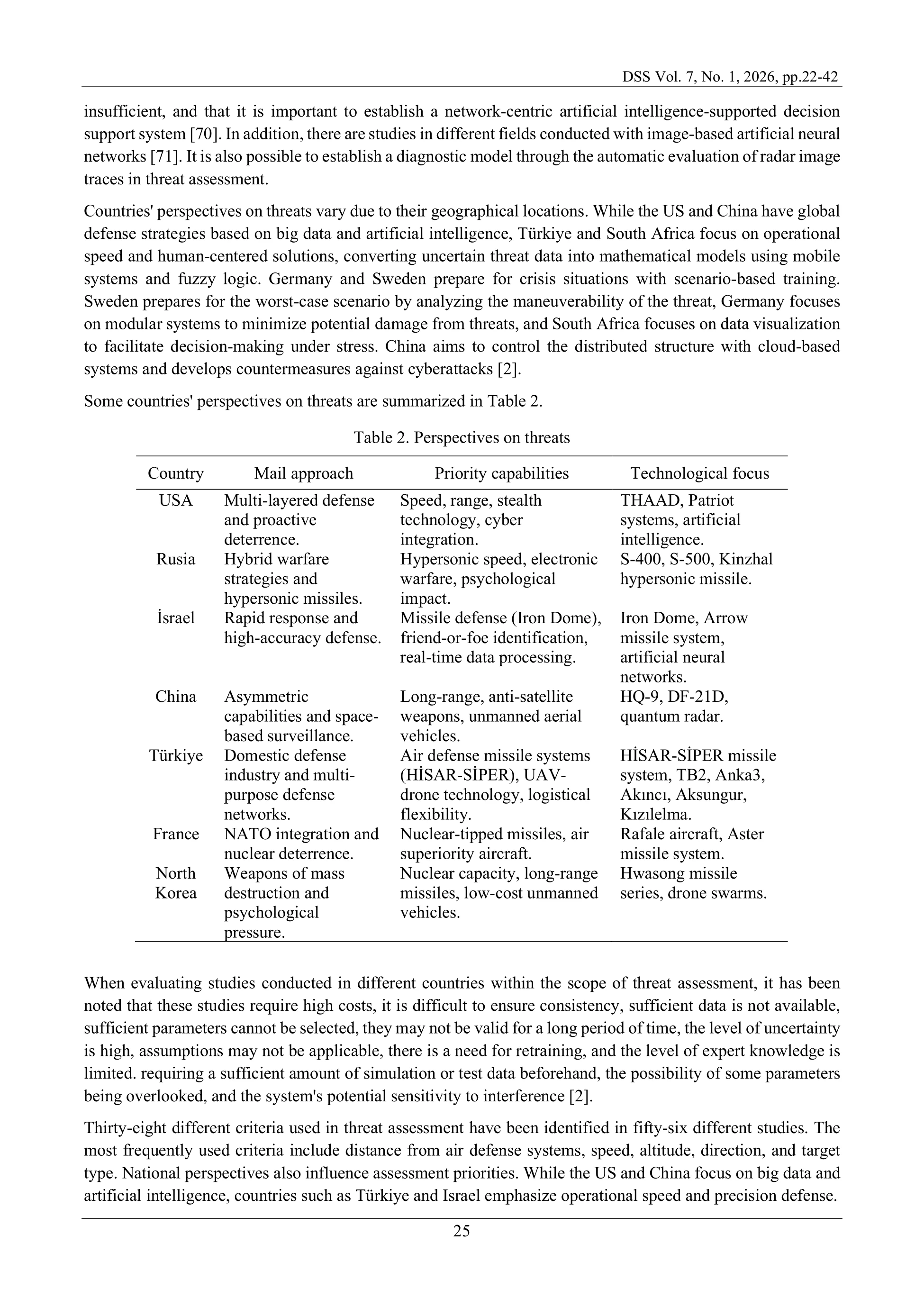
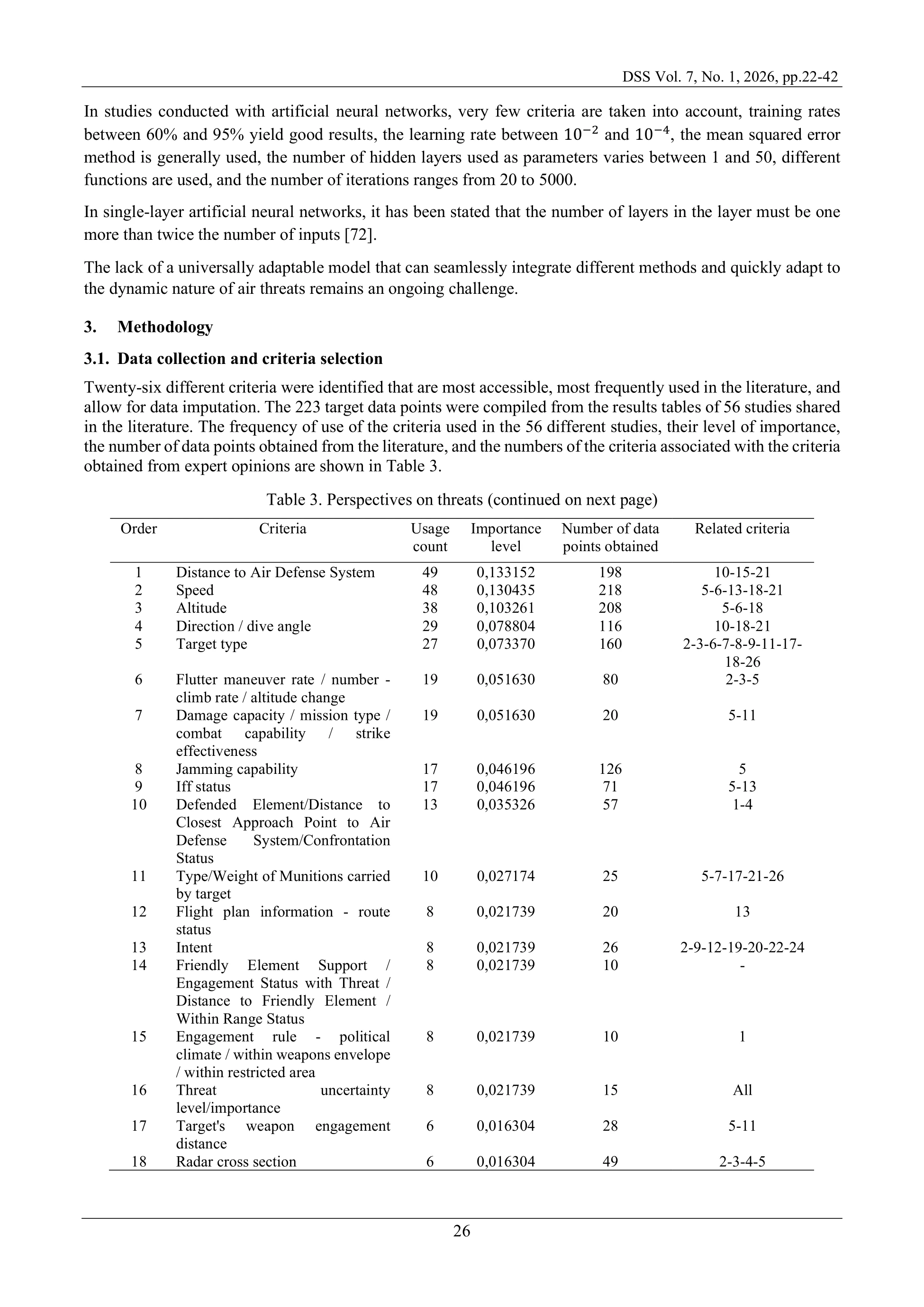
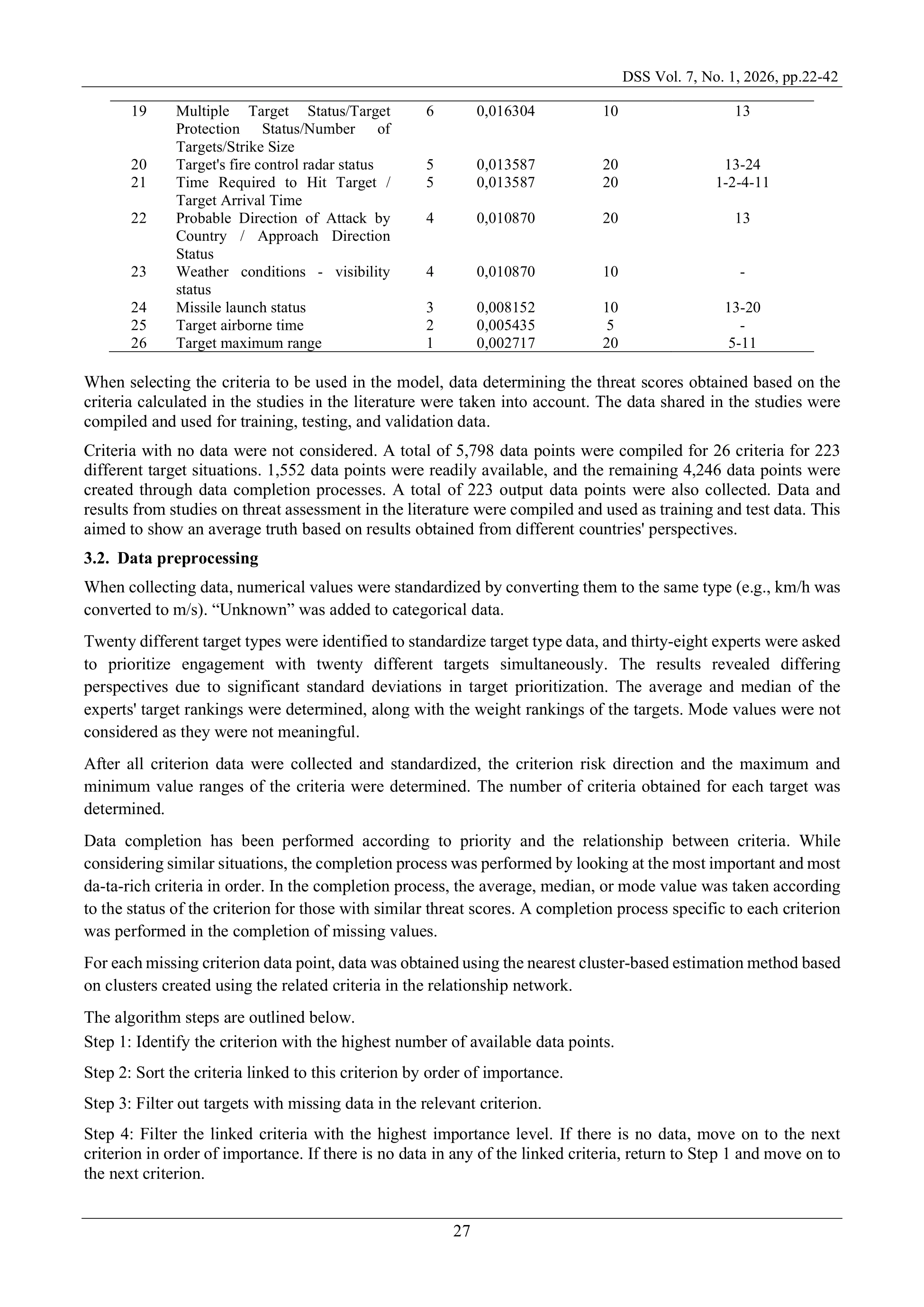
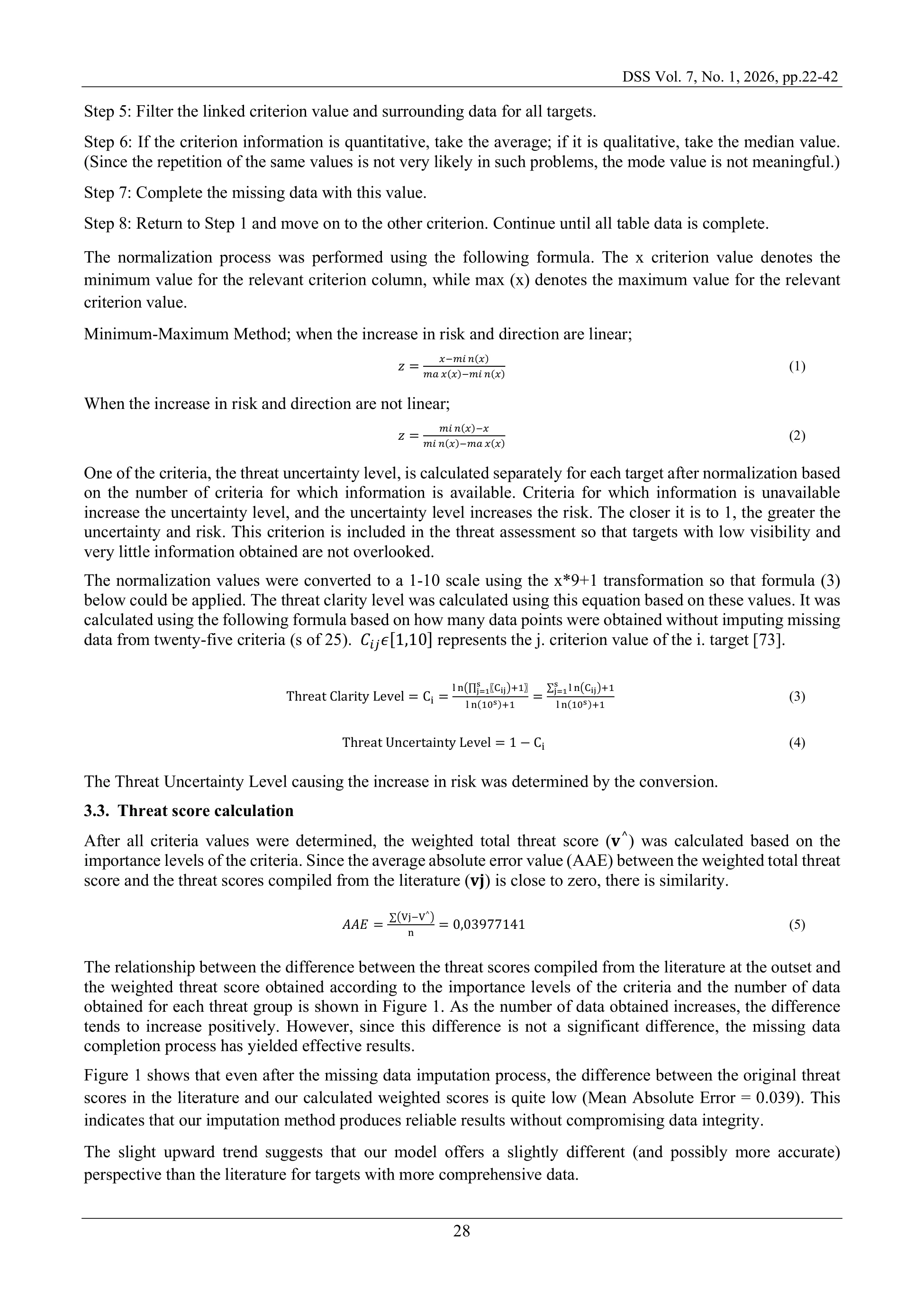
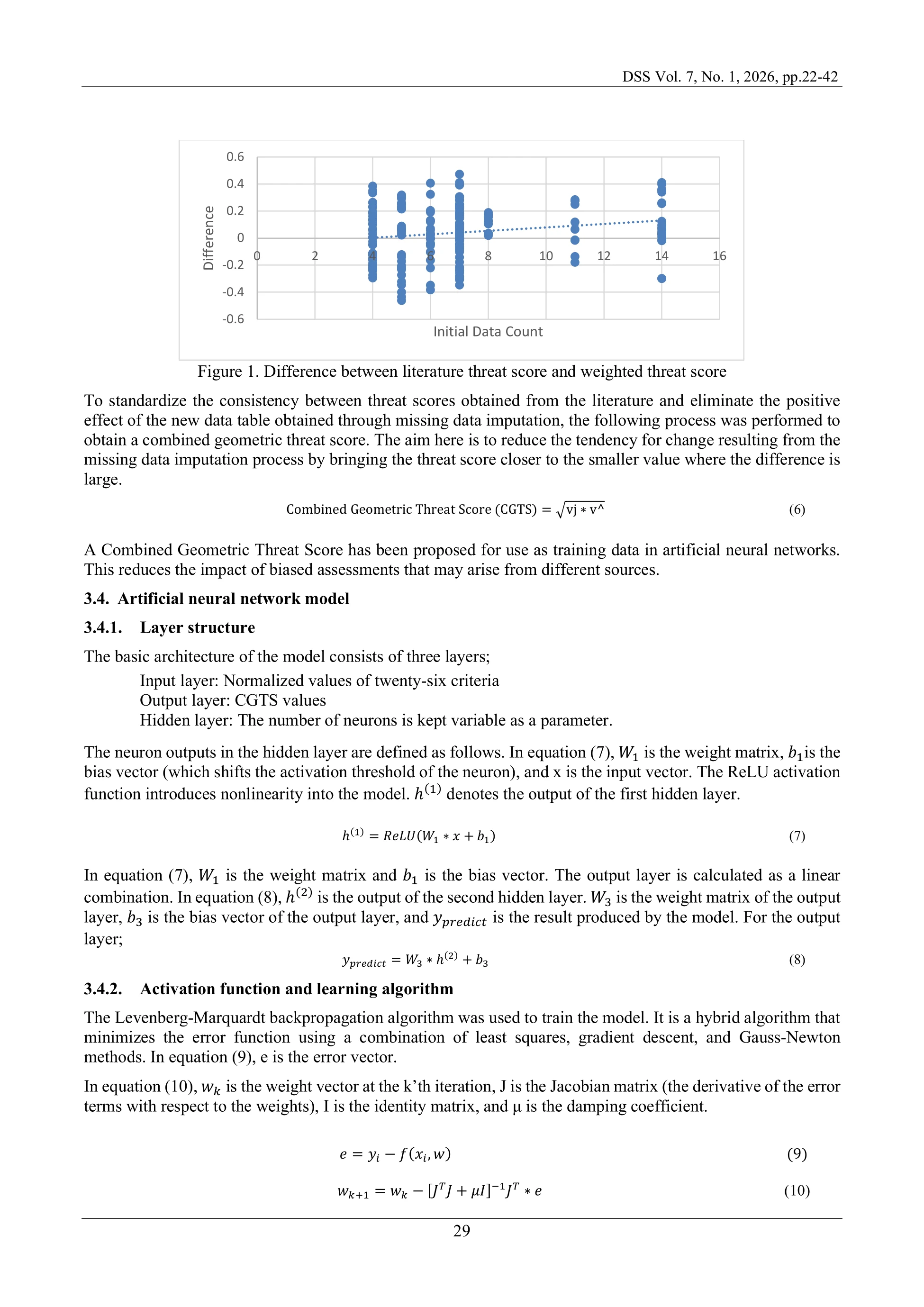
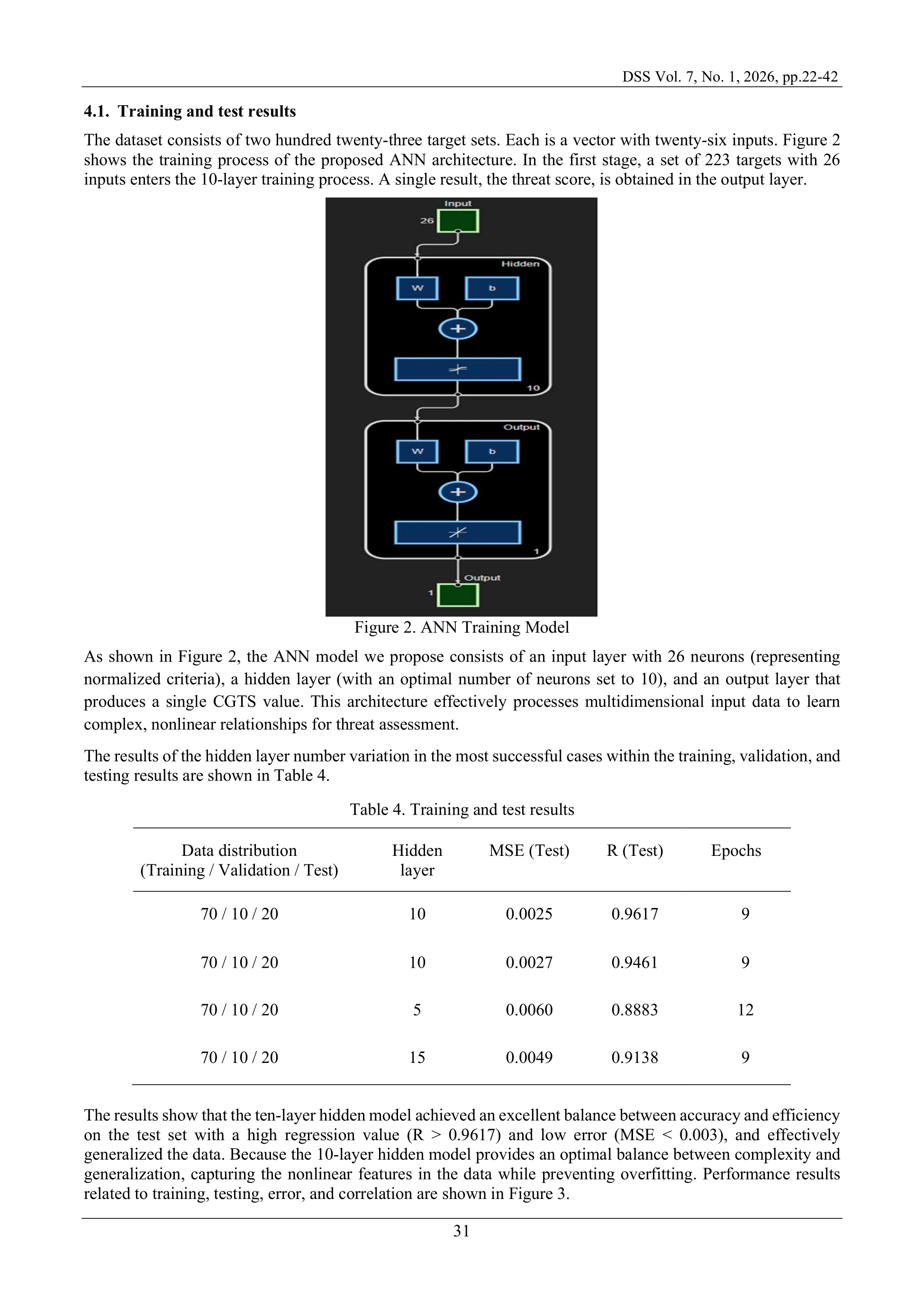
(Online) ISSN 2744-1741 Defense and Security Studies Original Research Vol. 7, No. 1, 2026, pp.22-42 https://doi.org/10.37868/dss.v7.id303 This work is licensed under a Creative Commons Attribution License (https://creativecommons.org/licenses/by/4.0/) that allows others to share and adapt the material for any purpose (even commercially), in any medium with an acknowledgement of the work's authorship and initial publication in this journal. 22 Threat assessment model in air defense systems using Artificial Neural Networks Salih Taşdemir1*, Murat Atan2 1 Department of Econometrics, Hacı Bayram Veli University, Türkiye 2 Department of Econometrics, Hacı Bayram Veli University, Türkiye *Corresponding author E-mail: salihtasdemir35@hotmail.com Received: Dec. 25, 2025 Revised: Jan. 11, 2026 Accepted: Jan. 13, 2026 Online: Jan. 13, 2026 Abstract This study aims to automate threat assessment and target assignment processes in air defense systems using a dynamic, learning artificial intelligence-based model. Unlike threat assessment studies in the literature that use different criteria and methods, this study integrates missing data completion, multi-criteria analysis, and artificial neural networks to dynamically update the threat score. Furthermore, unlike studies in the literature, the number of criteria used has been increased to enable the model to provide a broader perspective. Most studies are static and use a small number of criteria; this study presents a dynamic, multi-criteria model that can handle incomplete data. The developed Geometric Threat Score proposes an average perspective for threat assessment, which varies depending on individuals and geographical conditions. The model generates threat scores using criterion data obtained from radars and sensors and can respond adaptively to changing conditions. The results achieved demonstrated high performance with mean square errors (MSE) of 0.0005–0.0072 and a correlation coefficient (R) above 95%. This approach accelerates decision support processes in air defense systems, reducing human influence and increasing system effectiveness. © The Author 2026. Published by ARDA. Keywords: Threat assessment; Artificial neural networks; Air defense systems; Multi-criteria decision making; Missing data completion. 1. Introduction Threat assessment and weapon assignment in air defense systems are among the most critical processes for decision-makers in a combat environment [1]. These decisions are often made within limited time frames and re-quire considering multiple variables simultaneously. Therefore, artificial intelligence-based approaches are gaining importance to reduce human-related errors and create faster decision-making mechanisms. Traditional methods often struggle to dynamically adapt to evolving battlefield conditions and new threats [2]. This paper proposes a novel and dynamic threat assessment model that uses an Artifici...







































