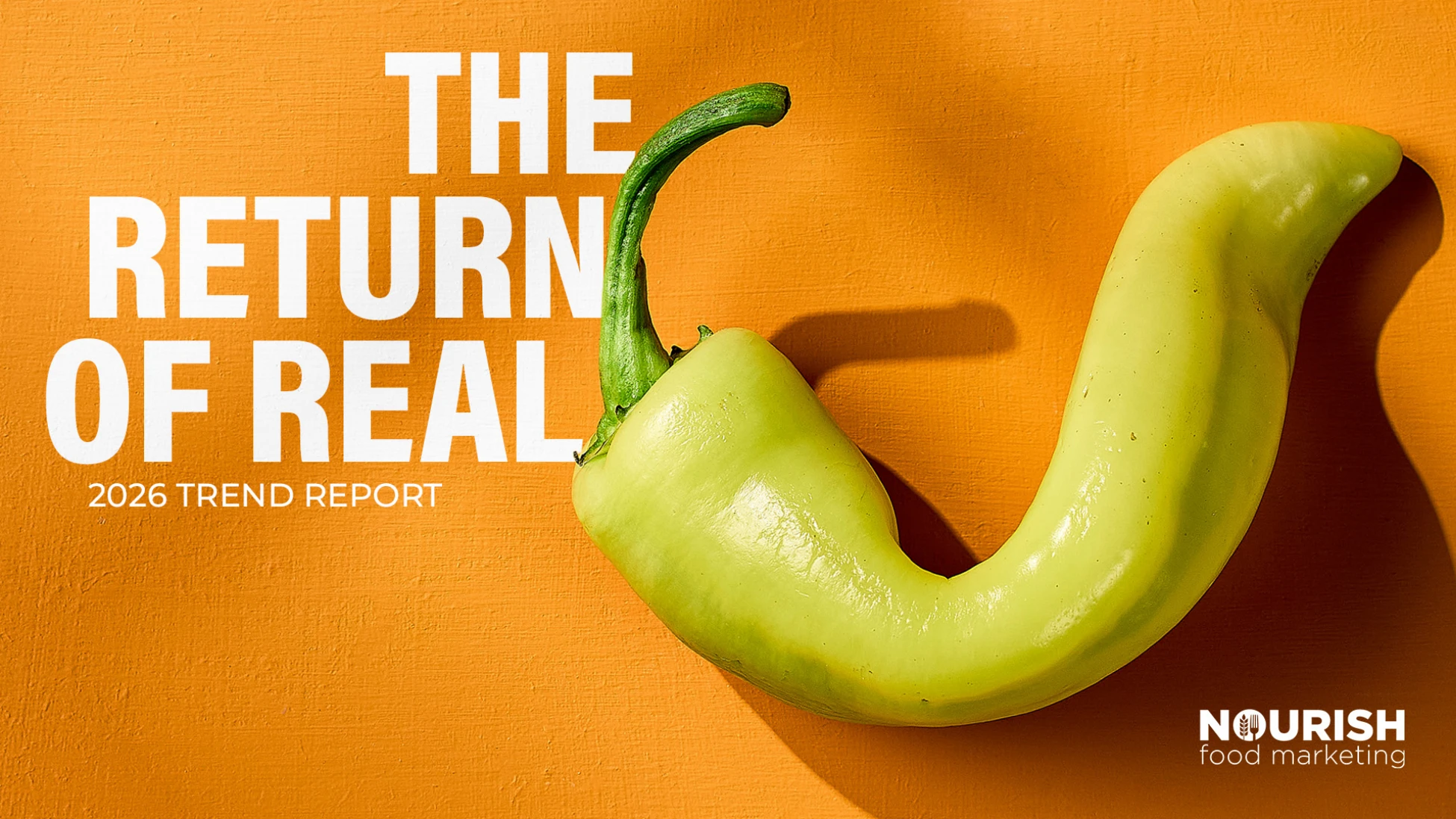
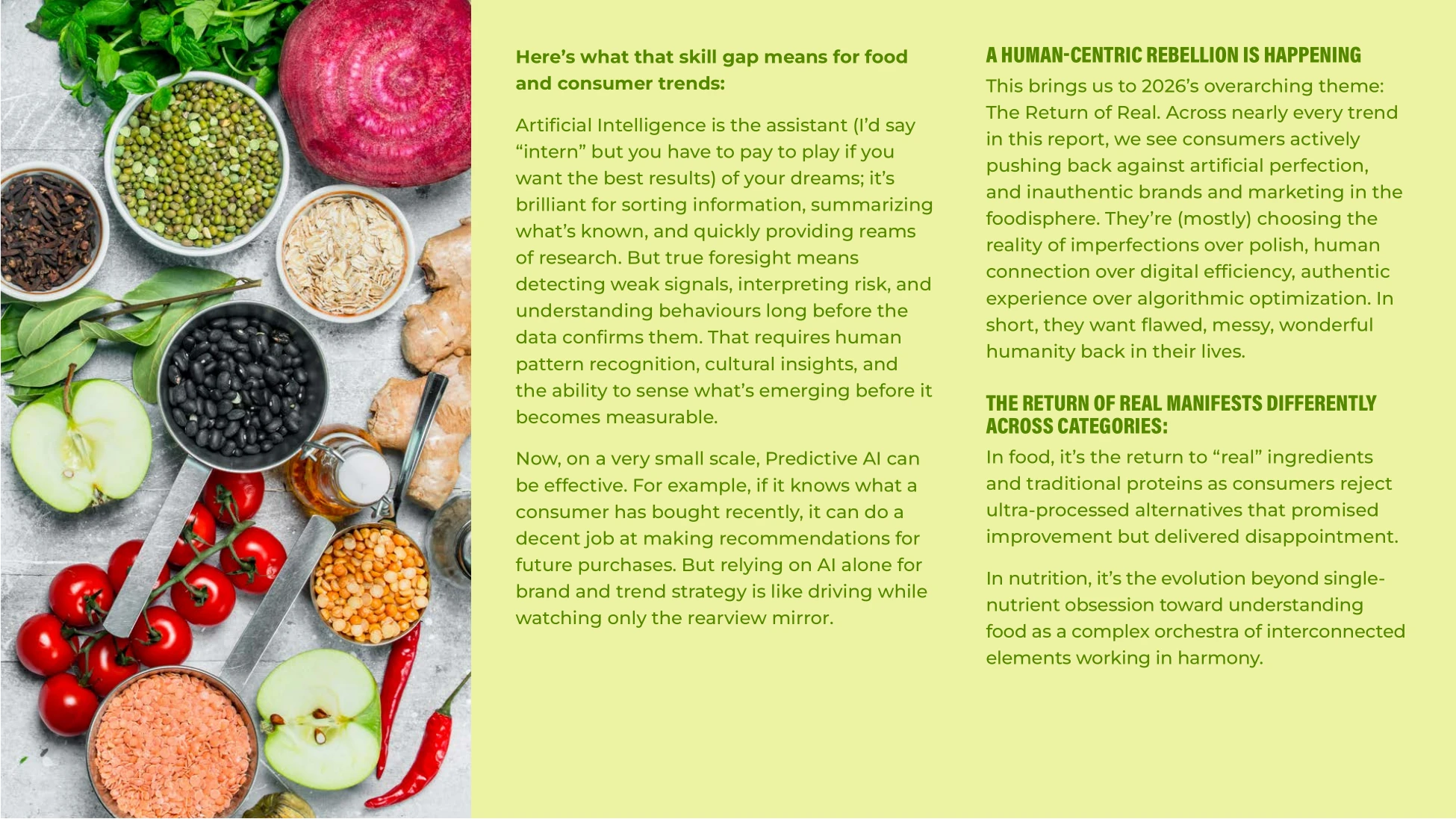
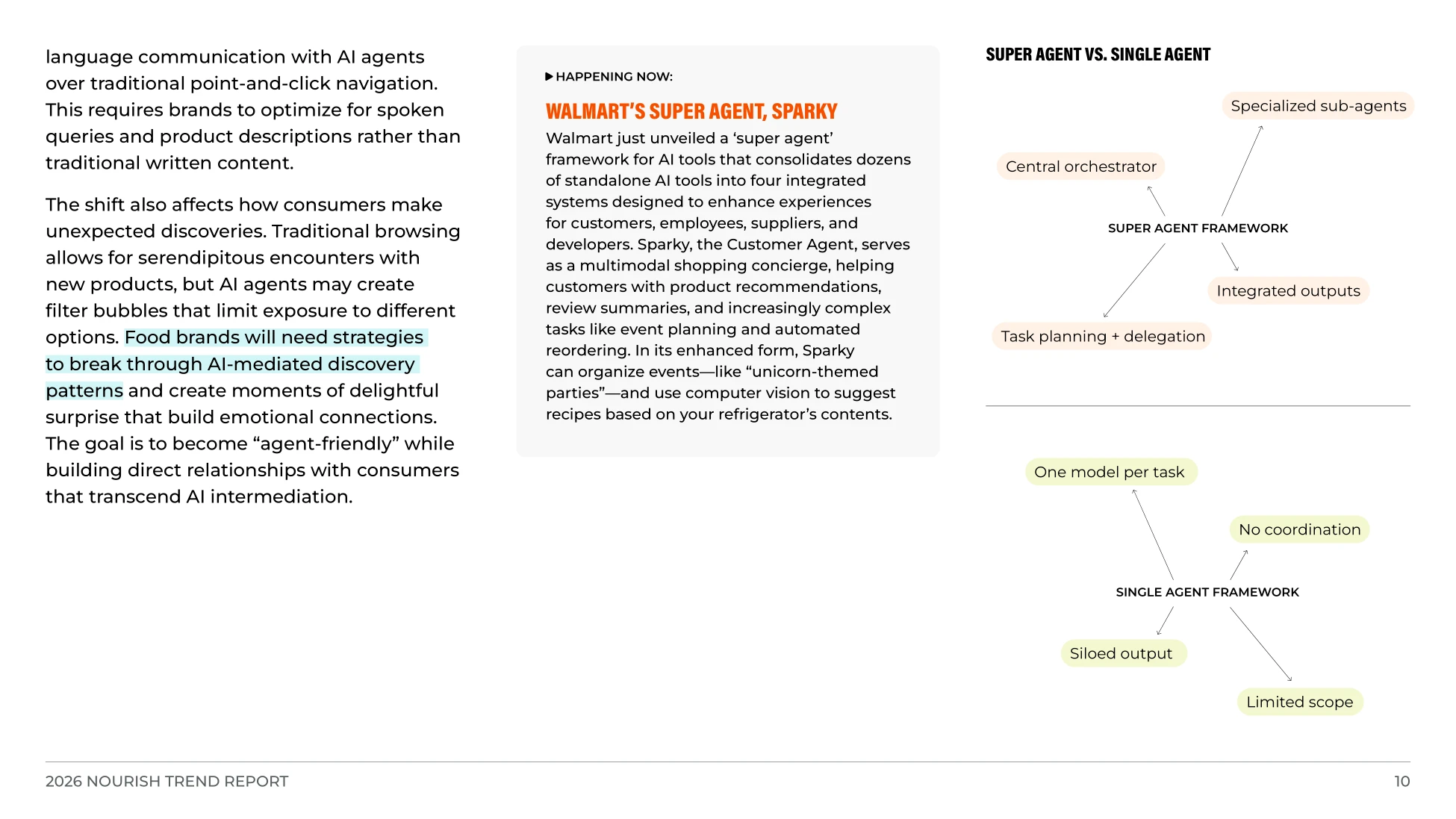
2026 NOURISH TREND REPORT2FOREWORD BY NOURISH PRESIDENT JO-ANN McARTHURTHE RETURN OF REALThe rhythm of our daily life has fundamentally changed. Hybrid work erased the line between home and office for most people. We can get anything we want whenever we want it, wherever we want it, thanks to a multiplicity of shopping apps. Traditional TV broadcast schedules are all but gone, replaced by streaming that is fully on-demand, personalized, and optimized by algorithms. We’re eating earlier, fasting longer, staying home more, and spending less time socializing. Meanwhile, the growth of single-person households and solo dining marks a wider cultural move toward individual living, even as the desire for real connection intensifies. This is the paradox of our time: we’re more connected digitally than ever before, yet more isolated as human beings. As Artificial Intelligence promises to solve everything from grocery shopping to meal planning, we’re discovering what it cannot provide: authentic human experience, serendipitous discovery, and the messy imperfections that make life meaningful.THE AI ECONOMY VS. EVERYTHING ELSEThe economy is being bolstered by a remarkable investment boom in Artificial Intelligence, with estimates suggesting that AI capital expenditures may reach 2% of GDP in 2025, up from less than 0.1% in 2022. That means the equivalent of about $1,800 per Cover photography by Carbelle Djossa, shot in our in-house studio2026 NOURISH TREND REPORT3person in America will be invested this year in AI.1 However, a recent report from MIT found that only about 5% of corporate investments in AI are paying off.2The hundreds of billions of dollars companies are investing in AI make up, according to some analyses, an astonishing 40% share of U.S. GDP growth this year, with AI companies accounting for 80% of the gains in U.S. stocks so far in 2025.3Yet here’s what else the MIT research reveals beyond the hard data: AI can speed up your development pipeline, but it can’t tell you why everyone still picks chocolate. It doesn’t know what it tastes like or the emotional response chocolate triggers, no matter how many new flavour options come to market. It has no intuition and no foresight—AI is wedded to what HAS been done, what IS known. It reminds me of a quote from Haruki Murakami on acquiring knowledge: “If you only read the books that everyone else is reading, you can only think what everyone else is thinking.”THE LIMITS OF ALGORITHMIC PREDICTIONAI is entirely reliant on historical data. A lot of it, to be sure, and that can be very useful; as many have said, you have to look back to move forward. It can detect patterns in what’s already happened, if you ask it to, but it cannot see the horizon or make instinctual predictions about what may lie there and beyond. Future-shaping forces, like shifting political clima...







































