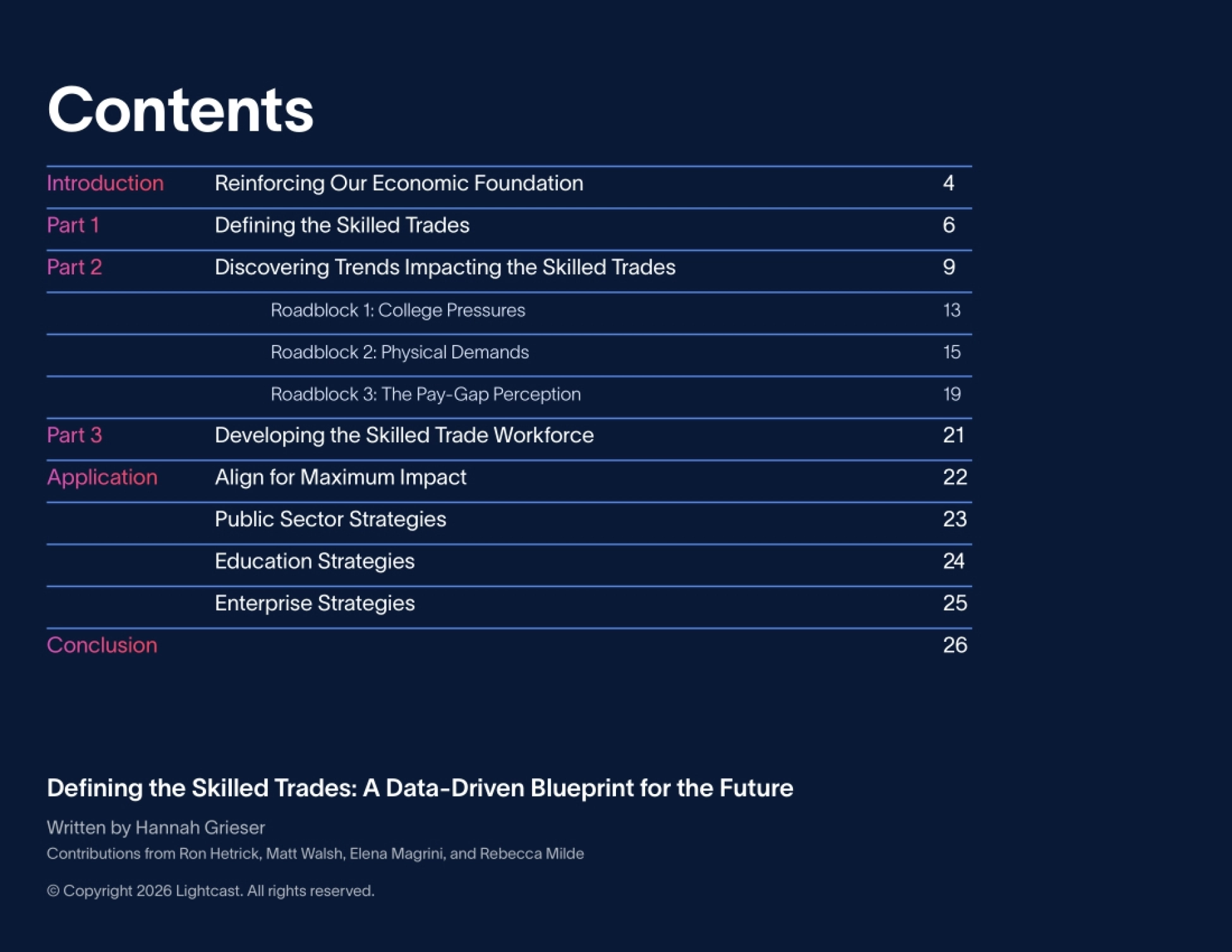
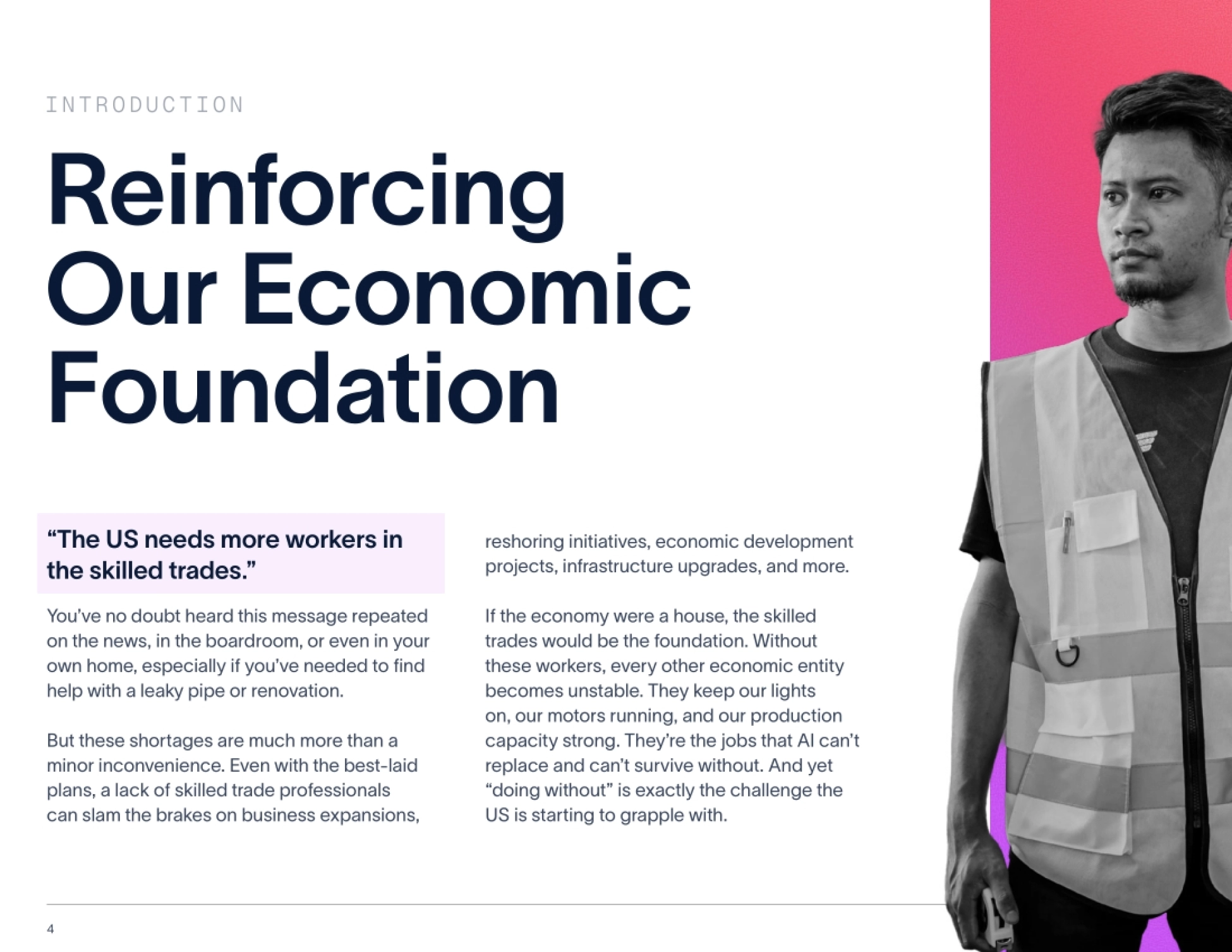
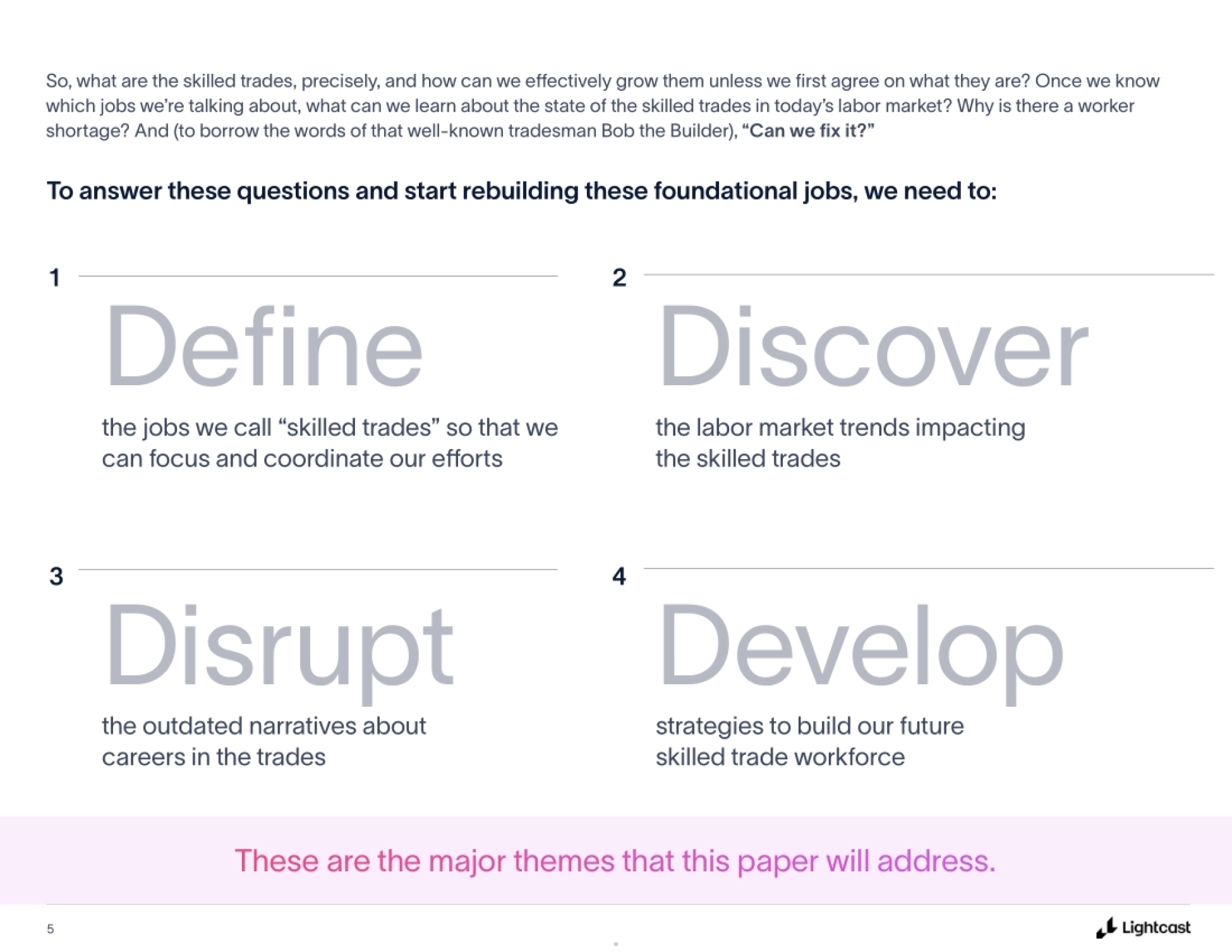
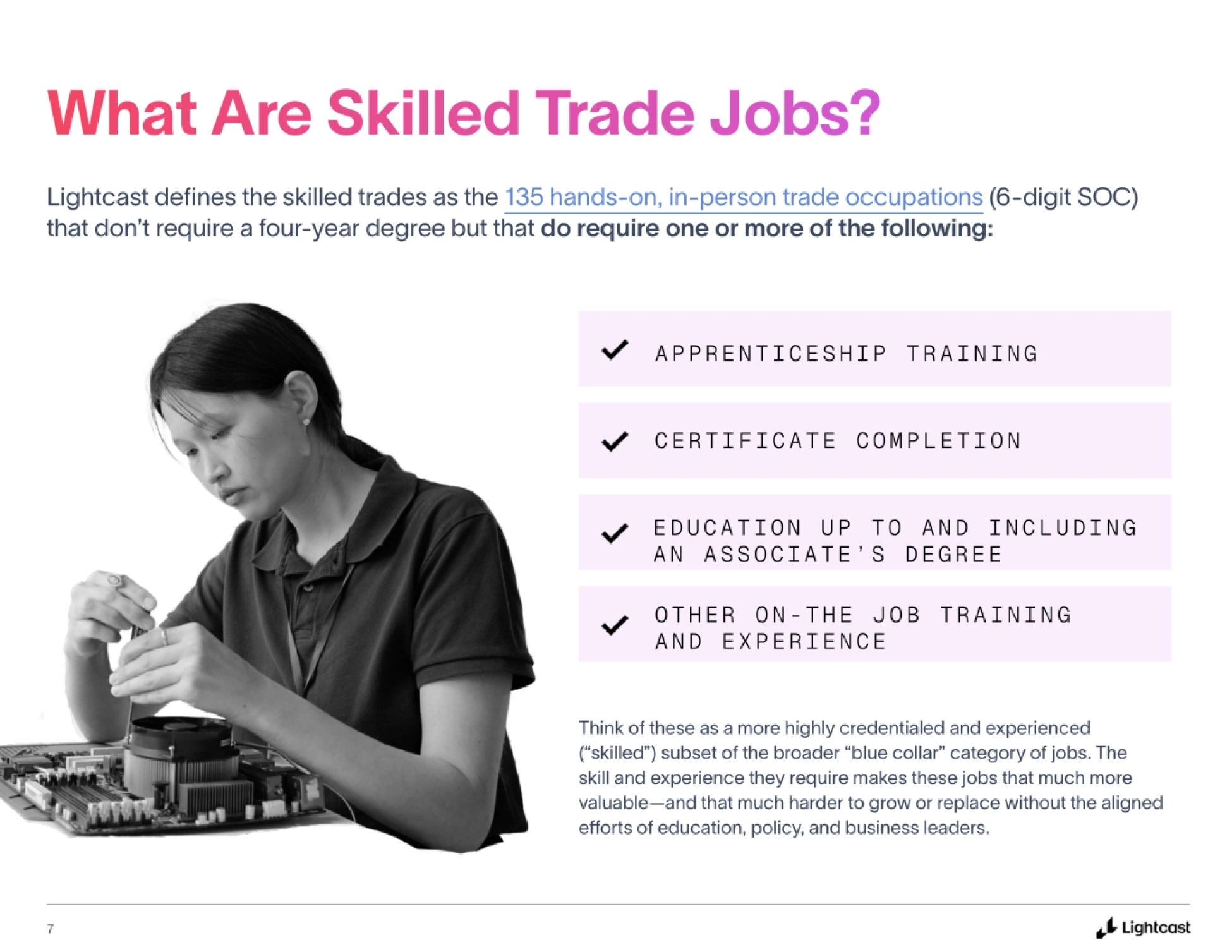
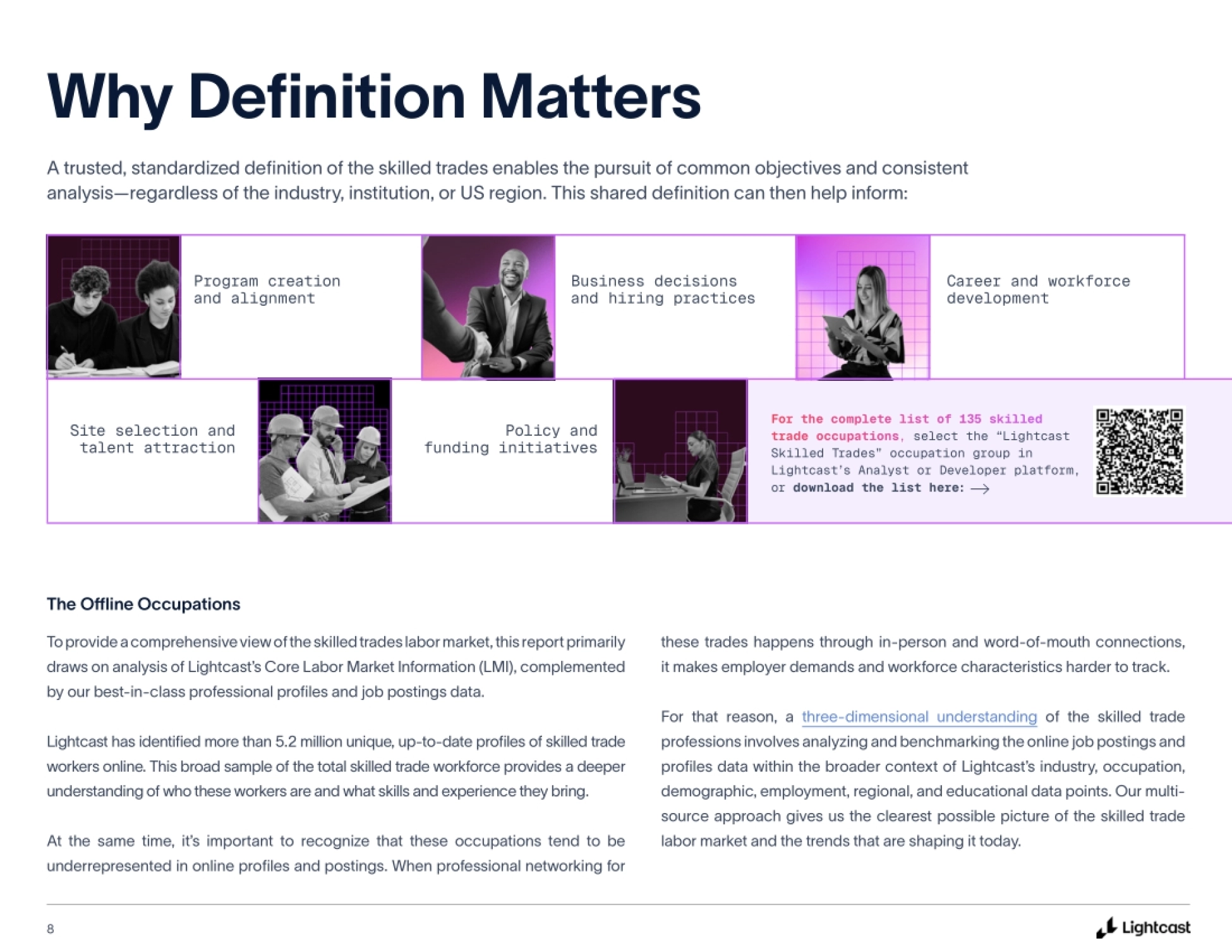
12Every region, business, and institution relies on the professionals who work in the skilled trades. But labor shortages, fast-growing industries, and recent policies are driving a new sense of urgency to train and expand this workforce to meet future demands. This shared goal is a great start—but it’s not enough. Achieving the objective will require greater focus and collaboration across the entire economy. This report aims to help make that possible by providing a deeper understanding of what defines skilled trade jobs, what labor market trends are impacting them, what opportunities and obstacles they face, and what strategies can improve their prospects for the future.The skilled trades have always been a loosely defined category of work. Everyone has a sense of what they are, but when it comes to studying the data and strategizing the details, gut feelings aren’t good enough. We need to know what jobs we’re talking about, specifically, before we can draw up the blueprints that will help us build this unique workforce. This is the key reason we set out to create Lightcast’s Skilled Trades definition: so that all of us can form a shared mission with a shared starting point. DOWNLOAD THE COMPLETE LIST OF LIGHTCAST SKILLED TRADE OCCUPATIONS HERE.EXECUTIVE SUMMARY3Defining the Skilled Trades: A Data-Driven Blueprint for the FutureWritten by Hannah GrieserContributions from Ron Hetrick, Matt Walsh, Elena Magrini, and Rebecca Milde� Copyright 2026 Lightcast. All rights reserved. ContentsIntroduction Reinforcing Our Economic Foundation 4Part 1 Defining the Skilled Trades 6Part 2 Discovering Trends Impacting the Skilled Trades 9 Roadblock 1: College Pressures 13 Roadblock 2: Physical Demands 15 Roadblock 3: The Pay-Gap Perception 19Part 3 Developing the Skilled Trade Workforce 21Application Align for Maximum Impact 22 Public Sector Strategies 23 Education Strategies 24 Enterprise Strategies 25Conclusion 264“The US needs more workers in the skilled trades.” You’ve no doubt heard this message repeated on the news, in the boardroom, or even in your own home, especially if you’ve needed to find help with a leaky pipe or renovation. But these shortages are much more than a minor inconvenience. Even with the best-laid plans, a lack of skilled trade professionals can slam the brakes on business expansions, I N T R O D U C T I O N Reinforcing Our Economic Foundationreshoring initiatives, economic development projects, infrastructure upgrades, and more. If the economy were a house, the skilled trades would be the foundation. Without these workers, every other economic entity becomes unstable. They keep our lights on, our motors running, and our production capacity strong. They’re the jobs that AI can’t replace and can’t survive without. And yet “doing without” is exactly the challenge the US is starting to grapple with. 5To answe...