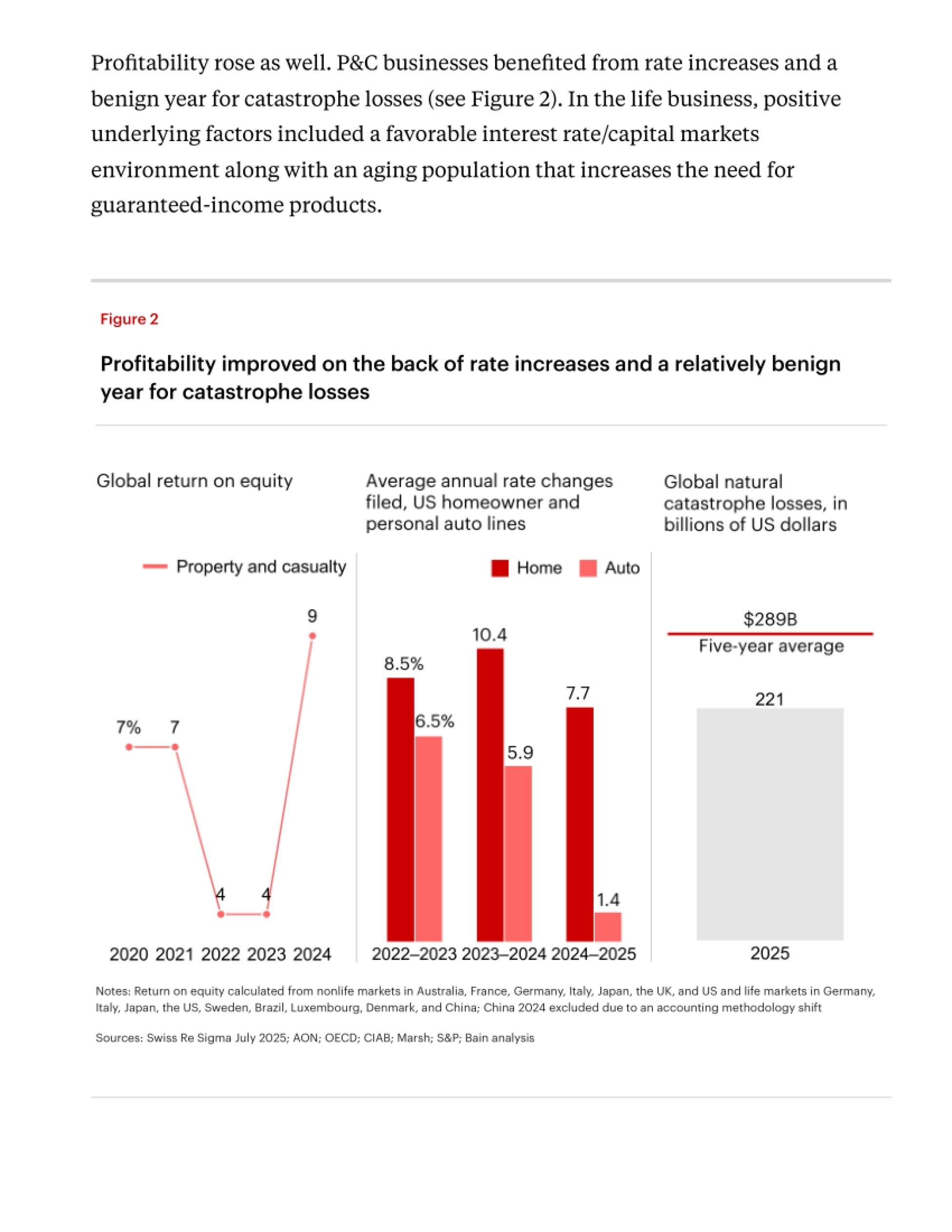
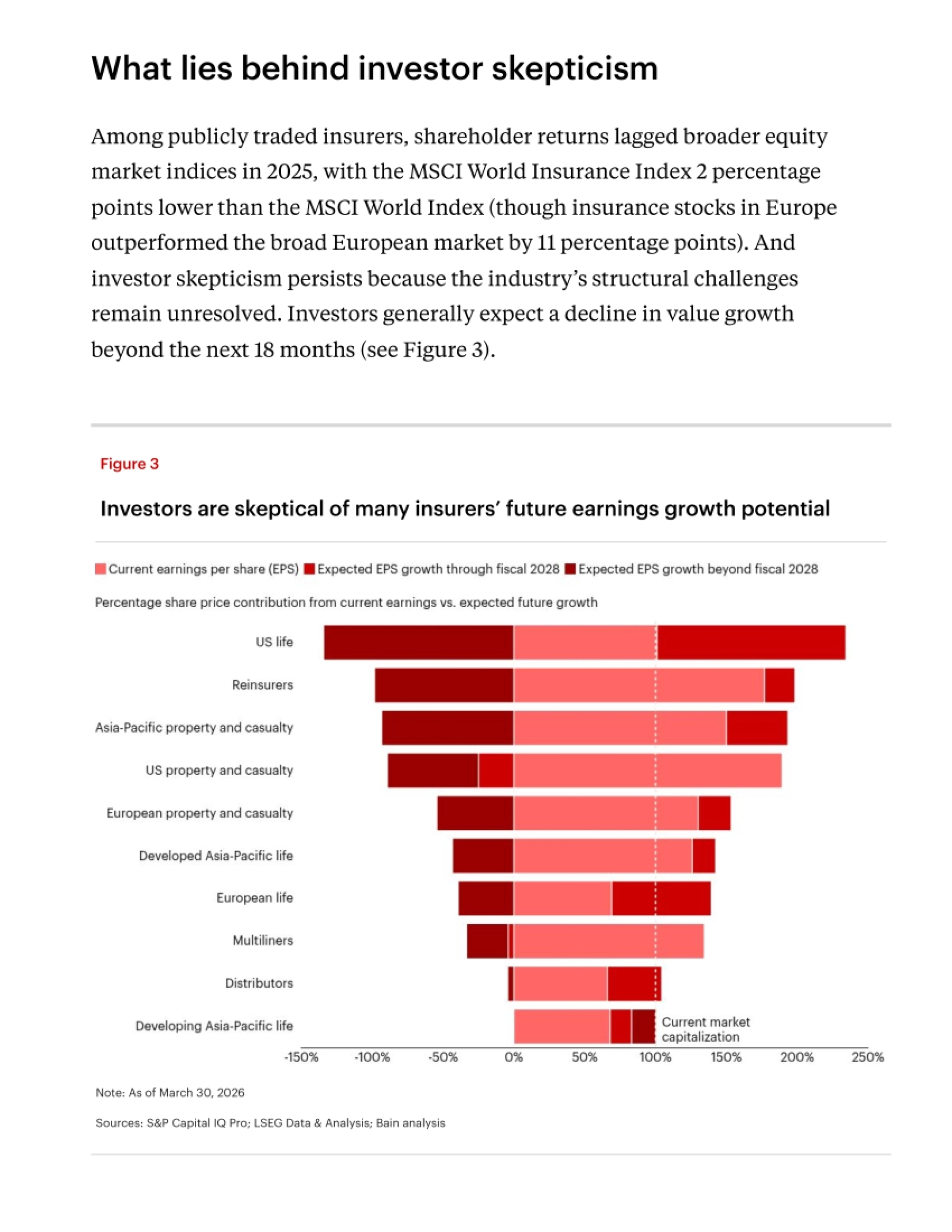
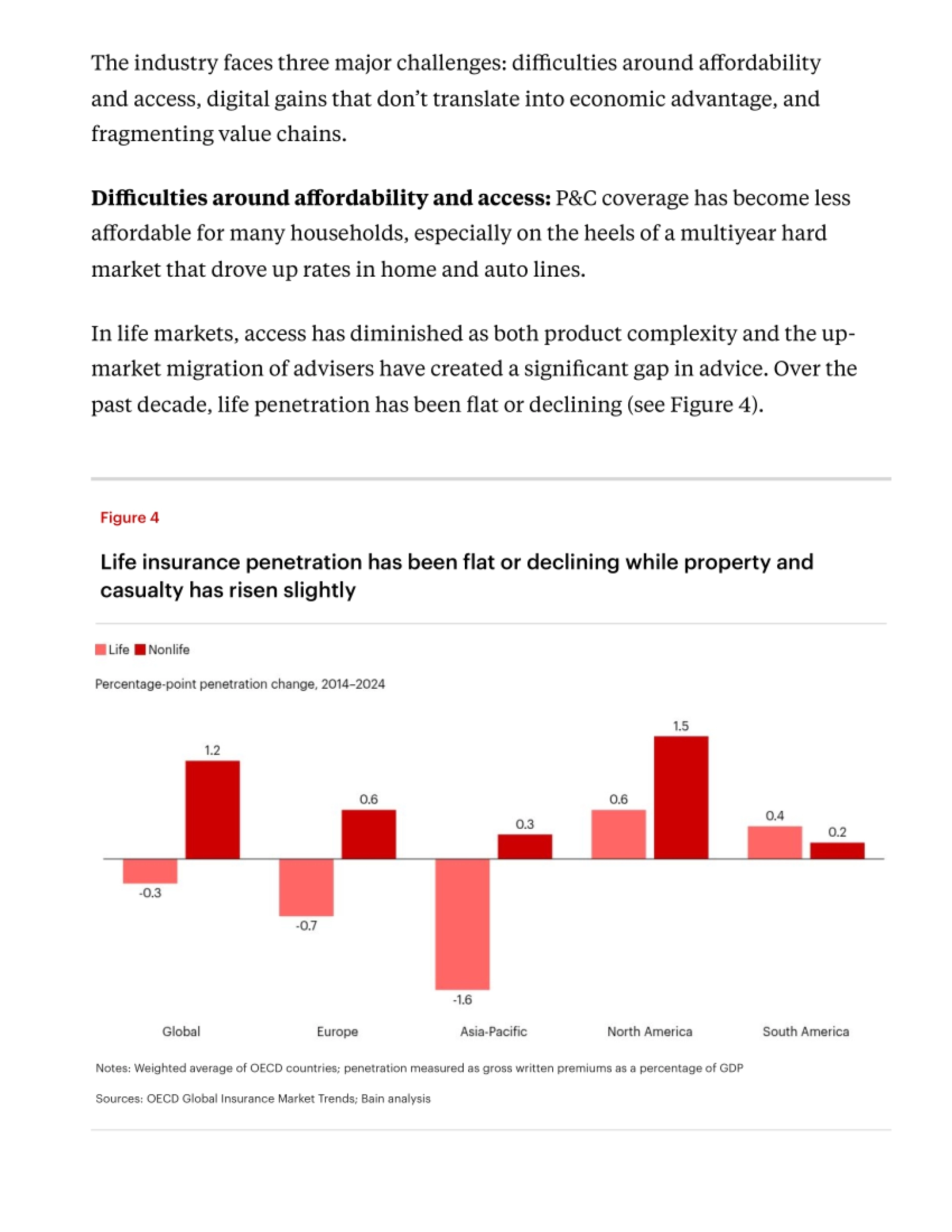
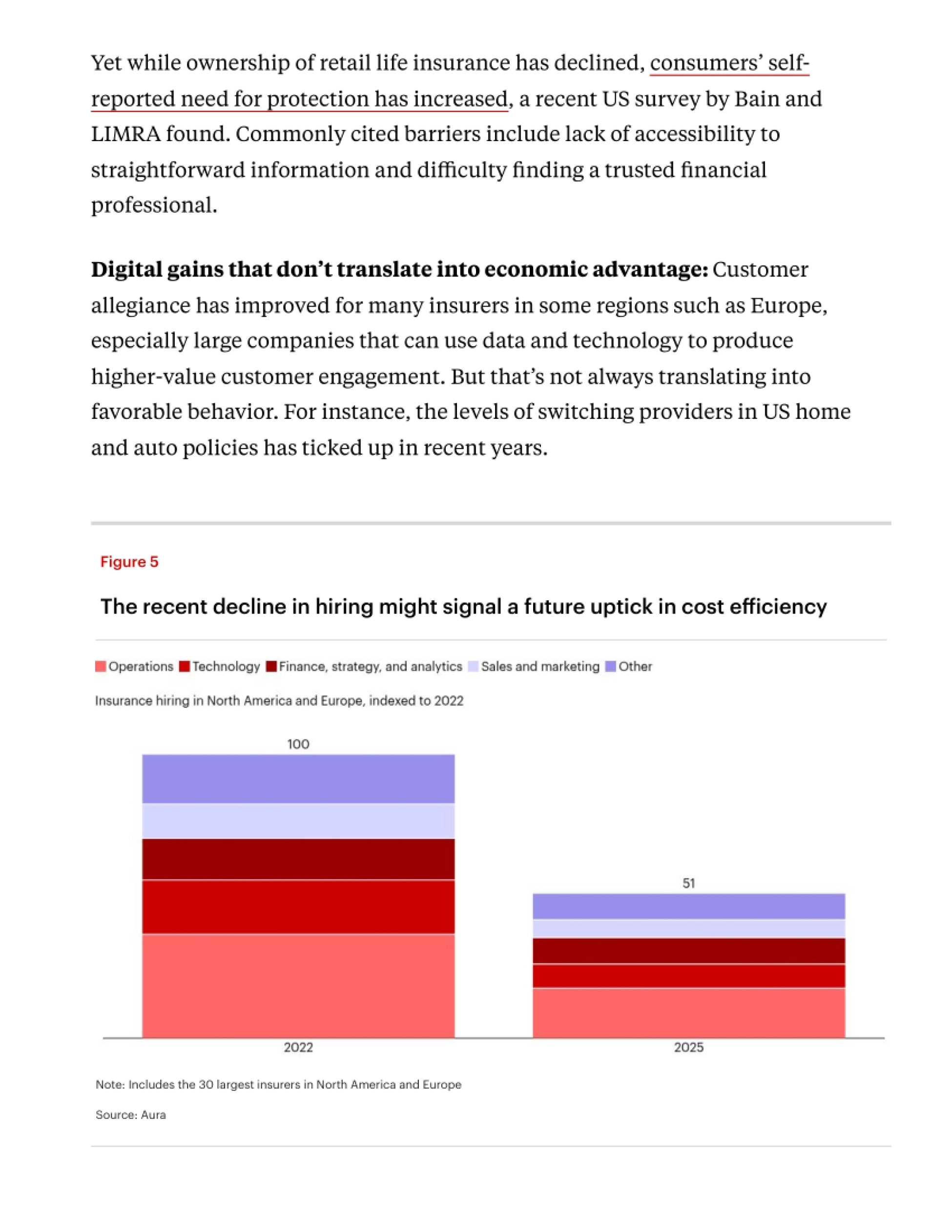
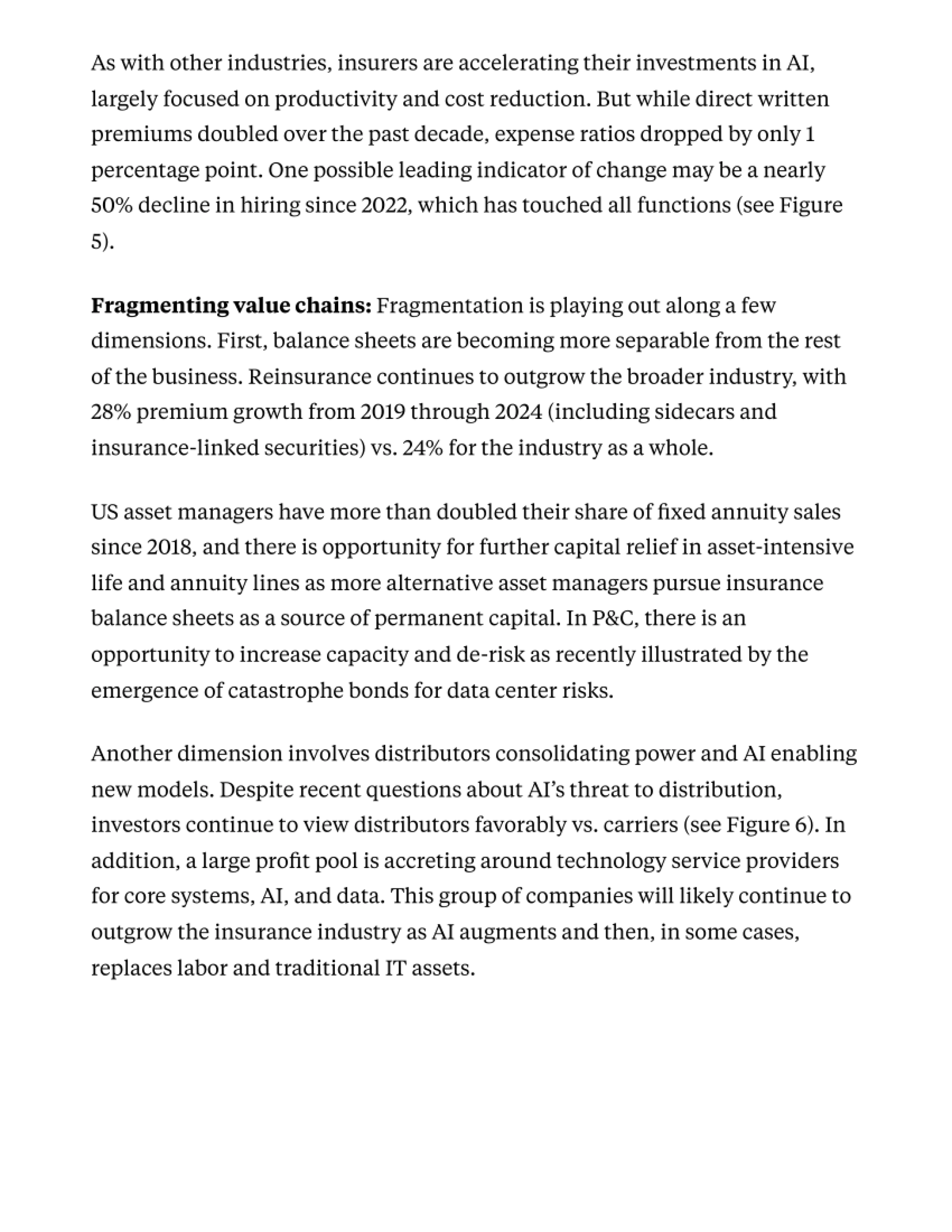
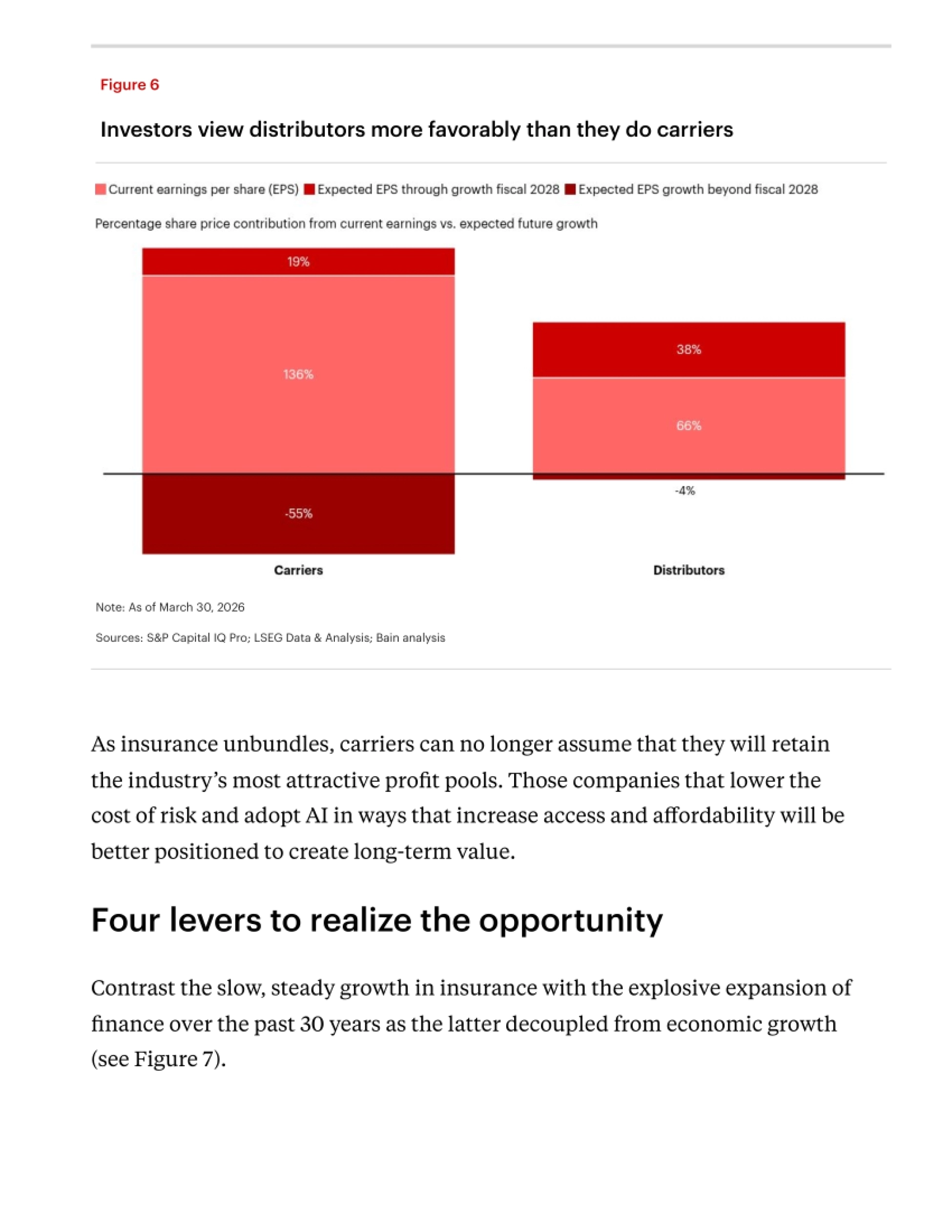
By Andrew Schwedel, Sean O'Neill, Harshveer Singh, and Tanja BrettelInsurers can increase relevance and expand the market by lowering the cost of risk.Strong Momentum in Insurance, but Structural Challenges RemainAt a GlanceThe insurance industry broadly delivered strong premium growth andprofitability in 2025, but this was largely a cyclical performance.Long-term challenges remain unresolved: Penetration is low, affordability isstrained, and investors question insurers’ ability to generate durable valuecreation.The basis of competition is shifting to firms that can lower the cost of riskand build advantaged positions in a more fragmented insuranceecosystem.To improve growth and relevance, insurers will need to drive down the costof risk across four areas: claims, distribution, operating expenses, andcapital.“Enjoy it while you can” might be the catchphrase for the insurance industryin 2025. Insurers had a strong year, with premiums growing above historicaltrends across most business lines. Profitability improved as well. This recentperformance is largely cyclical, however, and not indicative of long-termhealth. Insurers face major strategic challenges ahead—namely, turningtechnology, distribution, and capital innovation into structurally lower cost ofrisk and superior long-term value creation.Premium growth during the year was expected to exceed that of the pastdecade in every region except South America and across property and casualty(P&C), life, and health (see Figure 1). Because of reporting lags, full-year 2025data has not yet been released in many countries.....Figure 1Insurers posted strong premium growth in 2025Notes: Full-year 2025 data not available for all countries at the time of publication; US public health data removedSource: Bain global insurance database, including local regulators, the S&P 500 Market Intelligence Database, and Swiss ReProfitability rose as well. P&C businesses benefited from rate increases and abenign year for catastrophe losses (see Figure 2). In the life business, positiveunderlying factors included a favorable interest rate/capital marketsenvironment along with an aging population that increases the need forguaranteed-income products.Figure 2Profitability improved on the back of rate increases and a relatively benignyear for catastrophe lossesNotes: Return on equity calculated from nonlife markets in Australia, France, Germany, Italy, Japan, the UK, and US and life markets in Germany,Italy, Japan, the US, Sweden, Brazil, Luxembourg, Denmark, and China; China 2024 excluded due to an accounting methodology shiftSources: Swiss Re Sigma July 2025; AON; OECD; CIAB; Marsh; S&P; Bain analysisWhat lies behind investor skepticismAmong publicly traded insurers, shareholder returns lagged broader equitymarket indices in 2025, with the MSCI World Insurance Index 2 percentagepoints lower than the MSCI World Index (though insurance stocks in Europeoutp...