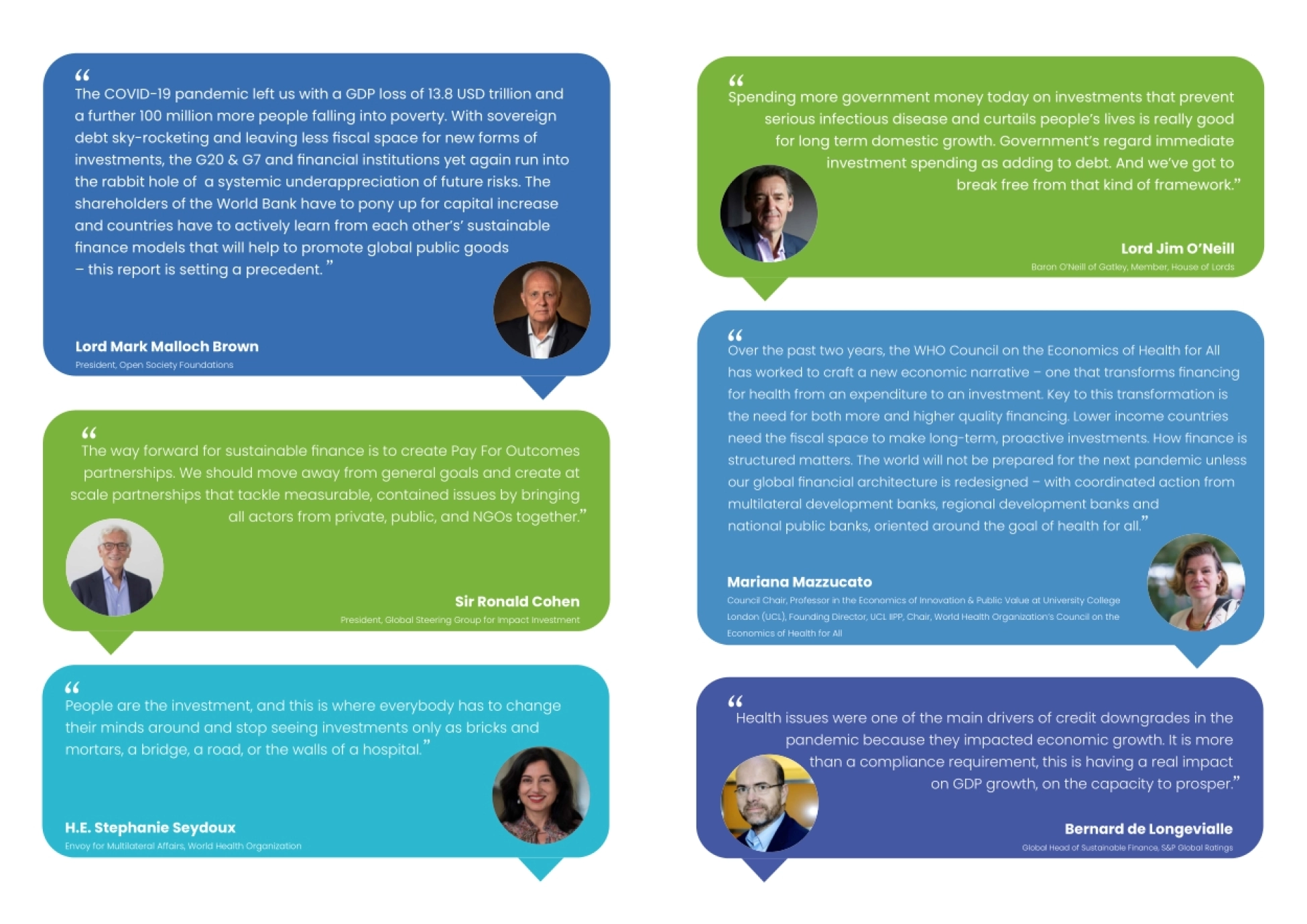
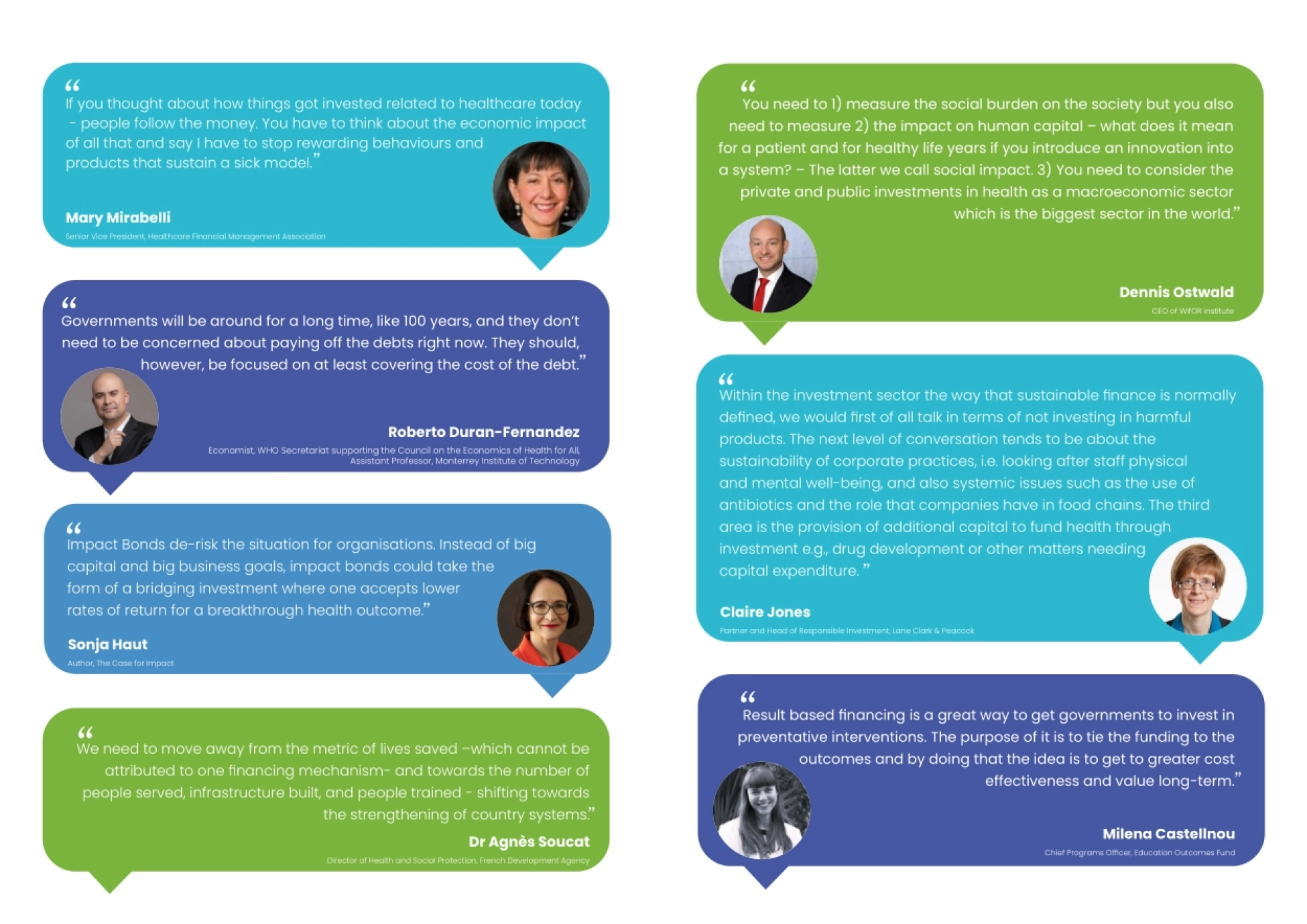
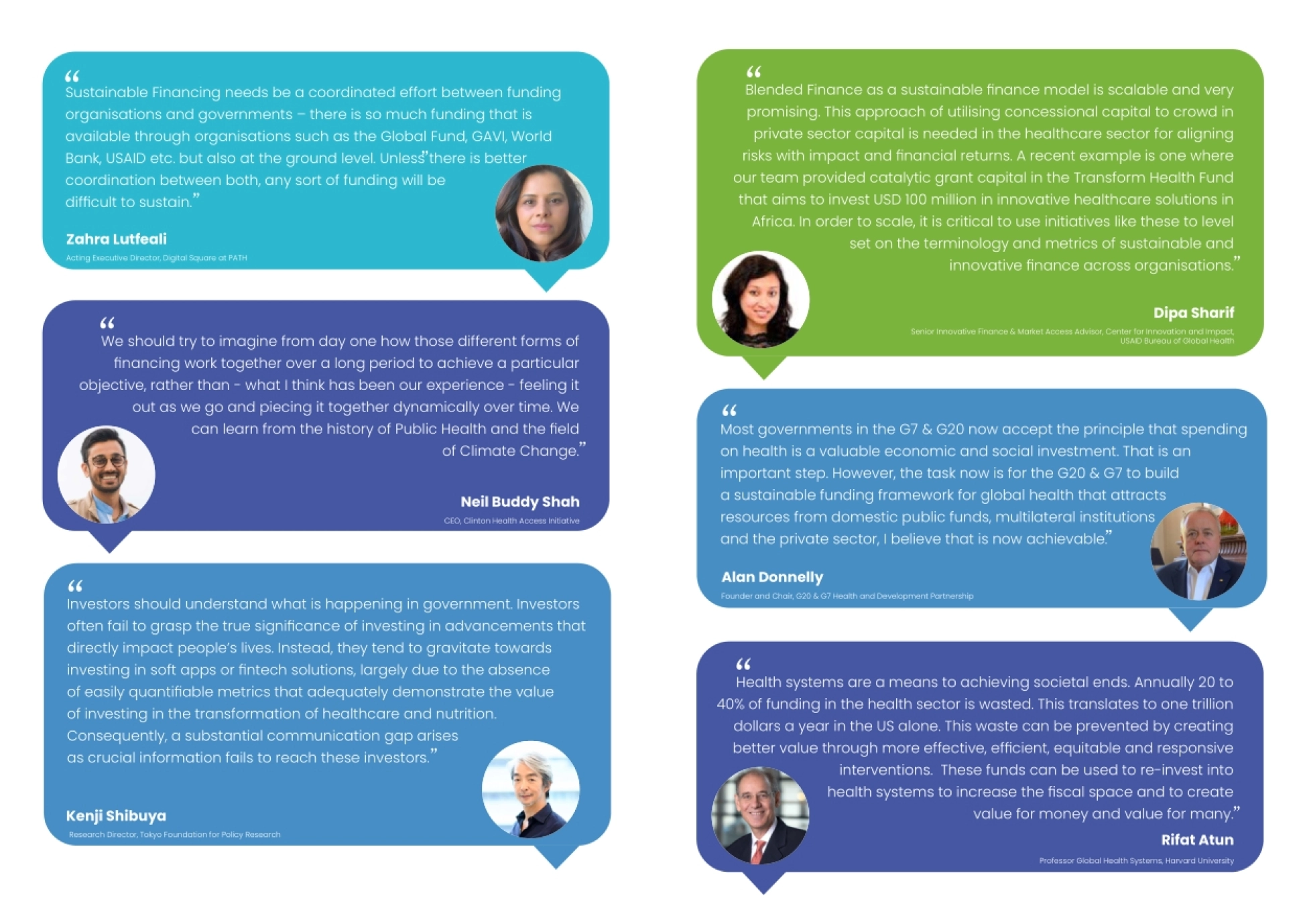
THE ROADMAP TO SUSTAINABLE FINANCE IN HEALTHA Toolkit for G20 & G7 Countries and Developing a Taxonomy for HealthThe COVID-19 pandemic left us with a GDP loss of 13.8 USD trillion and a further 100 million more people falling into poverty. With sovereign debt sky-rocketing and leaving less fiscal space for new forms of investments, the G20 & G7 and financial institutions yet again run into the rabbit hole of a systemic underappreciation of future risks. The shareholders of the World Bank have to pony up for capital increase and countries have to actively learn from each other’s’ sustainable finance models that will help to promote global public goods – this report is setting a precedent.Lord Mark Malloch BrownPresident, Open Society FoundationsThe way forward for sustainable finance is to create Pay For Outcomes partnerships. We should move away from general goals and create at scale partnerships that tackle measurable, contained issues by bringing all actors from private, public, and NGOs together. Sir Ronald CohenPresident, Global Steering Group for Impact InvestmentPeople are the investment, and this is where everybody has to change their minds around and stop seeing investments only as bricks and mortars, a bridge, a road, or the walls of a hospital. H.E. Stephanie SeydouxEnvoy for Multilateral Affairs, World Health OrganizationOver the past two years, the WHO Council on the Economics of Health for All has worked to craft a new economic narrative – one that transforms financing for health from an expenditure to an investment. Key to this transformation is the need for both more and higher quality financing. Lower income countries need the fiscal space to make long-term, proactive investments. How finance is structured matters. The world will not be prepared for the next pandemic unless our global financial architecture is redesigned – with coordinated action from multilateral development banks, regional development banks and national public banks, oriented around the goal of health for all.Mariana MazzucatoCouncil Chair, Professor in the Economics of Innovation & Public Value at University College London (UCL), Founding Director, UCL IIPP, Chair, World Health Organization’s Council on the Economics of Health for AllSpending more government money today on investments that prevent serious infectious disease and curtails people’s lives is really good for long term domestic growth. Government’s regard immediate investment spending as adding to debt. And we’ve got to break free from that kind of framework.Lord Jim O’NeillBaron O’Neill of Gatley, Member, House of LordsHealth issues were one of the main drivers of credit downgrades in the pandemic because they impacted economic growth. It is more than a compliance requirement, this is having a real impact on GDP growth, on the capacity to prosper.Bernard de LongevialleGlobal He...